


David Foster Wallace, feminism and #metoo

On May 4th this year, the writer Mary Karr tweeted about the recently broken story of allegations of sexual misconduct against the writer Junot Diaz. Karr’s initial tweet on the subject, while it voiced her support for Diaz’s accusers, served also to remind her followers of Karr’s own story of abuse at the hands of a literary darling, during and after a relationship with cult favourite David Foster Wallace in the early 1990s. Sex, gender and the body are well established areas of focus in Wallace studies by now, and a critical conversation about how we square those vibrant and vital avenues of work with the question of Wallace’s behaviour towards women is overdue. Wallace’s behaviour to Karr is well documented, including in DT Max’s biography of the author, and involved “show[ing] up at Karr’s family home near McLean to shovel her driveway after a snowfall, or com[ing] unannounced to her recovery meetings. Karr called Deb Larson and asked her to let Wallace know his attentions were not welcome. Wallace besieged her with notes anyway” (Max, 147). Wallace also tattooed Karr’s name on his shoulder and planned to shoot her husband instead of waiting for Karr to leave him. He put his fist through a car window after one interaction at Karr’s place of work. In short, Wallace displayed fairly incontrovertible patterns of abusive, coercive behaviour.
Karr notes that her original telling of this story was met with silence, but at a time when many distinguished writers are coming under scrutiny, her courageous reiteration of her history has echoed louder, and critical dialogues around writers like Wallace, along with Diaz and Sherman Alexie most recently, must address it. In considering the role of the #metoo movement in critical dialogues around such writers, I want to think about some possible responses to these kinds of writers, about whether, and how, it may be possible to ethically engage with a writer whose recorded behaviour is so troubling. Does reading Wallace make me a bad feminist? If not, can it make me a better feminist? Can my personal (as distinct from my critical) feminism contribute to my critical understanding of contemporary culture through works that engage and deal in misogyny, and toxic masculinity more specifically, wherever these attitudes emerge from? To quote Lucas Thompson’s introduction to the forthcoming Issue 1 of the Journal of David Foster Wallace Studies, “in what terms can we justify still reading and teaching him?” As a feminist critic, scholar and teacher, I do see value in continuing to read and teach Wallace, but perhaps in a new context. It is instructive in this regard to consider the specific cultural moment we’re in at the moment and to discuss how resisting the temptation to withdraw from these texts can enrich our understanding of that moment; in essence this essay looks at what works of exceptional artistry, written by flawed artists as flawed artworks, can teach us about the world we live in. Most significantly, I want to draw a distinction between the decisions we make as readers and those we make as critics, and how this distinction can move the conversation towards a productive exchange instead of towards a commercial standoff.
The first thing I think it’s important to say here is that I believe Mary Karr. It is well recorded that Wallace behaved in the ways she has described, and it would require feats of casuistry to avoid describing that behaviour as abusive. There doesn’t appear to be much in the way of dispute about its occurrence, but as Karr notes, Wallace’s behaviour has been neutralised in another way, by becoming part of the myth of the troubled, romantic genius. Quite apart from the genius myth, though – which we see repeated with almost tedious regularity in the cases of Diaz, Alexie, and those further back to Mailer, Hemingway and so on (and on, and on) back to Byron and beyond – is a cultural context that promotes and validates less overt forms of coercion and abuse. The term toxic masculinity is a familiar one, but pinpointing a critical definition of it can be difficult, as it often is with critical phrases adopted into popular culture. Writing in 2005, Connell and Messerschmidt refer to toxic masculinity as a subset of the more critically stable hegemonic masculinity, with men “engaging in toxic practices – including physical violence – that stabilize gender dominance in a particular setting”. They note that the term hegemonic masculinity is weakened by the implied exclusion of positive behaviour among men, and point out that as “a theoretical formulation finds application in other settings and by other hands, the concept must mutate—and it may mutate in different directions in different environments”. They therefore suggest that sub-definitions are required, understanding hegemonic masculinity as a complex and not specifically negative overarching cultural system. The terminology of toxic masculinity, although the phrase itself does not appear in the essay, thus seems to answer this need for nuance, and is close to the understanding of the phrase as I use it here. Kathleen Elliott, working off Connell and Messerschmidt among others, writes that toxic masculinity manifests as “masculinity based on simplified norms and understandings of traditionally masculine characteristics such as violence, physical strength, suppression of emotion and devaluation of women (Connell, 2005; Pascoe, 2005; Posadas, 2017) [...] The result is a culture that continues to award power and status to men (particularly white men), despite how they behave or treat others, and that offers to women a complex mixture of opportunity and constraint, empowerment and subjugation, which they must navigate on a daily basis.” Toxic masculinity is closely related to rape culture, where as Jeremy Posadas argues, “rape culture is the mechanism that channels toxic masculinity into specific, socially legitimized practices of sexual violence”, and what is particularly vital in this case about the interrelationship of these three concepts – that is hegemonic masculinity, toxic masculinity and rape culture – is the gradient of acceptable behaviours, what has been referred to as the pyramid of abuse, beginning with socially ratified behaviours like casual sexism, unwanted non-sexual touch and so on, moving categorically from normalisation through degradation and finally to assault. There is a liminal space at the base of that pyramid, underneath normalisation, that we might describe as codification; broader cultural attitudes that codify and validate the behaviours of normalisation through their romanticisation and promotion of still-more-innocuous attitudes and actions. Edward Laumann, in his seminal 1994 work The Social Organization of Sexuality, argues “it is clear that men’s normal socialization and roles in the sexual encounter undermine their ability to recognize limits set by their female partners. Men and women interpret these violations differently”.
More particularly, certain behaviours that Karr describes Wallace as engaging in – persistent contact despite being asked to stop, turning up unannounced, moving to be closer to her, tattooing her name on his body – are part of a pattern that is familiar from romantic popular culture, in which what is effectively stalking and coercion are coded as romantic persistence, with the ultimate narrative end of reward in sexual form. These socially condoned behaviours can escalate to more familiar forms of abuse: talking about violence, engaging in actual violence, but they are persistent tropes in romantic comedy, for example. Molly Ringwald wrote recently about her reappraisal of The Breakfast Club, dwelling on what she now reads as a scene of sexual assault that is glossed over in the film; the familiar boombox scene in Say Anything and more recently the Nice-Guy creep played by Andrew Lincoln in Love, Actually (and arguably all the heterosexual relationships in that film to one degree or another) valorise and vindicate a refusal to hear or accept rejection. The effect of this culture of masculine entitlement to women’s attention, space and bodies needs little canvassing. What is of interest in a critical consideration of this culture is that this pattern of refusal to change behaviour, associated with damaging consequences is one we see repeated across Wallace’s writing in various guises – not all of them related to gender, or to violence, but more often related to personal identity. We might think of the boy in The Pale King, who wounds himself in his quest for self-knowledge, or of John in Broom, who starves himself, or any of the tennis students in Jest, whose desire for improvement is mediated through a kind of vicious self-conquering and results in actual physical deformity. Persistence can be a virtue; persistence despite the assurance of failure is one of the central tenets of Wallace’s vision of meaningful and sincere communication. Equally though, we see Infinite Jest itself as a marker of the peril of persistence; we see the drug addicts, their spirals of destruction predictable and painful; we see the refusal to accept rejection in the men Q interviews in Brief Interviews, and Don’s life-threatening persistence in the face of overwhelming pain, among countless others – indeed, the damaging side of persistence is often mediated through painful or deformed embodiment. If we tie this idea of persistence as a moral good to the centring of sexual conquest and (more palatably) romantic entanglement as a form of successful contemporary masculinity, the patterns of abusive and/or coercive behaviour are hard to avoid simply because the more innocuous iterations are so strongly ratified in contemporary culture generally. By valorising toxic masculinity and masculine rage as a form of acceptable romantic-social performativity, we validate and perpetuate a culture that diminishes and denies female and feminine agency and desire, in ways that are reflected in both Wallace’s reported behaviour and in his writing.
What responses, then, are available to us as readers or critics, when faced with the culture that promotes and produces this behaviour? A couple of years ago, Yale Professor of English, Amy Hungerford wrote about choosing not to read or assign Wallace. Hungerford gives two separate accounts of this: in the widely circulated Chronicle article from September 2016, she includes only a short paragraph outlining what she calls her “small act of countercultural agency” in refusing to read Wallace, and essentially ascribes it to not thinking his work is worthwhile. “Why”, she asks, should we turn the podium over to this author among so many others, to invite him to stand at the microphone of literary culture for a thousand pages and more if it’s not pretty clear to a moderately well-informed person that his work is worth our attention?” It’s an eminently reasonable question, I think, though one that could be asked of literally any writer ever, and weakened, I’d suggest, by its implicit assumption that Jest is the only text that’s assigned or read – the ur-Wallace, if you will, thus inadvertently playing in to exactly the “Jurassic vision of literary genius” Hungerford is purportedly trying to escape. However, in her book from earlier that year, Making Literature Now, Hungerford expands on this refusal to read Wallace, and it’s clear in that context that her refusal is predicated on her perception of his misogyny – that it is, in short, a moral judgment of his character rather than a critical judgment of his writing, which it seems she then adds a critical layer by the time of the Chronicle article. As David Hering wrote about in February for Bloomsbury’s author blog, this and a number of later pieces of work including “Men Recommend David Foster Wallace to Me” and “Can Male Writers Avoid Misogyny”, along with more recently a somewhat bizarre essay in The Guardian blaming Dickens for incels, in which the writer refers to Wallace as “the patron saint of elevating male bullshit” have created a body of work enshrining resistance to Wallace’s work as a critical act. Latterly, with Diaz and Alexie in particular, that model of resistance-as-criticism seems to be solidifying more and more. It’s an understandable instinct – to boycott, to turn away, to somehow seek to punish the artist through the art, and functions as a personal action of principle. It should go without saying that choosing not to read a certain writer because of things they have said or done is a perfectly valid choice as a reader. However, I have serious reservations about it being mooted as a form of critical praxis, for a variety of reasons. Firstly, taking the implicit motivation of the action as valid for a moment, refusal or disengagement as critical praxis seems to me to reinforce a neoliberal, late capitalist mode of understanding or encountering art. The motivation is clear enough: the author should be affected at a market level for their actions, a disjointed relationship of individual cultural/capital exchange. But this form of resistance immediately codes that disengagement as an individual consumer action, rather than a critical action, reinscribing commercial or financial success as the goal of cultural production and playing into the class and race-inflected realities of economic consequence that trouble contemporary political dialogues. The non-reading response seems to me also to in some way absolve the larger patriarchal structures that have in large measure given rise to the cultural contexts of both the art and the behaviour, which is to say that an individual act of “countercultural agency”, if we accept it as such, devolves the responsibility of protest to individuals – usually women, in this case – and by that very disengagement actually works to simply silence the problem by simply removing dissenting voices from the conversation on an individual or small-scale basis. Regardless of the motivation or the depth of the conviction, critical disengagement in a context like this is therefore actually counter-productive. Further, while I understand and often share the individual instinct, the choice as a reader to disengage, we are in a different position as critics; although it may be intended as a critical gesture, it functions to isolate and divide rather than to critique and elucidate. We simply stop talking, which is where it gets tricky at a practical level; in Hungerford’s case, taking her motivation as sincere, there are two issues I see arising. Firstly, given the range of available and valuable texts that we might assign for study, no one questions the absence of an author in any rigorous way – you might get, as many of us have, a slightly peeved undergraduate asking why there’s no Kerouac on this course, but that tends to be the extent of it. It absolutely is our duty as critics working in the contemporary field to critically address the formation and increasingly the decolonisation of the canon, but while an act of inclusion can be quietly radical, an act of exclusion is unlikely to be noticed or understood. In other words, unless Hungerford is actually articulating and then critiquing her reasoning for this exclusion as part of her course, the message gets lost and it reverts to an individual, fundamentally neoliberal form of consumer action rather than its intention as a critical gesture. The second issue is more specific to Hungerford herself, and it in some way contradicts my previous argument. Hungerford is a powerful and visible academic; her voice carries. Her imprimatur on a collective refusal to read Wallace arguably positions it as a critical gesture, despite the reservations I’ve outlined here. An alarming emerging trend – thus far reported only anecdotally, let it be said – is one where young female, femme-identifying and feminist scholars of contemporary literature are not only withdrawing from reading Wallace, but vocally criticising those who do choose to engage as bad feminists. Such policing of engagement simply ghettoises critical dialogue, implying – or outright saying – that a “good” feminist scholar cannot engage with particular writing, not because of the writing itself (which would in its own way be a problematic position) but because of the writer. An additional issue with this is that it presupposes that we should read only work of which (and of whose writers) we approve, which seems an ethically very empty way of encountering the world. Quite apart from the difficulties with virtue-based reading and with biographical reading in general, this forces a critical divide that practically speaking unavoidably damages the goal of dismantling patriarchal structures within the cultural marketplace. As a feminist scholar, this is one of my primary goals, and I cannot see how a simple refusal to engage does anything other than polarise debate. In that vein, a more generative – although also more ethically challenging – response seems to me to be to engage in the deconstruction of these texts.
With that in mind, what are the critical benefits, micro and macro, that may be available if we as critics choose to continue our engagement with Wallace, incorporating and reflecting on the new ways of seeing necessitated by a confrontation with this behaviour? Toxic masculinity resonates through forms of violence that move beyond male-female to encompass male violence (physical, sexual and otherwise) against children, trans* bodies, genderqueer and male bodies. Even more interestingly, the patterns of toxic masculinity as a constitutive cultural force appear in the very structures of the writing. In the first place, it’s hard to avoid the inflection that this awareness forces with regard to the much-discussed thematic misogyny at work in Wallace’s writing. It has become a truism of both critical work on Wallace and cultural backlash against his work that Wallace’s work is misogynist – this term is used with various meanings; I’ve argued myself that some of the misogyny depicted in the writing demonstrates a broader dynamic of fear of and desire for otherness, and also that that interpretation does not absolve Wallace of the (relatively) uncritical representation of misogynistic behaviour. Other critics have made similar and more stringent arguments, and this area of Wallace studies is gratifyingly vibrant; for example in the shortly forthcoming Journal of David Foster Wallace Studies, Daniela Joffe has written an exceptional piece of work on The Broom of the System and second-wave feminism in which she notes that the opening scene of the novel sets the pace for gender politics throughout the work. Joffe argues that the scene is one of sexual assault, and the tone of coercion is certainly clear throughout. My own earlier readings of this scene have focused on the linguistic – and specifically signatory – aspect of the scene, to the exclusion of what I read as a crude representation of adolescent sexual pursuit in the American university system. Indeed, in a June lecture in Dublin, Martha Nussbaum pointed out that much of the recent work on college campus sexual violence in the United States has its roots in a number of very public cases from the early 1980s, so that tone of threat is consistent with an interrogation of campus culture of the time. Revisiting the scene, the undertow of fear that animates the young women in the scene, the swaggering physical imposition of Andrew and Biff in particular (especially their blocking of the door, the inescapability of their demands, and it is worth returning to that passage from Laumann; these behaviours are read differently by men and women) charges the scene in a way that connects power, physical force, linguistic domination and gendered violence. Indeed, considering the signatory element of the scene in light of this open power play, it seems to invite a reading that closely links linguistic control with bodily and often sexual control.
We can see almost endless iterations of this connection of sexual or sexualised violence with muteness or aporia throughout the work, especially Infinite Jest; and importantly, while the violence is male sexual violence, the victims range across gender categories. This is the reason I think it’s more useful to discuss toxic masculinity in the work than simple misogyny; to discuss misogyny in isolation is to miss a good deal of nuanced writing of male rage. For example Clenette’s story of child rape (echoed by Pemulis’) encodes the same pattern of speaking, violating male agent and silent female, child or emasculated victim. These two stories also include a second silenced character, a witness who falls into the same identity category as the victim. Another, more visceral scene that I would argue shares this pattern is the extremely grim death of Lucien Antitoi in Infinite Jest, in which the highly stylised and ineluctably sexualised depiction of fatal oral penetration – with, not coincidentally, a broom – ties sexual (or sexualised) and gendered violence to the concept of linguistic control. Jest also contains the scene of so-called “lexical rape”, the mental invasion of the supine Don Gately by the consciousness and specifically the vocabulary of the Wraith. Again it’s worth commenting on the feminisation of an otherwise masculine character in this context; Gately, like Lucien, is passive, bleeding and unable to speak. Like Lucien’s section, this one also foregrounds the language of sexual encounter, specifically in this case rape: Gately “tries to fend off” the incursion of memory, crying No! No! Importantly, this scene is explicitly connected with Gately’s recollection of his mother’s physical and sexual abuse at the hands of the MP, adding another layer of gendered interaction to the already complex palimpsest at play in the scene.
These scenes of violence play out with exhausting regularity through Wallace’s work, but toxic masculinity is at play in more than just content. Between the almost explicit connections of physical and linguistic control that open Broom, and what Wallace referred to as the “fear-based misogyny” that animates Brief Interviews in particular, and which is certainly discernible throughout the work, as well as the almost-obsessive reference to the “she” reader, comes to seem more like a concerted effort to control the direction of the narrative; I’d argue that we can see Wallace’s reported behaviour towards Karr – overwhelming, excessive, by turns violent and seductive – reflected in the structures of his writing, the “please love me I hate you” dichotomy that he articulated in the McCaffery interview. This dynamic works beyond the misogyny in the writing. The directive nature of the structures by which Wallace’s work operates, including the breathless, dizzying sentences punctuated by brief, often devastating phrases, the sheer heft of the works; all of these elements combine to make Wallace a writer who simultaneously woos and imprisons. The many tensions that critics have to date identified in his writing – chiefly that essential tension of the I and the not-I, the desire to be subsumed and the desire to be separate, the drive to truly understand and the knowledge that such understanding is impossible while maintaining a distinct subjective, agentic self – work into and out of this binary of control and release, making Wallace’s very writing a structural reflection of and on toxic – or hegemonic, at the very least – masculinity and heteropatriarchal cultural force.
In the end, I argue that continuing to read and teach Wallace – and influential writers like him, the kind of critical darling whose behaviour towards women we now know to run the gamut from relatively benign sexism to outright abuse – offers us as critics an exceptional repository of work created in that strange crucible where toxic masculinity and virtue-signalling feminist language meet – the “woke misogynist”. Firstly, the thematic iterations of misogyny and gender-based violence – including violence against trans and genderqueer bodies – show the cultural depth of misogyny that informed “the texture of the world [Wallace] lived in”, to borrow a phrase he used about his style. Wallace’s apparently sincere artistic and ethical attempt to unpack these cultural edifices does not excuse his behavioural capitulation to them, but from a critical perspective an awareness of that disjunction can, I think, help us as feminist and gender-conscious scholars to interrogate the many contradictions of a culture that both rewards violent and coercive postures of masculinity and invites its male artists to deploy gender-consciousness as a form of ethical investigation. We should be outraged by Wallace’s behaviour, and should hold him and his work accountable, but to quote Martha Nussbaum quoting CBS sportscaster James Brown, “outrage is useful only if it leads to a real project: really hearing women’s voices.” Choosing to disengage may offer a satisfying, valid individual-to-individual cultural act of moral judgment, but it seems to me that in order to meaningfully dismantle the patriarchal structures that continue to dominate the cultural marketplace, as critics we have the harder and more effective job of sincerely interrogating these works for what they can teach us about both individual and structural engagements with toxic masculinity. Instead of turning away from them, let’s place them in conversation, as critics have started to do with older texts of the Anglophone canon, but let’s read them against and through works that address what they elide, writing by Porochista Khakpour, by Zadie Smith, both of whom have acknowledged Wallace as a direct influence. Read Wallace in conversation with Chimamanda Adichie, with Jessmyn Ward and Claudia Rankine and Louise Erdrich. To me, this offers a useful, ethical and critically rigorous answer to Lucas Thompson’s question of how we can continue to read and teach Wallace.
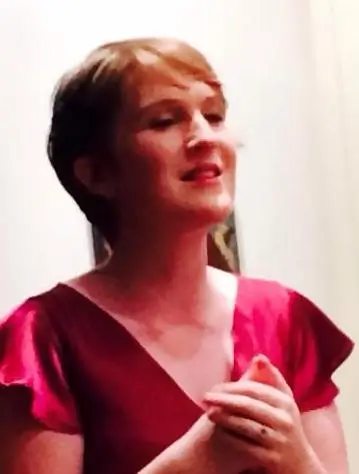
Clare Hayes-Brady is
a lecturer in American Literature at University College Dublin. Her PhD focused
on communication in the work of David Foster Wallace. Other research interests
include the interaction of literature with film; transatlantic cultural
heritage; performative sexuality (both normative and queer), resistant gender
modes and the history of burlesque; digital humanities and modes of
transmission; adolescence in contemporary fiction, and dystopian narrative.
More work by Clare Hayes-Brady



Tel: 028 7126 6946
Email: hueditor@theverbal.co
Verbal, Stable Lane and Mall Wall, Bishop Street Within, Derry/Londonderry, BT48 6PU
 company
Copyright © 2026 Honest Ulsterman