


Lessons from a pandemic
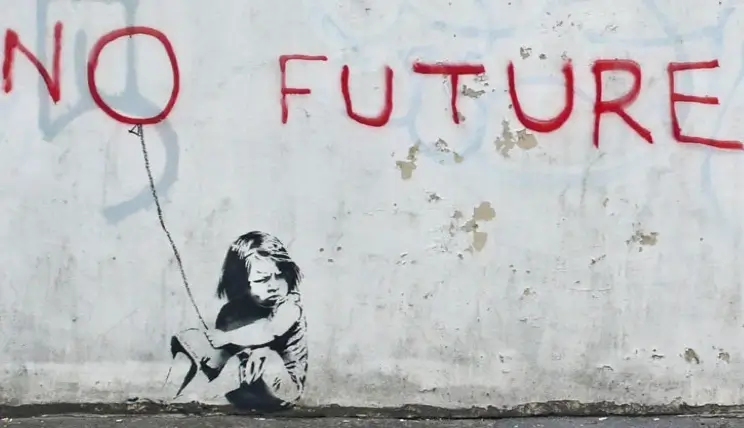
In recent years, the term precarity has crept into ever more common usage. While the word itself has long origins, the usage that it now enjoys dates largely from the 1980s and 90, but has more recently come into focus as a way of understanding a distinctively capitalist way of being marked by instability and contingency. Judith Butler, writing after 9/11, used the term to refer to people whose lives are precarious, existing on the edge of grievability; the displaced, the deeply vulnerable, those whose dependence on strangers and hostile systems lays bare the uncomfortable fragility of the whole edifice of modernity and its many, tendrilled systems of connection. Post-2008, precarity has entered the popular lexicon alongside gig economy; precariat; contingent labour – terms that simultaneously highlight and disguise the soaring human cost of late-stage (arguably, indeed, any-stage) capitalist systems and globalised, just-in-time market logic. Around the world, swathes of the working population operate on subsistence wages, without rights, benefits or recourse. Employers – loosely so-termed – trumpet flexibility and speak of the desire of younger workers to move freely between jobs, to create their own timetables, to reject the cog-in-a-machine model of their parents’ generation. Millennials and avocados are mentioned frequently. Meanwhile, millennials, approaching their 40s, struggle to pay rent in spiralling urban markets, dream idly of ever buying property, put off marriage and child-rearing. While the financial crisis of over a decade ago has provided a focal point for discussions of this trend, providing the illusion of a turning point, this precarity has of course existed for decades, centuries. Just, not among middle-class white people. People and families whose lives do not mirror capitalism’s imaginaries of itself – people of colour, the working class, the queer, the disabled, the single-parent families, the many hundreds of categories of people whose images are not the ones beaming emptily from mid-20th century advertisements for soft drinks – have operated in this way all the time. Multiple jobs without adequate pay, insecure housing, poor and patchy access to healthcare, minimal power in decision-making: these are the terms of life for countless millions. But after 2008 it began to seep – inevitably, of course, as is the way of systems that are succeeding – outwards, to cannibalise the very images it promoted. The profit motive of the system began to outgrow its glossy, aspirational posters, becoming self-sustaining, and to turn them to the same purpose as the precarious others whose bodies, labour and lives have always already been grist to the mill. As is perhaps typical, public discourse in the anglophone West – created and sustained by, and catering to, the broad middle class – began to turn its real, engaged attention (having, of course, bemoaned it appropriately in murmurs for many years when it remained at acceptable distance) to this phenomenon only as it gnawed anew on members of that privileged set. And so we began to bewail this New Phenomenon, to whisper furiously about Precarity, invading longstanding Respectable Jobs and even – gasp! whisper it – encroaching upon The Professions.
I am being glib, here, but it is a frightening thing to see careers that offered a form of stability to adulthood devolving into exploitative, impossible, crushing burdens that break the spirit and threaten the health of those who work in them. While it is widespread and becoming more so, my experience of this is in academia. All professions are unique; academia is unique in, among other things, its potential for a particular kind of cruelty. It is by no means the hardest work, nor the most urgent, nor the most dangerous in and of itself. In Ireland, decades of under-investment and the rapid, intense neoliberalisation of the system has forced our universities to do without sufficient state investment, and instead rely on high international student fees, research funding that often comes from businesses and industries, whose goals are different if not wildly divergent from those of a university, as well as the ancillary assets of the university – expensive halls of residence and facilities for hire. Ballooning administration costs are balanced by savage cuts to faculty budgets, meaning fewer people employed to do more work, at least on the teaching side. Rising class sizes and increased administrative loads mean that research time is squeezed beyond meaning. For the Arts and Humanities, where I work, the combination of relatively low-overhead teaching and research projects, combined with the near-total absence of deep-pocketed businesses who stand to gain from our research, the purse strings in these departments are tight. Workloads mount, stress spirals, morale dips, and relationships sour. And they – we, I and my colleagues – are the lucky ones, in secure if stressful employment. Our worries are mainly workload and salary related, but we are not precarious in the way it has come to be understood in academia. Many of our colleagues – some of long standing – with the same qualifications, abilities and passion as any of those in the fortunate position of secure employment, are working semester to semester, for often less than minimum wage, and certainly less than a living wage, with no control over scheduling and no way to plan long term. Typically denied access to research funding, office space and consultation on employment conditions – to say nothing of university systems that capriciously change – these colleagues are paid hourly (not well) for what should be salaried work. Some of these colleagues are PhD students themselves, and the work is regarded, not entirely fairly, as a kind of apprenticeship – though without official structure, feedback or assessment. In these cases, most are engaged to conduct tutorial work rather than lectures, and have some guidance from the lecturing staff on coverage and approach, but these tutors are the closest contacts students have in class, their first point of contact in (dramatically rising) cases of mental ill health, their guides through developing the skills of reading, critique and argument that we pride ourselves on our students acquiring. This is not piece-work, it is the backbone of our teaching. In one of the most distressing small cuts of this policy, precarious colleagues often have to reveal their situation to students, who are unaware of the system under which their education operates.
Where the tutors are PhD candidates, some institutions have gone so far as to demand unpaid work from their graduate students, who are already paying fees. But even if we do regard this teaching work as a kind of training, it is work, and should be paid as such, as it is in training in other industries from law to plumbing to medicine to retail. To be clear, the work is there: student numbers demand higher staffing rates, and outlay on hourly paid staff is high across the sector. It is just that the jobs have not followed. And this fact accounts for why many of the people carrying out this work are not PhD candidates, but PhDs – highly trained, extremely qualified, published and internationally recognised as experts. It’s worth noting that a majority of those in precarious academic labour are women and minorities. Institutions have realised that they can do what looks like the same work for a fraction of the cost; if your institution is calibrated to be run along business lines, with clients and services and outputs and revenues, why wouldn’t you “streamline” your “processes” for more “agility”? The operational logic is unassailable from that perspective, but it is based on the false premise that universities exist in the same categories, and with the same motives, as businesses. I am not naïve and I am not a utopianist; I understand the running costs of universities are high and must come from somewhere. But the business model of a university doesn’t work from any angle; research cannot be independent if it is tied to profit, teaching cannot be piecemeal if students are the lifeblood of our institutions (even if we did reduce that to a financial bloodstream, which is both accurate and wholly wrong in the way that economics can be), and those who are good teachers and researchers are not especially likely to handle administration well, particularly when it is to be sandwiched into 20% of their work time. And, most importantly, it is deeply, irremediably unethical in its practical implications. Surely the most basic rule of a business should be that if you cannot shoulder the cost of production, you cannot afford to be in business. Well. Perhaps I am naïve after all. So, there is the egregious financial exploitation. But in thinking about the injustice of this system, it is not simply the financial abuse of these colleagues that rankles; if these roles were adequately paid so that those who work in them could predictably make ends meet, with the premium you might expect to be attached to short-term work, the instability of the work would continue to be grossly unjust; no pay through the summer, no certainty of work often until days before starting, and still, the deep inequality of working with colleagues whose research time is part of their salary, while yours is not. Those of us lucky enough (and it is partly luck, for all of us) to be securely employed (for now) look nervously to the east and west, seeing redundancies and full scale programme layoffs in institutions there – so secure employment does not look so secure. Meanwhile we battle the mounting fatigue and administrivia, and one of the overlooked reverberations of this is that we do not advocate sufficiently for our more precarious colleagues. What little power we have in the continued precaritisation of the academic workforce is buried under the detritus of survival – which suits the institutions.
This is a battle we must continue to fight and fight harder, despite all else that is going on, but the encroachment of the gig economy in academia is not new. Since 2008 it has rocketed and indisputably become a feature rather than a bug, and noise about it has increased in volume appreciably in the past five or so years. 2020’s particular brand of chaos has added new brushstrokes, new slants of light. In March, along with the rest of the country, we adjusted frantically to working remotely, which meant teaching from home, whatever that looked like. Much of this burden, of course, fell on precarious colleagues teaching tutorials full of anxious, bewildered students. There was no additional pay to cover the rapid and immense preparation for the new mode of crisis delivery. This was discussed at length, and the ethical issues around precarity in the university system were canvassed anew. But perhaps more profound than this new and extra requirement was the sharpening more broadly of the sense of what precarity might mean. One of the effects of the pandemic has been to highlight how pervasive precarity has become in contemporary Western society. Suddenly the whole country – the whole world, really – seemed precarious. In the spring, in Ireland, this was met with a drawing together. Solidarity was expressed everywhere, if not necessarily always followed by action. Social media timelines filled with hopeful poetry quotations and pictures of landscapes. The sun shone. There was a renewed sense of society, the whisper of a hope that this might be the thing to bring down the system and build a better, more human one, in its place. The sun continued to shine. Sourdough starters were optimistically begun, house plants and gardening supplies proliferated madly, the streets were dotted intermittently with tentative joggers (including me). Elsewhere, creative work was shared across media, and teaching tools and ideas to help occupy, stimulate and reassure young children especially were shared freely – online storytimes were a favourite in our house (the rumour that the attractiveness of the reader factored into the decision of which ones to watch was a vicious slander). Generosity and abundance flowed, while the roads were silent save for the peripatetic, perpetual, beloved delivery drivers. And, gradually, there emerged a new sense of what we value, what we consider essential, what really matters. We turned to each other, and we turned to the arts, and to the humanities. The practical realities of life during a pandemic were pared back; what was essential became suddenly, startlingly clear. A strange doubling occurred: on the one hand, traditionally relatively secure jobs and careers suddenly changed radically – the office space, that dominant cultural touchstone of the late 20th and 21st centuries, suddenly evaporated. Hundreds of thousands of people were suddenly in receipt of unemployment payment, adrift from carefully built careers. Those numbers have declined, but look set to rise again soon. People whose employment had been stable and well remunerated were suddenly shown how precarious that employment was. On the other hand, traditionally precarious and underpaid (often highly gendered, not coincidentally) work – supermarket work, cleaning work, childcare, nursing and home care – came to be understood as vital. Some of this continued even in the deepest lockdown, with workers on minimum wage risking their health to provide the rest of the country with the necessities. Some didn’t – notably childcare – with genuinely catastrophic effects for the economy, and for the participation of parents – again, women particularly – in the workforce. It’s striking that nothing has been done to address the multiple crises in this sector in staffing, pay and insurance even after its absolute necessity was laid bare. And all around, humming underneath everything, the new virus and our ignorance of it, its unpredictable striking, its vast spectrum of severity, its horrifying unknownness.
So, on one side, a swathe of the population who had never particularly faced precarity (there are, of course, always exceptions and this is a very general snapshot) suddenly found itself economically, socially and medically vulnerable, as well as cut off from most pleasures. For a lucky minority, this meant working from a new space, home rather than office, dealing with either stretching loneliness and limited human touch or the chaos of children needing supervision, and a near 100% reduction in available social outlets. For a significant minority it meant financial strain, lack of space for those who were still employed, immense personal stress, and for some the raised spectre of abuse or neglect. Childline reported a 26% increase in calls after schools closed. On the other side, the traditionally precarious came into sharp focus as the backbone of society. A strange sort of balance emerged, and the rhetoric of solidarity and support grew through the spring. Perhaps the post-Covid world really could look different, with stronger local communities, and more value placed on those jobs that had turned out to really be essential.
Then came the summer, and the drop in cases, and the sense of possibility. People were meeting again, childcare reopened, ultimately schools reopened. People were encouraged back to work, some even in offices. The optimism and solidarity faded, and as cases have risen sharply, the high talk of solidarity has been replaced with finger-pointing and suspicion, with the language of self-discipline, individualism, narrowness. There has been no shift in pay or conditions for those in essential work; no guaranteed sick leave for those in meat factories, a mere 10c per hour increase in the minimum wage coming into effect in January, much talk of reforming Direct Provision but no movement to do so, the continued granting of planning for crowded co-living spaces. Universities continue teaching remotely, and continue to rely on contingent labour for much of this work; the normalisation of this, which is likely to continue at least in part until 2022, pays no heed to the living situations of many of those workers, or the fact that they may not have the necessary equipment to carry out the work. In other words, it seems like business as usual. More widely, and perhaps more tellingly, the turn to poetry, music and the arts in general that animated and soothed during the first wave has not had the same sway this time; the generosity of creators has been met with little targeted help, although the increase in the Arts Council budget is welcome. How quickly we forget. It seems that, after all, we have not yet learned to appreciate what is truly essential. From another angle, we might say that the first wave of the pandemic made us all precarious; it is to be hoped that the second wave makes us truly ambitious for a better, more sustainable, society. As one of the many “inspirational” quotes that crossed my Instagram feed recently rather threateningly has it, lessons will be repeated until they are learned. I’m not sure the people who are posting these quotes know quite what inspiration means. If the optimism of the early lockdown could be chased with courageous action in work practices, funding models and planning, we might yet evade the continuation of a society built on ever widening precarity and exploitation. If we could learn from the increased precarity in academia and other industries, what we do not want the world to look like, and if we manage, above all, to sustain the awareness that when the chips are down it is to the arts and humanities we look for meaning, perhaps we really could summer anywhere.
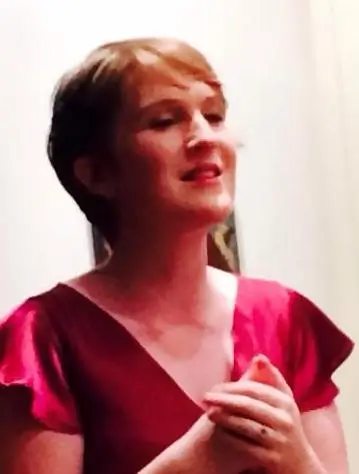
Clare Hayes-Brady is
a lecturer in American Literature at University College Dublin. Her PhD focused
on communication in the work of David Foster Wallace. Other research interests
include the interaction of literature with film; transatlantic cultural
heritage; performative sexuality (both normative and queer), resistant gender
modes and the history of burlesque; digital humanities and modes of
transmission; adolescence in contemporary fiction, and dystopian narrative.
More work by Clare Hayes-Brady


Tel: 028 7126 6946
Email: hueditor@theverbal.co
Verbal, Stable Lane and Mall Wall, Bishop Street Within, Derry/Londonderry, BT48 6PU
 company
Copyright © 2026 Honest Ulsterman