


On the Vaccine
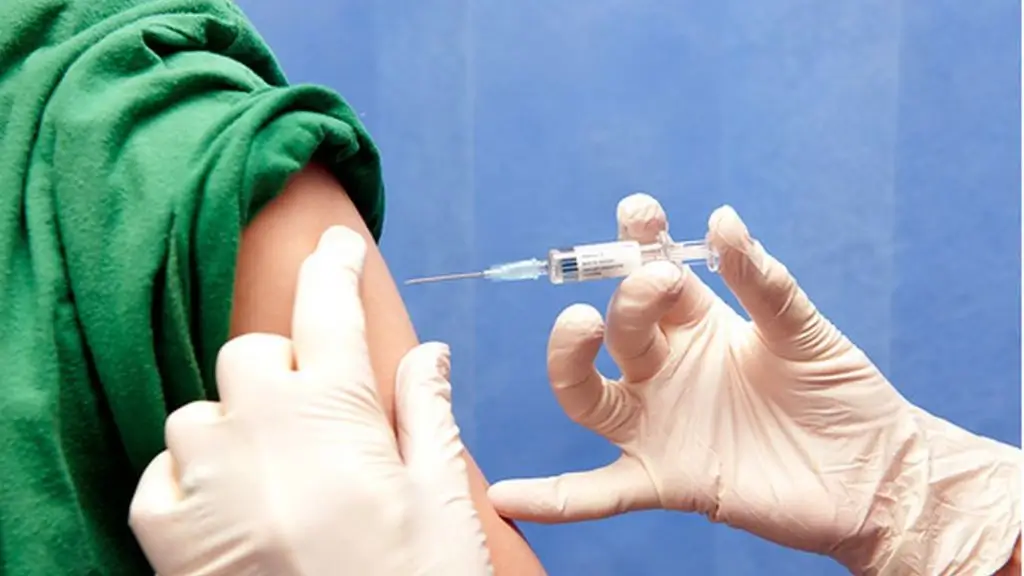
This new vaccine is alternately miracle or poison. Only a bad mother would allow her children to get it, or not to get it. It’s the duty of all right-thinking people to line up for inoculation, or to flee from it. We don’t know what’s in it, we don’t understand exactly how it works – isn’t science wonderful, and terrible? These vigorous arguments might sound like Twitter circa late 2020/early 2021, but the shouting factory operates in a long and appropriately cyclical shadow. What has changed since the early 19th century, with the arrival of the smallpox vaccine is not so much the rhetoric, which is strikingly similar, nor even the basic science, but the rapidity, both of scientific progress and of the circulation of information, for good or ill. A look back over the responses to vaccination programmes highlights the fact that, to steer a major vaccination policy successfully, it is not – and never has been – a simple question of providing the facts to the public. Rather, narratives of class, of politics, of duty and family and social standing, of monstrosity, martyrdom and mutation, clash and coalesce around the changing realities of science and public health. Tracing the kinds of responses that dominate popular media during vaccine rollouts, certain striking similarities emerge. The central roles of family and the local, recurring images of monstrosity on both sides of the debate, and the role of fear all emerge as themes that animate the discussions. Notable too is the predictable pattern of uptake versus mistrust, which follows a clear trajectory around pandemic peaks and troughs in a delicate balance of mistrust, desire and complacency that would not be out of place in one of Netflix’s dark romance series. Hesitancy appears to rise early in a pandemic, fall steeply as the disease takes hold, replaced by broader appetite for vaccination, which is then succeeded over time as complacency sets in, usually on foot of generational shift that breeds a lack of familiarity with the original disease; a good example of this is the decline in recent years of measles vaccine uptake. The same patterns are visible in recent discussion of the emerging Covid-19 vaccine candidates, with the incredible speed at which these vaccines have become available adding a further layer of complexity to the conversation. At the heart of that conversation are all the fundamental questions of humankind; what does it mean to be vulnerable? What does it mean to protect those we love? What knowledge can we trust, and how do we know?
When the first evidence of the possibility of smallpox vaccination was published in 1796, there were immediate, diametrically opposed responses, ranging from awe at the possibility of prevention to fear and hostility at the prospect of intervention. Language of freedom warred with that of duty; narratives of care were deployed on both sides, and the image of the family – and the mother, especially – was weaponised. Ireland’s first vaccination programme opened in short order, with the Foundling Hospital in Dublin under John Creighton in 1800, and given Ireland’s rapidly evolving political situation over the century that followed, it makes a particularly interesting study for the development of a cultural response to vaccination. As the science develops, the emphasis shifts to the “public” in public health. How does information circulate and take hold? The relationships of healthcare are founded in narrative exchange, between doctors and patients, scientists, pharmacists and the communities they serve, between patients and loved ones, between skeptics and believers. It is important to know what narrative forms hold sway at what times, and how to deploy those forms to maximum effect.
There are many different kinds of story that circulate around public health issues; it is rare that the whole of a population is occupied with one thing in the way it tends to be with a pandemic. The collective focus on one thing naturally brings with it diverse, sometimes contradictory responses. The medical and scientific information takes its own form, operating within its own lexicon and relying on its own epistemic structures; it does not cross easily into common language. In the current circumstances, terms like R0, exponent, mRNA, intubation, pronation, sit uneasily on tongues unfamiliar with them. It has been ever thus; specific disciplines of knowledge speak their own languages. What we see, rather, is the adoption of themes, images and ideas into popular forms, where they are fleshed out and addressed through more familiar, and often more visceral, narrative forms. This is a double-edged sword; on the one hand, there is a greater reach, but on the other, nuance – and sometimes reality – is obscured. Examples range from impassioned journalism, both right- and wrong-headed, that seeks to distil “knowledge” into digestible soundbites. Charles Dickens was one of the chief exponents of this during the smallpox period, when the magazine he edited, Household Worlds, used its pages to propound the virtues of science, which was “the concern of all forward thinking adults”, creating an image of the hero-physician, “the most relevant of public servants, the most inspired of spiritual leaders”, as Nancy Metz wrote in 1978. Although, as Metz points out, Dickens was not the writer of these pieces, his editorship of the magazine was of a very public nature, and he was deeply associated with the scientism of the publication. Indeed, the concern with public health that animated the pages of the magazine is echoed in Dickens’ own fictional output, itself profoundly concerned with public health and related questions of class and social justice. As the title suggests, the primary readership of the magazine was composed of women, which follows a pattern of popular media taking up issues of science and health in various guises. At the same moment, we can trace popular fiction forms – also largely marketed to women – addressing obedience to scientific advice as the duty of the right-thinking, and more importantly the socially ambitious. Children’s literature too – again often feminised in its market, read by mothers to and with children and dominated by domestic imaginaries. Across these forms we see motherhood and the maternal figure especially, deployed as a central element in protecting and exposing children to the dangers of pandemic illness; the dutiful maternal instincts of Marmee in Little Women and Nana in The Velveteen Rabbit contributing to the treatment of scarlet fever, with Little Women implicitly nodding to the common sense of the mother over the laissez-faire treatment of the doctor as delaying Beth’s inevitable decline. A contrary example exists in The Secret Garden, where it is the neglect of the mother figure that saves the child, who is saved from cholera exposure only by her parents’ selfish absorption in their adult lives. While such narratives do not explicitly espouse medical theory, they position the family as key to health, and guarding the health of the family as the primary duty of the family, and especially of the mother figure, in a way that seems calculated to orient readers favourably towards public health interventions. Historical novels including Emma Donoghue’s eerily timely The Pull of the Stars also situate the reader and protagonist at an angle to the action – in this case the 1918 flu epidemic – that approaches public health and social justice with incandescent and self-renewing fury.
Another, rather more abstract form that often emerges around narratives of contagion and disease is that of speculative fiction. It is easy to see why; the visceral heft of a post-apocalyptic narrative, where the world has been abruptly reshaped by an unspecified medical Event, is indisputable. A zombie thriller is significantly more exciting than a peer-reviewed cohort study, to the lay reader at least. But, like all popular narrative forms, speculative fiction is powerfully grounded in social anxieties. We might think of Dracula, and its fears over immigration from Eastern Europe; Frankenstein’s anxiety about technological capacity outstripping ethics; Oryx and Crake’s clarion warning about environmental collapse; Station Eleven’s imagination of a swine flu epidemic that reshapes the world. My husband is a front-line medical worker, one of the hollow-eyed, exhausted legions a year into a crisis like they, and we, have never known. Receiving his first vaccine dose last month was like Christmas morning. Hope, cheer, and a little magic was in the air.
Throughout history, we have made gods and monsters of what we do not understand, from creation to death. Stories of the posthuman – or maybe more accurately the metahuman – track across time, with the same features, the same patterns, the same petty tyrannies. These imagined others are by turns cruel and merciful, and fundamentally unknowable to us. Our gods are so often human: Prometheus who brought fire to humanity; Zeus, who conceived and then imprisoned the Minotaur; the Christian God, who created humankind in his own image and then exacted various mercurial punishments on individuals and the world. Our monsters are broadly the same, from the highly relatable Satan of Milton’s Paradise Lost to Frankenstein’s Creature, to those who refuse to rest easily and return as ghosts, zombies, vampires, to finish whatever business they believe is more important than life. Often our own misguided efforts have caused the proliferation of these monsters, be those efforts grounded in a genuine search for knowledge (typical of the mid-twentieth century works of Asimov and others), a thirst for power or cheap labour (the Androids of Dick’s Do Androids Dream of Electric Sheep?) or disregard for the value of human life or the environment (Ishiguro’s Never Let Me Go, or Pauline Melville’s short fiction). Such narratives vary with custom, culture and time, but fundamentally offer us scope and safety within which to explore very real anxieties regarding rights, justice, power and survival. In the stories of monstrous creatures, cut off from society, denied access to the spectrum of human rights, placed outside of humanity though they look, or act, or once were, human, we can imaginatively enter the spaces of the dispossessed – refugees, enslaved people, those living in abject poverty, the disabled, addicted or ill – without the complicating elements of reality. Empathy – having suspended the realities that are too close for comfort – can ironically flourish at a slightly greater distance, and so where we might indeed shun a newcomer to the neighbourhood who looks different and speaks in a strange accent or manner, we can nod sadly over the rejection of Frankenstein’s poor Creature; where we reject the surgical interventions upon bodies bred for that purpose in Never Let Me Go, we nonetheless continue to profit off exploited and exhausted bodies. Sympathy comes more easily than change. It is for this reason that the term metahuman may here be more appropriate than posthuman, which brings with it images of the superhuman, the awe-inspiring – citior, altior, fortior, so to speak. In the term metahuman we can comprehend human as a category of exclusion, a relationship of power; humanity is power. The disempowered are placed beyond, or outside, the human. They are Butler’s ungrievable lives, rather than the organising forces or existential threats. In the face of a pandemic, the emphasis shifts again, and we can trace the emergence of metahuman narratives in real time. Those like myself, with no medical, scientific or data analytics expertise pore over graphs, numbers, snippets of information that do not actually inform us of anything we can use, like runes, or reality television. We speak new languages, and what we know as usual human interaction fades into collective memory, a kind of alien past, replaced by floating heads in pixelated boxes, speaking from the moon, or an exotic beach, or a kitchen. These are our robots. Patients – young, old, healthy and vulnerable crowd hospitals, weakened, baffled, sickening and in too many cases, dying, flanked by healthcare workers who are bruised, exhausted, masked and bee-suited. These are our zombies. Whispers of conspiracy – in the disease, in the circulation, in the vaccination, in the social curtailment, each more outlandish than the last – circulate, shadowed by images of the very rich and powerful with purported agendas that are contradictory and confused. These are our villains. And the disease itself, miasmic, invisible, ubiquitous, hybrid and mutating: this is our monster.
The difficulty with vaccination is that it isn’t a story of science. It is a story of humanity. Our anxiety about the disease, its progress, fatality, treatment and prevention, all emerges at once, and with it complex imaginaries of governing logic. In the end, this is what we seek, with stories of nature and technology beyond our grasp – logic, coherence, predictability. To know a foe is, we think, to prepare to defeat it. Where the knowledge that is emerging (at astonishing, unprecedented pace!) is confusing, or incomplete, or arrives in a language we cannot speak, we flesh it out with narrative forms whose affective heft bypasses the need for full comprehension; thus we have serious conversations about, for example, whether mRNA vaccines change our DNA – DNA, at least, is a familiar term, we know its popular image and how it works in movies about science. Many of us are counting the hours until a vaccine becomes available to us, hoping that it will restore some form of normal human relations. A minority (it seems) are fearful that the vaccine may change or harm us, egged on by the small, vocal minority – a reliable 6-8%, research suggests – who are always, unreachably, opposed to vaccination. For this group, whom I would call anti-vaxxers, a label too blunt for those who struggle with run of the mill fear of the new – the common arguments are that it is an abrogation of rights, freedoms, the sanctified wholeness of the body. This language of purity and pollution has always existed for various bodily interventions, from sex to science, and the echoes of earlier pandemics in contemporary discourse are remarkable, from the flagellants of the Black Death to the magazine monsters of the mother refusing to vaccinate her child against smallpox – to the conjured spectre of autism as a kind of punishment for those who did vaccinate their children against the potentially fatal measles, a conspiracy so mired in ableism, complacency and misunderstanding that it takes the breath away. There are political elements to the argument, too – it is interesting, for example, to see how the political divide in the United States is reflected in attitudes both to the disease and to vaccination, which itself was anticipated in a divided Ireland of the 19th century – that require nuanced understanding of local and regional ideologies to resolve; again, the problem is not one of understanding, but of sensation. In this vein, it is hardly surprising that it is the visceral, affective, highly simplistic narratives that sustain their power, rather than the nuanced, evolving discourses of research and evidence.
In the myth of Pandora’s Box, one of the first horrors to escape is Apate, daughter of night and of dark, goddess of deceit, depicted in Nonnus as flying around the world at great speed. Mis- and disinformation continue to feature as monsters of our own making, just as much as fevered imaginings of disease, conspiracy and the shadowy operations of far-flung laboratory scientists. In the end, like the metahuman narratives that stir sympathy for the dispossessed and misbegotten, it seems that own-voice narratives are one of the truly powerful tools we have at our disposal; voices like Laura Brennan, one of the clearest and best-informed voices of the HPV vaccine controversy in Ireland, whose immense strength was not her knowledge or clarity but the visceral, uncompromising individuality of her story. Since her death, we have continued to see women of extraordinary courage, acting at a time of immense personal difficulty, in which it is hard to imagine wanting anything but privacy to grieve and rage, emerge to tell the same story, to seek accountability and understanding. “I am the reality”, Brennan said, of a woman suffering, and dying, of a disease that could have been prevented by vaccination – a story absolute in its humanity. We do not, as a society, fear clothes, or glasses, or penicillin, in the way that we fear vaccination. In working against fear, anxiety and the stuttering accretion of knowledge, it may help in the crucible of public health conversations, to recognise that we are, always, already, posthuman, and that in accepting our already-accomplished hybridity as really no more exciting than a new pair of shoes, we might find new ways to accomplish the fundamental human task of caring for one another.
Clare Hayes-Brady is
a lecturer in American Literature at University College Dublin. Her PhD focused
on communication in the work of David Foster Wallace. Other research interests
include the interaction of literature with film; transatlantic cultural
heritage; performative sexuality (both normative and queer), resistant gender
modes and the history of burlesque; digital humanities and modes of
transmission; adolescence in contemporary fiction, and dystopian narrative.
More work by Clare Hayes-Brady



Tel: 028 7126 6946
Email: hueditor@theverbal.co
Verbal, Stable Lane and Mall Wall, Bishop Street Within, Derry/Londonderry, BT48 6PU
 company
Copyright © 2026 Honest Ulsterman