


Frankenstein and Maternity

This Hallowe’en, children will knock on door after door in search of sweets. Some houses – decorated, bright, welcoming – will offer chocolate, jelly sweets, home-made spider biscuits, a bounty beyond the wildest sugar-crazed dreams of the urchins who beg for them. Others – dark, cold, forbidding – will not answer knocks or bells, and the hordes will quickly learn not to bother with them. Still others, also undecorated, will open to their first callers and reveal the confused face of either a young adult or, more often, an elderly occupant whose visible distress reveals that they had forgotten the holiday, who will scramble for an eclectic combination of treat – small coins, fruit, mints and so forth. Of the (mostly) small monsters who roam the streets, some will have green faces, clumsily drawn scars and a bolt at the neck – Frankenstein’s monster as Boris Karloff incarnated him on screen in 1931. Although most of them will not be aware of it, this year marks 200 years since the publication of the novel from which their chosen monster springs, what popular culture imagines as the fever-dream of a poet’s teenaged mistress, a horror story that poured out whole and raw after a nightmare, moved by pure inspiration. The reality, as ever, is rather more complicated, and a great deal more interesting.
While Frankenstein was published 200 years ago this year, its genesis was earlier, in 1816. It is indeed true that Shelley was inspired by a waking nightmare, on the night of 16 June as she recorded it in her diary. She was still Mary Godwin at this point, as Percy Shelley was married. His wife would commit suicide later that year, and he would marry his young mistress within three weeks of his wife’s death in the Serpentine. The same winter, Godwin’s half-sister Fanny Imlay died, also by suicide. Famously, her relationship with Percy Shelley had much of its early exposition in the graveyard where her mother was buried, with the highly Gothic rumour that she lost her virginity on her mother’s grave having lost little of its potency in the past two centuries. Sex and death are closely linked in Mary Shelley’s work, as it seems they were in her life, but both are also closely connected to another (literally) visceral experience that haunts Frankenstein – pregnancy and maternity. Godwin’s mother, Mary Wollstonecraft, died shortly after giving birth to her daughter, a loss that shadowed the author’s life. Even prior to her death, Wollstonecraft was deeply ambivalent about both marriage and maternity. She and Godwin married to give legitimacy to their children (he displayed a rather greater proclivity for matrimony than she did, marrying again not long after her death), and while in labour with Mary she wrote to her husband of her expectation that she would see “the animal” that day. Mary herself bore four children; all but one of them died in early childhood. The first of these losses took place in March 1815, when she gave birth to a daughter, Clara, at seven months’ gestation. Clara died eight days later, and she wrote some days afterwards in her diary that she had dreamed “that my little baby came to life again; that it had only been cold, and that we rubbed it before the fire, and it lived. Awake and find no baby. I think about the little thing all day. Not in good spirits”. The understated grief of the passage is deeply affecting, but more than this, it is impossible to ignore the resonances of Frankenstein, which she would begin writing the following year. She gave birth to her second child, William, several months before commencing work on Frankenstein, and to her third, a daughter also called Clara, about four months after completing it. Between the two editions of the novel (1818 and 1831), Mary would lose both Clara and William within a year of each other, as well as suffering a miscarriage in 1822 resulting in a near-fatal haemorrhage for her just two weeks before her husband’s death.
With all this in mind, it seems surprising that the bulk of critical takes on Frankenstein continue to read it more or less exclusively as a fable of scientific hubris. While, like any novel, reading Frankenstein solely through a biographical lens is restrictive and ultimately not particularly useful as a critical exercise, considering the novel as also in part a meditation (and a raw one, at that) on maternity enriches the many other elements that underlie the work, from the progress of science to the question of slavery.
I once heard a lecturer memorably describe Frankenstein as the narrative of two penises chasing a third, larger penis around the world, and while this description is apt in its own way, when it came to teaching the novel, I wondered how reading its maternal motifs might expand my understanding of Shelley’s Gothic tour de force. The novel rewards such attention right from the beginning; it is subtitled The Modern Prometheus and opens with an epigraph:
Did I request thee, Maker, from my clay
To mould me man?
Did I solicit thee
From darkness to promote me?
The words are spoken by Adam to God in Book 10 of Paradise Lost. Putting together these two intertexts is suggestive of Shelley’s intentions regarding the focus of the novel (although it is important to note that the epigraph was excised from the 1831 edition). Beginning with the novel’s subtitle, there are several iterations of the Prometheus myth, but Shelley had studied Ovid’s The Metamorphoses and referred to it in a diary in 1815. In Ovid’s account of the Prometheus myth, the focus is not so much on Prometheus’ gift of fire to humanity as it is on Prometheus’ creation of man from earth. Zeus obliterates the human race in a flood, and the son of Prometheus, Deucalion, imitates this mode of reproduction, fashioning new descendants from clay. Genevieve Lively writes that Prometheus’ combination of earth, air and water to produce life “represents the re-embodiment of chaos” and that Deucalion is “overtly censured for turning to artificial means of reproduction”. Taking Frankenstein’s subtitle as a reference to Ovid’s Prometheus, then, we see echoes of the explicit condemnation of “scientific” means of reproduction. Moving on to the novel’s epigraph, the same creation narrative is invoked – the creation of man from clay – and again explicitly condemned, this time by the creature itself. So, both intertextual references invoke the “unnatural” creation of life from clay and both refer to narratives that occlude and excise the centrailty of women in reproduction. The epigraph invites the reader to approach the narrative from the perspective of the creature, setting the novel in tension with its title, which seems to centre the creator; the common thread between the two is the elision of the feminine. Throughout the novel this pattern is repeated in numerous ways, both overt and covert. One crucial theme is the often violent silencing of the novel’s female characters. Those feminine characters that do appear in the text, chiefly Elizabeth Lavanza, who is murdered before her marriage to Frankenstein can be consummated, and Margaret, Walton’s sister, to whom his letters are addressed, are radically desexualised, their relationships to the text’s protagonists mediated as specifically familial. Between the two editions of the text, the blood relationship between Frankenstein and his bride is diluted to a sort of foster-sibling relationship, withdrawing from the (unconsummated) suggestion of incest in the original text, and this relationship is echoed in the one between Felix DeLacey and the Turkish Safie, the only female character with anything approaching agency. She, too, is a foster sibling of sorts, and her betrothal to Felix is also interrupted by the Creature’s appearance, after which she exits the narrative. Victor’s mother, whom we never meet, dies of scarlet fever; the family’s maid, Justine, is wrongly executed for murder. Even where he is not actively violent, the Creature’s appearance is associated with the departure – narrative or mortal – of femaleness. Besides the literal destruction of the feminine, and in keeping with the disruption of familial bonds, the first direct victim of the Creature’s frustration and wrath is a child, Victor’s brother William.
Apart from the elision of women and children, the structure of the novel fundamentally offers a homoerotic triangle of flight and pursuit among Walton, Frankenstein and the Creature, where the men seek after glory and knowledge without regard for (or rather with a dismissive acknowledgment of) the danger to themselves and others. Victor’s pursuit of the knowledge he uses to create the monster is couched in his own narrative as a scientific quest, an intellectual passion, and is largely understood in these terms, but in the novel the passion for this knowledge is strongly associated with the illness and death of the women in Frankenstein’s life; his departure for university is delayed by his mother’s death and it is after this that he develops his obsessive interest in “the principle of life”. Indeed, on the night he achieves his goal he dreams of both his future bride and his late mother, with specific reference to death:
I thought I saw Elizabeth, in the bloom of health, walking in the streets of Ingolstadt. Delighted and surprised, I embraced her, but as I imprinted the first kiss on her lips, they became livid with the hue of death; her features appeared to change, and I thought that I held the corpse of my dead mother in my arms; a shroud enveloped her form, and I saw the grave-worms crawling in the folds of the flannel.
In other words, Victor’s pursuit of intellectual advancement, his scientific application, is galvanised by the death of his mother, and indeed ultimately bookended by the death of his wife. Further, this quest for knowledge divides him from his family; his lack of contact with them during the period of his study is repeatedly commented upon. Each iteration of family that we see in the novel – the Frankensteins, the DeLaceys and to a lesser degree the Waltons – is damaged by the incarnation of Victor’s creature. Frankenstein and Walton are both severed entirely from their families through their actions, and the DeLaceys, the novel’s paragon of familial harmony, see their home destroyed for a second time. Structurally speaking, throughout the novel, the pursuit of intellectual mastery of the world, as iterated in the Creature, is deeply anathema to the idea of mutually supportive society as symbolised, however imperfectly, by the bonds of family. The idea of domination over nature is shown to be fanciful and fatal by both Frankenstein and Walton, who works in many ways as a reflection of the man he rescues from the sea. Harmony with nature, when we see it in the dispossessed, aristocratic De Laceys and in Victor’s recollection of his early life, is the most appealing existence the novel shows, portrayed as beautiful, peaceful and desirable, even to the raw spirit of the Creature. Victor’s move to Ingoldstadt – away from his family and away from his bucolic home – is the first step in his downfall. The association, then, of motherhood with happiness, stability and nature, is disrupted by Victor’s evasion of natural reproduction, as it was by Deucalion in Ovid’s The Metamorphoses, with fatal and enduring consequences.
Victor’s own account of his work is striking, too, for its recurrent use of language and imagery associated with pregnancy and birth. While his desire to “infuse a spark of being into the lifeless thing that lay at my feet” echoes Ovid’s account of Prometheus’ creation of man, which Dryden rendered as
Whether with particles of heav'nly
fire,
The God
of Nature did his soul inspire;
Or
earth, but new divided from the sky,
And,
pliant, still retain'd th' ethereal energy;
Which
wise Prometheus temper'd into paste,
And,
mix't with living streams, the godlike image cast...
From such
rude principles our form began;
And
earth was metamorphos'd into man.
Dryden’s translation is full of references to fire, energy and great change, echoed in Frankenstein’s description of the “spark” of life. This repeated image is a clear invocation of galvanism, relatively new at the time of Shelley’s writing, and also echoes the dream she had of her baby coming back to life. Frankenstein’s references to energy, to electricity and current and mechanism, give his grisly project a scientific veneer, but there are several phrases around the same part of the novel that evoke pregnancy and birth. At the end of Chapter 4 of Victor’s narrative, he speaks the following phrase: “Winter, spring, and summer passed away during my labours”. We know that he is at least two years into his studies, but his particular focus on creating a being is of shorter duration. The passage of three seasons – winter, spring and summer – amounts roughly to the duration of a pregnancy, and this chapter is striking for its repeated use of the word labour. The word occurs 34 times in the novel as a whole, six times in this chapter alone and used almost exclusively by Frankenstein to refer to this specific undertaking and its consequences. Upon the point of breathing life into the Creature, Frankenstein describes “anxiety that almost amounted to agony”, and the emotional turmoil of his response to the Creature – “the wretch whom with such infinite pains and care I had created” – are certainly more visceral than scientific. Victor’s is the suffering of a complex kind of maternity.
The immediate revulsion that the Creature inspires in his creator may be taken as a repudiation of that parental bond the rest of the passage seems to avow, but its very fervour is arguably testament to the maternal emotional attachment of Victor to his project. While Karloff’s 1931 portrayal of the Creature – green of skin, misshapen of skull – is the one that lives in the cultural imagination of Frankenstein’s monster, the Creature as he is described does not sound so very hideous:
His limbs were in proportion, and I had selected his features as beautiful. Beautiful! Great God! His yellow skin scarcely covered the work of muscles and arteries beneath; his hair was of a lustrous black, and flowing; his teeth of a pearly whiteness; but these luxuriances only formed a more horrid contrast with his watery eyes, that seemed almost of the same colour as the dun-white sockets in which they were set, his shrivelled complexion and straight black lips.
The yellow skin, the black lips and the watery eyes are the greatest horrors Victor describes, and we know that the Creature is over eight feet tall. Apart from begging several questions about what kind of skeleton, human or otherwise, Victor had used to construct his Creature, there is no clear evidence that he is monstrous to look at. In fact, Jill Lepore argued earlier this year in The New Yorker that the Creature is strongly racialised, figured as African in contrast to the Enlightenment figure of the white European man, noting his height and capacity to bear extreme temperature. She further points out that the Creature was invoked by the Foreign Secretary George Canning during Parliament discussions of Abolition at the time, and that even in the 1931 film, the monster’s eventual lynching marks him out as black. Reading the Creature as an emblem of slavery also feeds into the reading of family disruption; it was common practice for children born into slavery to be separated from their mothers in infancy or young childhood. Victor’s horror at beholding his creation is explicitly figured as internal: he is “unable to endure” looking at the Creature, but again the objective horror of his countenance is unclear. The horror is that the Creature is unnatural, uncanny, not that he is merely ugly or monstrous to behold. His monstrosity inheres in his very closeness to humanity, he is the embodiment of the uncanny valley, the point at which the sublime takes over and we cannot reason away our horror and disgust.
Various readings of Frankenstein have rightly noted its criticism of Enlightenment discourses of rationality, science and progress. Remarkably, MIT Press published an edition of the text last year, explicitly aimed at scientists. The novel in this edition is “annotated for scientists, engineers and creators of all kinds” and aims to highlight “its scientific, ethical and cautionary aspects”. It is edited by three men, all of whom work specifically in scientific disciplines (although one of them, Ed Finn, has a PhD in English). The edition contains numerous essays by excellent scholars and authorities on the text, but there is something faintly ironic about a novel that works so hard to show the dangers of pure scientism and of removing women from the business of advancing the species being so edited in its bicentennial year. Frankenstein is not only a novel about motherhood; it certainly does explore and challenge the doctrines of social and scientific progress of its time, but its central narrative is also about the silencing and sidelining of female experience, about the complexities and dangers of birth and about the moral and emotional difficulty of bringing a child into the world and what happens after that. Reducing the novel to an exercise in mourning is unhelpful, but neither should we reduce it to a fable about the dangers of intellectual hubris. Mary Shelley wrote a remarkable and vital account of what it is to create a life, and a searing tragedy of what it is to abandon that creature to its fate. At its heart, this is a novel about all kinds of creation – scientific, reproductive and literary. The hideous progeny she launched into the world is perhaps most remarkable for the breadth of its resonance. Monstrous, solitary and destructive, it appears that we all see ourselves in the Creature and our works in the scientist.
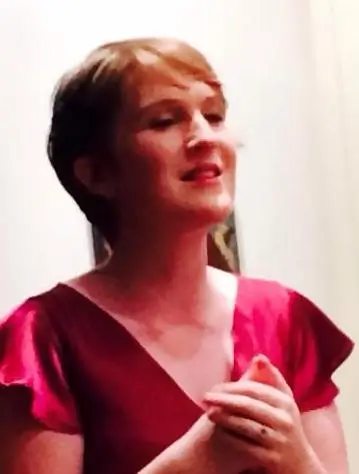
Clare Hayes-Brady is
a lecturer in American Literature at University College Dublin. Her PhD focused
on communication in the work of David Foster Wallace. Other research interests
include the interaction of literature with film; transatlantic cultural
heritage; performative sexuality (both normative and queer), resistant gender
modes and the history of burlesque; digital humanities and modes of
transmission; adolescence in contemporary fiction, and dystopian narrative.
More work by Clare Hayes-Brady


Tel: 028 7126 6946
Email: hueditor@theverbal.co
Verbal, Stable Lane and Mall Wall, Bishop Street Within, Derry/Londonderry, BT48 6PU
 company
Copyright © 2026 Honest Ulsterman