


Clockwatching and Coronavirus
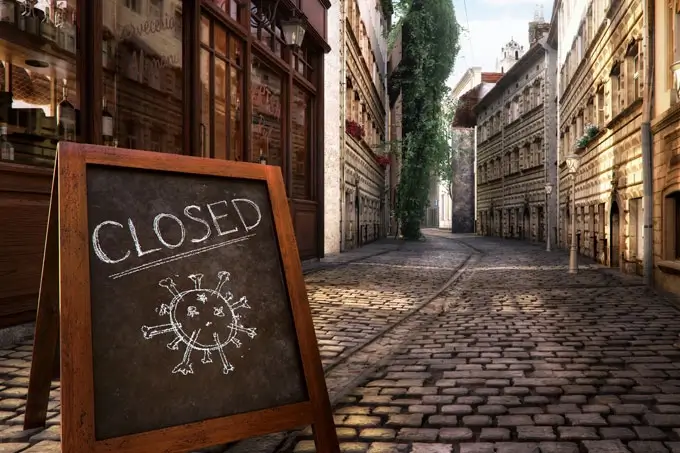
“Billy Pilgrim has come unstuck in time”. Kurt Vonnegut’s traumatised, baffled, frightened WWII veteran’s loss of purchase on his surroundings, his surrender to chaos, anxiety and managerial aliens, cuts a pathetic and familiar figure on the pages of Slaughterhouse-5. His inability to control his progress through the world at the most basic level of temporal stability – he falls through time without warning at various points – brings the reader into his trauma, jostling and pushing us around to distant points in space and time. The novel uses this unstuckness, this unwanted movement in time, to reflect on the experience of life after trauma. Likewise, Toni Morrison’s Beloved imagines its way from the Middle Passage to post-Civil War Ohio, and indeed to posthumous activity, in the same breath. Non-linear time is a familiar feature of contemporary literature, television and film. David Foster Wallace’s Infinite Jest runs along a complex circularity with an absent vital connection, a frustrating Mobius strip of narrative; Jennifer Egan’s A Visit From the Goon Squad flashes between voices, places and times to show the altogether mundane trauma of aging. Last year’s television series Russian Doll imagines a time loop that both allows the protagonist space to develop and invites the viewer to think about the nature of narrative and experience, and how the ways we tell our stories affect the ways we live them. These and other narrative forms have been on my mind since March 2020 – the 12th, to be specific – when it was announced that schools and childcare facilities would close in an effort to limit the spread of the novel coronavirus CoVID-19. The intervening 92 days (not that I’m counting) have been an ongoing experiment in chaos for me as I juggle work, parenting and the outside world. Time is indeed out of joint. Reflecting on this period as it passes, what strikes me most is the ways in which time has changed; more accurately, the multiple simultaneous ways, often contradictory, in which I have experienced time over the past 13 weeks.
A little personal context: I teach in a university in Dublin, which, like other institutions, moved to remote instruction in March. I have two pre-school aged children, who are charming agents of total disorder (one of them is actually nicknamed Mayhem). I am married to and living with a hospital doctor, a respiratory physician who has been working on the front lines of the pandemic response. I am a total and unabashed extrovert, extremely sociable and usually extremely busy. Each of these strands of experience has demanded a different response to the sudden shift in experience, and in each case I have experienced time differently. What is particularly interesting to me is that these widely different experiences of time have also been simultaneous, because the elements of my life that had heretofore been overlapping but separate, complementary, suddenly all came rushing together. The boundaries of my existence suddenly fell, as I – like most of us – was confined to home. Carefully developed routines toppled and schedules evaporated, and I began to realise how much these things structured the not only my experience of life, but my understanding of time itself. The pandemic rages on around the world, and seems unavoidably set to change the world in irrevocable and as yet murky ways; this obscurity, I think, is exacerbated by the competing strands of temporal experience that have become the syncopated rhythms of 2020. On the one hand, the world has seemed frozen in recent weeks, with empty buses ghostlike ploughing empty streets, adorned with ads for now-cancelled events. Posters in the city centre from before its harrowing invite us to sales, concerts, movies, a colourised Pompeiian snapshot. The dates are jarringly recent – mere yesterdays. The quality of this juxtaposition is hauntological rather than traumatic, as such, in that the sense of being stuck in early March is not a repetition but an immobility, not cyclical but simply stuck. On the other hand, that world seems wholly lost to me, a time unimaginably far off and strange. Watching recently released television shows, reading books that have come out in the past few months, I recoil in a visceral way from scenes of gathering - parties, festivals, funerals. I react with new, dreadful anxiety to images of strangers embracing. Waiting in the now familiar queues for a local shop, an elderly man came close enough to me recently to tap me on the shoulder, an action that left me genuinely reeling with horror. The immensity of the change in social behaviours belies its pace; it is almost inconceivable that so much has changed so fast, and so I feel at a deep level that it cannot have been as fast as it has been. Time is stretched to accommodate its mass. This juxtaposition, which I can’t quite make room for, has been accompanied for me by a kind of grief for what has been lost. Not only the thousands upon thousands of deaths, the millions – billions? – of irrevocably altered lives, the traumatised hosts of health workers – the many very concrete tragedies and troubles – but the bereavement of an abstract life, the loss of the shape of a future, though not in my very fortunate case of the future itself. It is a peculiar, distant kind of grief, especially measured against the much more immediate and poignant griefs of both the pandemic and the passion-filled protests around the world against systemic racism, white supremacy and police brutality. These protests also warp time, reaching back to the vital histories of uprising and social change, a new line of propulsive melody in what seems like an eternal song. The sense of history that accompanies these protests is underscored by the incantation of the names – Breonna Taylor, George Floyd, Riah Milton, Tony McDade – whose lives have been ended, the loss of their time layered and centred. The eight minutes and 46 seconds of George Floyd’s killing have become emblematic of an eternity of final moments, the exact count of seconds imbued with meaning in repetition throughout the world, shadowed by the knowledge that no moments of silence could ever approach the endlessness of those seconds in his life. Again, time and timing are key threads of understanding; the sweep of Black Lives Matter protests in Pride month reminds us of the interconnectedness of so many forms of struggle, each with their distinct character. Critics murmur that “now is not the time”, voicing anxieties about gathering at a time of high risk of infection, not seeming, often, to realise that this gathering is only evidence of the significance of the menace against which the protests are set. The privilege of worrying about illness instead of racism, rather than illness compounded by racism, affords those of us whose daily lives are not threatened by both to talk about timing as though it can be chosen, as though there would not, always, every time, be another reason not to speak up now. “Now” is a great and terrible weapon, a reasonable concept, a brief moment of deferral that is always renewable. Past and future collapse together in a suspended and endless present; now will never be the time, and the deferral of the “right” time is a weapon against change. The protests around the world operate in recognition of this fact, in defiance of the deferral as much as of the threat of disease.
Of course, in a more abstract way, now is never the time at all. Writers and theorists have attempted to come to terms with time throughout human history, from Zeno’s paradox, in which there is always a moment before, to Macbeth’s yesterdays and tomorrows, to Madeleine L’Engle’s tesseracts and Margaret Atwood’s sometime futures. To imagine a now is to remove oneself from it; Kierkegaard articulated this as the role of the artist, to look back at their generation while also in step with it. Now exists exclusively outside of experiential time, referring variously to the immediate future, immediate past or observed parallel events. In Time and Narrative vol. 3, Paul Ricoeur wrote about the preoccupation with time that characterises narrative in various ways. He wrote that “the hypothesis that governs out inquiry [is] that the effort of thinking which is at work in every narrative configuration is completed in a refiguration of temporal experience”. That is to say, every narrative involves time – the time taken to read it, the relationship to the time represented, the change in orientation to the time after reading, and the aporetics of temporality, which broadly refers to the irresolvable conflict between universal and lived time. 2020 has thus far been a masterclass in the aporetics of temporality, seeming simultaneously eternal, atemporal and hurried. The “now” of 2020 is breathless and contradictory, perpetually whipping our attention away. Narrative – especially creative narrative – offers both a way of imposing logic and form on an inchoate reality (a happened, then b and therefore c) and a metonymic structure of experiential time, in which we observe the now of the text as it passes. There are two simultaneous experiences of time at work in reading – the now of the reading and the now of the text. The reader is aware of the now of the text, which can pull us all over time and space, but generally less conscious of the now of the reading. One of the tricks of literature is to return the reader to that level of now, commonly through metafictional devices that remind us that we are reading, sending us briefly to observe our own activity as we observe the activity of the text, placing the two experiences of now into contact, metonymically reminding us of the experience of extra-narrative time, where we chiefly go through time without being aware of it as such, and periodically are reminded of the inexorable passage of time, through a memory, the glimpse of a changed face, the loss of a landmark. These things are traumatic not for what they are in themselves, often, but for their capacity to remind us of our movement through time. Moments of being pulled out of time, like Billy Pilgrim, bring home to us again the fundamental lack of agency that underpins our experience of the world; we may control – or feel that we control – certain aspects of our lives, but the governing framework is beyond both control and understanding, speeding, slowing and lurching in unpredictable bursts.
Children are particularly powerful temporal reminders, in more ways than one. Seeing a young child’s new tooth, or remarking on the immense change in a friend’s child in the time since you have seen them last, these are common reminders of the passage of time. Children, and parenting, especially parenting young children, operate in a kind of endless present that ranges from the delightful to the deranging. Certainly parenting happens on this level – hours and days pass in a blur of feeding, changing, soothing, cleaning, while night wakings take on an endlessness worthy of Dante’s Inferno. But being home with my children for these months has reminded me too of the fundamental now-ness of childhood; babies and young children have so little understanding of the abstract concept of time that it is impossible to do anything but live in the slipstream of their presence. Watching my children play, the urgency with which they imagine and move, I remember that they live so much in the present that there is no need to name it. Children’s books are nothing but present, richly representing a universe of infinite simultaneous nows. For me, this forced retreat to the immediate has been mostly joyful, filled with movement and meaning that has pulled my attention back again and again from the haunted, unfolding world outside. But it has been because my husband has been working in the hospital – his days busier but broadly unchanged from their pattern of travel to and from work, its rituals and routines repeated in a different key but melodically familiar – my children have been included in work meetings along with those of several others. The interstitial moments of conversation in hallways are replaced by the curious intimacy of colleagues’ domestic spaces, so the relationships built up in hallways, offices, cafes and classrooms are changed and another boundary collapses. Time billows again, swallowing the distinction not only between my work and non-work lives, but those same distinctions in my friends and colleagues. There are, I know, those who are better at demarcating their time when it is not demarcated by space; I know of people who factor a commute into their working from home setup by walking around the block before and after their day’s work commences, those who dress formally, those who sit always and only at their desks at home. I am not one of these disciplined people, and work variously from the desk I am fortunate enough to have space for, the bed, the couch and the kitchen table, depending on where else my attention is focused at a given time. This migratory pattern has made me understand how my awareness of time is predicated also on my location. The days of working at home are the same length as those in the office – longer, even, in the absence of the long commute – but so fragmented by the intrusion of the other parts of life that I experience the time in short bursts. Seeing flashes of the same fragmentation at work in other lives, my sense of shared time is also disrupted, as though I and my colleagues are operating not in one metaphysical space but in many, like the discrete planets of The Little Prince, each with its many sunsets, monadic and absurd.
Beginning to consider this phenomenon in the brief instants of unfilled time that have begun to emerge in recent weeks, I have remembered other periods of my life where the experience of time has shifted radically, from the endlessness of the childhood summers of memory to the peculiarly telescoped time of semesters at university, from the final, electronically-punctuated moments of a grandparent’s life to the everlasting instant in which a danger becomes evident. Driving home late one night in the rain, stopped at a traffic light with a car behind me and a car next to me, a Mercedes without lights on took an oncoming corner at speed and skidded towards me, squealing to a halt a few yards away. Those seconds took aeons, and in the silence after the car stopped I sat totally still with my hands on the steering wheel, certain that time had stopped, and that if I moved at all it would all begin again. That moment in the dark and the rain has come to mind during this period when the different streams of time get muddy, flowing through and over each other, and when the story of the streams is the only way to make sense of the experience. Looking back on the spring and summer of 2020 will be an unfolding work of narrative, of interpretation and the excavation of a logic that is currently indistinct. The points of clarity are uncompromising – names and numbers of deaths, fevers and coughs, stories of job loss, homelessness, fear. I am lucky enough to have been insulated so far from these still points in time, and so my experience of the time has been almost wholly indistinct, geographically fixed and temporally fluid. Like the protagonist of “The Yellow Wallpaper”, confined to a room and unable to work, days bleed together and stretch beyond imagining, weeks are gone without distinguishing features. The new meaninglessness of weekends calls into question many of the very structures upon which our lives are predicated, inviting thoughts of a full renegotiation of advanced capitalist time. Patterns of sleeping, eating, working, socialising have slid and stretched. Opportunity and anxiety weave in and out of each other; some things that are lost will be mourned, some replaced by better things. It is, as they say, an interesting time.
Clare Hayes-Brady is
a lecturer in American Literature at University College Dublin. Her PhD focused
on communication in the work of David Foster Wallace. Other research interests
include the interaction of literature with film; transatlantic cultural
heritage; performative sexuality (both normative and queer), resistant gender
modes and the history of burlesque; digital humanities and modes of
transmission; adolescence in contemporary fiction, and dystopian narrative.
More work by Clare Hayes-Brady


Tel: 028 7126 6946
Email: hueditor@theverbal.co
Verbal, Stable Lane and Mall Wall, Bishop Street Within, Derry/Londonderry, BT48 6PU
 company
Copyright © 2026 Honest Ulsterman