


reading the perpetual crisis of masculinity
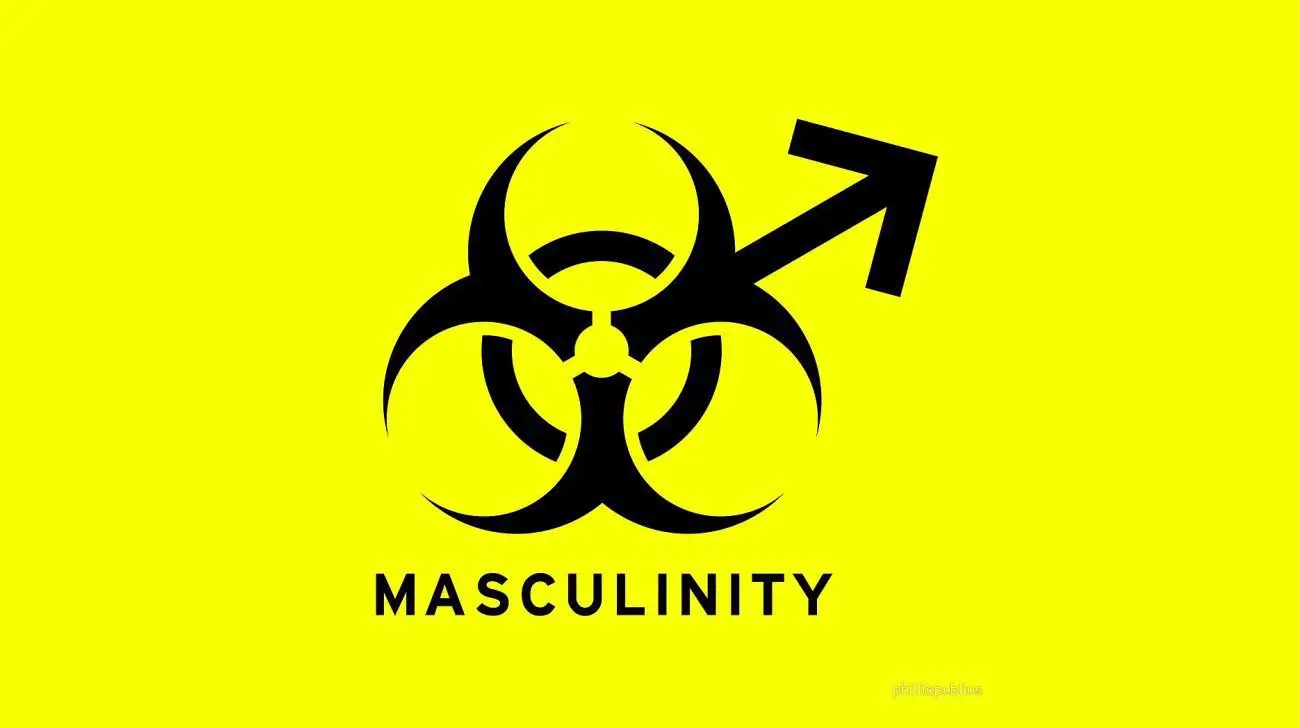
“One is not born, but rather becomes, a woman […] it is civilisation as a whole that produces such a creature” - so wrote de Beauvoir of the social construction of womanhood. It may seem strange to begin an address on masculinity in crisis with a reference to categories of womanhood, but it’s instructive to consider for a moment the spaces around this quotation. If civilisation as a whole is responsible for producing - or creating - the woman, what is responsible for the man? De Beauvoir’s argument here suggests that manhood is - if not natural, perhaps - normative, at least. If womanhood is created by civilisation it cannot be of civilisation, which is therefore in some way non-woman. Manhood, maleness and masculinity - quite distinct terms, I think - are the guiding structures of most human societies throughout history, as a glance through any competent history attests. More recently, you may have noticed the whimper of outrage over a professional services firm that reportedly told women attending an “empowerment seminar” that they should not flaunt their bodies, and that they have “pancake brains” (men, you will be relieved to hear, have waffle brains, which allow knowledge to pool in the channels. This is science.)
The UN’s Gender Index, the first tool of its kind, which assesses gender equality across 129 countries, indicated this year that not one country was on target to achieve gender equality by 2030. Women and girls are more vulnerable to climate crisis, to violence and to economic instability and poverty. Gender inequality is complex and persistent; interestingly, while it is true that on balance higher-income countries score more highly on gender equality than those with lower incomes, this is not always the case; “No one country is the world’s best performer – or even among the world’s top ten performers – across all goals or all indicators”, and several lower-income countries outscore higher-income nations on women’s participation in government and judiciaries, on access to reproductive healthcare and on women’s safety. This is an oversimplification of the available data, but my point is that gender equality remains a distant goal, and this inequality is woven through the very fabrics of contemporary global society, and this, for me, is key to understanding the rhetoric of crisis that pervades discussions of masculinity. What I want to do here is to consider the history of this rhetoric, look at its operation in contemporary culture and think through the structures that perpetuate it. I’m interested in the disconnect between the manifest centring of the world on the masculine subject and the perception that that same masculine subject is somehow being radically decentred. I’m particularly interested in discussing who or what is served by this perpetual rhetoric of crisis.
It is, as Mr Brown noted, a man’s world. This fact ramifies in myriad ways in contemporary society, from crash test dummies and resuscitation models to menstruation poverty, medical dismissal and the domestic mental load. The world as it exists now, and as it has existed throughout most of history, is a male world. That is to say, it is designed and built, physically and metaphysically, to accommodate the male body and the male subject. The patriarchal structures that have governed the transfer of power, wealth and security, both overtly and covertly, for millennia, are a direct result of this design. The systems of patriarchal power transfer have come to be codified into what we call society, which constructs appropriate gender and sex roles as a means to perpetuate these systems. Masculinities and femininities are inventions of male (or male-coded) society, mechanisms of control that in large part emerge from the desire to transfer wealth. They are, in other words, fundamentally economic categories for the purposes of what I want to talk about here (although there are of course many other ways of considering, understanding and inhabiting them). The intersections of categories of both privilege and marginalisation give rise to almost infinite permutations of possible forms of crisis of and in masculine identities, but scaling up it becomes clear that what are termed masculinities constitute a wide variety of cultural practices; what we have seen today are discussions of types of masculinities that move beyond hegemonic, including what Connell and Messerschmidt would call both subordinated and complicit masculinities. While I want to draw on these discourses, I’ll primarily be discussing the operation and representation of hegemonic masculinity, and primarily white hegemonic masculinity, although again I want to talk about the nexus of racialised and gendered logics of identity. Specifically, I’m interested in looking at the ways in which contemporary hegemonic masculinity depends upon and reproduces the market logics of neoliberal capitalism. That is to say, I want to explore the continued aspirational representation of hegemonic masculinity (and, by corollary, the undesirability of deviation from these behaviours) as it has evolved alongside forms of labour and capital.
In considering this relationship, it’s important to talk about the operation and purpose of crisis rhetoric more broadly, and the reification of masculine-coded virtues as elements of representation, and ultimately come back to what I see as the crux of this argument: individual masculinities do experience crisis, but the broader narrative of masculinities in crisis mirrors the rhetoric of hegemonic masculinity itself, working as a form of social control that exists and operates in the service of capital, most recently but not exclusively patriarchal capitalism. So, what do we talk about when we talk about masculinities? The theory of multiple masculinities was first articulated in the article “Toward a New Sociology of Masculinity” in Theory and Society in 1985 by Carrigan, Connell and Lee. I mentioned a few moments ago that it is a man’s world, and that manhood, maleness and masculinity are different terms, and Carrigan Connell and Lee’s preliminary observations in their article were that while “most social science is indeed about men, good-quality research that brings masculinity into focus is rare”, and that the “political meaning of writing about masculinity turns mainly on its treatment of power”. The authors observe that the sex role models of masculinity that dominated in the 1960s and 70s are contradictory, depending on how you read the data: men either are or are not fundamentally aggressive, ambitious etc. Hegemonic masculinity as Carrigan, Connell and Lee defined it is performative: it is both psychological and institutional, characterised by its power relations with other forms of masculinity, with homosexuality, and with forms of femininity. Thirty-four years on, we must add that hegemony masculinity is further complicated by its relationship to bisexuality, queer, non-binary, trans and gender non-conforming identities. Masculinities, then, as we might most clearly understand them, are mutable, malleable, socially enforced codes of behaviour and relationships of power. Hegemonic masculinity is “a question of how particular groups of men inhabit positions of power and wealth, and how they legitimate and reproduce the social relationships that generate their domination” – which could be read as a description of patriarchal capitalism as well as hegemonic masculinity. Of course, this form of capital reproduction in contemporary western culture is also predominantly white, and these power dynamics are underpinned by imperialism and white supremacy in complex ways. Hegemonic masculinity is predicated on the subordination of non-normative identities, in which category non-white masculinity falls, from the fantasy of hyper-masculine threat represented by the black male body to the imagined effeteness of Asian men throughout imperial, colonial and modern history, as Jackson and Balaki note in the Introduction to their collection Global Masculinities and Manhood. In Between the World and Me, Ta-Nehisi Coates writes of the complexities of living in a black body in America, and of his fear for his son, who “must be responsible for [his] body in a way that other boys cannot know” and who must also be responsible for the bodies of those who can hurt him, since the world designs and rewards the exercise of that institutional power. Coates’ body, simultaneously legible as both agentic threat and disposable object in this system of patriarchal state and street violence, is under persistent threat from white-coded dispossession. The final section of the book opens with a quotation from James Baldwin about “people who believe themselves to be white”, and Coates transfigures this belief into what he calls the Dream, the national fantasy of innocence and hope, characterised by a deep unwillingness to confront racism. He traces the metamorphosis of Jewish, Italian and Irish immigrants from Other to White, demonstrating the shifting nature of racist normativity. In this vein, Coates notes that some of the police officers enacting violence on Black bodies are themselves black, which ironically underlines the artificial nature of whiteness as a category, and highlights its institutional embeddedness; social power is coded as masculine and as white, categories that are ostensibly delineated by physicality but are in fact governed by performance. Similarly, individual women are admitted to the relative privilege of masculine-coded identity by engaging in exaggerated displays of masculine-coded behaviour coupled with overt or covert repudiation and/or suspicion of feminine-coded practices. This admission is often quite literal – such women are frequently (approvingly) described as “one of the boys”.
Another example of how the normativity of white heteropatriarchal heroism has recently been coded is in what Hannah Hamad has observed as the valorisation of postfeminist fatherhood. A particular subsection of this trend is the disaster movie in which a father estranged from his children sacrifices himself – explicitly on behalf of his children – to save the world. The father is always coded as extravagantly masculine – muscular, taciturn, hard-drinking and inarticulate – but he is redeemed and the planet saved by his ultimate expression of love for his children. The clearest examples are two films from the turn of the 21st century, Independence Day and Armageddon. In both cases, at the moment of the father-hero’s death and redemption, there is an explicit passing of authority, to the would-be husband of Bruce Willis’ character’s daughter in Armageddon, and to the President of the United States, himself a father and recently-bereaved husband, in Independence Day. A less swashbuckling example is Cormac McCarthy’s The Road, where the father passes his son into the care of a new family having shepherded him through the dangers of a world after the fall of western civilisation (signified rather pointedly by a lone can of Coke). In all these cases, the sacrificing father is a hypermasculine white man, who overcomes the existential threat to his children by means of violent intervention. We might read more recent cultural production in the same way; Breaking Bad, for example, begins as the effort of a failing father to protect his family from financial ruin; Succession revolves explicitly around the intrafamilial transfer of socially-significant wealth. We might also consider the ongoing reality television series playing out in the US and the UK regarding white masculinity, wealth and social control – the families Trump and Rees-Mogg are particularly good examples. Masculinity is intimately tied to economic power, and in contemporary culture it is even more specifically associated with patriarchal capitalism and the safeguarding and transfer of capital assets. This is true across different racial and cultural contexts, but is particularly seen as a normative virtue in the case of white protagonists.
While these examples are widely different, and each come with a complex set of intersecting issues, they coincide in pointing out the valorisation of white hegemonic masculine violence as representations and enforcers of an fantasy set of cultural ideals, as a civilising, controlling force; the perpetual historic representation of white masculinity as heroic - with the attendant sidelining, vilification and caricaturing of the non-white and the non-male - complies with the imperial Enlightenment project of normative whiteness and masculinity. Of course, whiteness is as much a construct as masculinity, and the whiteness I am talking about is the combination of cultural, institutional and representational strategies that enforce the notion of whiteness as natural, as moral and as heroic. As Braidotti notes, Enlightenment humanism and its attendant imperialism codified the male, the white and the ideal of rationalism as both unassailably positive and fundamentally European. The discourses of humanism as a civilizational ideal are predicated on concepts of masculinity that are deeply tied to this project – muscular, reasoned, Christian, heteropatriarchal and patronising. White, European masculinity transcended the boundaries of its own experience to become – to be created as – humanity’s natural zenith. So, when I use the term hegemonic masculinity, I am talking about a nexus of race, culture, physical presentation and economic status, categories that emerge from a society geared to the male, white, cisgendered and able-bodied, and which are made to seem stable and organic, but which upon the smallest inspection crumble into liminal, nebulous behaviours, permeable and impermanent, obsessively renegotiating its imagined borders out of a horror of its own frailty. Those whose identities fall outside these narrow confines are variously to be subordinated, repudiated, confined and perhaps most damagingly, protected. This protection, of course, is not of the Othered, but from the othered. The rhetoric of benevolent custodianism that animates much Imperialist discourse is a projection of fear coupled with a murky awareness of the violence and turpitude that underpin hegemonic masculinity. That animating fear is both individual – of being ejected from the haven of masculine identity – and collective – of being dispossessed. None of this is new information. What I’m interested in is why these behaviours mutate and persist, how they operate in contemporary culture and who or what benefits from their endurance.
As I suggested earlier, the idea that masculinity – however we understand it – is in crisis is decidedly Old Hat. As long as the category of masculinity has existed, it has been under threat. This threat is fundamental to the category’s survival, because a category that must simultaneously depend on and deny the nebulous, shifting performativity I referred to above must endlessly refresh and reinvent its members’ investment in it and perpetuate its desirability through apparent exclusivity. Identifying, policing and sometimes admitting Others reinforces – and where necessary redraws – the boundaries of the category; we can see this in the writing of the Transcendentalists on self-reliance and reason, for example: these qualities are ascribed to men only. In many cases the threat response is dressed as concern – we might think of Emerson’s flight of fancy when talking about women: "More vulnerable, more infirm, more mortal than men […] They are poets who believe their own poetry. They emit from their pores a colored atmosphere […], wave upon wave of rosy light, in which they walk evermore, and see all objects through this warm-tinted mist that envelops them." I truly do not know where to begin with this – I would have thought mortality is more or less a binary state – but you get the general idea. Emerson was by the standards of the time a raging feminist, sympathetic to and involved in women’s suffrage, ostensibly considering women equal while paralysing them with praise. As Diehl notes, Emerson’s fulsome admiration of women is more eulogy than acclaim, “reifying her into a text – no matter how prophetic – to be read” and thus both implicitly and explicitly excluding women from the sphere of action and intellect, neutralising the threat of dispossession. In some cases, the threat response is given a more urgent tone: Pinar notes that diverse constructions of white masculinity that prevailed in 19th century America, from the upright patriarch to the romantic abolitionist, seemed to crystallise into “a more rigidly circumscribed set of gender expectations for middle class white men” at the turn of the twentieth century. Discussing the crisis discourse around masculinity over the course of the past two centuries, Pinar highlights the contentious history of the conceit; on the one hand, he draws together those critics who find the crisis hypothesis compelling, pointing to the work of Michael Kimmel and Scott Derrick that draws multiple threads of social change together to argue that male behaviour at the turn of the twentieth century constituted a threat response – Kimmel identifies a nexus of social change that “cracked the foundation on which masculinity was founded”, including emancipation, migration and movement towards gender equality in the form of female entry into the labour market. This is mirrored by the establishment of what Derrick calls “mechanisms of masculinisation” – in particular the Boy Scouts and various forms of the fetishizing of muscular masculinity through organised sports and physical conditioning. On the other hand, Pinar traces a resistant strain of scholarship that includes Griffen and Bedeman, who both argue that the crisis argument is an oversimplification. Bedeman argued that "men were actively, even enthusiastically, engaging in the process of remaking manhood," yet, she continues, "middle-class men were clearly still convinced that manhood was powerful, that it was part of their identity; and that all beings with healthy male bodies had it".
It seems to me that both of these lines of argument can be true at the same time if we consider the crisis threat as a self-perpetuating end in itself; masculinity is perceived as under threat – the reality is quite irrelevant – and responds by reinventing and reinvigorating the affective investment of its members. That is to say, the threat is not a threat but a strengthening mechanism. So the rhetoric persists, camouflaging its purpose in the colours of the particular anxious geists of a given zeit but fundamentally orbiting the same set of ostensible challenges: race, migration and gender. As Kimmel, who founded the White Ribbon Campaign and is an advocate for gender equality as an urgent requirement for male and masculine wellbeing, writes compellingly about the destabilisation of American masculinity, highlighting the alienation of labour as a central force in masculine disaffection; however, the mythology of capitalism was and is so deeply ingrained in the Western psyche that recognising the culpability of the capitalist labour market is impossible, and the resentment of the alienated worker is sublimated into resentment of and escalating violence towards newly visible and vocal groups of the historically marginalised. Kimmel notes, “the sustained, insistent demands for inclusion by those who have historically been marginalised did not begin in the 1960s, but it then became a permanent fixture in the national social and political agenda”, and the persistence of those conversations has kept these identity categories in the foreground. In very general terms this is positively associated with civil rights gains, but it has also allowed the labour system to escape the blame for this disaffection by focusing on marginalised identities as alienation’s coevals and therefore causative agents. The crisis of masculinity is a rhetorical instrument constructed and wielded by a toxic heteropatriarchal capitalist system that works as a catastrophically – though almost coincidentally – destructive distraction.
The operation of this instrument extends beyond the simple redirection of resentment. One of the most interesting and frustrating features of the way the #metoo movement has unfolded is its atomism. For months, it seemed that social media in particular was awash with slightly different versions of the same conversation, with sub-tags on various spaces and places in which women had experienced male abuse. Each time, the conversation followed a specific path: initial narrative (Me), corroboration and expansion (Me Too), and then a bizarre diversion into the nature of the profession or space or time period that was held to account for its failings. It was disorientingly, vanishingly rare to see a conversation that moved beyond the narrative to the metanarrative of Me Too, which is of course that the common feature is the structures and strictures of masculinity. That extension has become more commonplace, but seemingly no more potent; it is now said with resignation, as if toxic masculinity is inescapable, too big to fail, precisely the same tone often used when discussing the cataclysmic disaster of advanced capitalism. In thinking over why this connection seemed to be being missed or avoided, why the conversation continued to be in pockets, it struck me that in creating and sustaining a world designed for and by men, the governing ideologies and virtues are also ones that have been coded as masculine; focus, reason, compartmentalisation and self-reliance. Like everything else, these become corroded and malformed in extreme circumstances, and in this extreme, those ostensible virtues have, I would argue, become restrictions on the capacity for thought and discussion. The radical individualism of the neoliberal capitalist system restricts not only our ability to work together, but our very ability to identify the commonalities that require us to work together. The heady combination of toxic hegemonic masculinity and neoliberal capitalism radically restrict our capacity to name, organise and resist, even in principle.
To slightly modify the remarks of the immortal Ursula LeGuin, “We live in toxic masculinity and capitalism. Their power seems inescapable. So did the divine right of kings”. Is there reason to be hopeful? What – if anything – is new about the current iteration of the crisis in masculinity? Zadie Smith, in a recent interview, discussed her husband’s frustration at his increasing experience of being categorised in recent years. “He turned to me and said: ‘I used to be myself and I’m now white guy, white guy.’ I said: ‘Finally, you understand.’ But the lesson of that is that identity is a huge pain in the arse. The strange thing to me is the assumption [of white people] that their identity is the right to freedom.”. The crisis rhetoric I outlined earlier was endogenous, a self-seeded illusion of threat whose direction was outward, an internal fortification, a kind of mild metaphysical fever. By contrast, contemporary examinations of masculinity are undertaken by more and more non-masculine subjects. The Le Guin quote I mentioned a moment ago goes on: “Resistance and change often begin in art, and very often in our art, the art of words”. The beginning of altering anything is identifying it. To dismantle the patriarchal capitalist system that continues to destroy itself and everything around it, it is necessary first to name it.

Clare Hayes-Brady is
a lecturer in American Literature at University College Dublin. Her PhD focused
on communication in the work of David Foster Wallace. Other research interests
include the interaction of literature with film; transatlantic cultural
heritage; performative sexuality (both normative and queer), resistant gender
modes and the history of burlesque; digital humanities and modes of
transmission; adolescence in contemporary fiction, and dystopian narrative.
More work by Clare Hayes-Brady


Tel: 028 7126 6946
Email: hueditor@theverbal.co
Verbal, Stable Lane and Mall Wall, Bishop Street Within, Derry/Londonderry, BT48 6PU
 company
Copyright © 2026 Honest Ulsterman