


Baking and being in a world of panic
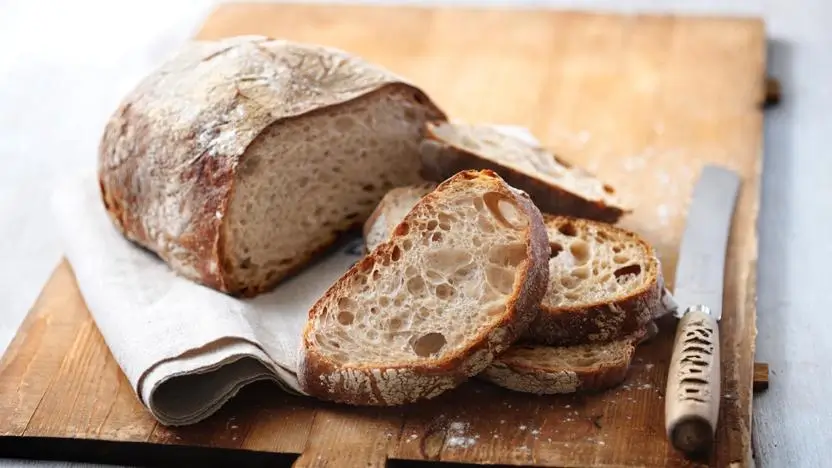
Between last night and this morning, as is common in my life, I made a loaf of sourdough bread. I started baking sourdough about two years ago after acquiring some starter and a set of basic instructions from my (wonderful) local bakery, and quickly discovered a quorum of like-minded (which is to say deeply engaged, mildly obsessive) sourdough fanciers at work. We call ourselves a culture club and meet periodically to share recipes, but the bulk of our activity is solitary, with the triumphs and the inevitable failures shared over social media. Other colleagues around the world chime in with their tips, questions, images. Starters are fed, ferment length and temperature agonised over, acquisitions of new paraphernalia revealed with a mixture of pride and embarrassment. We have discussed milling our own flour; it is only partly a joke.
I love making bread, the alchemy of flour, water and time, the crackle and blister of the crust and the hiss of yielding dough. My range has grown from the first dense plain sourdough loaves to sourdough brownies and crackers, pizza dough and focaccia, baguettes and poppy-seed rolls. I plan to try bagels soon. As the habit has become more and more ingrained, I have begun thinking about why I do it, and what baking - and food as a symbol more generally - means. While discussing with a colleague our respective baking histories not long ago, I commented that I am not really much of a baker by nature. This is true - I lack the precision that marks the true baker - but baking, especially bread, has cropped up at a number of significant points in my life. Prior to the current sourdough hobby, I baked a lot of bread during the final months of my PhD work, when I lived alone in a campus apartment and thought my thesis might truly send me over the edge. My specialty in this period was yeasted walnut bread, which needs a short rise, and bakes dense and bitter. Before that, as a recovering anorexia patient in my late teens, brown soda bread was part of my journey back to a state of bodily equilibrium. The cessation of internal hostilities emerged around this and several other simple, quick recipes, where I was able to control what went into what I was eating. Anorexia patients in general are often very good cooks, yielding to the sensory pleasure of cooking before we are able to yield to that of eating. For me at least, cooking eventually became a way back into my body. Further back again, many of my early memories are of making scones, soda bread, biscuits with my mother and grandmother.
My tastes are savoury rather than sweet in general, which may explain in part my choice of bread over cake, but there is something about bread that seems fundamental in a way that other food is not. The persistence of the quotidian, the very simplicity of bread, is its attraction. Good bread is clean, unfussy, grounded and grounding. The process of making it, too, is so simple that it is almost instinctive, working to the slow music of the body, push and pull and stretch and thump. While, for me at least, baking cake requires thought and precision and niceness - a drop here, a pinch there, a whisper between too much and not enough - baking bread feels elemental, basic, capacious. It is the physicality of it that I think explains its attraction for me. I live my life in my head much of the time, wrestling with semantics, ideologies, abstractions. Thinking and writing are two of my primary modes of engagement with the world. I am not particularly athletic or strong by nature, neither do I inhabit my body with especial grace; I admire its capacities and have learned to take great joy in it, but my natural plane of existence is cerebral. I have always met the world with a pen and paper, it is not only a feature of my professional choices, but my work magnifies the Cartesian bent of my days - I think, therefore I am myself. This amplified sense of myself as broadly mental rather than physical can make me sluggish and anxious. I have discovered through long experiment that while I spend my days focused on the mind, an idle body causes trouble for me, and so I have learned to look for physical outlets to clear my head. I do yoga and cycle, I walk and dance. I have only recently made the connection between this knowledge and the sporadic intrusion of baking into my life; baking is in effect a kind of zen activity. It requires total concentration, but cannot easily be thought about in any meaningful way while in process. It is slow, like writing - like Hemingway’s bankruptcy it works gradually, and then suddenly. The process of mixing dough, particularly a slow dough like sourdough, offers a physical metonym for the process of working through an idea from conception to editing, beginning with precise but disparate data and theories, devolving into chaos that needs time to breathe, an iterative process of leaving and returning, an unfolding of quiet magic that evaporates and becomes leaden with too much interference. For those of us familiar with the process of peer review, it maps quite nicely on to the extreme heat of a bread oven, which can be by turns uplifting and unexpectedly, implacably hostile. I find that the absorbing quality of baking often frees up a cerebral knot, that an intractable work problem will have miraculously sorted itself out by the time the oven pings. Besides this, mirroring the mechanisms of thought in a physical process is soothing and satisfying, and comes with the additional element of a product, a physical mark of achievement at the end of the process, which certainly enhances its appeal for me. Its transience and controllability calm my mind and help me focus. I am not alone in this. In an article for The Atlantic in December 2018, author Amanda Mull quotes the food journalist Kat Kinsman, herself an avowed “anxiety baker”, talking about the grounding power of cooking in an anxious time: “You’re digging your hands into something pliable, and with an immediate result to it,” Kinsman said. “Everything else seemed so distant and painful, in a way, and this was something I could whip out and there it was. Instant gratification.” For me, in a career where the product of my work - a written article or book, a lesson or collaboration - takes a long time, the immediate output of a mirrored physical process is reassuring. In the essay, Mull notes that changing economic models can intensify the sense of labour alienation that seems to bedevil contemporary society - she is particularly interested in the work lives of young people, which are becoming “more gig-centric and internet-based” - and sees baking as a kind of palliative to this disaffection. Another element of this process that Mull adverts to but does not fully flesh out is the communal object of baking; it is easy to cook both by and for oneself, but baking is a scale operation a way to make friends. There is a reason that the classical image of community is the breaking of bread. Religious practice around the world is predicated upon the model of bread as mutual, common. The image of daily bread is so culturally foundational that it almost passes beyond the point of explanation; bread is renewing and renewed each day, the communal product of an often solitary labour, the point at which relationships from the most casual to the most intimate connect.
Beyond the easy intimacy of its sharing, bread has a wider symbolic function. In baking bread, as in any creative process, we are enacting faith in the future. Our making is couched in the assumption that there will be a future with which to share it; we build homes in the belief that we or others will inhabit them, we weave blankets to cover those who will be alive to need their warmth and stories to console and inspire those who will be present when they are complete. Even with death, surely the loss of a future, we create and mark a space for those who continue on to grieve. Preparing food is one of the shorter iterations of this infinitely observable process, but it too rests upon the assumption that there will be mouths to eat it when it is complete. In this respect, underlying the soothing physical process and the joy of sharing what we make, there is a restful, if temporary, assumption of continuity. In a world whose future is increasingly in peril and increasingly under urgent discussion, even this momentary relaxation can be healing. In fact, baking bread iterates a process that anxiety sufferers often reach for in overwhelming moments: when the whole future is too much to consider, consider this moment and the next. Filling the moments and working into the future does not ask us to cede control or agency in the way that meditation or mindfulness can, and for those who find themselves resistant to stillness, what we might call “mind-less” activity - work that takes focus but little thought - can help to soften the edges of the passing time.
The broader representational capacities of bread and baking show strong cultural associations around the social, the celebratory and the consolatory. Thinking of baked goods in particular as transient objects that speak to a future, a forceful network of associations emerges. Cake is particularly associated with sexuality: Miss Havisham, in Dickens’ Great Expectations, sits with the mouldering remains of her wedding cake, its continued, decaying presences a monument to the lost future she mourns. Christina Rossetti’s “kneaded cakes of whitest wheat”, the fruit of human labour, contrast sharply with the vivid fruits of Laura’s transgression, tracing multiple dichotomies, between continent Christianity and concupiscent secularism, between nature and control, between purity and impurity in all the complexity of these imaginaries.
Bread is more commonly associated with nourishment and youth. The poet Dante is warned of his exile in terms of the loss of his local bread - the necessity of eating an unfamiliar type of bread, a salted bread, is presented as the epitome of the pain of his exile, highlighting the sensory memories of childhood foods. By contrast, in Toni Morrison’s Beloved, food marks a movement away from the past. The novelis shot through with strongly religious images of nourishment - the strong Eucharistic tones of the making and breaking of bread are mirrored by the symbolic drinking of blood figured in the taking of Sethe’s milk - and Shirley Stave argues that the narrative form actually mirrors a religious association between the baking and consumption of bread and the recollection and telling of stories. Indeed, the novel itself plays on this connection, religious or not, by figuring narrative in terms of appetite: Sethe and Denver’s stories of the past become “a way to feed” Beloved, who eventually gorges on their histories in an almost vampiric way, and Sethe herself likens her mind to a greedy child who cannot stop eating as she tries to stop listening to Paul D’s recollections. Picking up on this motif, Sethe explicitly uses the physical process of baking to resist memory, as a form of managing trauma: on the one hand, as she kneads the dough she undertakes “the day’s serious work of beating back the past”, while on the other hand the rhythm of the kneading seems to open her capacity for storytelling - her narration of having her milk stolen, one of the most harrowing episodes in the novel, is interwoven with her actions as she bakes. The physical occupation of kneading seems to offer space for the unlocking and management of trauma, a point of contact with the world through which to resist the grief and anger that threatens to overwhelm her.
The cultural overlap between bread and cake can also add force to a narrative. In the Raymond Carver story “A Small Good Thing”, the loss of a child is circumscribed by baking - it opens with the ordering of a birthday cake, a sweet, celebratory enterprise meant for sharing, and closes with a coarse-grained bread fed to grieving parents. The cake at the beginning is bright and simple - a chocolate cake “decorated with a spaceship and launching pad under a sprinkling of white stars, and a planet made of red frosting at the other end. His name, SCOTTY, would be in green letters beneath the planet”. The cake is a playful, colourful image of childhood, the rocket and stars conjuring up an unlimited future. After the child’s death, the images of freedom and joy are replaced by a turning inward; the baker serves them cinnamon rolls, warm and sweet and closed up on themselves. “Eating is a small good thing in a time like this”, he tells them. The final image of the story moves away from sweetness altogether, with the baker offering them a rich, dark bread. The childless baker talks about his loneliness and doubt, he who is ironically alienated from the product of his labour, though that product is so heavily freighted with ideas and ideals of togetherness and nourishment. In this sense, the baker arguably embodies the paradox of the capitalist economy: he is employed to bake a cake, to create the symbol of celebration and togetherness, but because he is not a party to the celebration he is unaware of its usurpation by grief. As a result, the cake itself becomes a cause and marker of grief, of what has been lost, its purpose poisoned purely by the system of exchange within which it operates. Because this system divorces the cake from its context, its purpose is accidentally weaponised, an acute and immediate iteration of what plays out to its end with Miss Havisham’s wedding cake.
That system of exchange that inverts the cake’s purpose can also be read as creating ambivalent spaces of performance in the baker as well as the product. Returning to Mull’s sense that the working lives of young citizens are increasingly dominated by the digital, Jenny Sundén’s framework of online textual embodiment adds an extra layer to the appeal of sharing the product of one’s labour; Sundén suggests that we increasingly understand ourselves in relation to the digital presentation of ourselves - that we “write ourselves into being”. Writing in 2014 about the rise of steampunk as a digital culture, Sundén’ notes that “steampunk seems to demand a tactile or ‘haptic’ method” to study it. Steampunk, which involves a radical reimagination of the uses of historiography and the body, is “a decidedly embodied, sensuous phenomenon”, which positions the body as a site of historical knowledge and imagination and can call into question imperial histories and paradigms of power, and which therefore calls up some ambivalence around roles, relationships and dynamics involved in the sensory performance of certain anterior futures. Bread baking in itself - like costuming in itself - lacks the element of performance that Sundén identifies, but the online sharing of what has been made, as well as the connection with historical social gender roles and ideas of domesticity, connect the two pastimes (indeed, Mull's point of departure for her essay is the persistent presence of a particular cookie recipe on her friend’s Instagram account). The explosion of lifestyle brands, blogs and Instagram accounts showcasing beautiful baked goods (including our own small Twitter network) positions the pastime firmly within the context of symbolic exchange as well as practical production, a way of making friends with baked treats that transcends the materiality of those treats.
Maria Hellstrom writes about the digital performance of fibrecraft on the website ravelry.com, where “hip domesticity” exists in the digital space through a complex network of commodity ownership, labour and display. Writing about the resurgence of knitting in general, Alla Myzelev argues that nostalgia comes into play at the nexus of the mind and the body, where the “mindless work of the body” allows space for social interaction or personal reflection, denoting the luxury of free time. Baking is the same; it is more efficient to buy bread than to make it, especially by hand, but rather than signalling a return to the restrictive gendered codes of practice of previous generations, the ability to choose this pastime encodes a kind of privileged anti-nostalgia, bending the practices of domesticity to the uses of leisure. Jean Railla, one of the proponents of the “Craft Revolution”, argues that embracing traditional women’s work is not in itself traditional, and that indeed the resurgence of these practices as (amateur) leisure pursuits in fact marks “one of the successes of feminism […] that young women feel so strongly about themselves that they can knit and be taken seriously”, finding or creating space for inefficiency in busy lives. The case Railla makes for reappropriating domestic tasks in the name of feminist activism is not entirely persuasive - I am struck, for example, by the (apparent) absence of discussion in her work of the majority of women worldwide who do not have access to this kind of leisure time, and for whom crafting and baking are not feminist interventions in postmodern culture but still very much necessities (I have the same ambivalences about my own baking) - but there are other examples of craft as activism that engage more clearly with these questions, like Cat Mazza’s micro-revolt project, which devises free fibrecraft patterns based on images uploaded to the application and whose logo knitting project is subtitled “subverting corporate hegemony” and which operates as a form of dynamic, tactile petition around labour practices. It is certainly the case that the conscious, public renegotiation of traditional domestic tasks is changing the collective imagination of the tasks themselves, in a way that (as Stephanie Sringgay argues) evokes Hannah Arendt’s idea of the space of appearance, migrated into a digital unspace. Among these tasks, baking is emerging as a response to the questions of a deeply anxious era, and while the contradictions of these practices persist, the attendant questions are counter-weighted, and perhaps even afforded space, by the material practice of the craft and its long symbolic associations.
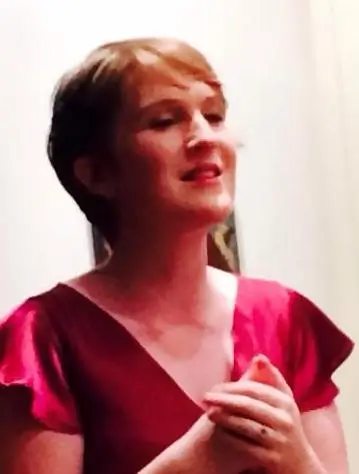
Clare Hayes-Brady is
a lecturer in American Literature at University College Dublin. Her PhD focused
on communication in the work of David Foster Wallace. Other research interests
include the interaction of literature with film; transatlantic cultural
heritage; performative sexuality (both normative and queer), resistant gender
modes and the history of burlesque; digital humanities and modes of
transmission; adolescence in contemporary fiction, and dystopian narrative.
More work by Clare Hayes-Brady



Tel: 028 7126 6946
Email: hueditor@theverbal.co
Verbal, Stable Lane and Mall Wall, Bishop Street Within, Derry/Londonderry, BT48 6PU
 company
Copyright © 2026 Honest Ulsterman