


Sean Borodale, the current Poet in Residence at Poetry Ireland, reflects on what his residency will consist of.
When Dorothy and William Wordsworth met Samuel Taylor Coleridge in the Quantock Hills in Somerset in the 1790s, they forged a project that became for them political, literary and situated. It was a happenstance residency that grew then by a natural inclination. Whilst not leaning towards a public face nor housed under the roof of an institution, they nevertheless worked to an outline of mission that wholly enfolded them. They sought to blur and imbue their literary project with insights gained from a popular folk genre, specifically the ballad. The collaboration gave rise to the Lyrical Ballads and laid ground for Wordsworth’s later poem The Prelude, charting the formation of poetic voice, and Coleridge’s critical work, his Biographia Literaria. The subjects of the Lyrical Ballads, being impoverished, outcast, misunderstood, unprotected, are a nod towards a latent community for the time they were in.
My residency, which began earlier this year, coincides with Poetry Ireland moving back into the newly refurbished Poetry House in Parnell Square, Dublin. The building is impressive, a Georgian mansion which incorporates the oak-panelled rooms of the former Council Chambers. On its first floor sits the newly shelved, newly catalogued ‘Seamus Heaney Library’. The several thousand books are the generous bequest of Marie Heaney and family. The books lived previously in the house and attic where Seamus Heaney lived and worked. The library, which will be open to the public by appointment, as a ‘word-hoard’, will be a key resource for my residency: an ‘omphalos’ for poets, readers, much in the measure of Heaney’s use of that word.
I started my post by thinking about the accidents of reading that can set a life towards poetry. The library therefore stands as the resource for most of what I will do. The books have the warmth of honey cells, a battery of gleanings and alchemical lives, and if they look orderly, in a hidden way the books are an unruly community of powers. I will work to take on the library in this sense, in the way animals and birds gain life in the hedgerows which are a neural network for survival across an organised land. My call will be to invite people to become hedge-wrens, whether directly or indirectly. Such a bird does not need to sing, it just needs to remember how articulate it is on its own terms. To go into books is to go into the thicket. The hedge is a usefully difficult learning place: brake, gorse and hawthorn, blackthorn, briar rose and tree-stump, ditch-side, deadwood, new growth, nettle. I will hold this hedge-sense as an emblematic guide in my approach to a use for the library, and will use it to provide material for the workshops and seminars that I will devise and run. The hedge, too, echoes and summons the Hedge Schools through which the shared language was learnt and reinforced. Perhaps my work is to touch a community of the inner language. That is what I want to encourage and I will be working with people of all ages, backgrounds, languages and skills. I will seek for a genuine contact, and not from a forced desire to be a poet, but to share time finding, as Heaney wrote, the ‘language that leads to language’.
I proposed a number of simple ideas for public engagement. The first was to write a series of situated essays, written in the library, finding themes there and utilising the library’s collection. The essays, to be published periodically on Poetry Ireland’s website during my time in residence, will explore the lives of poems as they exist, materially, and are experienced immaterially. I will use the resource of Heaney’s books (in the spirit of Derrida’s Archive Fever for which archive inspires an unknown future use). The essays will be a public demonstration of starting from scratch, of reading without bearing, of piecing together sense from a lack of initial bearing. The essays will reference back to the library’s catalogue, enabling people who visit the site to find their own paths into the hedge-gaps and tangles of inspiration. It will be a reminder that some of these materials inspired and motivated Seamus Heaney, and some simply shared the space with him, and some he probably never read. An unknown future community is therefore a part of my bid: to inspire new gleaners of the poetic resource. I felt also that these essays could open the library’s matrices to people who could not visit.
A wealth of languages exists in the Northside area of Dublin adjacent to Poetry Ireland. As much as the residency will address how we can live with poems, it will also put energy into asking how words live within us. I will set up a community-based project to examine how words are carried like keepsakes, how words become personal or familial. To celebrate the diverse 130+ languages spoken in Ireland, I will gather and curate a multi-national store (‘word hoard’) of words and their unique definitions, their use and origins: a celebratory dictionary of poetic potential as survivor words, hearth words, street words, journey words, distance words, ancestor words, baby words etc. This will start small, with non-native speakers, migrant communities, and local Irish communities. It is my hope that this dictionary can grow and can mark a time in the locale, and can come to serve as a reservoir of unique meanings for a wider community, an unknown community, for a need in an unknown future.
My first residency was in my mid-twenties when I was a Northern Arts Fellow at the Wordsworth Trust in Cumbria. I remember being in awe of the collections and manuscripts at the Wordsworth Trust Museum and archives, but I felt troubled by the weight of precedent. I sought instead to turn to the lakes and mountains of the Lake District, to walk and write, to go back to basics, to try to exist in the present as the Romantic poets had done almost precisely two hundred years before me. What I did, inadvertently, was to start to unlearn, to hunt for signals where the literary process begins: page, pen, dedicated time, intention, writing. I couldn’t have been alive to this necessary instinct if I didn’t have layers of resource to hand, if I didn’t have community to reflect with, and access to precedent. I hope that my time at Poetry Ireland will incite questions, and I look forward through the seminars, workshops and reading groups I will devise and run, to asking these questions together, and to making the residency a responsive space. Workshops will include working with ex-prisoners through the ‘Pathways’ scheme, and alumni of the ‘Introductions’ programme that Poetry Ireland runs each year. Each of these spaces brings participants into Poetry Ireland House to think deeply about what a poem can be, gives time and space to shared writing and shared reflection. The Dictionary Project goes back to essentials: words as lanterns of the order of heirloom or keepsake, old tools that are broken being given new uses, a dictionary of one-word poems as a community of words and people.
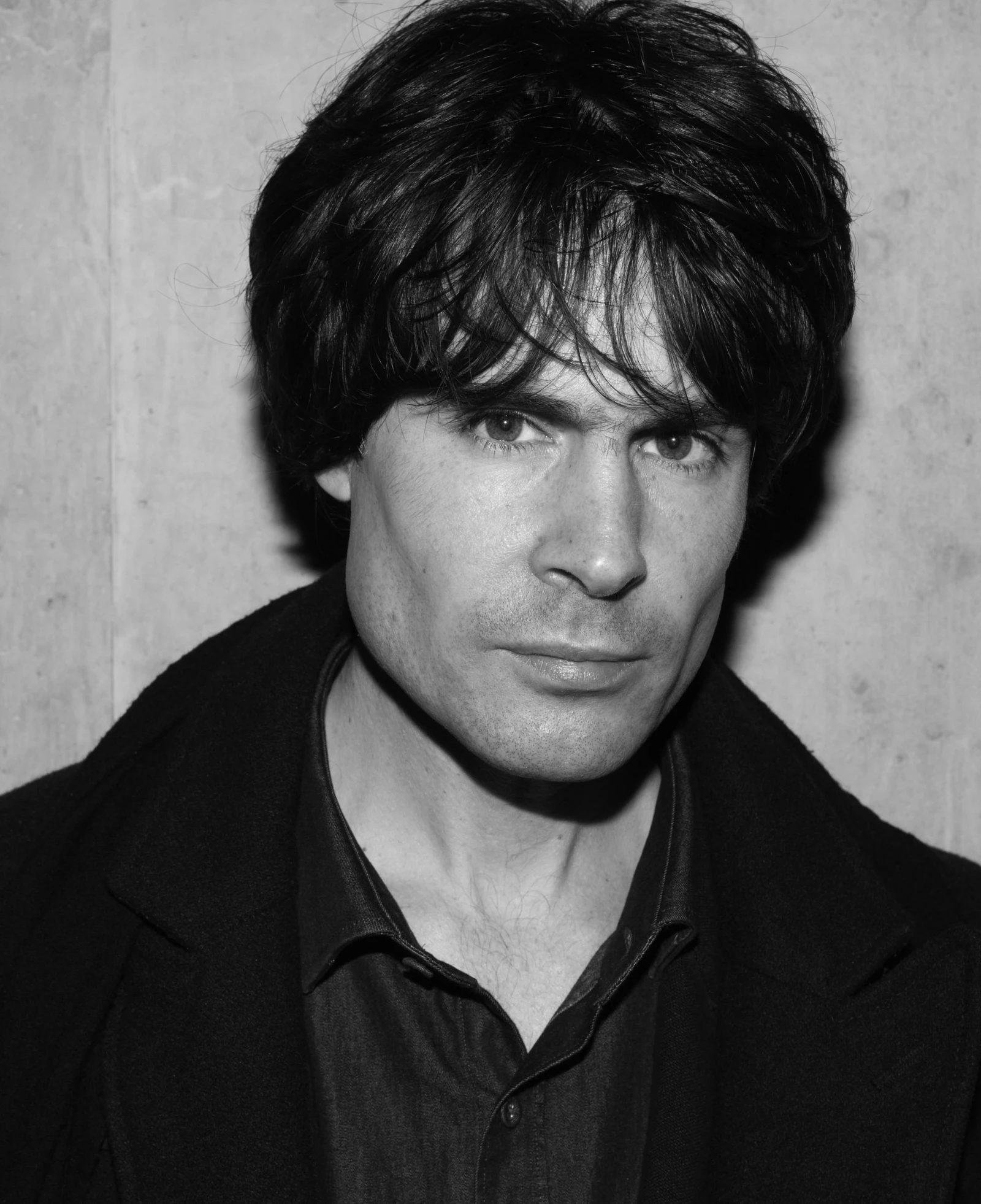
Sean Borodale is the current Adrian Brinkerhoff writer-in-residence at Poetry Ireland. His debut Bee Journal was shortlisted for the TS Eliot Prize and the Costa Book Awards. His poetry is published by Jonathan Cape and includes the collections Human Work, Asylum and Inmates.
More work by Sean Borodale


Tel: 028 7126 6946
Email: hueditor@theverbal.co
Verbal, Stable Lane and Mall Wall, Bishop Street Within, Derry/Londonderry, BT48 6PU
 company
Copyright © 2026 Honest Ulsterman