


Bone House - Writing Poetry in a Pandemic
As part of my Major Artist Award from the ACNI, I had committed to a book of poetry examining relationships between mothers and daughters and I was excited about it. In late 2019 I had only a handful of poems, but lots of ideas for exploring mother/daughter stories, myths and experiences. I had been reading psychoanalytical theory, academic explorations of Greek myths and science about mitochondrial DNA; alongside books I had first read in my twenties, such as My Mother, My Self by Nancy Friday. My mind was full of ideas. Then the pandemic began to creep inexorably towards us across Europe. Dread moved with it. I watched daily news stories, grim footage of overwhelmed hospitals in Italy. When the first wave arrived with us here, I found myself completely stopped in my tracks. I couldn’t write, I couldn’t even read, I was paralysed by fear. I had no concentration. I would sit with my notebook and a pen and all I could get were fragments; nothing seemed to flow, everything was trapped by the jagged edges of life, the spikes of the virus. I couldn’t make sense of anything. All I wanted was to be able to cuddle my tiny granddaughter. I ached for her.
What finally made the poems in Bone House possible was two-fold. Firstly I returned to reading the poetry that I loved, the poems that had got me through my angst ridden teenage years. It was like rediscovering an old comfort blanket. I ignored the flood of new poetry that seemed to be streaming from everywhere and kept faith with the poets who had kept me going in the past. I remembered why I loved poetry. Secondly, I abandoned my ambitions for the book, accepted that I wasn’t going to make sense, that perhaps there was no sense to be made. And it didn’t matter if they were ‘good’ poems or not; or even whether anybody would ever read them or not. I allowed myself to be free to say what I wanted, to write against silence and judgement. The many fragments, the spikey images that refused to be lyrical, became the backbone of the book - the four poems within it that are all entitled Bone House. They became the spine on which to hang other poems.
The other poems turned out to be a lot more personal than I’d expected. Poems of revelation, not redemption, exploring why this dread seemed so familiar to me, why my mother was still so unquiet in my dreams. I slowly began to recognise that the fear felt familiar because my fundamentalist religious upbringing, meant I had been raised in fear. Anxiety was in my bones.
Fear was the rock on which our faith was built,
fed in mother’s milk through generations,
in prayer and catechism, chapter, verse.
Fear was my nourishment, it formed my bones
and sinews, grew me up in contradictions
and in all the ways of loss.
(Rock of Ages)
I saw that it still permeated my psyche in a myriad of ways, and always had. That some of my most foolish decisions were a kickback against that upbringing. The effect that this evangelical upbringing had had, not only on me, but also on my mother and on her life. This spiritual abuse was at the root of why our relationship had been so problematic - for both of us. I had the sense when writing these poems that I was picking up my mother’s bones and placing them into an ossuary, a bone house, Laying them to rest. I questioned myself –
can I mother
if I am always daughter
(Bone House)
Sometimes it is only after something is finished that you can see it properly. I felt a lightness on the book’s completion. I showed the poems to a few trusted readers and got positive feedback, but when it launched, I had no idea of how it would be received. I was surprised and delighted when it seemed to speak to other’s experiences, and it has sparked some really interesting conversations. As part of the process of releasing a book, you get the opportunity to answer questions about it. It was only in trying to answer these questions that some of the elements contained in the poems became clear to me. I wrote an essay for the Irish Times and in it explored further the legacy of this type of fundamentalist upbringing and its effect on individuals, families, and on politics here in the North. The patriarchal nature of belief and the part that plays in the silencing of women, how it twists lives. This essay became part of the journey of the writing of Bone House.
The pandemic took me to places in my writing that I didn’t think I could go and the poems in this collection revealed things to me that I knew, but had been trying to ignore. It wasn’t an easy book to write, but I’m glad to have done it.
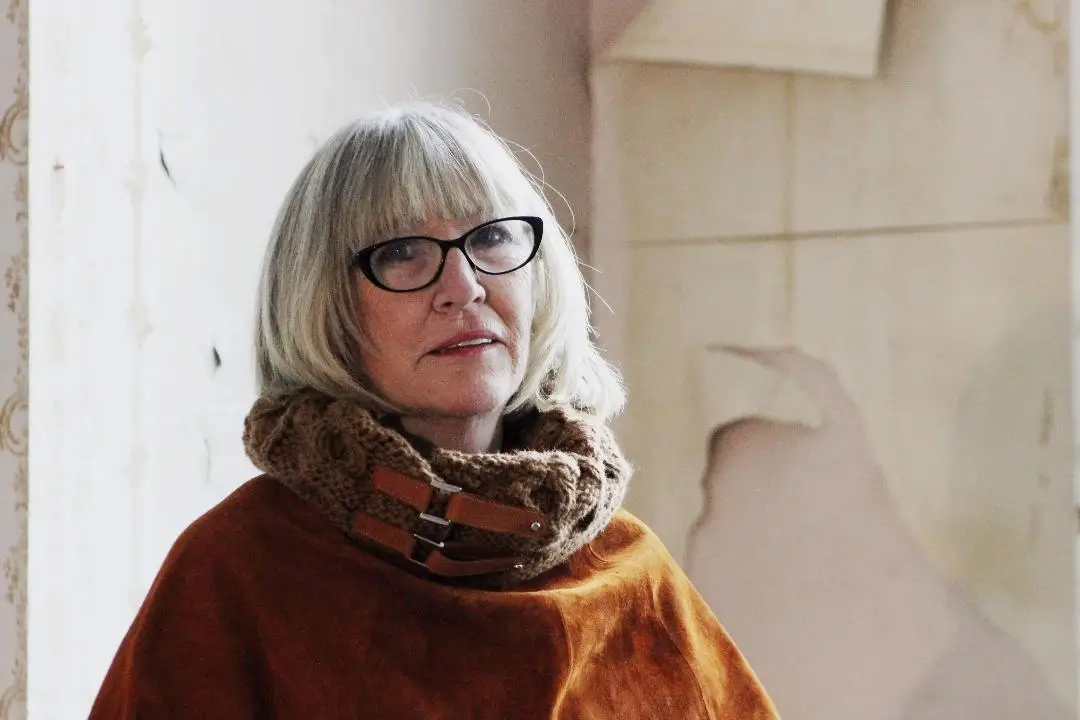
Moyra Donaldson is a poet and creative writing facilitator from Co Down. She has published nine collections of poetry, including a limited edition publication of artwork and poems, Blood Horses, in collaboration with artist Paddy Lennon. Her most recent collection is Carnivorous, Doire Press, 2019. In 2019, she received a Major Individual Artist award from Arts Council NI.
Her new collection, Bone House, published by Doire Press was launched in April 2021 and can be purchased here:
https://www.doirepress.com/writers/moyra-donaldson

Moyra Donaldson is a poet and creative writing facilitator from Co Down. She has published nine collections of poetry, including a limited edition publication of artwork and poems, Blood Horses, in collaboration with artist Paddy Lennon. Her most recent collection is Carnivorous, Doire Press, 2019. In 2019, she received a Major Individual Artist award from the Arts Council NI. Her new collection, Bone House, published by Doire Press was launched in April 2021
More work by Moyra Donaldson


Tel: 028 7126 6946
Email: hueditor@theverbal.co
Verbal, Stable Lane and Mall Wall, Bishop Street Within, Derry/Londonderry, BT48 6PU
 company
Copyright © 2026 Honest Ulsterman