


An Interview
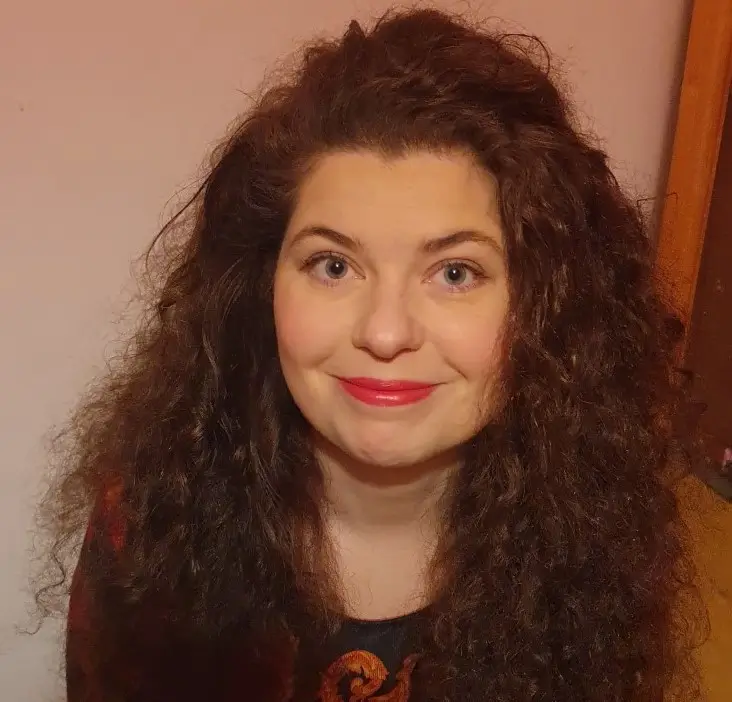
Amy Louise Wyatt is a poet, artist and lecturer from Bangor in Northern Ireland. She edits The Bangor Literary Journal. Amy was shortlisted for The Seamus Heaney Award in 2018 and 2020; won The inaugural Poetrygram Prize and The 2021 Waterways Poetry Competition. She recently completed her MA in Creative Writing and has been nominated for both a Pushcart Prize and Best of the Net Award. ‘A Language I Understand’ is her debut poetry pamphlet published by Indigo Dreams. Amy is working on her first full poetry collection. Website: https://amylouisewyatt.com
Moyra Donaldson: Hi Amy – thank you for agreeing to chat about your poetry and the Bangor Literary Journal. I know you are a very busy person, with a career in education, and a family - alongside your writing and your art. You also took on the task of founding and editing the Bangor Literary Journal. I’m really interested to know what your motivation was for this? How did you go about it and what does it involve?
Amy Louise Wyatt: Moyra, you are so right—I always seem to be waist-deep in something—(it’s my nature)—I appear to be in a continuous state of motion!
I suppose that having a deep interest in both writing and art was one of the reasons I set up The Bangor Literary Journal. For me, creativity comes in many different guises, and I loved the idea of creating an outlet—that although literary focused, encompassed the elements of visual art too.
Having written poetry for a good many years and having had the experience of running The Bangor Poetry Competition and working with local festivals, I think the journal was a natural progression from those experiences and insights. I didn’t want to create a pretentious platform, instead one that focused on magnifying really high-quality work produced by a wide range of writers and artists.
The journal is currently published three times a year and is available in PDF form from the website. I love the idea of people being able to download the issues onto their phones and engage in a bit of sneaky reading on their coffee breaks! Even though, in the future I may consider working in a print-based format, at the minute I feel the accessibility factor of it being online in current times works well, especially with thousands of people reading each issue.
One of the elements of editing the journal that I enjoy, is the fact that all work is read blind. Our open windows will see at times up to 500 submissions come landing in the inbox. Anything that has traces of the writer’s name is rejected—as this taints the process. This is a very important aspect of the project for me, and it has paid off in the sense that the journal has offered many writers their first publication opportunity where they’ll often find themselves within the same pages as writers in more advanced stages of their careers. This can be a catalyst and confidence boost for many people beginning their writing journey, knowing that their work was selected from hundreds of others based purely on their own merit.
In addition to this, in each issue we feature a poet and either a prose writer, artist, photographer, musician, or sometimes an international creative. We’ve featured so many highly-regarded talents over the years, including yourself Moyra, when you featured in our inaugural issue—you helped launch the boat!
Of course, running a journal is a lot of hard work—mainly lengthy reading hours (hundreds of submissions), administration—in regards to sending thank you and acceptance emails, keeping the website on track… and that is even before the journal itself is put together. I’m very lucky that my husband Paul Daniel Rafferty (who is also a poet and photographer) agreed to join me on the journey as co-editor. He plays a huge role in helping select the work, organising the events and keeping everything running smoothly.
We’ve been going for four years now, which is a real achievement and something I’m very proud of.
MD: The launches and readings that you host in your studio, The Blackberry Path are always so friendly, welcoming and inclusive. Do you think a sense of community is important for poets and writers?
ALW: Writing and creating can be very selfish acts. The need to get out what-refuses-to stay-in can be time demanding, all consuming and very isolating. In an odd way, the launches that we host are almost more important that than the journal itself, and there are a couple of reasons for that.
Firstly, what you read on the page is a totally different kettle of fish from what you hear when the piece is brought to life by the writer, in their voice, with their intentions and intonations. And of course, I understand that most writers are not ‘performers’ and at any of the launch events we host, we never expect people to be. But there is something almost communal about speaking the things that you have written alone ‘out-loud’ to a crowd of people, that takes the act of communication to a selfless level. Suddenly you are no longer concerned about the ability to create, but instead the ability to communicate in some sort of way, so that those in the room with you— will connect with you. For me that is a powerful transformation.
Secondly, it is important, especially post-pandemic, for writers to network and make friends with other people they have things in common with. Rebuilding the broken connections of the last few years is crucial for writers who often tend to dwell on their own inadequacies. (I blame the editors and all those rejection emails that writers get!) Struggles with mental health often affect members of the creative community, and for some people, these types of events are the only thing that they have attended in months. The food, the wine, the chats, the listening ear, the human touch—these all are as important as the words.
Even me, an introvert—knows the love that the writing community in Northern Ireland has for its members; the support that is out there; the rallying round; the pick-me-ups—when you’re knocked down.
MD: You are an artist as well as a poet. Is there a cross over between the two? Does one inform the other?
ALW: This the age-old question for those who dabble in two arts: Jack of all trades… Master of none? Sometimes I feel that way. Sometimes I feel married to one discipline and when I cross into the other, I feel like I’m cheating on the one I left behind. Sometimes I play one off against the other. Sometimes I feel torn and pulled in two directions. Sometimes I feel lucky to have both in my life. But two loves can be overwhelming…and demanding.
As an artist I must admit, I care much less for the prestige. I don’t bully myself to get hung in ‘bucket list galleries’ or to have someone represent me. I don’t hold myself to the any fashion, or trend or institutional standard. My mum taught me to draw and I never stopped. But writing is different, I feel driven to achieve, to publish, to maintain a profile—and to be honest, I cannot tell you why that is! I am still figuring that one out.
At the minute (and actually for a long time) I have been working on a project about my great aunt Delia, a spinster seamstress from East Belfast. She lived to one hundred and three, never married and made wedding dresses all her life. This seems to be one area where my art and poetry have met. I am currently working on a fourteen-piece ceramic and glass composition called ‘Sonnet to a Seamstress’ which echoes one of the many sonnets I have written about her. This has been a major project that has seen my poetry inform my artwork and vice versa. I carry the irony of her life story with me and that deep personal connection seeps into many aspects of my work.
MD: You have recently completed your MA in poetry. Could you say a little about the experience and how it has influenced your writing?
ALW: Yes, I was very fortunate to be able to study for my MA in Creative Writing Poetry with the Open University online and part-time over two years. This allowed me to still be able to lecture full-time and find some time in and around that for my family. (They may say otherwise—my poor son and husband!)
Having graduated from Queen’s University with a BA in Social Anthropology and English in 2003 and a Post- Primary PGCE in 2005 with University of Ulster, this was a very different experience. There were a few factors at play that made the experience of education as a mature student a more rewarding experience.
To begin with, I didn’t need another qualification (I have a secure teaching job) instead I did this for my own personal development and passion. As a mature student you are very aware that by choosing to do a post-grad course you will have to fit it around the rest of your busy life. You make sure that you eek out every ounce of material and seek every opportunity offered, as you know putting yourself through something so intensive as an MA must offer rewards higher than the certificate at the end. Being older too allows you to have much more life experience to draw upon and to utilise in your approach to assignments and projects.
I’ve only been out of the MA now for about six months, and I feel like I am still recovering. I reaped lots of benefits from it and was heavily influenced by the work of many contemporary poets who did me the huge favour of dragging me out of my comfort zone.
MD: Your debut pamphlet ‘A Language I Understand’ was published from Indigo Dreams in early 2021 and you are now working on a full collection. How is that going? Are the themes similar?
ALW: My pamphlet ‘A Language I Understand’ came out right bang in the middle of the pandemic, but I still got to experience a wonderful online launch and have had many real-life opportunities to read from it recently. The poems in my pamphlet focus on the relationships I have and have had with my family now and in the past. It also concentrates on the power of memory and identity and the attempt to understand myself in a world where I don’t always feel I fit in. (I suppose we all feel a bit of that though.)
Since my MA finished, I have been working on a body of work which will bring together my first full collection of poetry. This has been a much more challenging feat than I thought it would be, and I can’t work out if this has been due to ill health, or a lifestyle that never seems to stop, or the temptation to find a new way to express myself after the completion of my last publication.
It’s tempting to draw a line under the poetry I wrote before the pandemic, before the MA, before the first publication came out… and I do find myself wanting to be a ‘new me’, someone who’s taken all those experiences and found a new voice. But in all honesty, the more I try to be ‘new’, the more I find that the only things that I can truly write about with sincerity are the concrete, unmovable people and experiences I know. Everything else creates imposter syndrome—and I have enough of that already thanks!
What I have been changing however, is the approach I take. To explore the things that are vital to my writing, I have been inventive in my ways of uncovering the feeling, the memory, the spark. Turning the themes that have stuck to me like shadows—on their heads—challenging them to break away—take on a life of their own.

Moyra Donaldson is a poet and creative writing facilitator from Co Down. She has published nine collections of poetry, including a limited edition publication of artwork and poems, Blood Horses, in collaboration with artist Paddy Lennon. Her most recent collection is Carnivorous, Doire Press, 2019. In 2019, she received a Major Individual Artist award from the Arts Council NI. Her new collection, Bone House, published by Doire Press was launched in April 2021
More work by Moyra Donaldson


Tel: 028 7126 6946
Email: hueditor@theverbal.co
Verbal, Stable Lane and Mall Wall, Bishop Street Within, Derry/Londonderry, BT48 6PU
 company
Copyright © 2026 Honest Ulsterman