


An Interview
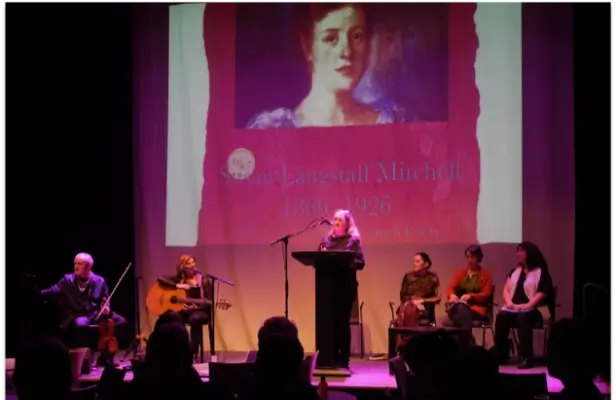
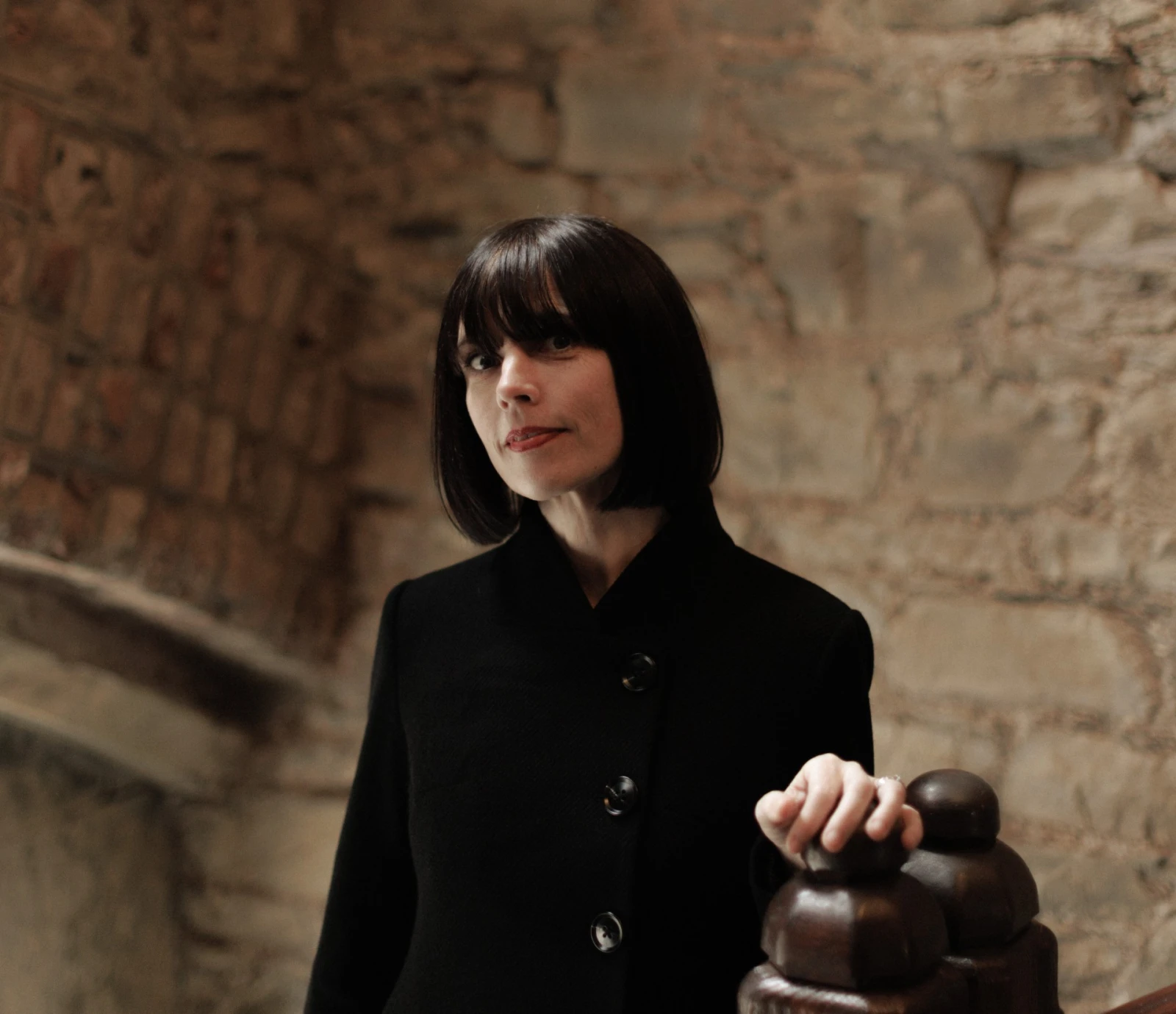
Christine Murray lives in Dublin with her two children Tadhg and Anna. Her poetry has been widely published, both in print and online, in chapbooks, anthologies and journals. She founded and curates Poethead; a poetry blog which is dedicated to platforming work by women poets, their translators and editors. She is an active member of Fired! Irish Women Poets and the Canon which seeks to celebrate and draw awareness to the rich cultural heritage of Irish women poets through awareness-raising and reading. Her books include: Three Red Things,” (Smithereens Press, 2013), “Cycles,” (Lapwing Press, 2013), “The Blind” (Oneiros Books, 2013), “Signature,” (Bone Orchard Press, 2014), “A Hierarchy of Halls,” Smithereens Press), ‘Bind’ (Turas Press, 2018). Anthologies representing her work include: “And Agamemnon Dead: An Anthology of Early 21st Century Irish Poetry,” (eds Peter O’Neill and Walter Ruhlmann, All The Worlds Between,” (Eds Srilata Krishnan and Fióna Bolger, Yoda Publishing, 2017), “The Gladstone Readings,”(Ed. Peter O’Neill, Famous Seamus Publishing, 2017). She was a contributor to “Eavan Boland: Inside History,” (Eds Siobhán Campbell and Nessa O’Mahoney, Arlen House, 2016).
Moyra Donaldson: Hi Chris, thank you for agreeing to answer a few questions. As I was reading your new collection bind, with its fragmented landscape and coded mysteries, I was reminded of your description of yourself as a poet without a narrative heritage. Could you say a little about how that sense of not having an inherited landscape has influenced your work? Are there poets that have been an influence on you?
Christine Murray: Thank you Moyra, I have felt an urgent loss in my narrative heritage for years, in fact all through my secondary and college education! We learnt about the great male poets, like Yeats, who spoke of great mythos, magic and universality. I loved Yeats a lot, I did a senior project on him and when I think back, I wonder at how easy it was to access criticism on him, everything was at my fingertips but it was not Yeats’ images and magic that subtly enthralled me. I developed a sense of absent voice - we were filled with the noise of great deeds, but I suppose that I became aware of absent women gradually. There were very few women in our literary courses and they were objects of desire, affection and fear, Yeats’ Gonne, or Joyce’s Penelope or Isolde, or whomever the writer was obsessed with. I tired of the obsessional voice and I couldn’t find the woman’s voice. My influences in poetry were Lorca (initially), the muses bored me, I needed the duende. I found duende in Plath, In Barrett-Browning, in Sexton, in Nagy, although I had to search for these voices as they were not accessible in our studies. Yeats’ ‘duende’ was personal and public but subject to an external propriety, a mannerist duende, if you will. Yeats only became real when I read his letters or ‘A Vision’, he kept things back and the reader can sense it, the public poet! I think that the public poet is a very cauterised individual, as they have to watch their words!
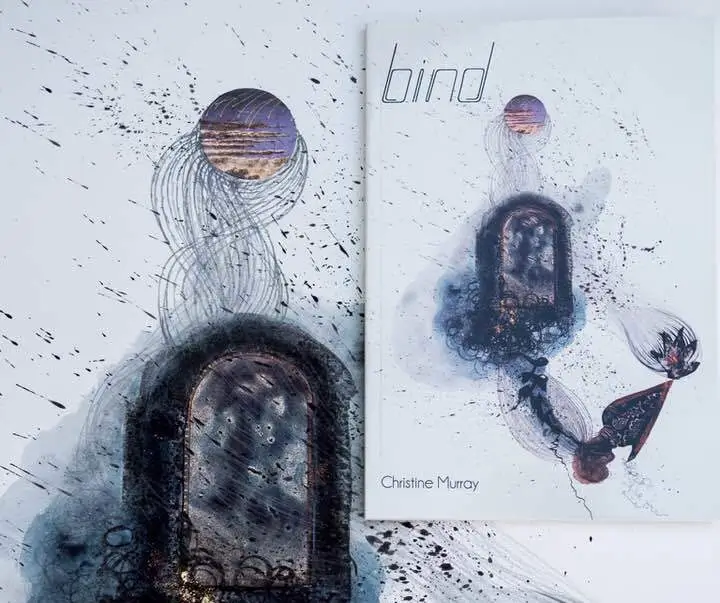
MD: I am fascinated by the way the elements of the long poem are chiselled into their shapes on the static page. I wonder if your background in stone cutting has had an effect on your process of writing?
CM: Stone-cutting was my absolute joy, I learnt from a master-mason how to cut huge stone by hand, it frees the mind to play. Manual labour has an intensity about it that is hugely freeing and I loved my job, but I do not think it changed my writing. It fed my imagination, I worked in a very isolated place with 38 builders through all weathers, including floods and storms. The men had stories and ways of doing things that absolutely fascinated me. The castle where we were based for the longest stretch had men who were masons, cutters, dry-stone wallers and general operatives. The general operatives were small farmers who needed winter-work, so I heard about the farms. The dry-stone wallers were musical and tactile about the stone, they repaired the Staigue Fort and The Skellig. The masons were British for the most part and gave me bawdy language and skills that I couldn’t imagine using geometric visualisation techniques. I pine a bit for that time, but I did myself a serious injury and I finished a year or two after my full qualification. I can still cut but I am used to huge work and would find a studio set-up oppressive. During that injury time which was 18 months at first, then more treatment, I did write an awful lot. I was lucky, I suppose that the arm that was injured was not my writing arm but my hammer arm. I am left-handed, so though I have a lot of strength on the right side, I have lost some finesse and ability there.
MD: I really enjoy the microscopic way in which you examine nature and how the recurrent symbols and fragments gather into meaning in the mind of the reader. How conscious are you of this process while you are writing?
CM: When I write a book, like ‘bind’ or even ‘A Hierarchy of Halls’, a lot goes into it, despite its seeming minimalism! ‘A Hierarchy’ took four full notebooks. ‘bind’ took about the same, both books are written by hand long before they are typed up or even submitted. A lot gets left out or cut away. I need a confident reader who can sense what is going on! I worry that maybe I may have omitted too much, but these are the decisions that you make when you are constructing a book. I thought that I was very, very conscious of the relationship between the symbols in the book, but a recent review shows me that i am not really and that is delightful. the reviewer picked up something that I hadn’t considered about mirror-symbols. So, I like to fool myself that I am conscious of everything, but I absolutely am not at all.
MD: For ten years now you have been doing the important work of archiving and providing a platform for women writers though the fantastic resource that is Poethead. How did this start? Do you find it difficult to balance this commitment with your creativity?
CM: Poethead is a personal site. I began it as a platform to share work that enthused me. I have to admit that I was also angry, I felt that I could spend my life complaining about the awful treatment of women poets in the canon and make myself sick, or I could actually show people what is there and do something about it. Poethead was a private space that became a public space, I still have problems dealing with this, and I often need to get offline because I can feel hugely exposed and responsible as the site is very public. I had experience writing online for sometime before I had the guts to just set it up, but nothing prepares you for the response which has been global and has made me so many friends, some of whom I don’t think I will ever meet. Poethead was also about ‘me-time’, I had two quite young kids when I began, they are older now, but it was my time and space to cultivate writing and editing habits away from the domestic and demands of life, which can take a lot from you as a mum. But, I can happily go into myself for weeks, or get lost in a good book without noticing time pass because I need the time and alone space very badly. Nothing affects the writing of a book however, except maybe if I get lazy and don’t want to do it, or feel it is not ready to be written yet.
MD: I know that you have been one of the driving forces behind Fired! Irish Women Poets and the Canon. Would you like to say a little bit about how this came about? What are the issues that make it relevant?
CM: The Cambridge Companion to Irish Poets (2017) catalysed a lot of discussion on the canon and its absences. There was a lot of talk about how we could approach this problem, which, and we all believe that the book was another iteration of a consistent problem. Each poet or academic involved has their own take, their own story, on how the absence of women has affected their work, esteem or their sense of the appalling lack in respect for the woman poet’s voice. Mine is simple, I do not want to be part of a generation of writers that did not face this and interrogate that absence. I do not want my daughter’s generation doing the work of interrogation and asking why we, now, are too lazy or complacent or afraid to question the Irish perception of poetic authority. I am not someone who feels that it is right to walk away. Fired! is every single person involved and every single one of them feels this loss to our narrative differently. I am mostly sad that there is no confidence displayed by the canon-makers in the woman’s voice. I am sad that editors think that it is okay to put a book into the hands of an Irish child that disavows the authority in the woman’s voice and that they think it is ok for that 12-18 year old to accept that women poets can be discarded, degraded and be objectified as muses and objects for male poets! I was that child, young woman who was taught that and I have never forgotten how absurd this view is! it is an absurdity that has fearful repercussions for the canon which has to be one of the most sexist in western civilisation. Maybe people are happy to espouse an absurd sexist view of poetry that insists that Irish women’s poetry is in its infancy and nothing much existed before the late 1960’s and 1970’s. I suppose that a poetry in its infancy is easier to diminish further and it absolves the current generation from responsibility to the loss that preceded this period? I am not sure how ridiculous they want to be, I do know that editors and publishers have done their best to ignore Fired! and they hope it will go away and they can continue with their farcical neglects, who knows?
MD: Now that bind is out in the world, what are you working on next? Do you have something in progress?
CM: I shelved a collection of previously published poems in order to finish ‘bind’. I am working on pulling them into an manuscript. At the same time I am fermenting a Masque /Libretto but I am unsure where it is going as it is complex. I have four notebooks (again) and a few ideas that are hugely tentative, I am not sure if it will develop at all to be quite honest!
People can buy bind here: https://turaspress.ie/shop/bind-by-christine-murray/
Poethead can be found here: https://poethead.wordpress.com/
Fired can be found here: https://awomanpoetspledge.com/

Moyra Donaldson is a poet and creative writing facilitator from Co Down. She has published nine collections of poetry, including a limited edition publication of artwork and poems, Blood Horses, in collaboration with artist Paddy Lennon. Her most recent collection is Carnivorous, Doire Press, 2019. In 2019, she received a Major Individual Artist award from the Arts Council NI. Her new collection, Bone House, published by Doire Press was launched in April 2021
More work by Moyra Donaldson


Tel: 028 7126 6946
Email: hueditor@theverbal.co
Verbal, Stable Lane and Mall Wall, Bishop Street Within, Derry/Londonderry, BT48 6PU
 company
Copyright © 2026 Honest Ulsterman