


Angela Graham talks about photo-poetry & her new collection 'Exposure: war, media, democracy'; followed by a review by Alan Millar.
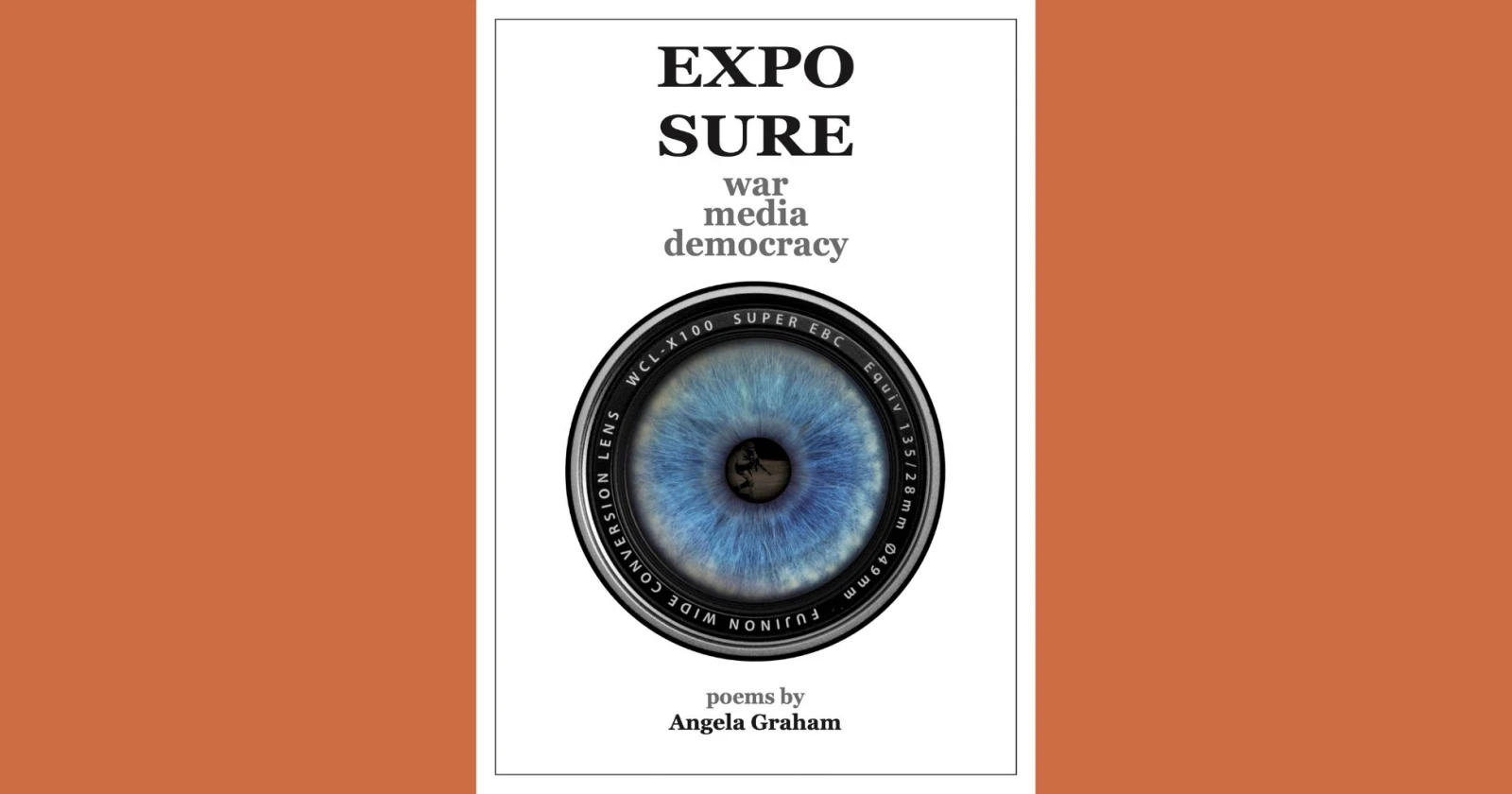
My new collection of poetry, Exposure: war, media, democracy is described by its publisher as “photo-poetry with the photographs left out”. Since photo-poetry as a genre usually displays paired photographs and poems, my decision to exclude the photographs which prompted the poems is an unusual one.
The collection began from the impact made on me by a newspaper photograph: a Russian soldier, killed at the outset of the Russian invasion of Ukraine in February 2022, lying supine in snow by an armoured personnel carrier. I saw the photograph on the war’s first anniversary in a retrospective montage. A poem resulted and then another seventy three, in response to journalistic coverage of the Russian invasion of Ukraine, the Israel/Gaza war and conflict within democracies.
Poetry prompted by images or other art forms has a long tradition. An unspeaking work of art communicates itself. Writers give words to its effect on them. Poetry is an ancient art; photography is less than two centuries old. Indeed, photography was initially seen as a mechanical process, capable of recording reality but not of interpreting it.
One of the most influential pioneers of photography, Julia Margaret Cameron did much to sway opinion in favour of accepting photography as art through her 1875 photographs prompted by Tennyson’s The Idylls of the King. Her tableau-like renditions externalised images which had, until then, existed only in each reader’s mind or been interpreted via the minds of artists. Her contemporaries could see people like themselves “being” Arthurian characters with a visual veracity astonishing at the time. It was art but not as it had been known.
Today we don’t question photography’s creative potential. We are not naive about the manipulation of images and we know that our most heartfelt responses are vulnerable to the lies told us by fake media.
Since photographs of Crimean War battlefields of the 1850s, photographers have been accused of mocking-up battle scenes but, conversely, the impact of much war photography comes from the verified proximity of photographer and incident. The photographic impact depends on truthfulness. This really happened. Always the implied, What is your response?
Poetry also employs this dynamic. At the root of every poem must be truth, no matter how fanciful the genre. In the weak poem we recognise a weak sense of truth. We are disinclined to respond with a candour we suspect is missing from the poem. Communication is short-circuited.
It is not surprising that photography’s capacity for truth-telling has attracted the responses of poets. The term photopoem was first coined by Constance Phillips in her book, Photopoems: a group of interpretations through photographs (1936). To generalise for brevity’s sake, the process of photopoetry began as photograph then poem. Then photographers responded to poems. Then photographers and poets worked together; sometimes poem first; sometimes photograph. The weakest work results when either genre merely describes the content of the other, contributing nothing.
One of the most successful examples of a photographer responding to poetry is Sweeney’s Flight (1992), by Seamus Heaney and Rachel Giese. In the preface, one of the reasons Heaney gives for his unease at attempts to marry the two genres is his sense that a photograph gives itself, as it were, absolutely in the moment, whereas a poem needs both many words and time for them to have their effect. But he was won over by Giese’s portfolio and he selected extracts from his Sweeney Astray (1983) which he thought had potential as stand-alone poems. Giese didn’t seek to illustrate, but to capture images prompted by how these poems had resonated in her.
Paul Muldoon and Bill Doyle’s Kerry Slides (1996) exemplify photography’s capacity to open out from the poem into a new dimension, as though the poet, having delivered the poem, leads us to the room’s threshold, opens the door and, with a gasp of realisation, we see something of his words made actual but different, through a photograph.
Among books where photographs precede poems, Remains of Elmet (1979) by Ted Hughes and Fay Godwin is a stand-out. Re-issued in 1994 as Elmet with new poems and photographs and a sharper format, the volume charts a landscape familiar to Hughes. It’s as if, through Godwin’s photographs, Hughes sees the familiar anew and responds with passionate acuity.
A teenage girl in Afghanistan burned herself to death in protest at being forbidden to write poetry. The poet and journalist, Eliza Griswold and the photographer and filmmaker, Seamus Murphy investigated the event and its repercussions. They returned to collect poems by Pashtun women and to photograph everyday life. Griswold worked with translators to render into English the indigenous form of the landay, a couplet with nine syllables in the first line and thirteen in the second. In I Am The Beggar Of The World: Landays from Contemporary Afghanistan (2014), Murphy’s fifty black-and-white photographs take the reader/viewer close in to life in these Pashtun communities, and especially into the veiled lives of women. The poetry opens out the image because it allows us to hear, albeit in translated form, more directly from the people: voices rather than captions.
Anastasia Taylor-Lind ‘s One Language (2022) demonstrates the potentially powerful impact when photojournalist and poet are the same individual. In Nagorno-Karabakh, Ukraine and elsewhere Taylor-Lind reports and photographs, documents the mundane details of the journalist’s trade and moves between the registers of commentary and poetry. What, she asks implicitly, is the “one language” all of us understand? Is it violence? Is it photography? Is it empathy?
Three years after I saw the first photograph my book was published, just before the fourth anniversary of the Russian invasion (and I was refining and revising till close on publication). Photographs of the same dead soldier were taken by many photographers. Judging by the changing weather, this had been across a number of days. Snow reached the area at 8.15 the morning after the death. I found what is probably the earliest photograph, taken the previous afternoon, of the body lying on the mundane, damp asphalt of an urban parking lot, rather than the snow-covered, anonymised “field of battle” of later photographs.
Composition, changing natural light and cropping potentially affected the significance of this death as it was presented to consumers, whether as defeat of a guilty foe, poignant death in a foreign country, impenetrable mystery… I read up on the careers of the photographers, their entry into this particular theatre of war and their leaving of it (through death in pursuit of a photograph, in one tragic case).
In the book’s several series of poems on media reporting of a number of conflicts, I was aiming to create in the reader’s mind a version of the image contents, to convey my own response and to incite the reader’s own creative imagination. I tried to respond honestly, without manufacturing meaning or moralising. Right at the outset of the book there was only one honest conclusion the first poem could have.
Photograph of a Dead Russian Soldier:
taken 26 February 2022,
seen by me on the war’s first anniversary
Rotting inside his uniform – he would be
but his final lover, the snow,
has lain on him so intimately
he is possessed entire;
his face veiled;
his right arm flung out on frozen linen
in his last abandon.
His up-turned wrist, his naked palm – florid – mimic life
but his fingers have scooped deep in a font of snow
as though he’ll rise and bless himself, thumb a swift cross
on our foreheads, eyes, lips, hearts,
shudder, and stumble on.
He’ll not be rising.
In a corner of the frame some pre-fab storage units
hint that he died in the back lot of a retail park.
Ochre and khaki, his stricken tank, behind him
(he did not leap far)
is motionless and only metal now.
I see the stillness, and the snow – a stalled assault,
already a year ago.
From all of this I can’t wring any meaning.
(Photo Credit: Sergey Bobok / AFP / Getty Images 1238775404, 26 February 2022. Source: The Atlantic: ‘Photos: Chaos and Resistance in Ukraine’ by Alan Taylor)
As soon as a poetic response to a photograph is twisted against its grain, a poem loses truthfulness. Without truthfulness there can be only ersatz meaning.
My decision not to include the photographs arose from an instinct about keeping a tight focus on what was most important to me to convey. I am by trade a film maker, with much experience of cutting extraneous material. I was trying to face aspects of reality which photographers and journalists had laboured to bring to me. The poems are my reports from that field of encounter. Each reader, when reading or hearing a poem, will have a unique image-bank, drawn on to compose a version of what I describe and it’s that intimate creative potential, which works both from what is held in common and what is deeply personal, that interests me here. Given the specificity of a photograph (this particular retail park), if I had paired photograph with poem I would have risked limiting the reader’s personal vision: this particular retail park rather than the image created in the reader’s mind by the words and my placing of them.
The eye, as it were, grasps a photograph whereas the eye has to go on a journey through a poem; and, very importantly, a poem has be both a medium of expression and a song (in the broadest sense); we do not hear a photograph, though it will have its own form of harmony.
I prefer readers to meet the source photographs, if they wish to, respecting copyright and access, at a distance from my take on them. The sections of the book are organised around imagination, which is potentially liberating and creative because it can take us into the lives of others and helps us break free of limiting patterns of thought and behaviour. Imagination, when it’s flourishing, fosters daring, empathy and life. I was acutely aware of how reportage could draw me into someone else’s life so that I could imagine (to an admittedly limited, yet genuine, extent) being the person in the report.
I was concerned also throughout the book to encourage readers to recognise the universality of conflict. A report from a distant war tells us something about ourselves right now, right here.
A Matter of Degree
Bucha, Suburban Kyiv
A naked woman in a fur coat, dead.
Condom wrappers on the floor above.
Whatever happened there – it wasn’t love.
Scant radio news but in my head
these words kept pressing to be understood
– something for me to grasp here, if I could.
The condom-users gone, a woman dead.
But why in fur? A pornographic hook?
She wanted it so much she chose this look:
deluxe seduction, high-class come-to-bed.
Is that the fantasy they made her play:
the lustful woman who leads men astray?
woman in fur coat condom wrappers dead
One click: The New York Times. She lay,
prone on a blanket, on backyard clay.
A short fur jacket pulled up to her head
conceals her face – her hair spread wide
like a dreaming débutante’s. She died
in the cellar under the garden shed.
Long skid marks on her livid thighs
showed she’d been dragged out. I realise
the cameraman has given her a shred
of dignity: she’s naked from the waist
but a passing policeman blocks our gaze.
As my small mercy I will leave unsaid
the detail of her extreme exposure
to the men who, as they shot her, posed her
so we’d know she was, to them, degraded.
Then they withdrew. Tower blocks look down
on the wire netting of the chicken run
where Mr Shepitko’s trees spread
their bare branches over his smallholding
and the gloved young man focussed on unfolding
a green/pink chevroned cover for a bed
and the policeman stooping by her head
and the old buckets, ash heaps and that shed.
A naked woman in a fur coat, dead.
Those soldiers – they buried themselves in her.
Contempt, I see is at the root of murder.
I search my conscience and I count my dead.
Sources: BBC Radio 4, The World At One, 5 April 2022, Photo Credit: Daniel Berehulak, The New York Times, 11 April 2022, ‘Bucha’s Month of Terror’ by Carlotta Gall
Exposure: war, media, democracy, Culture and Democracy Press, 2026. £14.00 Available from No Alibis Bookstore, online and EXPOSURE: war media democracy – ffolio.wales
***
Exposure: war media democracy’ - Review by Alan Millar
The 74 poems of Angela Graham’s ‘Exposure’ covers an expansive territory, contemporary and historic, geographical, cultural and moral, raising pertinent questions about democracy, the reporting of tyranny and ethno-nationalist driven brutality, in our increasingly troubled modern world.
Each poem is a response to a photographic image, or a development from this. Section one, ‘Soldiers and Civilians’, focusses on two ongoing conflicts, the Russian/Ukrainian war and Israel/Gaza. The second, ‘Citizens and Politicians’, extends the conversation into conflict and civil society.
I approached this collection somewhat sceptical about the merits of writing poems/photopoetry from news reports, a vantage physically remote from actual events. Graham wins you to her mission with the power, diversity and sincerity of her reflections, even allowing me to add some favourable arguments. News, whether copy, or images, is created to be responded to, with a poetic response as valid as any. Her work echoes of the politicized occasional verse written from war reports that appeared in the Belfast United Irish newspaper the Northern Star during the French Revolutionary Wars of the 1790’s.
The footnotes, citing her source image, connect imagination with reality as well as helping readers grasp the deeper intentions of the poet.
The opening suite of poems, are a study of photos of a dead Russian solider, taken in 24-27 February 2022, by different photographers. The forensically observed details, blended with her own reflections, create a disturbing immediacy of Putin’s tyrannical war: rotting body, snow, retail park car lot, tank. Grim, fascinating context includes poems about Russian oligarch, Yevgeny Prigozhin whose private militia, the Wagner Group, fought in Syria, Russia and Ukraine. He was killed in an air crash, possibly by sabotage.
Outrage at the Israel/Gaza conflict often focusses on civilians. In ‘I imagine I am Noor’s Mother’, a grief-stricken Palestinian mother buries her child. Graham explains her thinking behind slipping into the bodies of others, in ‘On Presuming to Speak in the Persona of Someone Encountered through Journalism.’ She sees the potential for personal transformation, of creating a momentum for change.
‘Opening Hell’, is a damning critique of Israeli PM, Benjamin Netanyahu’s comments, claiming that he and President Trump ‘have a common strategy, including when the gates of hell will be opened.’ ‘They speak so glibly about Hell’, Graham says, ‘…for the devil longed since Adam fell / for human fiends.’
One of the most powerful geo-political images in the book is found in ‘The Night Sky Over Tel Aviv’ during a bombardment by Iran. In the first two stanzas Graham describes the iconic half dome in the porch of the Mosque of Shah Abbas, in Isfahan, in all its ethereal beauty. The final stanza describes ‘Iron Dome’, the Israeli anti-missile defensive system working over Tel Aviv. One is left with the wild sense of the Mosque (half) dome sitting over Tel Aviv, the tracer of rocket and counter-rocket blending with the decoration on the Mosque dome. In addition to the terrible beauty of this image, there is the demographic statement; the numerically superior Islamic world – as yet, deficient in military and political power.
The following poem ‘Staying in Tehran’, focusses on the report of a resilient individual who, in the wake of an Israeli attack, refused to evacuate. The shift in focus to the plight of an Iranian individual, a reminder and not the only one, that these are conflicts Graham has taken sides on, though thoughtfully, not with emotive populism.
Graham uses her deep understanding of religion to powerful effect throughout. ‘God only had one son and didn’t spare him’, she quips sharply in ‘I Imagine Being a Ukrainian Soldier Who Speaks to Me from Inside the Besieged Azovstal Steelworks, Mariupol.’ In ‘Your Worst Fear’, she compares her own poetic reconstruction of the last moments in the life of a soldier vehicle-flattened at a roadside, with how God might do it ‘re-uniting flesh and essence.’
In ‘Station Fifteen, Kryvyi Rih’, the poet places a woman and soldier, from a photo captioned ‘Playground where a Russian rocket killed 9 children on Friday 4 April 2025, Kryvyi Rih, Ukraine’ on Christ’s journey along the stations of the cross. There are 14 in total, from trial to burial, with Graham’s 15th being ‘where the last hope is gone.’
Natural processes often provide a backdrop, with the power of this imagery crossing the boundaries between poems. The snow around the dead Russian soldier sits in stark contrast to the hot sands of Gaza. Often nature is brutally indifferent to the humanitarian crises going on. In ‘Point of View’, describing sufferings in Gaza, she says;
‘‘The heat in shadeless avenues of rubble,
The hot torpor in the waiting-pens
But still the ocean’s busy with the coast, the waves arriving.’
In ‘A Plan for the Development of Gaza’, the sand, created though processes ‘crushing large things into small’, is a metaphor for the destructive power of the Israeli military.
The importance of the intimate and localness stares from the cover of this book, the picture of the poet’s iris taken by Ballymoney optician Brian McKeown. The opening stanzas of ‘I Imagine the War Approaches My Town’, mention ‘the harbour’ and ‘the last ferry to the island’, placing me in Ballycastle. Then the disconcerting transformation of imagery: ‘The army is coming/ along the coast road. / Their drones will be ahead of them, / shredding the air.’ It could be any coastal town. Yours.
Later in the collection, Graham throws her net wider. The lynching of Afro Americans Thomas Shipp and Abram Smith in 1930 in Indiana, the murder of activists in Mississippi, 1964. Not forgetting the Northern Ireland conflict.
The pair of poems, ‘The Illegal Prorogation of Parliament, Westminster’ and ‘Assaults on Democracy, Washington’, consider threats to democracy from within. ‘Trump, Vance’, revisits the infamous meeting between President Trump and Ukrainian President Volodymyr Zelensky in February 2025. The nastiness currently infecting the heart of western democracy is poetically scrutinized.
I have touched on a small number of the multitude of interweaving themes and poems contained within this fine collection. Have a perusal yourself; find your own preferences in this thoughtful and disturbing mirror to some of the most challenging aspects of our modern world.
Alan Millar is a poet and journalist as well as Editor of Scots Language Society journal Lallans.
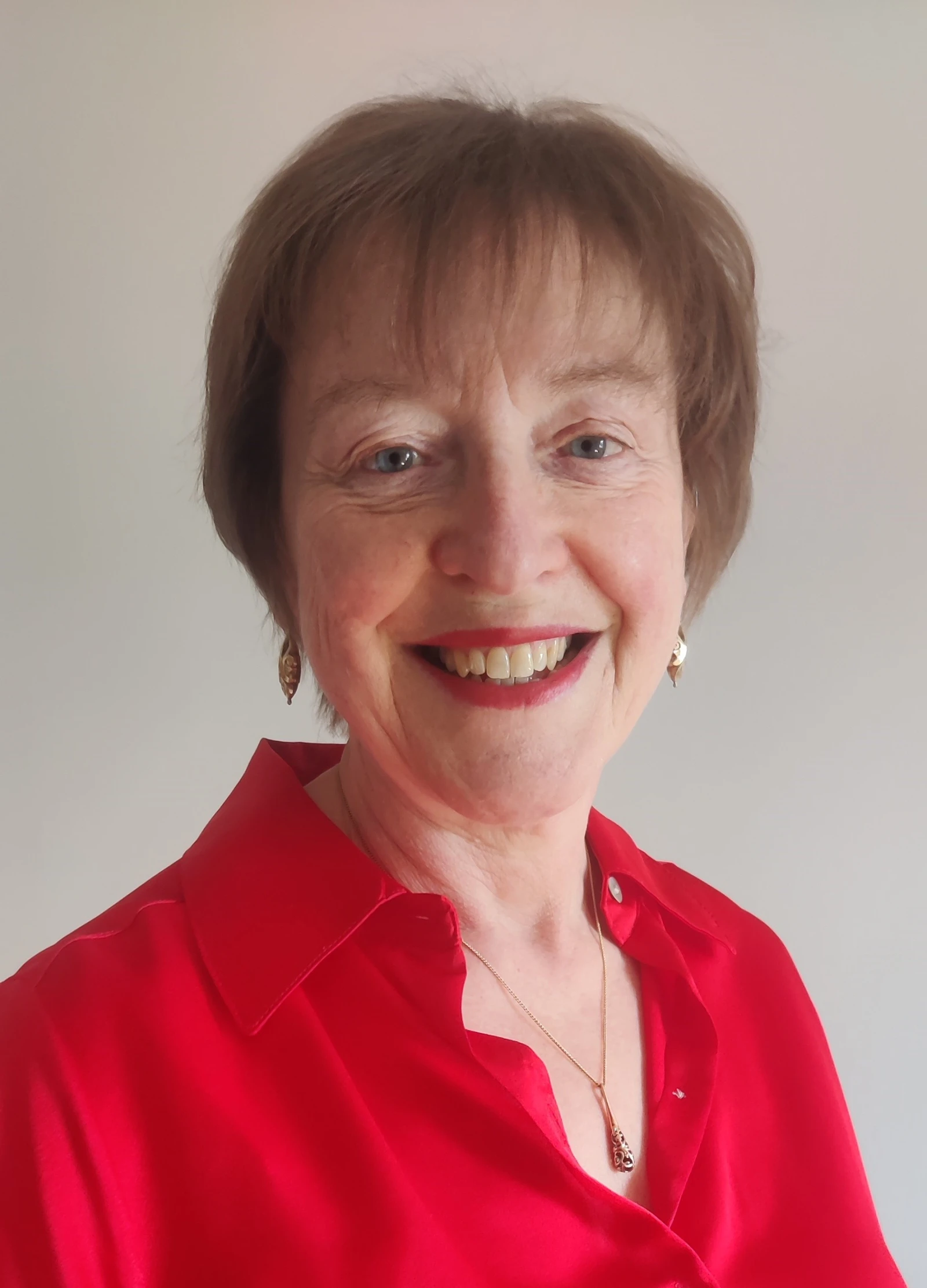
Angela Graham’s new poetry collection Star: poems for the Christmas Season is published by Culture And Democracy Press. Her collection of poetry, Sanctuary: There Must Be Somewhere 2020 and collection of short stories, A City Burning 2022 are published by Seren Books. She is an award-winning film maker and BAFTA-nominated screenwriter. angelagraham.org
More work by Angela Graham


Tel: 028 7126 6946
Email: hueditor@theverbal.co
Verbal, Stable Lane and Mall Wall, Bishop Street Within, Derry/Londonderry, BT48 6PU
 company
Copyright © 2026 Honest Ulsterman