


A Collaboration
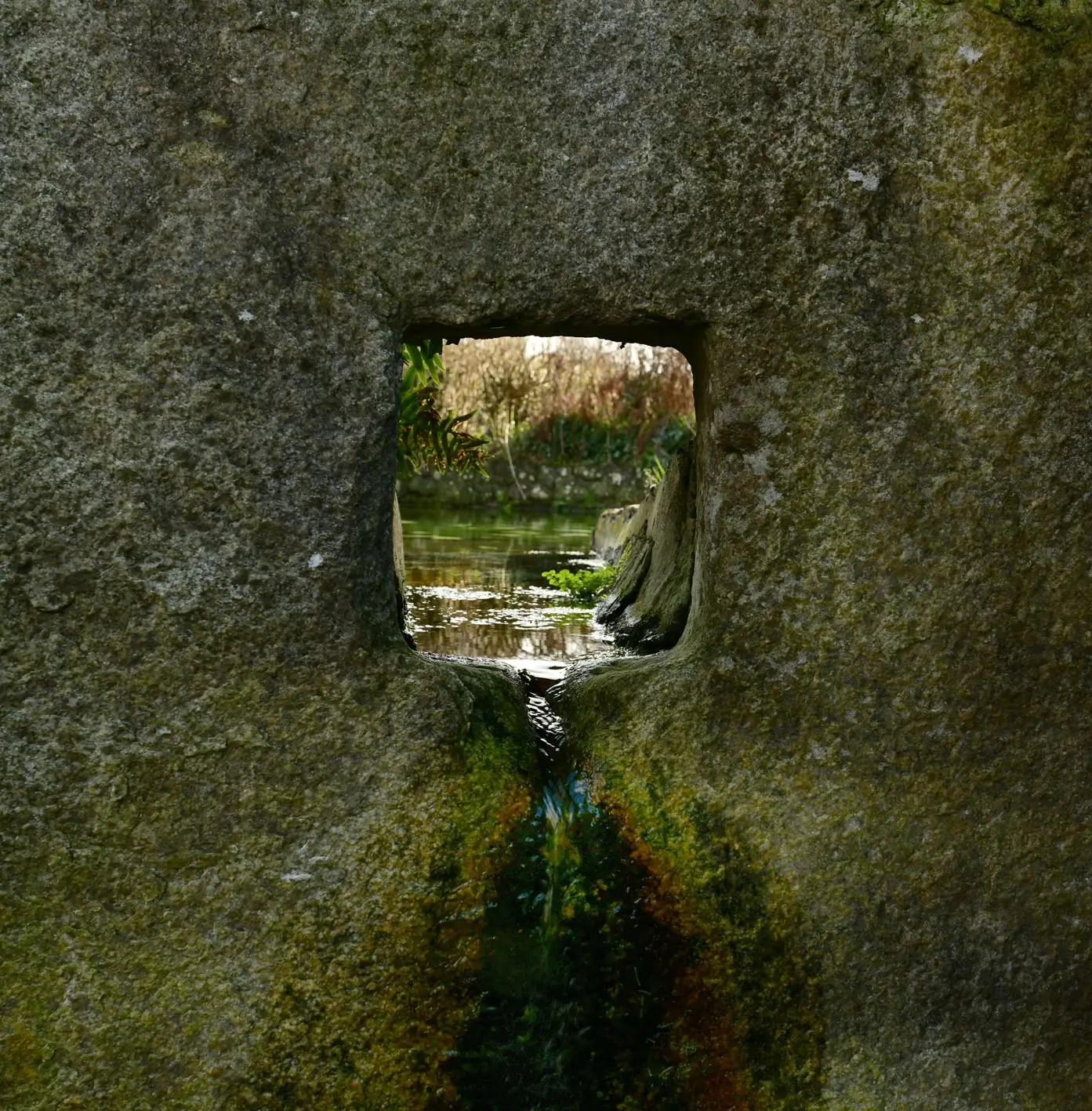
The pandemic has made sanctuary a very prominent concept. An inviolable, safe space, sanctuary speaks of openness and boundaries; of inside and outside; the spiritual; the protection of others and of the self and the environment. It is very rich ground to explore. A funding call-out from the Arts Council of Northern Ireland focused my mind on sanctuary as a theme for writing.
My debut collection of poetry is under consideration with a publisher. As soon as I began to contemplate a second collection the theme of sanctuary came to the fore. All of us are aware, to some degree at least, of the plight of those who have to leave home to seek sanctuary. We witness their vulnerability. We also witness their courage. If I were seeking sanctuary in a country foreign to me, I would particularly value a welcome from writers and poets, from fellow creatives, whatever the barriers of language and culture. I would hope for a listening ear and a chance to listen in return. I would hope that my voice could become part of that country’s chorus while sharing the best of my own. Couldn’t I immediately move towards offering that kind of welcome – via my poetry collection?
Inherent in sanctuary is the notion of a hosting, welcoming place. How could I imbue the collection itself with that spirit? By opening it, from its inception, to other poets. A collection is normally the work of a single poet but this idea took hold. So, which poets?
As I have been living recently for much of the year in Northern Ireland, which is where I’m from, and the rest of the year in Wales, where I’ve lived for decades with my Welsh husband and family, I opted to look for poets in both places. I reckoned that a S.I.A.P. Award from A.C.N.I, could pay two poets from both places to contribute a poem each, allowing plenty of time for drafting and polishing and also time for working in more than one language where appropriate.
I decided to look in both places for a poet who has experience of having sought sanctuary and a poet with particular experience of sanctuary in some other way.
Secondly, it was important to me to find people happy to work with me rather than writing separately from me. Collaboration has always been something I enjoy.
And, thirdly, I wanted to invite a poet to act as mentor to my own work. Since the poet, Glen Wilson has already, and generously, done that during 2019/20 in relation to my debut collection, I invited him to take that role again. I value the sharpening and focusing effect of having a skilled reader of my work.
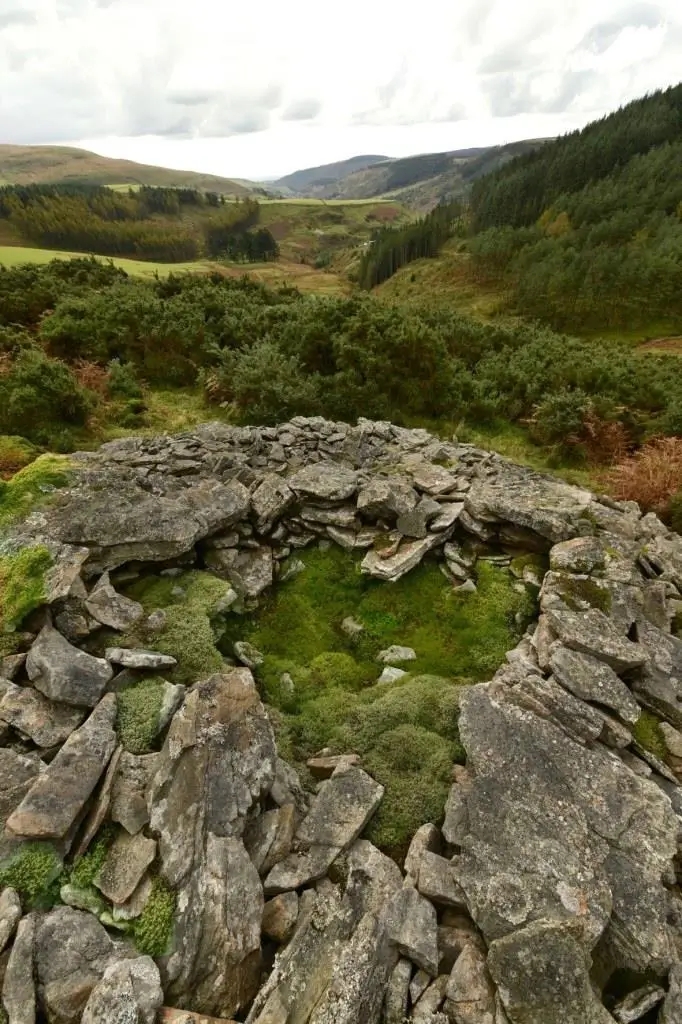
Image: Phil Cope, A Garw Valley cairn, Wales.
Happily, I did receive funding via a S.I.A.P. Award, for a period ending in August this year. Finding the two poets in Wales was not difficult. Phil Cope, from Cardiff but living now in the former coal-mining area of the Garw Valley, is a writer and photographer with an impressive roster of books on holy wells and sacred places across Britain and Ireland. We met during a dramatic clash of interests between devotees of an ancient shrine in Wales and the residents of the housing estate on its doorstep. Phil, who is a highly experienced community arts worker, had the tricky task of accommodating a wide range of notions as to what and where is sacred and inviolable in that place.
Phil’s extensive poem, ‘Another Lake Another Land’ is like a Celtic knotwork design, in which a single line takes off, swoops and plunges and turns back on itself, resolving into a dazzling, coherent whole. It begins in south Wales with observation of a pair of mating peregrine falcons in the Garw Valley. Its five sections take us to the Bosphorous, to Iran, to India and back, but to a starting point where what is seen is the transcendent: the Valley as a site of vision, a reality at once deeper and higher. It’s a grounded, soaring poem that examines refuge and risk; the permanent and the eternal.
The other poet in Wales came to me through the auspices of the indefatigably generous poet and publisher, Matthew M. C. Smith, who put me in touch with Swansea Asylum Seekers Support. Since 2003, this group has published much impressive work by asylum-seekers and former refugees via its Hafan imprint. Dr. Tom Cheesman of Swansea University and a trustee of S.A.S.S., suggested a poet who works under the pseudonym, ‘Moon’ to protect his loved ones in his native Iran.
Covid restrictions meant I got to meet Moon only once, in a park in Cardiff at the end of his working day. I realised, as I was hurrying to the rendezvous, that I had no idea what age he was or what he looked like because I hadn’t asked many questions, wanting to err on the side of discretion, given his circumstances. We found each other by Cardiff Castle, each of us clearly casting around for someone. We sat on a bench and talked like old friends. I had, by that point, had several exchanges with him about his poem which is (impressively, since it’s not in his native language) in rhyming couplets. It’s about the search for sanctuary in holy places and holy books but the finding of it in ‘YOU’, which is the poem’s title. The poem lists a series of tragic and joyful occasions, some tangentially allusive, such as in the line:
When I had nothing left except Maria’s umbrella
I discovered in our meeting that this is how it had been for Moon. A woman called Maria gave him an umbrella because she saw him in the rain, and she became his first friend in Wales. One When after another accumulates to a turning-point of recognition of who it is who has kept him going.
My contact with Moon had consisted of emails which, though brief, conveyed a great deal. I felt a strong connection flowing. I have written several poems prompted by Moon’s comments. It’s as though some of his experience has entered me. For instance, in one email he gently explained how painful it is for a person to be penned into the identity of refugee rather than citizen, something I hadn’t previously thought of. I had a dream in which the Welsh word, ‘ystyried’ was addressed to me many times. This means ‘to consider’. Hence this title:
CONSIDER
Why do you still call me ‘refugee’?
Do you want me to be forever fleeing?
I have fled. Now I am here,
trying to keep both feet on the ground
and find my balance.
Sometimes I feel I have two hearts.
One, the first-created
− taut as a drum-skin in my chest −
trembles at far-off shifts of energy
in the fault-lines of the home I left.
The other has grown itself around the first
as lymph spreads on the surface of a wound;
as albumen, fragile, tremulous,
helps a new life mesh itself together
somehow.
I was a refugee. Now I am here
where I have to do so much explaining,
where I have to live so much on your terms
and I am growing this second heart
as bravely as I can.
Where I came from will always be
where I come from
and now I come from
− and so let me be −
here.
In Northern Ireland, I had earlier made online contact with the Italian poet, novelist and cultural activist, Viviana Fiorentino. I was fascinated to hear of her work with economic migrants (she herself is one) and asylum-seekers. I was particularly struck when she said she had noticed that in workshops in which Northern Irish natives took part, those who had themselves experienced in the Troubles an uprooting, a banishment, a forced leaving of an area, stood on the same rough ground as those who had been obliged to leave home for work or to stay alive. There was some shared understanding of what it is like to feel uncertain of a welcome and also of a type of bereavement from place and connections.
It had been a pleasure to contribute last year to two projects with which Viviana is involved. I translated a poem by Livia de Stefani for Le Ortique which platforms under-appreciated women artists. I wrote a poem about the Turkish-Kurdish journalist, Nedim Türfent, for Letters With Wings which campaigns on behalf of unjustly imprisoned writers. I was delighted when Viviana agreed to join the Sanctuary project.
Viviana and I met on zoom to consider the four drafts of her poem. I had sent written responses to each. I then spent time with the four drafts, getting to know them in relation to each other, noting what had changed or endured between them, noting the poet’s movements from and towards this idea or that expression, trying to be in tune with her intentions. Two things particularly struck me in our zoom encounter. Between the third and fourth drafts there is a difference at a certain stage between a very simple exposition of a point and a more complex one. What was to be my suggestion to Viviana about which ‘worked’ better? Should I be neutral or offer a decided opinion? And would the latter weigh too heavily on her judgement?
In the process of working with the poets I have thought of each of them as being like someone who strikes a bell, a note rings out, both of us listen to it. I can offer my response but it is the prerogative of the poet to accept or decline. In this case, I preferred the complex version because, though the simpler one worked well, it might slip past the reader too easily whereas the complex one went deeper, requiring more effort from the reader but being more resonant, more rewarding. I understood that I had to be a clear echo rather than a muted one. Though I certainly have a role in relation to the material which is markedly different from the poet’s, it would not help to be equivocal. I opted decisively for the complex version. Viviana, I believe, agreed. However, if she changes her mind, that’s fine, because I have played my part and because this process of collaboration with the poets is about fostering freedom: helping to free the movement between impulse and word-on-the-page and aiming for a delicate freedom in exchanges about the poem as it develops.
The other, astonishing, experience was that in the version Viviana wrote after my first set of comments there were some lines that had great effect in the context of the whole poem:
A body leaving the house, the mourning
of a bird for its nest, a catastrophe
for every heart it’s the end of childhood
I told Viviana that I thought she had made a good decision to remove these lines from the next draft because they seemed to me to be powerful but the seed of another poem, and I added that there was a tragic note to them. Antigone came to mind. In some surprise, she revealed that she has begun work on a piece related to the tragedy of Antigone. Of all the echoes I could have heard, I picked up the Antigone one, which was present in Viviana’s psyche, if I can put it like that. Was it a subconscious prompt from that Greek word ‘catastrophe’? Or did that first line hint at a sister’s quest for honourable burial for her brother?
Of her involvement with the project Viviana comments:
“I'm enjoying the project and theme itself so much. I feel so lucky to work on it as, by its nature, the Sanctuary is a very current concept. In a century where our planet is put at risk and we are too with it, it is urgent and essential to think of what is sacred for us, what we want to protect. Anything we protect is something that protects us at the same time but also makes us a whole community. Reflecting with other artists on this concept is giving me the possibility to expand my point of view or change it, feeling connected, being part of the same community where we imagine a Sanctuary, a place, a body, a state of mind where we feel safe or we give others the possibility to be safe.”
Since I had found a male poet in Wales with experience of having been a refugee, I sought a female counterpart in Northern Ireland. She was not easy to find. Over five months I contacted many organisations and individuals, with no success. I learned that, in Wales, there is a longer experience of receiving and integrating asylum-seekers and refugees into cultural output. There has been time to build relationships and facilitate work with poets and potential poets, as the Hafan publications demonstrate. In Northern Ireland, very few contacts knew of female poets, though they could suggest practitioners in other disciplines. In fact, poets, I was told, were scarce. This is interesting and deserves further consideration as to what the barriers are and how they can be surmounted. I also grasped that the experience of being an asylum-seeker can be so fraught that there may be little time or emotional energy left for something such as writing poetry. There can also be an understandable reticence to go on the record in any way in case that jeopardises legal procedures.
I was introduced to some very interesting writers who are economic migrants to Northern Ireland, such as the South African, Nandi Jola and Jamaican, Raquel McKee who is also an actress. She plays the lead in Rosemary Jenkinson’s Radio 4 drama Lives In Transit about the knots in the asylum system between the UK and the Republic of Ireland. And I encountered work by the film-maker and writer, Csilla Toldy, who fled communist Hungary and who has written about that refugee experience in, ‘The Emigrant Woman’s Handbook’. But I felt duty-bound to keep looking for our fourth poet both as someone from outside Europe (since we had four Europeans already involved) and as a person who was not an economic migrant.
I finally found her due to a chain of generous connections culminating in a suggestion by community arts worker, Nisha Tandon (whose own experience of migration, from India to Omagh, is an inspiring story of patience and fruitfulness). Taaima Salem from Syria has just sent in the first draft of her poem, writing in Arabic and English. Hers is a poem of connection and separation; about the damage done by war and what might alleviate that. I intend to provide her with input from an Arabic-speaking poet-translator.
Information about the five poets involved in the collaboration can be found here.
Glen has given me feedback on the new poems I’ve written and has previously commented on others which are candidates for the collection. He also shared with me a powerful poem of his own which fits this theme, though he is not a contributor.
I have written a poem about what it was like to receive the initial drafts from these poets.
COLLABORATION: Sanctuary Poets Send Their First Drafts
I think of the artist that I know
who places mirrors underneath the sky
on a shoreline, in lake shallows, onto ice,
to catch the shifts of light,
rain showers, the slow slug’s crawl.
Onto these limpid discs
poems of happenstance inscribe themselves
and her shutter-click anthologises them.
Look: I have one on my wall
− clouds pool in a perfect O
among ragged pools of sea in a sandy heaven:
a world-doubling image.
I have been given four veiled mirrors,
each pregnant,
each caul’d and burgeoning,
pulling me to peel away that skin and I
am imaged within an image,
looking down
to a world that is swimming up to meet me
and up
through depths towards myself.
I am lured in, thrust out, dazzled and enlightened,
in dialogue with icons,
these double-worlding images.
Moon has written a poem in celebration of the camaraderie with his fellow contributors and how precious it is to have ‘a travel mate who feels my feelings and makes the way easier for me even for a moment.’
Phil writes, “This was a unique (for me) and often challenging experience ... but one which resulted in a better piece of work.”
Very soon we will have four completed poems. I am looking forward to working with the many resonances that have arisen for me from the experience of closely engaging with the work of these poets. The concept of sanctuary has been enlarged for me. I feel the collaboration has only begun. I will add new poems of my own and have the complete collection ready for submission to a publisher by New Year’s Day 2022.
Angela Graham is a Welsh-speaking writer and film maker from Belfast (BAFTA Cymru Awards, Oscars entrant). Her poetry has appeared widely. Her short story collection, A City Burning has been longlisted for the Edge Hill Short Story Award 2021. She is currently creating a collection on the theme of Sanctuary in collaboration with two poets from Wales and three from Northern Ireland, supported by her third SIAP Award from the Arts Council of Northern Ireland. She has received two Writer’s Bursaries from Literature Wales @angelagraham8
Top Image: Phil Cope, St Mullin's Well, Ireland.
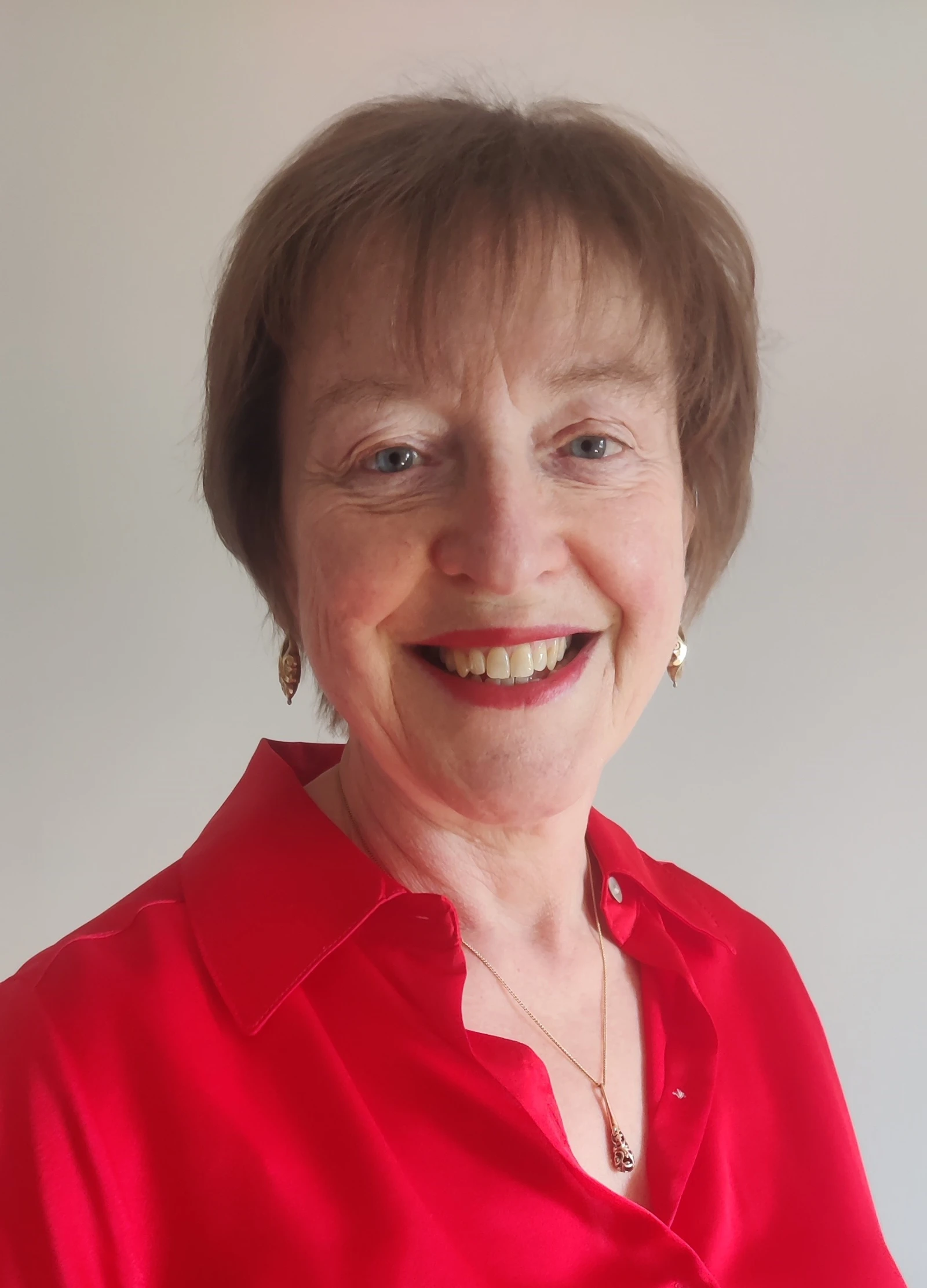
Angela Graham’s new poetry collection Star: poems for the Christmas Season is published by Culture And Democracy Press. Her collection of poetry, Sanctuary: There Must Be Somewhere 2020 and collection of short stories, A City Burning 2022 are published by Seren Books. She is an award-winning film maker and BAFTA-nominated screenwriter. angelagraham.org
More work by Angela Graham


Tel: 028 7126 6946
Email: hueditor@theverbal.co
Verbal, Stable Lane and Mall Wall, Bishop Street Within, Derry/Londonderry, BT48 6PU
 company
Copyright © 2026 Honest Ulsterman