


An Interview
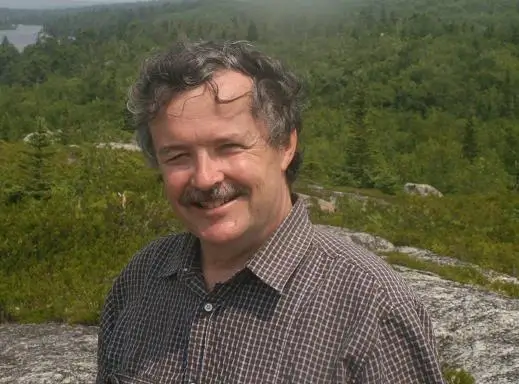
Gerard Beirne: Brian, looking back at your publishing history, I see you have been quite prolific with a wide range of books from poetry collections to nature writings, editorial work and so on. It’s very impressive, to say the least. How have you managed such versatility?
Brian Bartlett: I don’t believe one genre is innately superior to another—and wouldn’t insist, as some do, that poetry is the supreme sort of literary art. That’s one reason why I’ve rarely felt torn about pursuing several directions instead of one. Another reason: finding pleasure, as a reader, in experiencing many branches of writing. Practically, having a solid teaching job for many years—in a university that didn’t question my creative work—also supported the versatility you mention.
GB: Do you see your prose nature writing as an extension of your poetry or as a very different form altogether?
BB: That’s not the easiest question to answer, but your word “altogether” compels the answer “more the former than the latter.” The structures, language and experiential raw material aren’t the same, and the degrees of conciseness differ—but in both kinds of writing I pay attention to sentence-shaping, word-choice, rhythms, the sonic qualities of language. Still, the nature-journaling revels in kinds of expansiveness and digressiveness that my poetry hasn’t opened up to—though I have published a few long poems.
GB: You have edited a number of books in Porcupine’s Quill’s The Essential Poet series as well as other selections by significant Canadian poets. How have you found this experience?
BB: Editing choices of other poets’ work (and, in the case of Alden Nowlan, a collected) might feel secondary to the creation of original art, but it’s an activity I feel happy and fortunate about. The editing process has involved homage, the excitements of close readings, and chances to pay thankful tribute to mentors and friends such as Nowlan, Gibbs, Bauer and Domanski.
GB: You grew up in New Brunswick, spent some time in Montreal before settling in Halifax where you have been based for over thirty years. For someone so rooted in landscape as you are, how have these different environments shaped your writing?
BB: During my upbringing in New Brunswick, Wolastoq (the St. John River) was a steady presence, but most of my writing about it didn’t happen until I left for Montreal and began to realize more fully its fluent magnificence. Through childhood the Bay of Fundy was close enough that it also affected my poems’ imagery. A few poems grew from sites and events in Montreal, but my longest, most ambitious poem touching on several neighborhoods of that great city only got written after my move to Kjipuktuk/Halifax. Through three decades of living in Nova Scotia, and of exploring a few of the province’s small islands, both my poetry and prose have often been ocean-gazing.
Some writers mostly delve into mythic, metaphysical or fantasy worlds; others constantly feel a need to render the given—whether personal, social, quotidian realities. or those of other species and non-human dynamics. I’m mostly in the latter camp, but feel the aesthetic inclination wasn’t so much a considered choice as a result of lived experiences, such as fascinated explorations of natural settings—forests, fields, brooks, mountains, beaches—from childbood on.
GB: Wanting the Day: Selected Poems was published by Goose Lane Editions in Fredericton, New Brunswick and also by Peterloo Poets in Cornwall, UK. Was it important to you to have your poetry recognized outside of your home country?
BB: While the greatly surprising in-person offer by the late Harry Chambers of Peterloo to publish a mid-career selected felt affirming, I frankly have no idea how many copies of the book sold in Britain. At launches in Calstock, Exeter, York and London the audiences’ enthusiasm was warming, and the Peterloo edition got three positive reviews in England; but I have no illusions about the book gaining the poems droves of overseas readers. Poets sometimes simply need to take comfort in thoughts of an occasional, unknown reader being pleased or moved by a poem or two they’ve written.
GB: In terms of Irish poetry, are you able to keep abreast of what is happening here? Are there any Irish poets in particular who have been influential upon you?
BB: In my early twenties I wrote a B.A. Honours thesis, “Dialogue as Form and Device in the Poetry of W.B. Yeats.” and soon after that I began reading the earlier collections of Heaney, Mahon, Muldoon, Montague and Kinsella. Since leaving Montreal, I’ve also valued books by Boland, Carson, McGuckian, Meehan, Ni Chuilleanain, and Ni Dhomhnaill. Irish influences on my poetry might appear in flickers but be hard to pin down. One model I’m conscious of is Ciaran Carson’s long lines enjambed and followed by indented, much shorter lines, which can be read as continuations of the previous lines more than as separate entities. Reading Carson’s lines prompted me to use that sort of structure in several poems.
GB: You taught English and Creative Writing for a long time but retired in 2018. Do you miss it? And if so, what do you miss about it?
BB: Even after decades of teaching, I felt like an introvert never quite at home standing at the front of the classroom facing anywhere from 15 to 60 students. Sitting around a table, seminar-style, was always my preference, one reason why writing workshops (and smaller lit classes) always suited my nature and temperament better. What I miss most about the workshops are chances to watch beginning writers change and, from month to month, strengthen their language, imagery, voices, and sense of structure. But mostly I feel energized by retirement and more relaxed, with plenty of writing still to be done.
GB: What are you working on currently or what other writing projects do you have in mind?
BB: In the past dozen years I’ve published four books of prose (including one of prose writings about poetry), and a collection and three chapbooks of haiku montages, but no multi-structured collection of poetry. This year I plan to finish a new book of poems encompassing work written since 2007. This winter I’ve also been building onto another nature-journaling project, this one started seven years ago, drafted only in Januaries to Marches, and destined to reflect a decade of winters.

Gerard Beirne's most recent collection of poems, The Death Poems: Songs, Visions, Meditations was published by Salt Publishing in March. He has published two other collections of poems, three novels, and a collection of short stories. His new novel, The Thickness of Ice, is forthcoming in 2024. A Hennessy New Irish Writer of the Year Award winner, he has been shortlisted for the Danuta Gleed Literary Award, the Bord Gais Irish Book Awards, and Kerry Group Irish Fiction Award. He lectures on the BA Writing and Literature Program at ATU Sligo, Ireland.
More work by Gerard Beirne


Tel: 028 7126 6946
Email: hueditor@theverbal.co
Verbal, Stable Lane and Mall Wall, Bishop Street Within, Derry/Londonderry, BT48 6PU
 company
Copyright © 2026 Honest Ulsterman