


An Interview
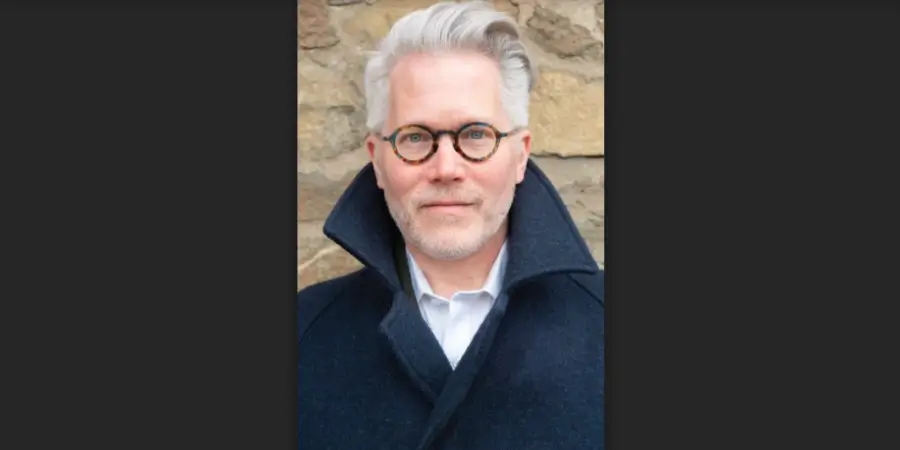
Mark Wunderlich is the author of four collections of poems, the most recent of which is God of Nothingness, published in January of 2021. His other books include The Earth Avails, Voluntary Servitude and The Anchorage. He is the recipient of fellowships from the Guggenheim Foundation, the National Endowment for the Arts, the Amy Lowell Trust and the Civitella Ranieri Foundation, the Wallace Stegner Fellowship Program at Stanford University, and his work has received the Lambda Literary Award, The Rilke Prize, the Missouri Review Editor's Prize, among other awards. Individual poems have appeared in the New York Times Magazine, The New Yorker, The New Republic, The Nation, the Paris Review, and his work is widely anthologized. He is the director of the Bennington Writing Seminars at Bennington College in Vermont, and he lives in New York's Hudson Valley, near the village of Catskill. To learn more, go to www.markwunderlich.com.
Gerard Beirne: Mark, one of the great joys of the pandemic (if that’s not an outlandish thing to say) was happening upon your poetry. Although I had occasionally read poems by you before, this time it was like finding you anew. The poetry touched me deeply and brought solace. And when your books landed on my doorstep in Sligo, I was entranced. Even the titles spoke volumes: The Earth Avails, Voluntary Servitude, God of Nothingness. The lyricism, the intense spirituality, the rigorous attention to language, … I was smitten. But to bring it back to you, Mark, what has your experience of the pandemic been like and have there been any unexpected joys?
Mark Wunderlich: First, thank you for giving me the chance to have a conversation here, albeit electronically. I’m so pleased to know that my work was being read by someone in Ireland—I love having readers internationally, so I was delighted to know you spent time with my poems.
At I write this, things here in New York State are opening up. The mask mandates are fading away, restaurants are opening, and so are movie theaters and museums and other public places. I went out to a local cider bar last night and drank cider and ate tacos with unmasked people, and everyone was smiling, and pleased, I suppose, to have emerged, but also to have survived. My experience of the pandemic was deeply local—I was in my house in the country, and I rarely left it. Work intensified, as the college I work for struggled to retain students, to keep things running with everyone far afield. I spent days answering emails, composing myself inside a little box on Zoom. My most recent book came out in January, and so there were many readings, podcast recordings, interviews, and all of it was conducted from my home, with no in-person contact with anyone. I have a yard and keep some chickens and a garden, and so I was busy there too. I was lucky, in that I was able to do my job, continue to be paid. I did not get ill, nor did I have to care for anyone who was. I did a great deal of stress baking, ate an enormous amount of cake. At night I read and watched films, and now as I look back, I see that it was a very productive time in many ways, but also a very lonely time—a kind of shadow life, in which most of my interactions were stilted, a bit distant, a little cold and remote. When I try to remember what last summer was like, nothing stands out—not a single detail of the summer—and this sameness makes that time seem as though I was in a kind of stupor.
But you asked about unexpected joys, and so I will say that I decided to teach a class on the poetry of Rainer Maria Rilke, but to do it entirely through the postal mail. I wrote long letters each week, and I had 75 students in the course who received these. That was a kind of joy. My book came out in January, and I am still proud of it, still allied with it. I think the cover is really beautiful, and that too was a joy. I got to experience the daily changes of weather and light and temperature for a single place—from my home—with no variation of location, for over a year, and that created a kind of unexpected intimacy with the place I live. I read The Magic Mountain, and I watched many great films. I also did a great deal of planning and thinking about the sort of life I want to live, whose company I desire, how I want to be in the world, where I wanted to travel, and what, perhaps, my next act might be, professionally and personally. It was a time of introspection and intense work with bouts of boredom and loneliness, but this too taught me things I’m glad to know. I was, as I have said, enormously fortunate.
GB: I am always interested in place, where people grew up, lived – maybe it’s got to do with my own sense of being unsettled – and you were born in Winona, Minnesota and grew up in rural Fountain City, Wisconsin. Can you tell me a little bit about that, and perhaps its influences upon you as a writer. Fountain City, by the way, (I looked it up) sounds wonderful - rich in history, beautiful location, small town - but maybe not so much as a young person growing up there!
MW: I grew up in a part of the United States that most people don’t think about very much. It is a region that art and culture have largely passed over, though it is one of great and unexpected beauty. The region of the upper Mississippi Valley where I’m from is very rural, and when I was young, the economy was almost entirely agricultural. I grew up on a farm with animals, chores, crops around us, and as a child and adolescent I participated in that life as was expected. For recreation, I hunted and rode horses, went to horse shows, and rodeos and livestock exhibitions. My family went to church, and that was a center of my life then as well, and I spent about as much time in church as I did in school. In the 1970s and 80s, in the time before the internet, it was also a place of great isolation. I was bookish, and loved to read, and in summers when we were out of school, I had to beg someone to take me to the bookmobile (a kind of mobile library in a van) that came to the nearest town twice a month. It seemed to me then that when I had a question about something, there was very often no answer to be had—if I asked someone, and they didn’t know that answer, that was often where it ended. I was a curious boy in a part of the world often afflicted with a pervading ignorance, and there were hours spent sitting in church listening to windy, uninvolving and bloodless biblical platitudes. I spent much of my time in my own head, concocting ways to amuse myself and dreaming of getting out, but to what and where, I couldn’t be sure.
When I write, more often than not, I find myself returning to that place—to the people, and the landscapes, the seasonal patterns of work, the sense of the world being bound by bluffs on one side and the big brown Mississippi on the other. My family was one of the families who founded my hometown in the 19th century, and my feelings about the place teeter between my sense of having executed a narrow escape from a suffocating tradition and having been exiled from an ancestral home.
GB: And now you live, in the charmingly named, Hudson River Valley and are a member a member of the Literature Faculty at Bennington College where you are Director of the Bennington Writing Seminars graduate writing program. Teaching has been a significant part of your life it seems. You have taught graduates and undergraduates at numerous universities and colleges. How important is teaching to you and does it impact your writing in any way?
MW: Teaching literature has, without question, made me a better writer and it has allowed me to cultivate my own literary interests, to articulate what I know and love about something I have read. Early on in my career, I knew I loved being in a classroom, and I still love helping my students expand the range of what they know and understand about what they read. I also teach writing—in the form of tutorials and workshops—and this is when I get to mentor and assist new generations of writers to realize their own talents. It’s very gratifying work to do, and I am devoted to it as a vocation. Teaching has, of course, affected my own writing, and not always for the better, as it does take a tremendous amount of one’s creative energy which might have been applied to one’s own work. Still, I am lucky to make my living in this way, and so many of my students have become friends, have gone on to publish, and this is a very rich life and I’m lucky to lead it.
GB: You run a private course called Rilke by Mail: A Course in Letters. You describe it as an eight-week course on the poetry and prose of Rainer Maria Rilke taught in a series of weekly letters students receive in the postal mail with some online discussions via Zoom. I am intrigued. I love the idea of weekly mailed out letters! I love how you say, “Waiting to receive the letter is part of the experience–one of anticipation followed by the pleasure of opening and reading the material.”
Can you talk a little bit about the course and its design and tell me about the significance of Rilke to you?
MW: I will preface this by saying that I am completely devoted to the US Postal Service. I love sending and receiving mail—physical mail touched by human hands—and I still write letters and cards almost daily. When the pandemic began, there was a moment when people didn’t want to touch their mail, and this made me incredibly sad, so I was greatly relieved when we all learned that the virus did not linger on surfaces, and we could get back to opening and reading our correspondence. In the world’s rush to embrace video conferencing as the means to deliver a class, I was struck by how many people used to learn all around the world—particularly in remote and rural places—which was to enroll in correspondence courses. I wanted to replicate that experience for people—to coach them through a series of reading assignments by providing them with specific brief essays about what they were reading, but to do it in a way that was a bit more personal and intimate. The letters I wrote were a guide to weekly reading assignments, and they also helped me to figure out my own thinking about a body of work I love. The response I received was a bit overwhelming, and I had many more students enroll than I ever expected. In addition to composing what I hoped were engaging and amusing essays about the work, I took great care in the way the letters and envelopes looked, as I wanted their arrival to be a source of please and excitement for the recipients. I hope that’s what happened.
Rilke is a poet of great importance to me, and I’m currently writing a book of nonfiction about his work, his life and the way in which his poems have affected it—a kind of memoir of reading and travel, as I have spent some time in recent years traveling to places where he lived and worked. I love the whole trajectory of his development as an artist, and the Duino Elegies are one of the great works of 20th century literature. I learned German when I was young and studied German literature and film in college, and I read and write and speak the language, and I love switching over into another language in order to enter into that work—like crossing over into another realm and way of seeing and being.
GB: What other writers have been important to you and why? And while there is no obligation to name an Irish writer, have any been influential?
MW: How about I only name Irish writers here? Starting in the 1990’s many of your very fine poets came to the United States to make a living teaching in American colleges and universities, and I can say that I have been the beneficiary of their beautiful work and fine minds and sensibilities. For two years I held a fellowship at Stanford University, and there I worked with Eavan Boland. Eamon Grennan is an acquaintance as is Paul Muldoon, and I had the great fortune to spend time with Seamus Heaney before he died. I read once with Colm Toibin, and I think he is one of the great novelists of our time, and a person of deep personal charisma and warmth. The Anglo-Irish writer Annabel Davis-Goff is a good friend and a colleague at Bennington, and if you don’t know her novels, I recommend them. Jordan Hewson was a student of mine, and is a talented poet and a lovely person, and I once spend a wild night out in New York with Nuala Ni Domhnaill, which ended with someone playing a pennywhistle and much singing until nearly dawn, the police finally arriving to shut it down. The friendship and acquaintanceship of a number of Irish writers has been important, and I’m not at all sure this is what you were looking for, but Americans love Irish writers as a rule, and their work, their humor, their gorgeous talkativeness. I offer that list not as a self-regarding orgy of namedropping, but as a compendium of association, a network of deep interaction with excellent Irish writers who have lived and worked in America and who have shaped my own work through their teaching and their influence.
GB: On that note, is there much awareness of contemporary Irish poetry (the less established figures, perhaps) in North America do you think? And vice versa, despite the benefits of the internet in spreading word, I often feel that we are still missing out over here on some great North American writing. Would you mention some contemporary poets you value that you think we should be aware of?
MW: I think my previous answer gets at quite a bit of this, but I think I should say that I mostly know only of the Irish poets who have spent time here in the States, other than the giants of course—Yeats, Wilde, Joyce, etc. It’s important to note just how large the American literary world is, how many thousands of writers live here. Publishers in the US put out over 1000 books of poetry every year, and there are hundreds of writing programs, conferences, journals and magazines, residencies, across a vast territory and amongst its population of over 300 million people. Because we are so huge, and because America is so culturally dominant in so many ways (for better or worse), we can also be incredibly insular and inward looking. This has long been the criticism of American literary life from abroad, and it’s deserved, but that’s only part of the picture. There are so many poets I love whom I would recommend, but I will name a handful: Diane Seuss, Lucie-Brock-Broido, Carmen Gimenez Smith, Brian Blanchfield, Jenny Boully, Jennifer Chang—the list could go on and on.
GB: As mentioned, the title of one of your books is Voluntary Servitude. I know there are many interpretations of that to be gleaned, but there is a sense, in the totality of your work, and its formal construction, of a servitude to the act of poetry itself. Does it feel that way to you?
MW: The title of that book comes from the correspondence between Michel de Montaigne and his friend Étienne de La Boétie in which they created a discourse on the nature of tyranny. This evolved into an essay in which they explore ways in which one can resist or throw off the rule of a tyrant. “Voluntary servitude” is a phrase they use to describe a person’s relationship to the state and to power, but also to ideas of freedom. It also becomes a way of describing friendship. The letters between these two are intense, and they are charged with a strong tang of erotic tension. The book of mine with that title explores a number of things, including erotic power, friendships between men, and ideas of freedom and constraint. To answer your precise question, I do feel that I am living a life in service to poetry, and that as a reward for that service, I sometimes get to write poems myself. Poetry has given my life meaning, it has connected me to others, it has apportioned to me an architecture of the inner life that is durable, multivalent, and in which I can roam around and live in a state of freedom. Poetry has connected me to people around the world, to strangers, to the dead, and to the deep and abiding truths of our existence. So yes, I am in service to poetry—and I hope to remain so.
GB: Finally, as an instructor of poetry, is there something in particular you tell your students that you fell it is essential they know?
MW: When one is writing one’s own poems, the goal isn’t to present the self to the world, but to make the self ancillary to the poem, to get out of the way of the poem. Poems are best thought of not as answers, but as vehicles in which one asks complicated questions. If you enter into the writing of a poem because you believe you have “something to say,” you are already trying to determine the outcome when the requirement is to let the poem progress organically and as a process of discovery and unveiling and surprise. Lastly, I would say that the last moment in which the poet has full ownership of the poem is the moment right before it is composed; once the poem is on the page, it is the poet’s job to orient that poem toward the reader, to make it comprehensible, and to offer it, fully and generously to the reader to whom the poem must now be allied.
You can purchase the God of Nothingness here: https://www.graywolfpress.org/books/god-nothingness

Gerard Beirne's most recent collection of poems, The Death Poems: Songs, Visions, Meditations was published by Salt Publishing in March. He has published two other collections of poems, three novels, and a collection of short stories. His new novel, The Thickness of Ice, is forthcoming in 2024. A Hennessy New Irish Writer of the Year Award winner, he has been shortlisted for the Danuta Gleed Literary Award, the Bord Gais Irish Book Awards, and Kerry Group Irish Fiction Award. He lectures on the BA Writing and Literature Program at ATU Sligo, Ireland.
More work by Gerard Beirne


Tel: 028 7126 6946
Email: hueditor@theverbal.co
Verbal, Stable Lane and Mall Wall, Bishop Street Within, Derry/Londonderry, BT48 6PU
 company
Copyright © 2026 Honest Ulsterman