


An Interview
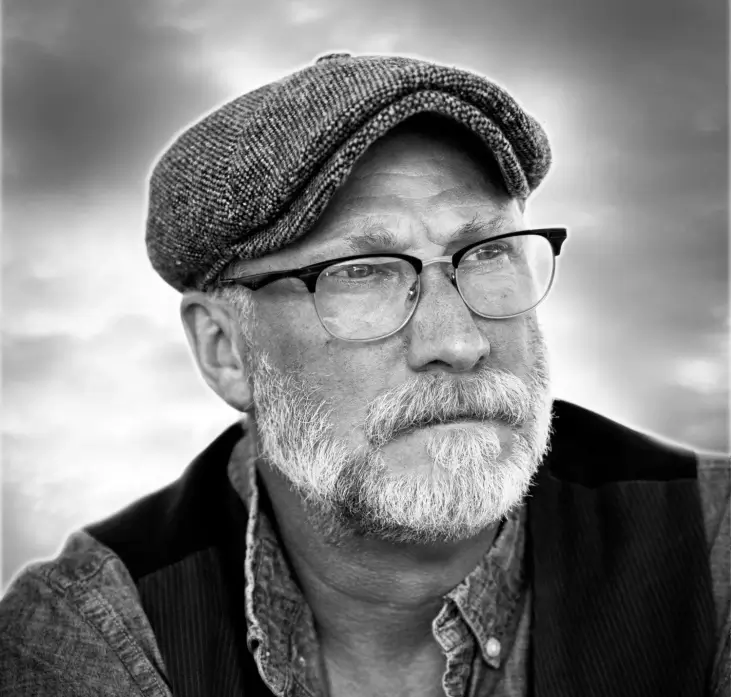
I first met David Williamson when I moved with my young family to live in Norway House Cree Nation, a remote indigenous community in Northern Manitoba, Canada in the late 90’s. I spent the best part of three years living and working in the community. Alongside a local Cree woman, I interview Elders in the community over the course of a year and a half for an oral history project documenting their lives. Later, I taught outreach courses there through University College North and Brandon University. Throughout all of this, David was a tremendous support who offered me guidance, knowledge, and, most importantly, friendship. Over the years, I have watched the development of his writing which is deeply rooted in the landscape he has inhabited, the culture he has immersed himself, and the remarkable life he has lived. It is a joy that his work which he has been nurturing so long will soon be shared with all in his debut collection.
Gerard Beirne: So David, we met when I moved to Norway House back in the late 90’s. At that stage I recall you had already produced a chapbook of poetry and had written works for the Winnipeg Theatre Fringe Festival. This now is your first full length collection of poetry, have you been writing during all of that time? How does it feel to have a collection coming out? How important is that for you?
David Williamson: With a few small gaps, I have been writing through most of that time. My writing has definitely matured a lot since then, as has my understanding of the writing, editing and submission process. I was able to access some mentoring through the Manitoba Writers Guild and, following that, I made a decision about six or seven years ago to begin submitting to literary journals and try to build my reputation in the community. Over the last few years, my work has appeared in dozen or so literary magazines in Canada and the U.S., as well as Aesthetica in the U.K.
To have a full length collection coming out at this point in my career feels like I’m finally where I wanted to be. I’m not fussy about the term validation but it’s good to be recognized by peers, editors, a writing community. Norway House has a great tradition of story tellers but its writing community is fairly small and emerging. I’ve been doing some local readings with a few local writers to help build a community. Many started with self-publishing but I’m trying to expand on what thye can do with their writing.
Joining the Manitoba Writers Guild and the League of Canadian Poets has been a great support as I’ve been developing my career. I encourage young writers to find a community for guidance and support.
GB: It’s significant you have lived for a large portion of your life in a remote part of the world and in a Cree community. Do you think that has influenced your writing and your approach to writing?
DW: Oh absolutely. A lot of my writing explores intersections of identity and place, culture and isolation. Many of the poems are grounded in being removed from the day to day business of urban life or even semi-rural life with good internet connection, Netflix and consistent road and air access. We don’t always have those.
My relationship with land is much different now. I grew up in farming communities but here land is more than simply utility or commodity; it is tied to an entire lifestyle, a cultural perspective. My father-in-law was a commercial fisher and pulling nets with him in the winter was an amazing experience, very humbling for me. I recognize how delicate our relationship with nature can be, especially during forest fire season.
My wife’s first language was Cree (Ininimowin) and the world view is much different in that language. I’m not fluent but I understand enough to see how land influenced language. Language isn’t just symbolic. It is grounded in the land, the air, the water and how we interact with those.
GB: As well as writing you have been a very engaged educator, not just in Norway House, but as Dean of University College of the North. How does this role impact upon your writing and creativity in general?
DW: I never planned on a long term career in education. I really fell into it by opportunity rather than choice but I’m very happy to have built a career here. I started doing academic upgrading, working with adults who had been away from formal schooling for a few years and wanted to go on to college. Then as I returned to do graduate studies, the northern college got its university charter and I started working on a first year university program in the communities to give students a boost to go on. We’re 800 km away from the larger urban centres and there can be a lot of culture shock in moving so having a northern university college has been a boost to the area, employment-wise but also culturally.
UCN covers an area about the size of Ireland itself and 80% of our students are Indigenous. With 40 – 60% unemployment in some communities, UCN has allowed the area to build educational opportunities but also to document its only history and revitalize the Cree language on its own terms rather than on academic terms. We work very closely with Elders and traditional knowledge-keepers. In our teacher education program, we do a lot of land-based activities where our professors and pre-service teachers work with Elders and school children. It’s great to see that inter-generational learning where lived experience becomes as important as scholarship.
I’m in my eighth year of “deaning” (and my last, incidentally) -- I miss the classroom. Writing, teaching in this environment, I feel more of a responsibility to recording authenticity and cultural accuracy. I’m also very aware that as an non-Indigenous person, my role is to support them telling their own stories. Decolonizing education in curriculum and in research.
GB: Despite the impact of the internet, there can still be great gaps in our knowledge of writers in other parts of the world and in cultures different than ours. I did feature and interview Eden Robinson (a member of the Haisla and Heiltsuk First Nations, British Columbia), but what other Aboriginal Canadian authors should we be reading?
DW: Eden is great. Probably my favourite recent novel by an Indigenous writer is The Marrow Thieves by Cherie Dimaline (Metis, Anishinabe). It’s a wonderful exploration of the division between Indigenous and Canadian world views in a dystopian landscape but it is also very hopeful. Her newest book is Empire of the Wild, which I’ve just started but is a nice twist on the supernatural teen werewolf thing in an Indigenous Canadian landscape.
The Break by Katherena Vermette is also really strong but explores an urban Indigenous lifestyle, a little more grit under the shadow of poverty and violence but it also has a sense of hope, of promise. Gregory Scofield and Richard Van Camp are worth reading – anything they’ve written is strong. There’s so many good Indigenous writers getting attention by a wider audience.
For poetry, I’d recommend Billy Ray Bellcourt and Joshua Whitehead (both Cree). They are playful, edgey and explore a wide range of gender and cultural perspectives. Zooey Roy (Cree) and Kateri Akiwenzie-Damm (Anishinabe) are great spoken word poets who have also published great collections.
GB: Which writers have influenced you most and why? Which Irish writers, if any, have been an influence upon you?
DW: I’m fan of most 20th Century and contemporary poetry, Canadian, American, European... almost any style. The Beats were my thing in my teens, 20s and 30s. Less so now. Being Canadian, you cannot claim a love of poetry without citing Ondaatje, Al Purdy, Atwood, P.K. Page… Cohen, of course. Years before Leonard picked up a guitar and began recording… The Spicebox of the Earth is a little gem.
For Irish writers, Seamus Heaney and Eavan Boland, without a doubt. I studied Yeats, Beckett and Joyce in my university days of course but I read Heaney for pleasure. From him, I discovered Paul Muldoon (I hope Ireland still claims him), Boland, Ciaran Carson.
Manitoba has a small but devoted poetry community. Rosanna Deerschild, Duncan Mercredi, Ariel Gordon, Jennifer Still, Angelina Schellenberg, Jonathan Ball… I’m honoured to become a part of it.
GB: I seem to recall you telling me early on in our friendship that until I arrived in Norway House you were known as the “Irish writer”. What Irish connections do you have?
DW: Ha, yes, I recall that too. My father’s family was from Wicklow, about six generations back. Two brothers came over, the older with a wife and son. Unfortunately, the older brother died after arriving and so the younger brother married the widow and raised the son (and nine other children). My lineage comes from the eldest son.
I went to Bré (Bray) in 2016 to look up some of the ancestral places. Dipped my toes in the Dargle waters, just to say I had. My family came to Nova Scotia in the 1840s and then moved to western Canada in the 1880s so there’s really not much connection but I often carry a stone with me from that river bank. I like its feel in my pocket when I’m hiking through Canada, a piece of another place, a piece of my history, I guess.
GB: We are living through a unique time with this pandemic. How has that impacted you in Norway House and has it affected your writing?
DW: I’ve actually been fairly active during the pandemic. I haven’t done any live readings, of course, but in July, I read at the on-line conference of the Association of Literature, Environment and Culture Canada, hosted by the University of Saskatchewan. I was involved in a virtual launch of Sweet Water, an anthology about water sheds, edited by Yvonne Blomer in June. I was published in a small chapbook produced by the League of Canadian Poets in May called Tending the Fire.
I miss the live connections with other writers in a public event but being in the north, I didn’t always get to attend a lot of face-to-face events anyway so my writing world is not much different. School, that’s another matter entirely… classes are very different now, most done virtually.
GB: What now? Your collection is coming out: are you working on new poems or do you have a different writing project in mind?
DW: The projected launch for Disassembled houses of perfect stones is set for spring, 2021 and so I’m knee-deep in the editing, negotiating, compromise phase of that. I have a great editor so I’m not too concerned but it’s a different process for me.
I have a dozen or so new poems in the submission hopper already. The Dalhousie Review has accepted a new one for release in the new year. These poems are a little different in form and style from the collection. We’ll see how they may evolve. I’ve got a shorter prose piece in process as well. It’s a little darker than my usual stuff but that’s all I’ll say for now. I don’t stay away from the keyboard or the pen for too long.

Gerard Beirne's most recent collection of poems, The Death Poems: Songs, Visions, Meditations was published by Salt Publishing in March. He has published two other collections of poems, three novels, and a collection of short stories. His new novel, The Thickness of Ice, is forthcoming in 2024. A Hennessy New Irish Writer of the Year Award winner, he has been shortlisted for the Danuta Gleed Literary Award, the Bord Gais Irish Book Awards, and Kerry Group Irish Fiction Award. He lectures on the BA Writing and Literature Program at ATU Sligo, Ireland.
More work by Gerard Beirne



Tel: 028 7126 6946
Email: hueditor@theverbal.co
Verbal, Stable Lane and Mall Wall, Bishop Street Within, Derry/Londonderry, BT48 6PU
 company
Copyright © 2026 Honest Ulsterman