


An Interview

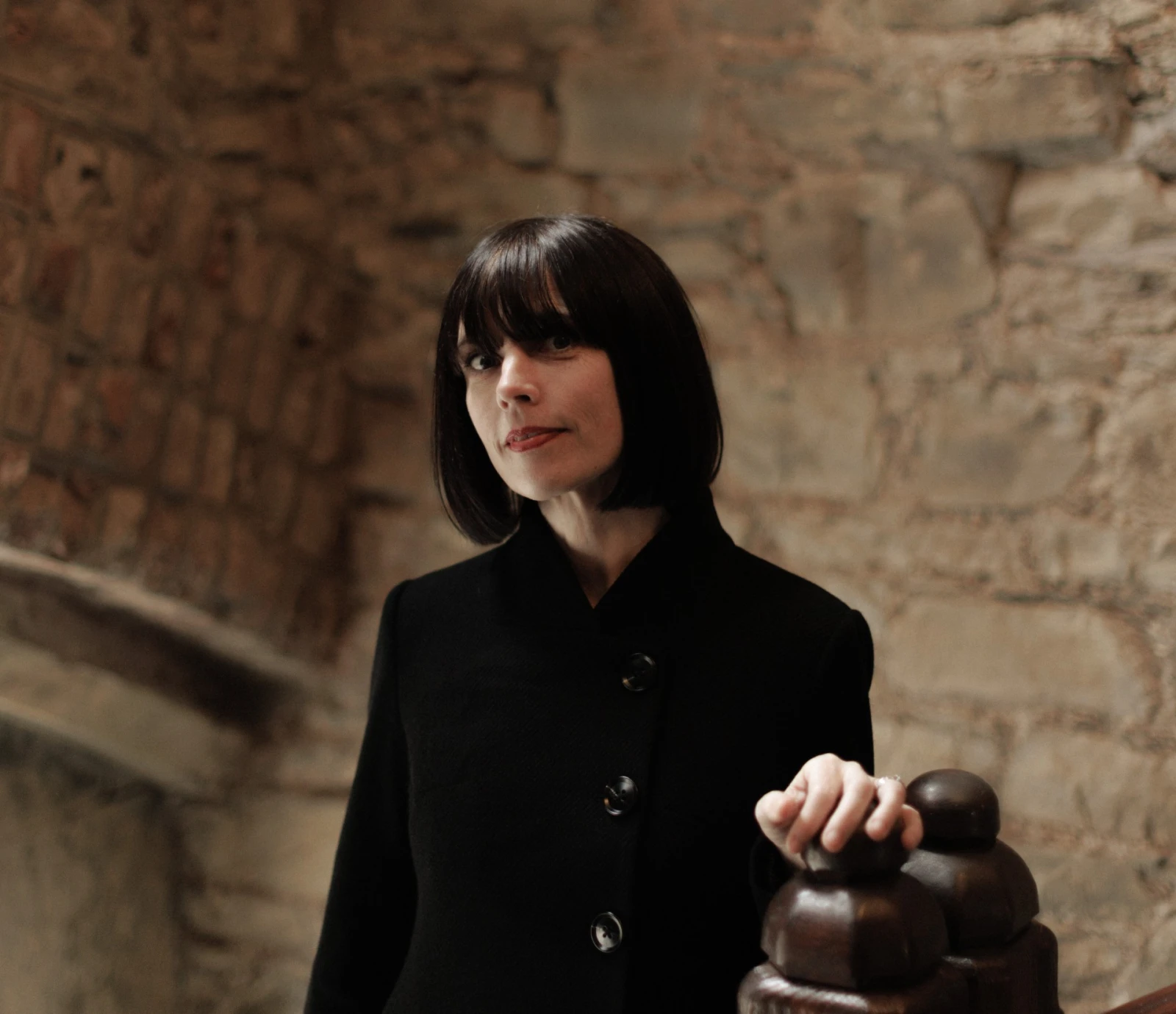
Tammy Armstrong was born in St. Stephen, New Brunswick, Canada. She moved to Vancouver, British Columbia in 1992 where she obtained a BFA and an MFA in Creative Writing at the University of British Columbia. She has published two novels and four books of poetry, most recently The Scare in the Crow and the upcoming chapbook, The Varying Hare (Frog Hollow Press). Her work has recently won the iYeats International Poetry Prize, Geist's Postcard Story Contest, Prairie Fire's Bliss Carman Poetry Prize, and The Cafe Writers Poetry Competition. In autumn 2018, she will be a Fellow at the International Writers' and Translators' House in Latvia. She currently lives in a lobster fishing village on the south shore of Nova Scotia.
Gerard Beirne: Tammy, you’ve published both fiction and poetry. You very recently won the Prairie Fire Bliss Carmen Poetry Award, the Café Writers Poetry Prize, were longlisted for the CBC Poetry Prize, and, even more excitingly, won the 2017 iYeats Poetry Award! So dare I ask, are you primarily focused on writing poetry currently or is there some fiction brewing in the background?
Tammy Armstrong: Hi Gerry, thanks for your questions. I’ve been working primarily in poetry for the past few years as I’ve been finishing up a manuscript, which hopefully will find a home this year. While the collection isn’t thematic, I’ve had to keep my focus on it as I wanted it to feel cohesive. Now that it’s under consideration with a press, I have some time to think about other projects. I’m still working on new poems, drafting almost every day, but I’m not ready to take on another poetry project just yet.
As far as fiction, I wrote a middle-grade novel a couple of years ago, which is making the publishers’ rounds now. And I’ve had some ideas swirling around for the past while, that I feel I might be moving closer to a commitment, shyly and slant-wise, perhaps. Right now, I’m still in the listening stage . . . I’m someone who likes to see a project through to the end, so I think I’m rather skittish about tackling the actual writing until I feel that the project is something that I can get behind and stay with. In thinking about new fiction projects, I’m currently drawn to stories that slip into new skins through metamorphoses and transformation, and this sort of thinking seems to be wanting more attention. In particular, I’ve been thinking about animal-human couplings and the beast grooms of fairy tales. . . these sorts of tales are so transgressive and yet, so endlessly intriguing with possibility and otherness. Over these past wintery months, I’ve had the most enjoyable research re-discovering wonderful Russian fairy tales and fables.
GB: Can you tell me a little bit about your writing process when working on fiction or poetry and if it differs between genres?
TA: In terms of poetry, I’m a cobbler. A very slow cobbler. I work from bits and pieces, images, lost stanzas and eventually—like a puzzle—the pieces sometimes find their way together. I often think that I really spend much of my time with poetry just moving things around and rewriting them into new possibilities. In doing this though, I can slip into a presence or a present-thinking mode of being. It often feels to me, even if I’m recollecting something, that this act of writing or moving things around is the important moment for the poem. It’s one of the only places where I’m not concerned with what will happen next.
With fiction, I still write with presence in mind, but with anticipation for what’s to come. I have to keep reminding myself that while writing pages and pages about snow or owls or whatnot is something I might enjoy doing as a writer, a story really needs something to hang itself on. I think when I’m writing fiction I learn and re-learn how to move narrative forward and how to balance my poetic aesthetics with story. While I’m still as solitary when writing fiction as I am with poetry (in my upstairs office in our cottage), I’m in a different mind-space. Writing fiction sometimes feels as though I’m stepping from rock to rock along the sea break and then turning to bring each of my characters along with me.
One of the experiences I most enjoy, whether I’m writing poetry or fiction, is that I tend to read differently. I think I read with a more technical mind/eye and I spend more time looking at and appreciating a fabulously constructed poem or paragraph to really appreciate how it’s done.
GB: What technical or elemental differences distinguishes the two genres for you, or are they closer in form than we might think?
TA: For me, I enjoy fiction with a strong poetic backbone, as it were. I like works that really put pressure on language while still following through with story. I’ve never really been attracted to straight-up reality-based fiction for that reason, because for me the magic is imaginative as well as linguistic. Over the past year, for instance, I’ve really enjoyed works from Claire-Louise Bennett, Ali Smith, and Fiona Mozley, and I’ve returned to wonderful classics like Proust’s Swann’s Way, which is a great novel to just flip through and read passages from. Aside from the sound and language, it’s the well-told story that makes fiction memorable. I grew up in a culture where oral-tradition was respected and expected. Not everyone could tell a particular story, because some were better than others at knowing when to pause, build suspense, or joke. It was all tied up with voice, eye-contact, hand gestures, and so forth. As a young girl, I didn’t sit in front of a television much at others’ houses, I listened to stories in the kitchen. And I knew even back then that there was a real art to it.
The poetry I’m most attracted to also makes imaginative leaps, pushing and pulling at metaphor, reminding me of those years of listening to voices in the kitchen, while also surprising me with what language can do if it’s made strange and new. I think poetry is allowed a ghostliness in a way that fiction isn’t because a story doesn’t perform as well if it’s coming out of suggestion. It needs something more concrete to help it keep its shape. I like this freeing aspect of poetry; it can shape-shift and buoy about and catch your eye at all sorts of angles. Some writers that I’ve enjoyed this year that do this are Sinead Morrissey, Jacob Polley, Michelle O’Sullivan, Adam Crothers, and Brigit Pegeen Kelley. While they’re all very different from each other, what I enjoy most is their abilities to unground me. They force me to swim around in language—unpredictable and inventive constructions-- before they give up their secrets.
In saying all of that, I suppose that I’m attractive to similar elements in each genre, though I expect their internal parts to work differently.
GB: In 2014, you completed a PhD at the University of New Brunswick on the place of the animal in Atlantic Canadian poetry. What did you learn along the way that has either influenced your own writing or that you began to recognize in your own writing? What surprised you or what stands out from your research?
TA: I think one of the fundamental lessons I’ve learned is that I can’t stop finding animals everywhere in literature! They swarm, herd, flock, pace, and circle about without warning. I’m also much more conscious of them in my own work. While they’ve always been there, and always will be, I think, I hope, that I’ve been able to include them in a more sophisticated way. There may be an animal, right there in the middle of a poem, but I want it to be more-than, to have freedom to shift, grow larger, grow smaller, make its own metaphor and so on.
In order to keep my dissertation manageable and cohesive, I focused on male writers working in the 1970s. This was deliberate because that era had so many cultural and societal changes. With feminist movements building and fire-in-the-belly masculine studies on the rise, I wondered if creature representation might also reveal some of the tension that was occurring within these identity/gender revolutions. And it’s true, animals were often either substitutes for some feminine idea, or they were toothy female creatures prowling through the poem, or they were sexualized and dangerous elements of the more-than-human world. But if you look at contemporary Atlantic Canadian poetry, however, it feels more inclusive for the animal. Creatures are allowed to remain wild and unknown, just as they ought to be, rather than vehicles for a nature/female binary that fails as a concept for reading the world.
GB: I know you have traveled a lot throughout the world. Have you been to Ireland? With regards the iYeats connection, was Yeats or were any other Irish writers in your awareness as a young writer?
TA: I’ve visited Ireland three times. I came to Dublin on a SWAP live-work programme after my first year at university and I’ve been back since then-- once to travel around Northern Ireland in the early 90s and once to the west coast. And I’ve loved it every time. I suppose I’ve always felt a pull toward Ireland. Like many Atlantic Canadians, my mother’s family had long roots there, which they spoke of with reverence and mystery. My grandmother’s family were coal miners in Sydney Mines, Cape Breton where Irish is still spoken in places. And my great grandmother spoke to me in Irish. The language was lost in the family by then, so I like to think she was giving me good, secretive life advice or blessings probably as she was a devout Catholic. Anytime I hear Irish spoken, I’m reminded how rich it is with musicality and poetry; I wish that I could speak it.
My interest in Irish poets probably began around the same time I grew interested in poetry. My English teacher in year seven, lent me a biography of Yeats and a collection of his poetry (his Late Poems, such as “The Circus Animals’ Desertion” still strikes me as both devastating and contemporary) which was a really wonderful jumping off point for discovering Samuel Beckett, Elizabeth Bowen, James Joyce, Seamus Heaney and the other giants, which has led me to those writers often over-looked over here in Canada such as Dermot Healy, Eamon Grennan, Dennis O’Driscoll, Sebastian Barry, and Nuala Ní Chonchúir.
As an aside, I was included in an Irish-Canadian anthology, The Echoing Years: An Anthology of Contemporary Poetry and Translation from Canada and Ireland, some years ago, and it’s still a collection I turn to and am proud to have been invited into. My husband, poet George Moore (the other one), has family roots in Northern Ireland in Desertmartin—his great grandparents moved to the States early in the 20th century—and he’s also travelled to Ireland several times for literary and genealogical projects. He’s introduced me to some really wonderful writers and history through his own interests in Irish literature, in particular poetry, which led him to teach courses in Irish writing for nearly thirty years.
GB: You grew up on the East coast of Canada and went to college on the West coast. How was this experience for you culturally?
TA: I grew up in a small, border town in southern New Brunswick where the Bay of Fundy and the St. Croix River meet. In our family Bible, my grandfather’s family is recorded for seven generations—all the way back to County Clare. He had sixteen siblings. My grandmother, who grew up in Sydney Mines, Cape Breton, moved to my hometown as a young girl and she had fourteen siblings. And there were many, many other large families with similar backgrounds in our town. Everything felt very rooted to Charlotte County as we’d been there for so long. So until I left for university, my world was a place where everyone knew me by my family. It was pretty much impossible to act out.
Moving to Vancouver was the first time no one asked me, Who’s kid are you? Who do you belong to? I also grew up during a recession and we were repeatedly told throughout our schooling that we would be lucky to get a job, any job, and we’d have to keep it forever. I think many of us just expected to work at the local flakeboard plant for the rest of our lives, accepting that our futures had already been determined. I knew, however, that I need to get away and see more of the world—reading takes you to so many places, doesn’t it? And in the 90s, with the Cold War wrapping up, the recession ending, jobs became easier to come by. Vancouver, in particular, was a city of growth and change and migration, and of young people who could pick and choose what they wanted to do. We suddenly had the freedom to try on different hats and test ourselves.
I think these lucky events, happening in tandem, brought with them a generosity of spirit that really helped shape me. Instead of having the same friends from year one to graduation, I suddenly had those friends, along with friends from all over the world and friends whose parents were from all over the world. I worked and studied with people from Croatia, Armenia, and Pakistan and countries I’d yet to learn about. And at UBC, I had wonderful professors who’d once been draft-dodgers and conscientious objectors to the Vietnam War and again my world opened up to take in all these complexities that had occurred on world stages, many I knew very little about. These sorts of global cultural connections introduced me to new food, new ways of cooking, new novels and poetry and music. It was very much a place of invitation: come try my mother’s Bengali cooking, come skiing, come camping, come to this poetry reading. And because it was such an affordable and creative city back then, I could do so much.
Those years redefined and reconceived my understanding of the world. I learned to pay more attention to what was happening around me because it mattered: here were people who’d lived through events inconceivable to me. Though I don’t write political or topical poetry or fiction, I think the more you can see of the world—especially the finer details that only others may offer you from inside their own cultures—the better writer you’ll be. So I had a responsibility to at least be informed and open to learning more whenever the opportunity arises. And these opportunities have all been given to me with such openness and generosity. I’m forever grateful for the time spent in my late teens and early twenties learning in this way: this was, of course, was before Wikipedia. Maybe we had to ask more questions of each other back then . . .
GB: In the previous edition of The Honest Ulsterman, I interviewed and featured work by George McWhirter who was born and raised in Belfast before immigrating to Canada where he eventually became Head of the Creative Writing Department at the University of British Columbia. You studied under George at UBC, did you not? What did you learn then that stands out for you still?
TA: Speaking of generosity, George McWhirter was very much a shaping figure for me as a young poet. I was incredibly shy and tended to sit out many workshop conversations in favour of listening. He always managed to draw me out of my quiet, though. And I always had the sense that he really enjoyed the workshops; he had such an easy way with engaging with everyone’s work, though none of us were working or thinking about poetry in the same way.
George would often call me over to his office, if I was walking by, where he’d lean up against the door frame and chat with me on any number of topics. Once he told me about a character who sucked on stones, moving them from one pocket to another as he finished. It took me a while to figure out that reference . . . He always had a number of books ready to lend me or a list ready of poetry collections I should read—many of them Irish. His ability to recall a single poem from a collection published twenty years before was really extraordinary, especially since his personal mental library was stocked with Spanish, Irish, Canadian, American writers, and those from many other countries.
I chose to do my MFA work at UBC because I’d be able to continue work on my first poetry collection, Bogman’s Music, with George. This was important to me because I felt that he understood what I was trying to do with the collection. Just before I handed the manuscript in as my final project I gave it to him to review. He handed it back to me just days later with a ten dollar bill stapled to the front. Smiling, he said, now before you get upset about all the lines I’ve cut, take this money and go buy yourself a beer and think about why I did it. So I did. At the campus pub, I started going through the red ink and cuts—nearly every one of my precious first stanzas had been crossed out. But by the end of the beer, I understood why he’d done it and why the stanza just weren’t necessary. I learned how to get into a poem better from that lesson and I still read for unnecessary first stanzas in my work and when I’m editing others. Bogman’s Music went on to be a finalist for the Governor General’s Award, so I’m glad I listened to George.

Gerard Beirne's most recent collection of poems, The Death Poems: Songs, Visions, Meditations was published by Salt Publishing in March. He has published two other collections of poems, three novels, and a collection of short stories. His new novel, The Thickness of Ice, is forthcoming in 2024. A Hennessy New Irish Writer of the Year Award winner, he has been shortlisted for the Danuta Gleed Literary Award, the Bord Gais Irish Book Awards, and Kerry Group Irish Fiction Award. He lectures on the BA Writing and Literature Program at ATU Sligo, Ireland.
More work by Gerard Beirne


Tel: 028 7126 6946
Email: hueditor@theverbal.co
Verbal, Stable Lane and Mall Wall, Bishop Street Within, Derry/Londonderry, BT48 6PU
 company
Copyright © 2026 Honest Ulsterman