


Tara Bergin
Tara Bergin was born and grew up in Dublin. Her first collection of poems, This is Yarrow (Carcanet), was awarded the 2014 Seamus Heaney Centre for Poetry Prize and the 2014 Shine/Strong Award for best first collection by an Irish author. Her second collection The Tragic Death of Eleanor Marx (Carcanet 2017) was shortlisted for the T.S. Eliot and Forward Prizes. Her third book is Savage Tales, published by Carcanet in 2022. Tara now lives in the North of England and teaches part-time on the creative writing programme at Newcastle University.
Nearly all of my writing emerges from a state of unknowing. I work in the dark and rarely have a full understanding of the poem’s intent until it gets close to completion.
After publishing my second collection this state of unknowing persisted for much longer than usual, and my writing-life entered a period of chaos, upheaval, and deadlock. The world of the poem became closed to me, all avenues barred, all entry points cordoned off.
I turned my attention to a series of new projects: a play, a set of short stories, a set of essays, a set of lectures. Everything in sets. Each project would begin with an elated sense of discovery and arrival, and each one in turn would be abandoned with a feeling of disappointment and failure. The initial ideas were interesting enough, but there were fundamental problems with the writing: it kept snagging on convention; it was disjointed and unfocused; it had no true voice.
Meanwhile the clock – as the saying goes – was ticking, and with six months to go before the deadline for a new manuscript, I had nothing that looked like a collection of poems.
As a kind of sideline to the ‘real’ writing that I had been attempting at my desk, I had also started a new routine of writing in a notebook very early in the morning when the house was quiet. I would write as freely and spontaneously as possible and try not to edit what I put down. Each day I would write on a new page and not re-read what I’d written. I tried to keep the entries observational: a record of daily life; ordinary happenings; no explanations. I enjoyed it because I made no judgement of it.
I had filled several of these notebooks by the time I reached the six-month deadline. In a state of both desperation and careless freedom (there was nothing left to lose) I decided I would take the material in the notebooks and try rewriting it.
This took me a surprising amount of time and effort. An enormous quantity of sheets of paper – huge piles – ended up in the shredder. Occasionally something might come quickly but it was rare. On other occasions, I could spend a whole morning turning one sentence around. Sometimes it could be cut down to a few words, or even a single word, which would itself then be broken into components.
This atomising could become desperate and even ludicrous. I am told that the sculptor Giacometti went through a period when his sculptures became smaller and smaller as he worked on them, until they became so delicate that one gesture with his work tools would reduce them to nothing.
‘To write by fragments ... my whole little universe in crumbs’ – Roland Barthes.
Then at some point the things that I had been writing without knowing what they were, started to form a pattern; and within this pattern I could see connections with those other modes that I had been striving towards: the play, the short story, the lecture, as well as the joke, the found object, the slogan, the poetic fragment. I recognised the potential for a deeper level of organisation. I saw thematic concurrences appearing. A collection was at last taking shape, partly out of those early morning writings, and partly out of the wreckage of the earlier projects.
I began to group and arrange the individual pieces, and this marked a new stage in the creative process. There was a physical element to this stage of the work. First, I laid a set of heading cards out on the floor: brief descriptions that in my mind roughly categorised the new work: Campus Pomes; Constructions; Sleep and Dream Notebooks, etc. Then I printed out all the individual pieces – nearly two hundred pages – and placed them under whatever heading I thought they belonged to. Not everything was placed under the heading I might have expected myself to choose. Underlying meanings were brought to the surface.
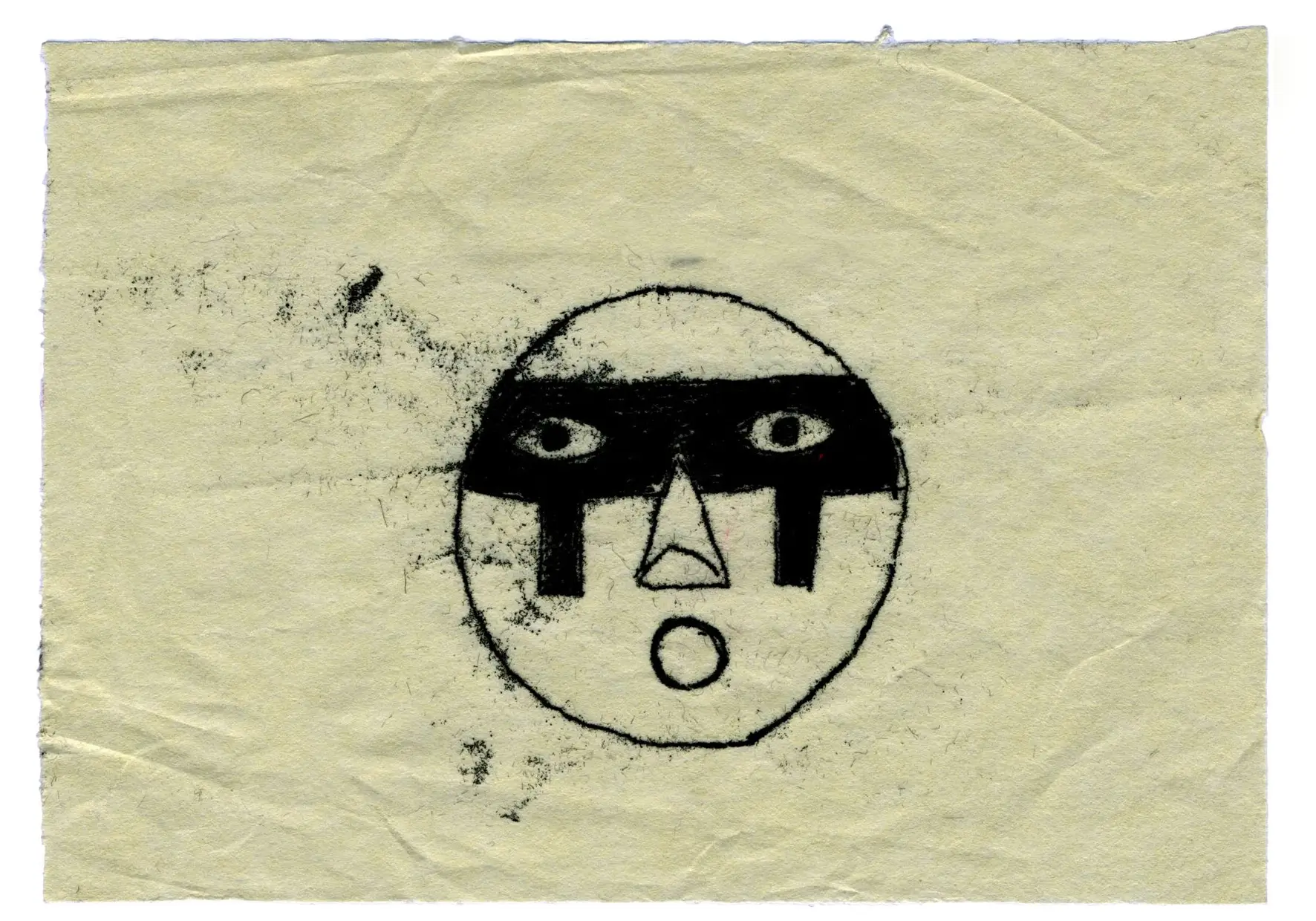
By the end of this exercise I had a structure for the collection. Shortly after this, I had a title for the collection, and an image for the cover. What I didn't have were any titles for the individual poems. I didn’t see how such short, condensed material could carry the weight of titles. Looking over the completed version, however, it was clear that something more was required.
I set myself a challenge: I would try to capture the essence of each piece in as few words as possible, and scribble this at the foot of every page. At first, I found this an unpleasant task because as a poet I find it hard to open up something I think is closed, and I am reluctant to look directly at whatever has arrived through a creative state of operating. This is superstition. Once I steeled myself to do it I found it to be an extremely useful exercise. Eventually I had a title for everything. These I kept at the bottom of the page, where they seemed to serve more as an afterthought or an addition, than as a preparation or replacement.
Many of the pieces in my recent collection are extremely short. They are not conventional poems. They are a signal, a cry, a paralysed thought. I’d be more than happy to write long lyrical poems about the things that move me, but that isn’t possible at the moment: things are more fraught, more constrained, voices are more dislocated and fragmented.
Much of the writing uses persona; different voices which can be those of troubled or neurotic individuals who are not quite grasping what’s going on around them. They use non-sequiturs, are easily distracted, they speak inappropriately. They make remarks that are beside the point – beside the point because this is a position I find revealing.
Putting together a collection of poems involves a certain amount of abandonment. I have two opposing thoughts about abandonment. First thought: it’s vital to close the door and know that no one is watching and no one is listening; that’s when the real writing begins. Second thought: if you want to write, it’s vital to imagine someone is watching; someone is listening.
Savage Tales can be purchased here: https://www.carcanet.co.uk/cgi-bin/indexer?product=2440
Image by Alan Turnbull.
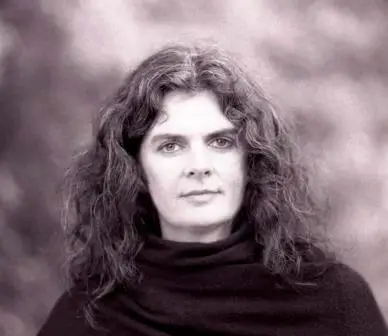
Tara Bergin was born and grew up in Dublin. Her first collection of poems, This is Yarrow (Carcanet), was awarded the 2014 Seamus Heaney Centre for Poetry Prize and the 2014 Shine/Strong Award for best first collection by an Irish author. Her second collection The Tragic Death of Eleanor Marx (Carcanet 2017) was shortlisted for the T.S. Eliot and Forward Prizes. Her third book is Savage Tales, published by Carcanet in 2022. Tara now lives in the North of England and teaches part-time on the creative writing programme at Newcastle University.
More work by Tara Bergin


Tel: 028 7126 6946
Email: hueditor@theverbal.co
Verbal, Stable Lane and Mall Wall, Bishop Street Within, Derry/Londonderry, BT48 6PU
 company
Copyright © 2026 Honest Ulsterman