


Claire-Louise Bennett
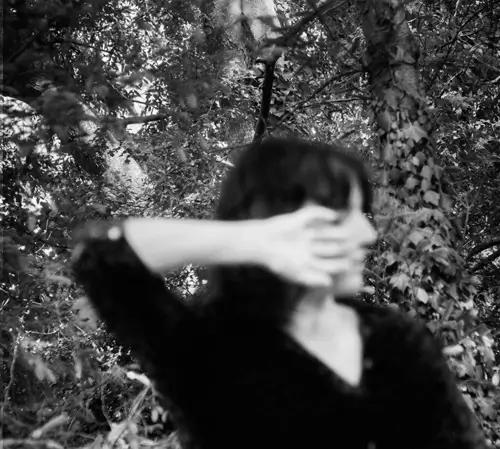
Claire-Louise Bennett is the author of Pond, Fish Out Of Water, and Checkout 19. Her essays and stories have featured in many publications, including Frieze, The White Review, gorse, The New Yorker, and Harper's Magazine.
Gregory McCartney: I loved Checkout 19. For me it defies genre, which my favourite things often do. How would you describe Checkout 19?
Claire-Louise Bennett: It’s most definitely a novel. With Pond I kept it sort of vague, avoiding saying emphatically whether it was fiction or autobiography, a collection of stories or a novel. In my naivety I didn’t foresee the kind of problems for booksellers and readers that that ambivalence, especially in relation to a debut book, brought about. I don’t regret that exactly, but it soon became frustrating, being quizzed on and on as to what category it fell into – to my mind it was a small matter, there were other aspects of the work I was far more interested in discussing. The novel is a very rich form, though perhaps our conception of it has become impoverished in the last fifty years or so. But historically it has been an incredibly malleable, porous bit of technology that can conflate a multitude of thematic strands and stylistic registers and shift quite wonderfully from the imagined to the autobiographical to the lyrical to the essayistic – there’s nothing especially new about any of that – and that’s why I’ve been very clear about describing Checkout 19 as a novel, to restore to the novel some of the complexity and playfulness that has perhaps been missing from prevailing contemporary ideas about it.
GMCC: I once had a conversation in the pub with the painter George Shaw. He was wondering how to articulate the days where nothing at all happened. People have of course no trouble remembering the great things and bad things but how to you remember or articulate the everydayness?
CLB: It’s down to curiosity I suppose, what you pay attention to – and I’m not sure you can always choose. There’s a passage in Checkout 19 where the narrator reflects on the way her two grandmothers each recount a story – they have quite distinctive modes of storytelling. Her father’s mother is very dramatic and likes to make an impact, whereas her mother’s mother is preoccupied with peripheral details and therefore relays scandalous news in a frustratingly roundabout sort of way – I am definitely in that camp! Great things and bad things make me feel uncomfortable – I don’t like that level of amplitude, I don’t trust it, it feels unreal and probably is unreal, so I tend to zone out, switch off, and focus in on what’s on the mantelpiece, or that child throwing stones by the fountain, or the colour of someone’s nail polish. It’s a form of defence perhaps, but what it produces is a kind of emotional synecdoche. Those minor details, those incidental images, utterly indelible, thrum with the emotional force of the entire situation of which they were a small part. They are the keys, if you like, to the great and the bad.
GMCC: I read somewhere that linear time is an illusion and this came back to me whilst I was reading Checkout 19 with its multi-layered directionality. Is writing history which is traditionally very linear (so to speak) difficult for you?
CLB: My perception of the past has changed as I’ve got older, and I can only assume it will go on changing. I have experienced more and have done many things that as a younger person I would never have imagined myself doing. I know now how easy it is to behave badly. Selfishly. Impetuously. Irrationally. So I am not interested in looking back and apportioning blame to this or that person, or arriving at a fixed interpretation of this or that event. I experience no sense of ‘closure’ in doing that. I’m not looking to draw a line under any part of my life anyway, not even the most difficult parts. The past, history, continues to be an open book. It doesn’t stay still, because it is not something I can ever leave behind; as I go on living it will go on living, and a crucial part of living is change.
GMCC: Is to be working class and ‘avant-garde’ downright impudent these days also?
CLB: You’re missing out the third, crucial, element in this intersection – being a woman! Being working class and ‘avant-garde’ for a man is probably very fashionable, it’s always had a certain cachet – the enfant terrible and so on. Some male critics do still seem to begrudge giving women credit for originality and innovation - they often cite male progenitors when reviewing my work for example, or else imply that I’m trying too hard, with all my big words, as a way of putting in my place.
GMCC: You’ve lived in Galway for quite a while. Has that informed how you write? You mention in a piece that how you live, that is the circumstances of working class writers such as Ann Quinn who flitted from place to place definitely affects the finished article.
CLB: I don’t know if there is anything about living in Galway specifically that has informed my writing. I think the circumstances that I have lived in, still live in, have been significant. I have been renting for two decades now. The rental market is not regulated, and tenants have very few rights and protections. As things currently stand in Ireland if a person is evicted from their flat, or loses their property, they will not find a new home to move into. I spent the last year living in a woodshed miles from anywhere without a car, and was grateful for that accommodation, before finally finding a more suitable place up near Galway, which was down to pure chance. That kind of long term precariousness has an impact on how you feel in the world, your vantage point, and your sense of your own worth. At the same time I wonder if it lends the work a certain vitality, urgency, restlessness. If I don’t feel settled then it’s going to be hard for the words I produce to settle onto the page evenly and without an attendant sense of provisionality. Additionally, since I lack control on the fundamental issue of shelter, perhaps it spurs me on to exercise more agency on the page – it’s the one place I can fully inhabit, in exactly the way I want to, so why not let rip, why be confined by a pre-ordained floorplan?
GMCC: I loved how a supermarket scene turned into a mad orchestral wild almost orgasmic delight. Are the insignificant things catalysts for the epic or magical for you?
CLB: Generally not. As I said above, everyday objects often have a significance for me, but that significance tends to remain within the realms of direct experience and lived reality. I remember writing this particular episode – the Russian man in the supermarket and the shelves of pickled vegetables transforming into an auditorium in a Viennese theatre – during a period when I wrote in bed day and night because it was January and the rest of the flat was cold. It was a very miserable, typical west of Ireland, January. The way this scenario in the supermarket opened out and became a sumptuous fin de siècle tableaux was quite spontaneous and occurred naturally. Clearly I was craving just such a change of scene, and I relished the time I spent working on this section of the book. That chapter also has a strong erotic dimension, which fuels that ‘almost orgasmic delight’ you picked up on perhaps – I suppose if you’re spending a lot of time in bed, as I was at the time, your thoughts are bound to drift into intimate remembrances and imaginings. I go through phases where I think about sex a great deal actually, and I’ve recently become interested, again, in exploring ways of bringing that to the page for no other purpose than to attest to the fact that sexual desire is something that feels very present throughout me from time to time. Whether any of the writing that comes out of this will ever see the light of day, I don’t know – perhaps it’s something I’ll go on exploring merely for my own edification and amusement.
GMCC: The book is for me very visual, do you see how a novel develops in a filmic kind of way? Do the images come before the words? The doodling scene struck home with me. My drawings always ended up being coloured into darkness, which maybe explains the Abridged.
CLB: ‘Coloured into darkness’? That’s wonderful! I like that a lot. I am interested in how images exist in our psyches, the influence they exert, and the status they acquire regardless of their provenance – how we make external material our own, and how our own inherent store seeks out likenesses. A key episode in Checkout 19 is based upon my own reading of E.M. Forster’s novel, A Room With A View. There’s a scene where Lucy Honeychurch is standing at the River Arno in Florence with George Emerson. She’s just witnessed a murder in a piazza in Santa Croce, so she’s in bit of a state, though of course she doesn’t want to show Emerson that. She remains utterly composed. It’s ridiculous. Quite comical – Forster is very good at bringing that out without being cruel or dismissive. What happens next is that some postcards she’d bought before the incident get thrown into the river. They are splattered with blood so must be got rid of, or cleansed perhaps. For years and years I had this vision of Lucy Honeychurch standing on a bridge with her elbows resting on the parapet, suddenly tossing these tainted mementos up into the air above the rolling water of the Arno. I loved that gesture. But then, when I reread the book many many years later I discovered that it wasn’t her who threw the postcards in at all, it was Emerson. That was most bewildering. What happens to that image I’d had for so long? – what becomes of the emotional charge it had – the significance of the gesture – the peculiar sense of conviction it had given me? The courage? The defiance? I mean it doesn’t all disappear does it? My psyche doesn’t update like a computer, ditching this faulty file and all the power it contained. In my mental landscape this image had taken on a life of its own. It’s an entity – an entity that perhaps I already contained, and this business in the book stirred it up maybe, animated it – I can never decide – I have many thoughts about this subject, it fascinated me. I don’t see any of this cinematically, though of course the film with Helena Bonham Carter has impacted upon how I superficially construe some of the elements of the book. But really many of the mental images I have lack visual cogency and form – as far as this one is concerned, there is an atmosphere of staring into nothingness and nothingness staring back, which produces a sensation of eyes being present, but who or what do the eyes belong to? There is also hair writhing about beneath a hat, and there are black waves and small cream sails, all sort of floating and crashing and soaring. What I try to communicate with words is not a description of a fully realised image, but the atmosphere of a vision and how it makes me feel.
GMCC: The narrator namechecks a lot of literature (the JL Carr mention I really liked!). There’s a great piece where she’s afraid to read Plath and Woolf because her darkness won’t measure up to theirs and she might get lost in their overwhelming narratives and that if she kills herself she wants ‘it to be all my own idea’, so she reads books by old white men, in which of course she can’t see herself. I found it both moving and darkly funny. There’s a great (if that’s the right word) Peanuts cartoon where Lucy says to Snoopy, how does it feel to know you’ll never be as a good as Tolstoy? Does the history of literature weigh heavily on a writer, the way the history of art does if you’re a painter?
CLB: I see the history of literature as something living – a sort of sprawling network or galaxy of voices, experiences, attitudes, scenes, triumphs, losses, insights, feelings, revelations, and so on. Like the night sky it’s always changing, some writers glimmer more brightly than others at different times, depending on my own position in the universe and the angle of my perspective. It’s a wonderful cosmos to feel a part of, to participate in, to contribute to –I don’t experience it as a weight at all – if anything it takes the heaviness out of me.
Image by: Mark Walsh.
Checkout 19 can be purchased here: https://www.penguin.co.uk/books/444884/checkout-19-by-bennett-claire-louise/9781473594364

Dr. Gregory McCartney is the editor of Abridged, the HU and an independent curator.
More work by Greg McCartney


Tel: 028 7126 6946
Email: hueditor@theverbal.co
Verbal, Stable Lane and Mall Wall, Bishop Street Within, Derry/Londonderry, BT48 6PU
 company
Copyright © 2026 Honest Ulsterman