


An Interview

Sarah Maria Griffin recently received the 2019 Irish Book Award for Teen / YA Book of the Year for her second novel, Other Words for Smoke. The world of Other Words for Smoke contains magic, secrets and subversion, through which Sarah expertly guides the reader. The characters include twins, a cat, a dark power, an Aunt and her ward. Wallpaper, never the same since Charlotte Perkins Gilman’s 1892 novella The Yellow Wallpaper - also plays a role. Asked how she feels about the freedoms and limits of speculative fiction, Griffin responds:
“I find speculative fiction, horror, and all of the parameters of science fiction really liberating. I find the extended metaphors available within these realms really comforting: I talk a lot about finding sci-fi like a kind of drag. Like I place these metaphors over the truth I am trying to tell and somehow they become more, and more true. It's with the tools of genre that I can find the freedom to say what I really mean. If there are parameters, I haven't hit them yet. I find it challenging, certainly, but I'm not sure it's supposed to be easy.”
Several themes in the novel echo Ireland’s troubled, misogynistic history. “In terms of speaking politically with the work, which I always do, to be honest - I think that science fiction has always served the purpose of reflecting back the state of the world as it is. The allegory of say, the Catholic Church's cruelty to women is in many ways so surreal that it feels as though it should belong in a fiction, as opposed to our villages, our towns, our homes. In reclaiming it in my fiction, I feel like at least I'm trying to speak back to power, in my own way.”
In the author’s first novel, Spare and Found Parts, the protagonist lives in an extreme, post-apocalyptic near future. She is concerned about creating something that sets her apart from her high achieving parents, a theme which, in the context of a world where people seek to colonise the body of the other in order to be accepted, makes one think of Mary Shelley, both with Frankenstein and her exposure to scientific experiments and new ideas via her extraordinary parents. Is there a link for Sarah?
“You know, I never thought of it like that - Wollstonecraft was an early, early feminist - and that does refract back through Spare and Found Parts, absolutely. I like stories about monsters, and loneliness, and selfish people - so Frankenstein, which I first read when I was a teenager, was really profound for me. It was biblical, almost. Radical, certainly. So playing with it was something I kind of had an impulse to do, which turned into experimenting with the myth at the heart of the story. Spare and Found Parts is just that, an experiment. I'm still not sure if it works or not: it lives, though, and for a book, that's enough.”
As a follower of Sarah on Twitter, I was led to Brit Marling's recent New York Times article, (1) 'I don't want to be the Strong Female Lead' . Marling suggests the search for a truer form of femininity to be portrayed through characters in TV, film and literature, rather than ‘strong female leads’ whose traits are masculine, thinly disguised by a tight top. I asked if Sarah agrees with Marling’s thesis, and has she had similar experiences when writing:
“I absolutely do, and I found that piece incredibly stirring. I love Marling's work, I've found watching The OA deeply comforting during the projects I've been working on in the last few years. Like, it's possible to approach storytelling in a different way. It's possible to tell big, strange stories that don't really feel like anything you've heard before, that are messy and wild at the edges. I also really agree with her about 'badass female leads' emulating masculine paradigms of strength, and I hold that query - what does a more feminine strength look like? How does that narrative take form? I look up to her a lot, in terms of being someone who falls between genres and doesn't really fit in anywhere: she's made something important and I can't wait to see what she does next.”
Sarah was selected as the 2018-2019 dlr Writer in Residence, which included working in the local authority area of Dún Laoghaire-Rathdown, Dublin, with different communities, artists and writers, and space to write in the RIBA Award winning dlr Lexicon library. Sarah found it to be an extremely positive experience:
“Oh man, that year changed my life. I had a blast. I was working myself into the floor on my first big corporate creative gig, and I got to do it in the most beautiful library I could have hoped for. My office faced the ocean, and I got to watch as the seasons changed the gradient of the sea as every day passed. Some nights I'd be working there until two in the morning, just at peace. I also wrote more than half of my own current novel there, which simply wouldn't exist if it wasn't for the holistic energy of the Lexicon. The place is remarkable, an incredible community resource: I loved the workshops I got to give around food writing and memoir, and the exhibition of writing that we created at the end with photographer Brid O'Donovan was just lovely - the participants in the workshop really came with their whole selves and wrote some stunning pieces. I had a great year, and though I work in a great office space right now, I definitely miss that view, and the gorgeous mix of total silence and busy energy the space had. It's a gem.”
Other Words for Smoke was awarded Book of the Year in the Dept.51@Eason Teen and Young Adult category at the 2019 An Post Irish Book Awards. We all know that one’s reading should not be dictated by awards or ‘best of’ lists, however winning awards does have an impact for authors:
“I was massively impacted by it, yes - totally shocked, to be honest, and still kind of am. Other Words For Smoke is a deeply personal novel and was a real labour of love, it's a weird book that I wasn't sure if anyone would connect to and I'm still really grateful that it did connect to anyone at all. What awards do is they bring your book to more readers: they place it differently in bookshops and libraries, they make it more widely available - and that's all I really want, is more chances for the book to find the people who might get some good out of it. I'm still really buzzed by it, and really thankful.”
Sarah’s column ‘Girl Offline’ explores life with, rather than within the internet. I asked her about the impact of social media on her work - both day to day impact,and as a form of expression, creativity performativity, and connecting with the writing community:
“Social Media is a big one. I write about it every week for my column at The Gloss (2) - but I write about it because I struggle with it. Some weeks it feels good, some weeks it feels bad. In some ways it helps my job, in other ways it's a time suck. Nowadays, I have a better handle on it in terms of how it makes me feel: I know when to walk away. I know not to say a single thing about myself out there, and to stick to jokes. Twitter is a video game, and the second you start treating it as that then you're all good. You're rewarded for good takes/good jokes by approval (likes) or redistribution (retweets) - that's all it is. You choose every single follow yourself, and the mute button is right there if you don't like something. In terms of the writing community, I've found some of my favorite writers through seeing snippets of their work online: it's how I find poetry, weird prose, zines - it's also how I stay in touch with my incredibly sound readers too. Like any miracle, it's a poisoned chalice, but it's up to us how long we hold it to our mouths for.”
With increasing access to people lives on social media and online media platforms and traditional media attempting to compete with these, I asked Sarah if there are increasing demands to give more of her private life to media:
“That's such a good question - I'm not sure what people want at all. I find when I'm being interviewed for magazines or newspapers, for example, I have had some brutal experiences where people only ask about my private life, my marriage, my emigration - as opposed to my craft. I think this comes from either my background in nonfiction and essays or, and this is probably the real answer, the fact that I'm a woman. I do sometimes find that people want me to show my bones, but I have very little interest in doing that. I think a lot of being a writer and having to engage with any sort of promotional interviews requires a great deal of smoke and mirrors, for self-protection. I'm not sure that you're supposed to say that, but I don't really feel comfortable talking publicly about anything but my work anymore. I'm not sure that interviewers would speak to a male writer the way I have been spoken to in the past: questions about my relationship, health, whether or not I want to have a family: I'm really only interested in talking about my work, and not my personal history or plans for the future, if that makes sense.”
As well as a voracious reader, Sarah is a gamer. She has spoken before about the storytelling qualities of independently produced video games, so it felt apt to ask for both her reading and gaming recommendations: “Since New Year's, I've read Elaine Feeney's As You Were, Handiwork by Sara Baume, Grown Ups by Marian Keyes, and Magic for Liars by Sarah Gailey. I just cracked into Doireann Ni Ghriofa's Ghost in the Throat last night, which absolutely stilled me. I also have The Crying Book, by Heather Christle on my desk right now, too. I sometimes find it really hard to read, and other times I'm just starving for books - now is one of those times. I'm feeling very nourished by them. I'm still playing video games most evenings with my husband - I actually play-tested a forthcoming Irish Indie game about teenagers growing up on an island, it's called If Found... and is by Dreamfeel. It's so beautiful and strange, not really like anything I've ever played. In 2019 I loved The Untitled Goose Game, where you play as a goose ruining a beautiful afternoon in a quiet little village; Donut County, where you play as a hole in the ground eating everything around it, and Anodyne 1 & 2, which I can't even begin to describe, but both have some of the most beautiful, warming music I've ever heard in the score.”
And as always, the final question, what Sarah is working on now:
“It's another weird one. It's about an island, a game, and a quiet, abandoned ship far in the distant reaches of space. I haven't quite figured out how to talk-the-PR-talk about it just yet, but soon I'll have the elevator pitch off by heart. It's very almost finished: I've been working on it on and off for two years, so I'm ready to have it away out of my system as soon as possible!”
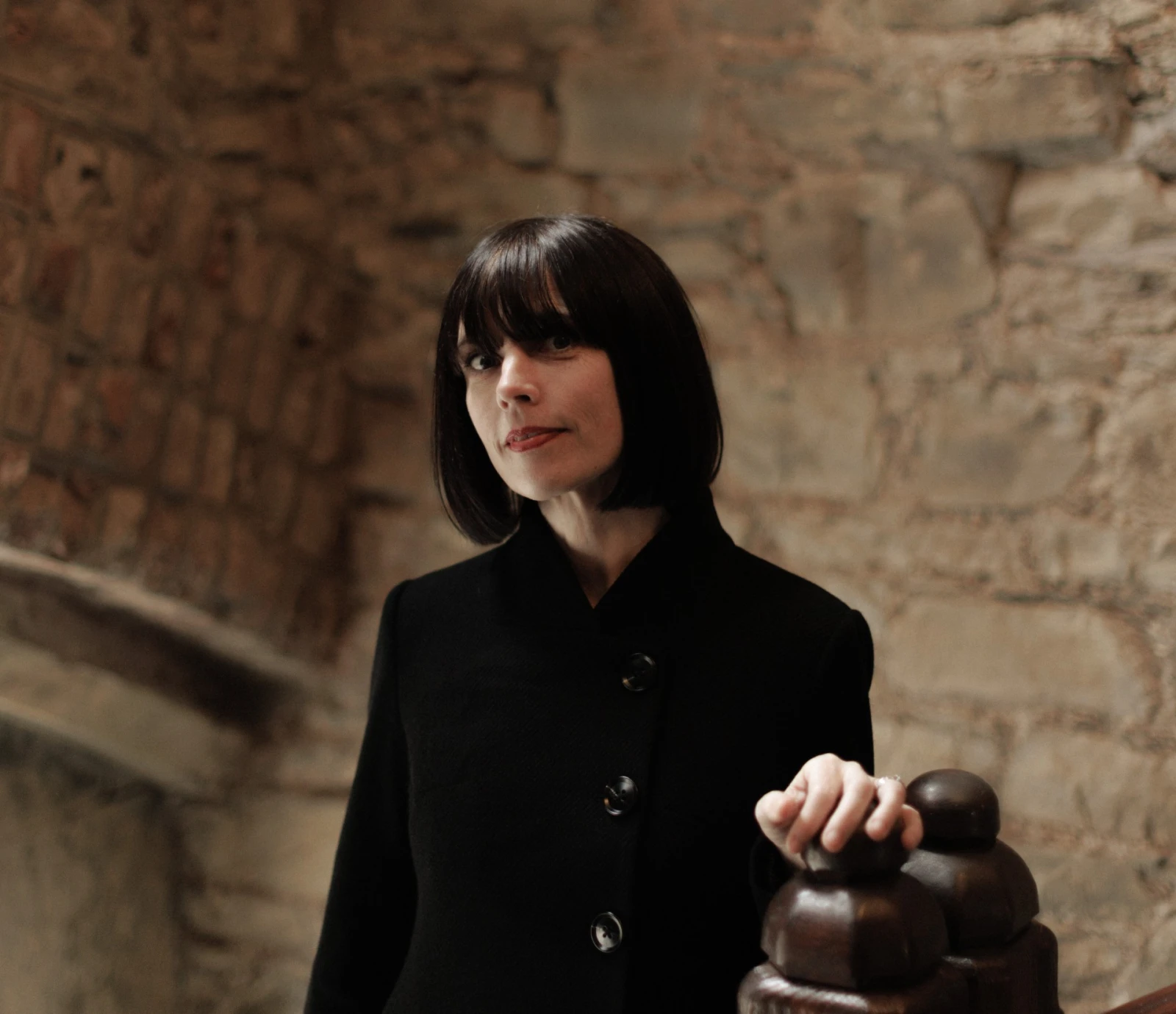
Sarah Maria Griffin's first novel, Spare and Found Parts, was published by Titan Books in Spring 2018 and was shortlisted for the Irish Book Awards that year. Her second, Other Words For Smoke, arrived in April 2019 and won the Irish Book Award in the YA category. Her collection of essays about emigration, Not Lost, was published by New Island Press in 2013. Her nonfiction has appeared in Winter Papers, Guts, The Stinging Fly and The Irish Times and more recently, in a weekly series about the internet for The Gloss Magazine. She was the recipient of an Arts Council Bursary for Literature in 2017 and 2018, and is a winner of the European Science Fiction Chrysalis Award. She was the Writer in Residence in Maynooth University in 2017/18, the DLR Writer In Residence in 2018/19. She tweets @griffski.
1. https://www.nytimes.com/2020/02/07/opinion/sunday/brit-marling-women-movies.html
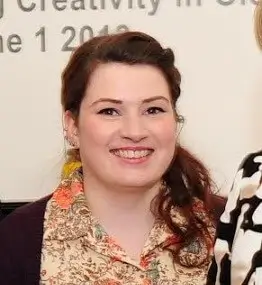
Maeve Mulrennanis a curator and writer based in Galway. She is the Head of Visual Art + Education in Galway Arts Centre, where she has worked since 2006. This role includes exhibitions, critical writing, residencies and education programming. In 2008 she founded Red Bird Youth Collective, which is now a youth led art collective working in visual art, architecture, animation and film. She is the co-curator of the youth & outreach programme for Cúirt International Festival of Literature. Maeve has been on the Board of Directors of Tulca Festival of Visual Art since 2006. Maeve lectures oin the MA Arts Policy & Practice in Huston School of Digital Media, NUI Galway and is an online- Lecturer with NODE Center for Curatorial Studies, Berlin. Maeve is a short story writer, with fiction published in several online journals, The Doire Press 2013 Anthology and The Galway Review. She is currently completing a BA in English Literature and Sociology + Politics in NUI Galway.
More work by Maeve Mulrennan


Tel: 028 7126 6946
Email: hueditor@theverbal.co
Verbal, Stable Lane and Mall Wall, Bishop Street Within, Derry/Londonderry, BT48 6PU
 company
Copyright © 2026 Honest Ulsterman