


The Writing Drug: the Inspiration behind Lifestyle Choice 10mg
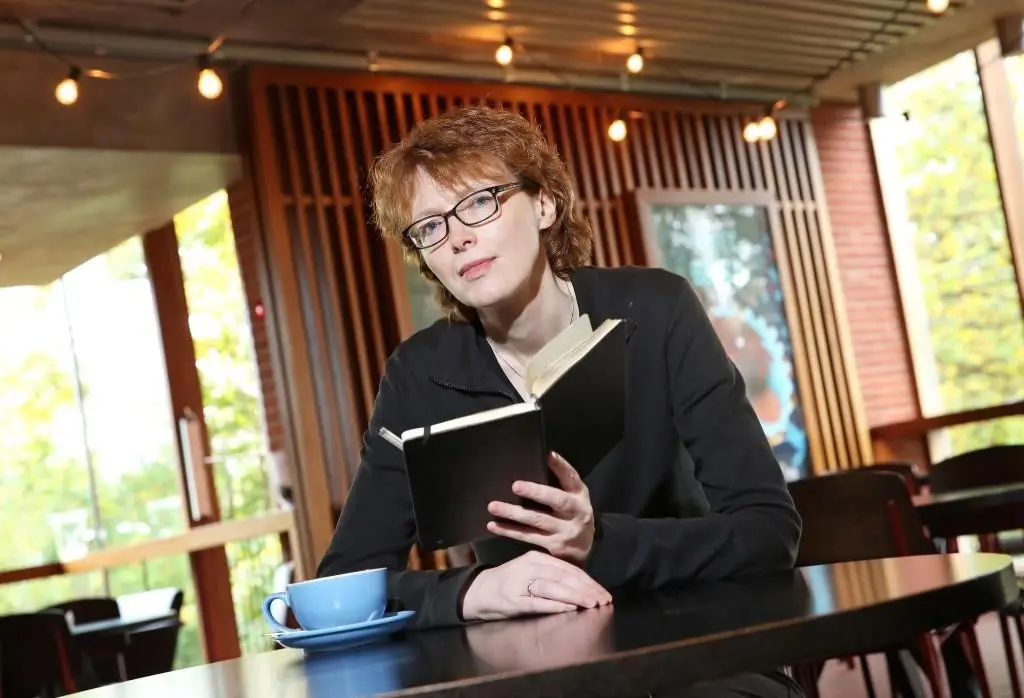
Rosemary Jenkinson is a playwright and short story writer from Belfast. She was the 2017 Artist-in-Residence at the Lyric Theatre and received a Major Individual Artist Award from the Arts Council of Northern Ireland in 2019. Her latest plays are May the Road Rise Up and Dream, Sleep, Connect produced by c21 Theatre Company. Her previous short story collections are Contemporary Problems Nos. 53 &54 (Lagan Press), Aphrodite’s Kiss (Whittrick Press) and Catholic Boy (Doire Press) which was shortlisted for the EU Prize for Literature. Lifestyle Choice 10mg is published by Doire Press in March 2020.
So why the title? The title is always the last piece of the jigsaw. And no two ways about it, a short story collection is like a jigsaw, a puzzle, a conundrum, because you’re assembling individual stories into some sort of comprehensible whole, not in narrative but in worldview. To me though, this book is more like bright, piercing shards from a shattered life because we are dealing here with the wrecking ball of existence through events such as the death of my mother, the loss of relationships and youth.
So back to the title. I’d discussed the options of Millennial Woman and The Willowherb Dream with my publishers, Doire Press, but I remembered how the title of my first short story collection, Contemporary Problems Nos. 53 & 54, had grabbed attention with its quirkiness, so I decided to go all out for originality. Lifestyle Choice 10mg is the title of a story and also a metaphor for how we choose to live our lives in measured doses. Life is a succession of short-lived experiences and thrills, whether your drug of choice is literature, sports, danger, travel, alcohol or sex. It’s like being hooked up to a morphine drip that you press when you need a fresh shot of relief. In this book, there are cancer drug mgs, painkiller mgs and recreational mgs. Besides, books with numbers in them are cool. 1984 is one of the greatest novels ever and I’m a fan of the cult classic, Less than Zero.
One of my drugs is relationships and the self-explanatory story, Men, is about when I lived with one at the age of twenty-seven in Gillingham. I had recently read Women by Charles Bukowski so Men was my riposte to show that males could also be sexually dissected. Bukowski gets a bad rap these days for being misogynistic but I think he adored women and, besides, using is not abusing.
A short story collection has echoes just as real life is an echo chamber of reverberating ideas and serendipitous connections. I try to group the stories by intuition and feel while leaving the final running order to my publishers as I become too close to each individual story, always dragged into the minutiae rather than being able to step back objectively. This particular collection is like a subversive family of siblings with genetic similarities and contrasts: the loyalist bonfire and the internment bonfire; friendly teenagers in The Willowherb Dream, dangerous ones in Man of the North; the slowness of lung cancer in Butterfly’s Canon in D and the sudden speed of it in Two People Shorten the Road.
As far as my writing preparation goes, I keep a notebook of jottings – descriptions I observe and dialogue I overhear every day - and these tiny building blocks might conglomerate or fuse into a new story. There’s no telling what ideas might snap my synapses into action. People often say to me, ‘Oh, that would make a good short story,’ but a good short story is never obvious, it’s always slowly gestating behind some lobe in the brain and, most importantly, it’s never created from one idea but from two – just as two DNAs combine to make a child. Take, for example, Two People Shorten the Road where the tale of the taxi driver who longs to travel is informed by that of her passenger who dies before achieving his dreams.
In 2012 I spent a couple of days in the Fountain area of Londonderry as research for a BBC film I was writing. Typically the film never got made but I couldn’t get the image of the Fountain out of my head and knew I’d tackle it again. Just to explain, the Fountain is a Protestant enclave of about 240 people which calls itself a ‘caretaker community’ because it looks after the local museum. Its sole raison d’être is to ensure that the Siege of Derry isn’t written out of the history books and it’s ironic how the Fountain itself is usually besieged by Catholic youths during the summer parade season. The paranoia within this tiny community feeds into my story What She Does in the Dark and it also shows the influence of one of my favourite films Ryan’s Daughter.
My first-person narratives definitely have more of an autobiographical tilt: Millennial Woman contrasting pregnancy paranoia with an ill-conceived (excuse the pun) desire for casual sex; Ketamine Nights about the decadent delights of self-destructive parties in Dundrum; Butterfly’s Canon in D about the loss of my mother through lung cancer in July 2017. The latter is a story I’ll never be able to read in public for fear of bawling (the public’s bawling, not mine!).
The titular story, Lifestyle Choice 10mg, is about my less than stunning career in administration but, in the twofold way I’ve mentioned, it’s also conflated with how painkillers can insidiously take over your existence. All of the drugs catalogued in this story were ingested by me over the three years I suffered from a spinal disease, Tarlov cysts. I soon learnt how life can be seductively simpler when you drift around in a codeined dream. Similarly, the story, Night Haze, deals with how things can spiral, this time in the sex industry with its sense of Epsteinian male coercion lurking in the backdrop.
Bomb Dust and Man of the North both deal with men haunted by the Troubles in spite of the generational difference. These stories are based on conversations with an ex-IRA bomber and the grandson of a notorious UVF killer. With so many ex-combatants now dead, I feel a huge impulse to record as many real-life stories as I can before they disappear, although my focus isn’t on the past as much as its impact on the present.
The Willowherb Dream’s protagonist has an unnamed neurological condition inspired by how my own world was shrinking due to my spinal illness. I made the protagonist a photographer intent on capturing the contemporary world in one perfect shot just like a short story writer. It’s this illusive evanescence that spurs on all of us artists. When I was trapped in my room, I remember watching from my window a large Roma family transporting their belongings in pushchairs, prams and trolleys. It was a cinematographic shot, reminding me of the refugees in Fiddler on the Roof, and a visual feast for my world-starved eyes.
The last story in the collection is The Lost Generation. I was conscious that the Lost Generation is a term for the countless numbers who were killed in WWI, but I saw a parallel of loss in my own generation of Northern Irish Protestants who felt impelled to emigrate during the Troubles. Like me, a few returned after the Good Friday Agreement but the majority settled across the water and never came home. I went to my own 30th class reunion three years ago, and the whole occasion was a toe-curling, if amusing, reminder of mortality and missed opportunity.
I wrote these stories with as much confidence as I could muster since, to riff on Thomas Edison’s quote, genius is one percent inspiration and ninety-nine percent self-inflation. I personally have very little self-doubt but the problem is I doubt that no one doubts my talent, if you see what I mean. Some writers talk about imposter syndrome, a belief that they’re not worthy of success – I have imposter syndrome too in that I believe all other writers are imposters except for me! Seriously though, you need to have confidence in your own talent as there are reviewers out there who will ignore you, damn you with faint praise, or tear you down.
Personally, I wish there was a writing drug on the market, a kind of writing Ritalin to help me focus without my mind flitting away. I like to write in silence although I’m not quite as bad as Proust who had his walls lined with cork. I wouldn’t mind writing in a sound-proofed chamber either except that it probably leads to overwork which finished Proust off at the age of fifty-one. While I write a first draft, however, I need to feel completely immersed. I’m an inveterate redrafter as well. Some of these stories will have gone through twenty to thirty drafts, sometimes only with minor edits, but I’m a perfectionist and, when it comes to the short story form, there’s no place for an imperfectionist.
Admittedly, in writing about my own book, I can’t help feeling like a fraudster conceptual artist trying to justify ‘the idea of a banana’, but it’s fun to do and, after all, writing is one of the most bananas careers in the world. As Anaïs Nin said, ‘The role of a writer is not to say what we can all say, but what we are unable to say,’ so I’m always trying to show the unexpressed beauty in the everyday, even if it is only 10mgs worth. In the end, I write purely to celebrate life on this big spinning disco ball of light we call earth.
Lifestyle Choice 10mg is forthcoming from Doire Press

Rosemary Jenkinson is a fiction writer, playwright, essayist and poet. She’s had over twenty plays produced and performed in Belfast, Dublin, Edinburgh, Brussels, Melbourne, New York and Washington DC. Her new poetry collection, Let Freedom Fall Upon You, will be launched by Arlen House at the BIAF in October 2026.
More work by Rosemary Jenkinson


Tel: 028 7126 6946
Email: hueditor@theverbal.co
Verbal, Stable Lane and Mall Wall, Bishop Street Within, Derry/Londonderry, BT48 6PU
 company
Copyright © 2026 Honest Ulsterman