


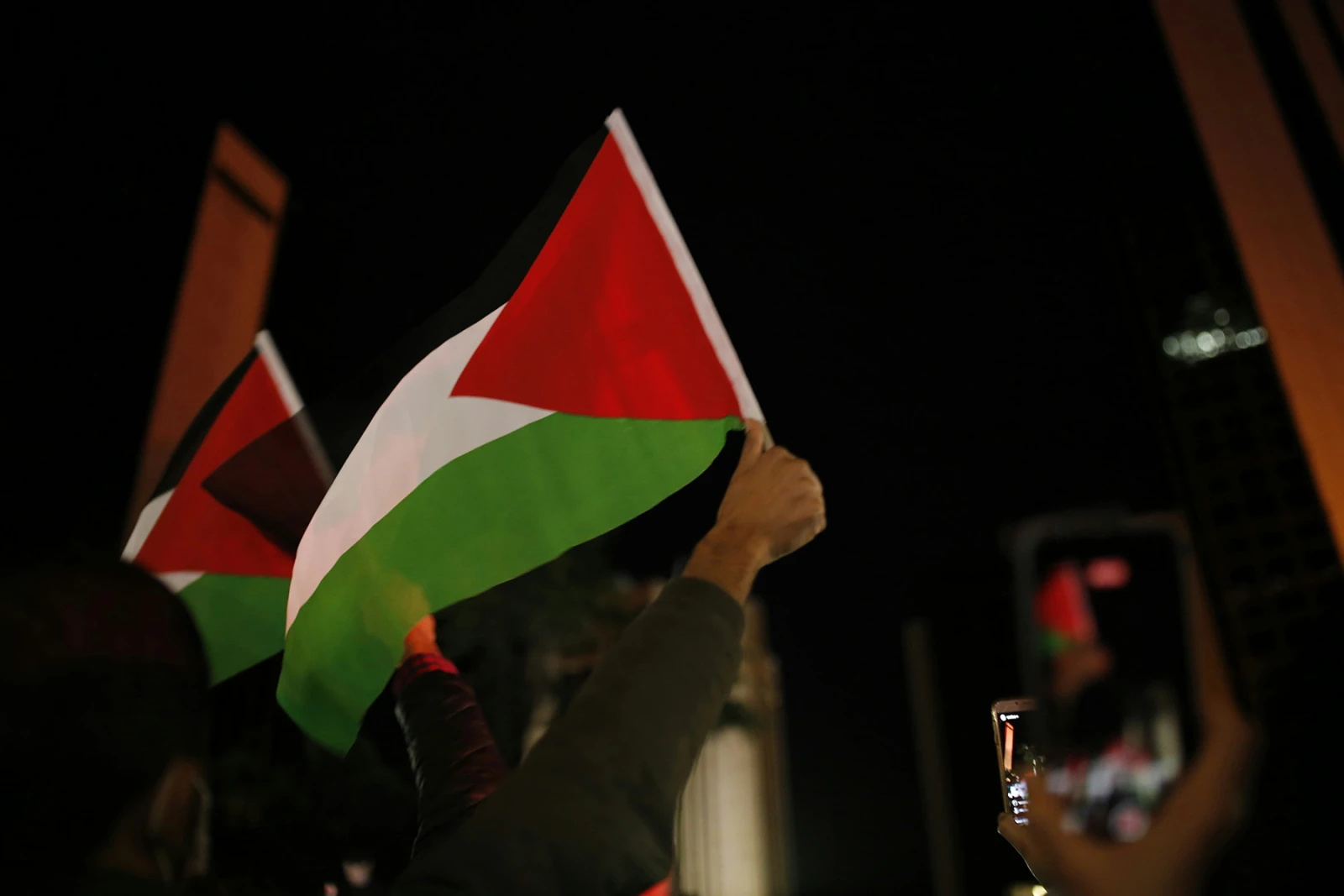
Writers are uniquely positioned to influence the court of public opinion when it comes to the Palestine Action ban. The ban came into force under the UK’s Terrorism Act on 5th July 2025 and has been largely challenged by the 'grey revolution' with older people ready to defy the antiterrorism law because they have less to lose in having a criminal record. It’s the era of the witty t-shirt terrorist where one man was arrested for wearing a t-shirt emblazoned with Plasticine Action. I keep telling myself to order a custom-made version that says Pleistocene Action, but invariably forget.
In August, an eminent English poet, Alice Oswald, made the news by being arrested at a London protest in support of Palestine Action. The image of a dignified Oswald being forcibly lifted by police gained traction. A week later Sally Rooney publicly declared her intention to support PA with royalties from her books and TV adaptations. I enjoyed her ironic suggestion that ‘if the British state considers this ‘terrorism’, then perhaps it should investigate the shady organisations that continue to promote my work and fund my activities, such as WH Smith and the BBC.’ She subsequently won the Sky Award, but decided against going to London to accept it in case she might face arrest. It would have been a brave and rallying act to turn up in person, but I understand her concerns. My own worry about a terrorism conviction is that it would affect travel which is one of the things I most love in the world.
But I have wanted to show support. In October, I unveiled my PA t-shirt at Cork International Short Story Festival and at a Dublin reading at Books Upstairs. Ireland is at least a safe haven, but the issue is that as I’m a UK citizen, it’s a terrorism offence to share images of myself in the offending t-shirt on social media.
The PSNI have made three arrests in Northern Ireland in total and doled out a number of cautions and advisory letters concerning PA. They’ve treaded carefully because they don’t want to be accused of double standards in their softly-softly approach to the insignia of terrorist organisations like the IRA and UVF. In addition to this, activists like Máire Mhic an Fhailí and Eamonn McCann are veterans of the Civil Rights campaign and know how to state their case persuasively to the press. The last thing the PSNI wants is to martyrise people.
On the cold raw afternoon of 22nd November, I went to the Defend Our Juries ‘Lift the Ban’ protest at the Royal Courts of Justice. It was just one of a vast series of demos running the length and breadth of the UK. Luckily, I found myself next to an activist called Niamh who was a pro at outdoor activism, giving me a piece of cardboard to sit on and a decent-sized placard to replace my weedy effort on a piece of A4. She told me she’d been arrested in London twice, charged and issued with a court date for January – one can’t fault her commitment. Four police officers kept their distance and the absence of nearby vans showed that they weren’t planning on arresting us, but I took a solicitor’s number off Niamh just in case. At one point, an organiser showed us photos of our counterparts being arrested in London and we were relieved to walk away freely at the end of the protest.
When photos of us hit the news, a man hilariously claimed to have seen me at a protest in Sheffield the week before and accused us of being paid protesters. Believe me, I wish I was paid! But my only currency is my own sense of action. I’ve always been a big supporter of Palestine, visiting Nablus back in 2003, and I’m an even bigger supporter of free expression and the right to protest. In March 2025, the British government ignored advisers who warned them that banning PA could mean their 'profile may inadvertently be enhanced, finding support among similarly minded members of the public who oppose the British footprint in the Israeli arms industry.' The advisers' document also said that ‘a ban under terrorism laws could heighten Muslim-Jewish tensions.’ All the signs were there for the government to resist their autocratic instincts.
The public understands the difference between terrorism and direct action in spite of Yvette Cooper's vague excuses that the British public ‘don't know the full nature of PA.’ Does Palestine Action perhaps have some ‘weapons of mass destruction’ that we don’t know about? Let’s not forget the 2003 Iraq war protests that seriously weakened Tony Blair’s government nor the previous precedent of mass arrest in 1990. On that occasion, four hundred people were arrested at the poll tax demo and subsequent riot, which helped to bring down Margaret Thatcher.
UN Human Rights Chief Volker Türk has said that ‘the [Palestine Action proscription] decision appears disproportionate and unnecessary.’ That is an understatement. The current trial at Woolwich Crown Court is centred on six PA activists who broke into Elbit Systems UK factory, the IDF’s largest weapons supplier in August 2024. An attack on a police officer with a sledgehammer was reprehensible, but it was surely a criminal rather than a terrorist act.
This is an era where language slips and contorts. The word ‘terrorist’ seems to have morphed into something we can’t recognise; the meaning is skewed. To be fair, it was always a contentious word in Northern Ireland. One person’s terrorist is another’s freedom fighter. Right now, one person’s terrorist is another person’s peaceful protestor.
As I write this at the end of November, we protestors could still be arrested. The police said in the aftermath of the protest that they are ‘reviewing the evidence’, a phrase that makes me shiver. The Public Prosecution Service will decide whether it is politically expedient to arrest us or not and it will probably depend on the outcome of the ongoing judicial review. If so, I would be one of the first in the firing line, since I publicly spoke at the protest. I’m trusting that the proscription will be proven to be unlawful, but what will be, will be. As an ex-paramilitary friend of mine says, ‘No worries. Join the club.’
Writing is my livelihood and I can’t help being concerned that by taking this stand the government will remove Arts Council support for me. Last year Conservative Business Secretary Kemi Badenoch actually blocked an arts grant to Kneecap for being anti-British. Kneecap responded, however, by taking Badenoch to court and won the case. In the case of the PA ban, it’s a constant battle for me between career and conscience, whether to stay silent or speak out.
I’ll leave the last word to Sally Rooney who recently released another article about the mistreatment of the Palestine Action prisoners. ‘Books, letters and other reading material should not be withheld or censored,’ she urged. ‘These are not extravagant demands, but fundamental human rights.’ This very week, she also revealed how damaging the ban is on her literary career; she stated that she will no longer be able to publish her novels in the UK, as her publisher faces ‘legal uncertainty’ over paying her money destined for a terrorist organisation. It’s important that Rooney continues to shape public discourse. The well-known phrase ‘well-behaved women seldom make history’ could equally be applied to writers. Palestine Action is the first direct action group to ever be proscribed in the UK and we writers must use our individual voices to make sure it is the last.

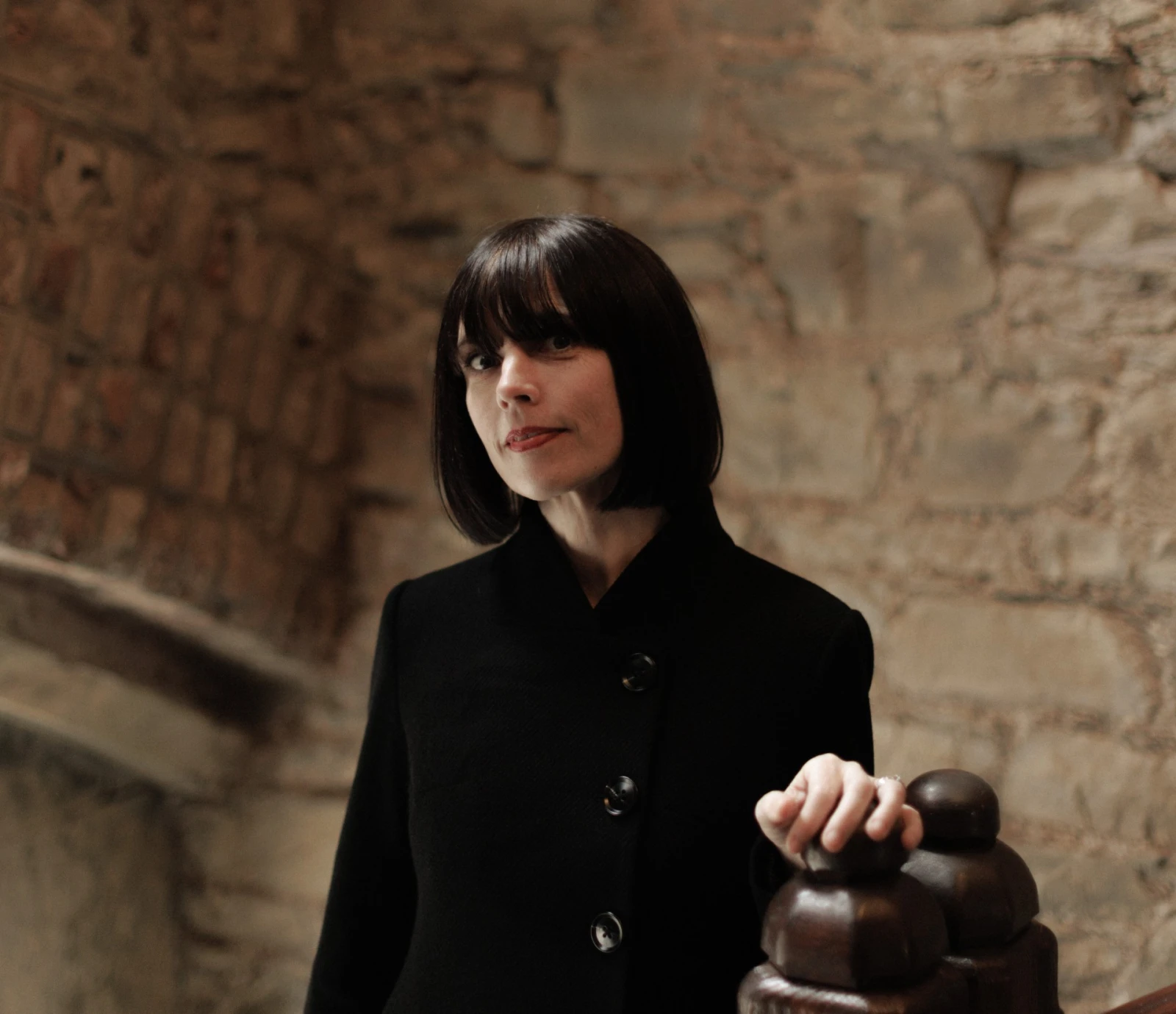
Rosemary Jenkinson is a fiction writer, playwright, essayist and poet. She’s had over twenty plays produced and performed in Belfast, Dublin, Edinburgh, Brussels, Melbourne, New York and Washington DC. Her new poetry collection, Let Freedom Fall Upon You, will be launched by Arlen House at the BIAF in October 2026.
More work by Rosemary Jenkinson


Tel: 028 7126 6946
Email: hueditor@theverbal.co
Verbal, Stable Lane and Mall Wall, Bishop Street Within, Derry/Londonderry, BT48 6PU
 company
Copyright © 2026 Honest Ulsterman