


The northmost I’m ever likely to get is a place called Svalbard, a Norwegian archipelago in the Arctic Circle. Sitting between Norway and The North Pole, it has no centralised government and about 2,600 weather-hardened maniacs call it home. At the height of summer the sun shines twenty four hours a day. During winter, Polar Night creeps in and the sun disappears for weeks. All year round Svalbard maintains clarity in everything that occurs there. Its days and nights are unambiguous in their complexion.
I always believed I would end up there.
I first spoke to Georgie about it when I was in sixth year. He was in university then. He told me to shut the fuck up and that only mental-cases would want to go somewhere like that. I told him I’d write my name in the snow there and frame a picture of it for him so he’d never forget how wrong he was about it. I’d remind him of it whenever I went down a Wikipedia rabbit-hole. I printed a picture of its capital city, Longyearbyen, using the school printer and stuck it to the wall in my bedroom. Eventually, he stopped arguing and just listened.
The most straightforward route would involve a plane journey to Tromsø for a connecting flight to Svalbard on a propeller plane. Once there, one would feel a removal from regular nonsense. Mountainous glaciers in the seas that surround it; reindeer lingering in the tundra. Depending on the time of year, it can be entirely dark or entirely bright throughout the day there. Northern Lights; Polar Bears; Husky sleds; nearly two thousand kilometres away from the nearest population centre. I imagined I would reside there for a while, stare at the tundra, go ice-fishing in the afternoons and sit with coffee in the evenings writing lines of serious poetry.
I found the picture of us in a box full of old developed photographs. We’re in the living room, sitting on the disgraceful mustard and brown diamonded carpet. Both of us cross-legged, backs to the camera. There was only one controller, and the wire trails around from the Nintendo to Georgie. I imagine him gripping the controller as if the world and everything in it depends on this level of Super Mario Bros. I recognised it as one of the earlier levels, meaning I would have to wait another while for my turn. The telly is positioned in the corner of the room. To our left is the window overlooking the garden where Grandad spent so many hours, trying to make sure we had as beautiful a garden as he did. Perched on the telly-stand are two mugs which I know are full of Cadbury’s hot chocolate with steaming milk. Its timestamp reads 7:34pm – 3/8/98.
I imagine Georgie played until he had used each of his three lives– he was the older sibling and this was how such matters took shape. While there were no written rules for who played the Nintendo or when, we managed a certain decorum when it came down to it. Looking back, I know that I often hoped my turn never arrived and that I could stay just as I was, watching him play.
I brought the photograph to work and Blu-Tacked it to the wall at my classroom desk, next to the picture of Longyearbyen which I had stuck there years ago. A student asked about it one day and I told him it was a childhood photograph I liked.
I even set them a composition task based on it– a four-page story using that photograph as a central image. I received twenty eight alternative responses speculating my life in front of the Nintendo with Georgie. Each one mustered the usual teenage drivel of predictable twist endings and clunky prose. Several stories included me or Georgie dying in a car crash. Some centred around the search for the lost Nintendo console. One described an elaborate drug plot in which Georgie had me ‘whacked.’ I granted none of them a lower grade than a B-.
Later, a student returned to the classroom where I remained during my free periods. Tall, wide-framed, messy dark hair. A star player on the school hurling team, Patrick O’Neill didn’t look like the kind who lingered in his English teacher’s classroom.
“What’s the project now?” I asked.
“One Hundred Years of Solitude,” he said, “It’s doing my head in a bit.”
Patrick O’Neill was young enough for afflictions of the universe to take root beneath his skin and torture him. He was not uncommon in this way. The reason I started teaching, I think, was to be around that state of mind.
I knew Patrick’s brother well– Séimí and I went to school together. He was now off travelling the world, finding himself, doing all of that. I hadn’t seen him in a few years, but asked Patrick about him every so often. He had a life I envied. In some way, it felt like hearing Patrick’s stories was some kind of way to live vicariously through them. As if hearing about Séimí hiking the Camino de Santiago or backpacking to Líma would somehow transfer that experience to me.
For the remainder of my free period I continued not to ask him where he should have been; whose classroom was down a pupil for those forty minutes. I told him to try a more straightforward novel– there would be plenty of time the more complicated stuff when he was fluteing around Trinity or wherever he would end up. As he left, a minute lingered before my rambunctious second years arrived. The classroom was empty. On the walls, posters of Abbey Theatre and The Gate productions. John Gabriel Borkman and Henrik Ibsen and John B. Keane. The cranky off-white walls. The shockingly green door and the cracked frame which held it. A student who looked far too young to be in first year passed by the window searching for something. The rumbling hallway betrayed the imminent arrivals of the second years and I moved to the whiteboard.
As the second years worked beneath a tenuous hush, the phone rumbled in my pocket. My elderly mother. I looked at the second years. Though none of them looked up, I knew they all waited in anticipation. I left them at it and stepped out.
It was surprise, but not a shock. Dad’s thrown his back out; clearing the attic; need you to come and finish it; wanted to make sure you’d no plans this afternoon; you’re a good lad.
A bang from inside the classroom. Big cheer. I imagined a battle royale, Hunger Games or Lord of the Flies-type scenario. They’d probably elected a leader and sacrificed the weaker kids by now. Maybe even Fight Club?
I hung up. Nearly thirty and a “good lad.” Re-entering the classroom, I saw tables cleared from the centre of the room. Two lads wrapping each other in headlocks amidst a crowd of onlookers. It was Fight Club after all. They froze as I entered, gripping each other as if for safety in wait of my response. I had taken a call in the middle of a class– we would all get done for this. I nodded towards the tables and they released each other, moving to reassemble the threadbare decorum which existed before.
A couple of times a year Mam would ask me about Svalbard. For ten years I regurgitated excuses as to why I had not yet gone. I was too broke; too busy; too single; too wrapped in the fabric of a terribly low-key existence to do something so incomputable. She even offered to send me there herself, if I didn’t have the money, never grasping the notion that money was never at the heart of it.
Much of those years I spent writing disparate thoughts in notebooks each morning. Three pages longhand. I would do this in the solemn belief that this is what kept me sane. Once every seven or eight months I looked through them, scanning the thoughts through which I trudged. There would be irregular mention of Svalbard. So, too, of Georgie; of Mam and Dad; friends like Barry; Chippy; Arnold (none of whom I speak to any longer).
Those notebooks charted my brief snatches at finding myself. I had, at this point, attempted yoga; pilates; ketogenic diets; ice baths; magnesium supplements; chanting fucking affirmations in the mirror. In other words: I had tried absolutely everything other than visiting that small pocket of snow people three hours north-west of Scandinavia. The odd thing, I suppose, is that I told none of my friends through the years about it. There was no easy talk where I revealed this dream of mine. I thought once about revealing to Arnold my ambition. I held my tongue. Once again, I wanted to keep something for myself.
The living room was lifted right out of the set of generic English sit-coms from the 90s. Keeping Up Appearances and the like. Floral-patterned sofa with cushion-protectors. Offensively clean carpet. Dainty cups and saucers in the glass-panelled press.
She wanted to get rid of Dad’s “old rubbish.” By that I knew she meant my father’s treasured belongings– football scarves from travelling to games; match programmes; mementos of holidays with friends. She once encouraged me to discard Dad's old Fender acoustic by breaking it down for firewood.
Leaving her, I climbed the stairs and opened the door to my old room. The attic was through a small wooden door in the wall, almost a cubbyhole. Every year as Christmas decorations were dragged out there was the crackle of potential conflict in the air throughout the house due to the glitter and sequins and tinsel which would be strewn about my room for weeks afterwards. Now, my room was untouched as though from a catalogue. I knew without entering it that Georgie’s was the same. Mam called upstairs announcing she would be back from the shops in an hour.
‘Clearing the attic’ required an intricate sense of judgement in order to throw away enough to satisfy Mam that a job was done, while salvaging enough relics of Dad’s life for him to maintain a sense of who he once was.
Funny t-shirts from past holidays– gone; vinyl records out of press– shuffle into another box and out of sight; old pint glasses stolen from pubs – gone. Over the course of an hour I sorted the increasingly anorexic boxes of my father’s possessions while ignoring my mother’s overflowing inventory of knick-knacks. This sort of job deserved a salary and a degree requirement. Then I found the Nintendo.
Set in a box labelled Georgie’s Things in black Sharpie, it was exactly as it was when we were children. Perfect condition, just as Georgie kept it. It had been pushed to the back of the attic, bubble wrapped in its box. Original packaging. I opened it, finding the Super Mario game that we had spent so many hours trying to complete.
Mam was gone shopping. Dad was incapacitated in bed. I carried the box downstairs under my arm and set it on the living room floor. The carpet I used to lie on after a meltdown as a child. There hadn’t been a bad one of those in years. I’m sure, if I continued reading the notebooks, I could tell you exactly when the last one happened.
She had the house prim. She wouldn’t stand for anything out of place. The photos of us as babies in their dusted frames set on the polished mantlepiece. The wine proudly in its case as decoration– herself not a drinker and Dad would only go for Murphy’s Stout and whiskey chasers. I sat with the bubble wrap for a minute, squeezing it between my thumb and forefinger. There wasn’t much pop out of it after years in the attic. I typed a text to Georgie and tapped send.
I found the old Nintendo we were looking for. Looks like it’s still in good nick. I’ll give it a go.
The wires didn’t match the sockets in the telly as Mam had gotten rid of the old one and replaced it with a SmartTV. She came home with it as if buying a new telly was what she had done every week of her life. Dad didn’t bother, just wiped down the old telly table before setting it up. I held up the wires with the red, white and yellow plugs on it. My telly was an old shitbox, but it had sockets for them. I pushed the Nintendo, its wires and the Super Mario game back into the box and loosely fitted the bubblewrap back over them. I stepped out, leaving the box in the backseat of my car before returning to finish clearing the attic. Dad would lose a few old t-shirts and boxes of DVDs but he wouldn’t resist, so long as the vinyls remained.
My grainy television displayed the title screen of Super Mario Bros. The console sat on the floor. I stood holding the remote. The animation rolled on the title screen, showing a demo of the opening level. Mario flattened Goombas beneath blue skies flecked with fluffy clouds. He punched boxes and consumed mushrooms and stars and collected coins.
Georgie was far better at it than I was. When we took turns it was always my fault when we ran out of lives. He’d screw his face up in disgust and chastise me.
“You’re crap,” he’d say, “You’re barred from now on until I say so.”
I’d hand over the remote and feel sorry for myself. He would play the opening levels again, deftly and skilfully. Soon he’d arrive at the point where I’d failed and I’d feel his arm come around me, squeezing my shoulder. He’d slip me the remote. “Try this level again.”
I pictured this happening right as the photograph of us was taken. It may even be why my mother captured this moment in particular.
I was thirty years old and no closer to Svalbard than I was thirteen years before. I imagined standing on the deck of a cruise boat moving slowly through the Arctic waters surrounding it. Wintertime: the Northern Lights would be clearly visible, even at midday.
Svalbard, while hundreds of miles from any other populated land, was the closest I would ever come to Georgie. The picture of us was set beside the picture of Longyearbyen for so long that when I thought of one, the other immediately came to mind.
On the TV, Mario climbed steep stairs and leaped to the top of a flagpole, lowering Bowser’s flag and retaking the castle. The demo of the opening level finished and the title screen flashed once more. I lowered myself to the floor in front of the telly, holding the Nintendo remote. Cross-legged, I pressed start. The screen went blank for just a moment and I recognised my reflection. Georgie, the older of us, was sitting beside me. He was putting his arm around me, squeezing my shoulder.
“Don’t worry about it,” he said. “Try this level again.”
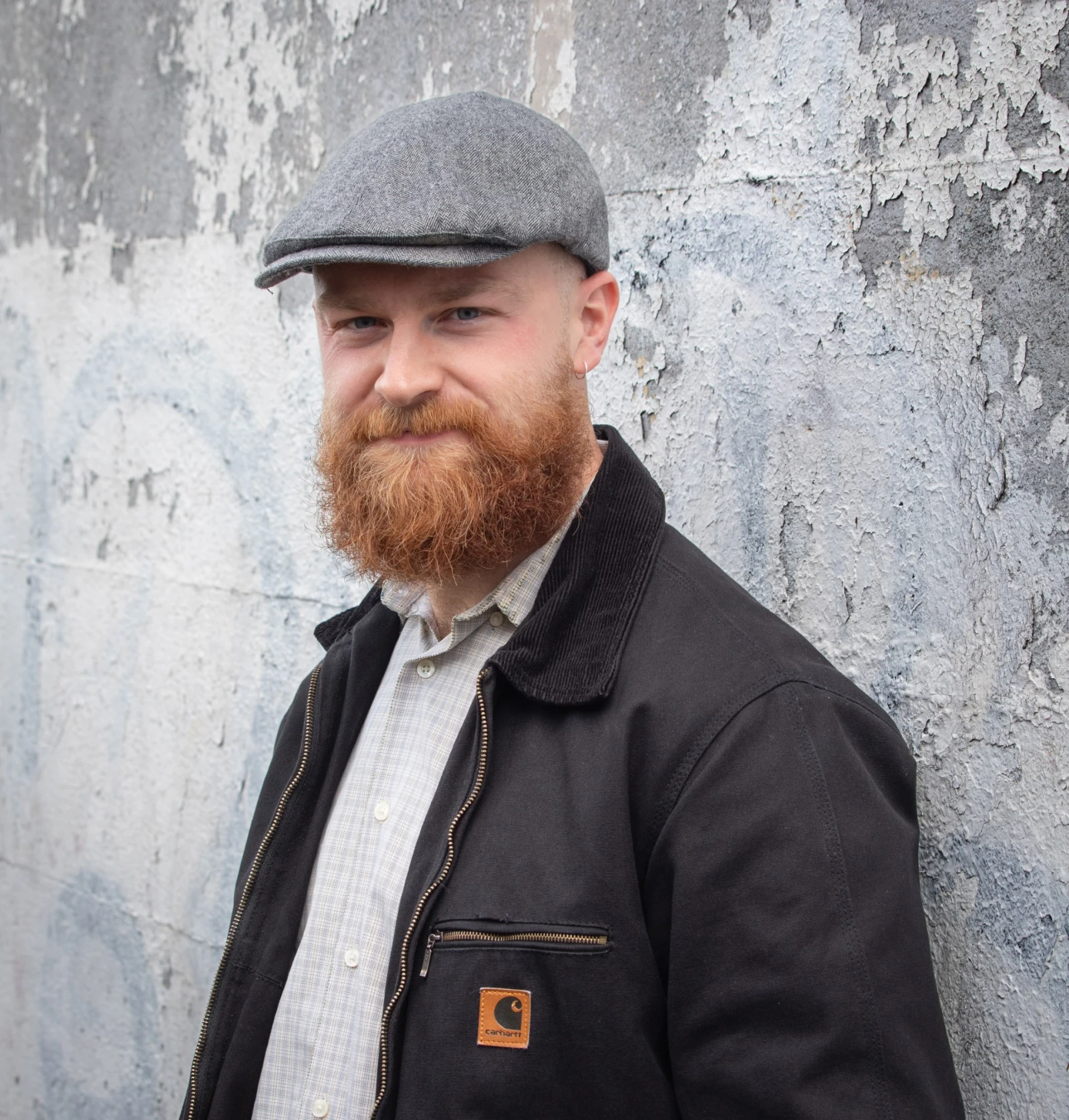
Shane Mac Domhnaill is from Dublin, Ireland. He has published short fiction in Sonder, Wells Street Journal, Silver Apples and elsewhere. He received the Arts Council Literature Bursary in 2026. His debut novel will be published in early 2027.
More work by Shane Mac Domhnaill


Tel: 028 7126 6946
Email: hueditor@theverbal.co
Verbal, Stable Lane and Mall Wall, Bishop Street Within, Derry/Londonderry, BT48 6PU
 company
Copyright © 2026 Honest Ulsterman