


Bram Stoker's Flawed Masterpiece
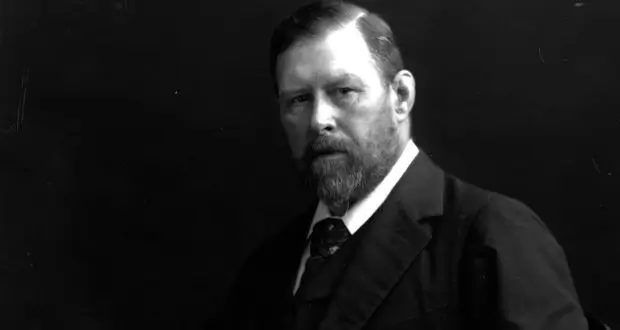
I am Dracula, and I bid you welcome, Mr. Harker, to my house. Come in, the night air is chill, and you must need to eat and rest.
No examination of the fantastic in Irish writing, howevery cursory, can go long without mention of Bram Stoker and his 1897 novel, Dracula. Although vampires had existed in literature prior to Stoker – most notably John Polidori's The Vampyre (1819), James Malcom Rymer's penny dreadful Varney the Vampire; or The Feast of Blood (1845) and J Sheridan Le Fanu's mesmeric Carmilla (1872) – it was Dracula that cemented the image of the vampire in public consciousness and set the 'rules' of the vampire genre.
Like Sherlock Holmes, James Bond or Tarzan, Count Dracula has become one of the most famous fictional characters in the world, spawning film and radio adaptations, comics, stage adaptations and sequels by other hands and his popular image (derived in great part from Bela Lugosi's performance in Tod Browning's 1931 film) has been used to sell everything from beer to ice lollies.
Born in Dublin in 1847, Bram Stoker was part of an Anglo-Irish tradition of fantastic fiction that ran through the nineteenth and early twentieth centuries and included such writers as Charles Maturin (Melmoth the Wanderer, 1820), the aforementioned Sheridan Le Fanu (In A Glass Darkly, 1872), Lady Augusta Gregory (Gods and Fighting Men, 1904) and Lord Dunsany (The Gods of Pegana, 1905). It has been postulated that Stoker, in common with several of the other writers mentioned, came from an outsider's perspective – middle class and Protestant in a predominantly Catholic society – and that this sense of 'otherness' worked its way into the fabric of Anglo-Irish literature. Certainly, in Dracula, Stoker created the ultimate outsider:
The vampire lives on, and cannot die by mere passing of the time; he can flourish when that he can fatten on the blood of the living. . . He throws no shadow; he make in the mirror no reflect . . . He has the strength of many of his hand. . . He can transform himself to wolf. . . . He can come in mist which he create. . . He can, when once he find his way, come out from anything or into anything. . . He can see in the dark. . . He can do all these things, yet he is not free. Nay; he is even more prisoner than the slave of the galley, than the madman in his cell. He cannot go where he lists; he who is not of nature has yet to obey some of nature's why we know not. He may not enter anywhere at the first, unless there be some one of the household who bid him to come, though afterwards he can come as he please. His power ceases, as does that of all evil things, at the coming of the day. Only at certain times can he have limited freedom. . . he can only pass running water at the slack or the flood of the tide. Then there are things which so afflict him that he has no power, as the garlic that we know of, and as for things sacred, as this symbol, my crucifix. . . to them he is nothing, but in their presence he take his place far off and silent with respect. The branch of wild rose on his coffin keep him that he move not from it, a sacred bullet fired into the coffin kill him so that he be true dead, and as for the stake through him, we know already of its peace, or the cut off head that giveth rest.
A sickly child, Stoker was bedridden with an unknown illness until the age of seven when he made a complete recovery – even excelling as an athlete during his time at Trinity College, from which he graduated with honours in mathematics in 1870. At this time he joined the civil service and worked part-time as a freelance journalist and theatre critic. In 1878, he met the noted actor Henry Irving and the two became friends. Irving would exert a strong influence on the character of Dracula and contemporaries noted the physical similarities of the two:
His face was a strong – a very strong – aquiline, with high bridge of the thin nose and peculiarly arched nostrils; with lofty domed forehead, and hair growing scantily round the temples but profusely elsewhere. His eyebrows were very massive, almost meeting over the nose, and with bushy hair that seemed to curl in its own profusion."
In 1978, Stoker married Florence Balcome and shortly after, Irving offered Stoker a management position at the Lyceum Theatre, a post he held for twenty-seven years.
Stoker's first novel, The Primrose Path was published in 1875. He continued to write and publish while managing the Lyceum, including the novels The Snake's Pass (1890) and the Shoulder of Shasta (1895).
But it was with his fifth novel – Dracula – that Bram Stoker would achieve lasting literary fame.
Told in the form of journals, diaries, letters, recordings and newspaper clippings, Dracula is (in a nutshell) the story of the vampiric title character who travels to England in search of new feeding grounds and of the small group of individuals who must put superstition and fear aside in order to combat the evil in their midst.
Even now, more than a century after its initial publication, Dracula remains a surprisingly modern novel, its gothic trappings grown familiar through countless cinematic versions – from F.W Murnau's unauthorised adaptation, Nosferatu (1922), to Tod Browning's 1931 classic, through the Hammer Film sequence from the late 1950s to the early 1970s and more recent versions of the story such as Dracula Untold (2014) – and its epistolary or episodic narrative form allowing Stoker to add an element of verisimilitude to its fantastic events. Equally, the multiple narrators of the story – Jonathan Harker, Mina Murray, Dr. John Seward, Lucy Westenra, and Dr. Van Helsing – allow for a very contemporary form of storytelling, added to an enhanced by fictional newspaper articles and in the chilling ship's log of the doomed Demeter which brings Dracula to England.
Yet I would argue that, in many ways, Dracula is a flawed novel, its early tension dissipating almost as soon as its title character leaves the centre stage and the nearly palpable sense of threat and strangeness conjured so beautifully in the opening third of the novel fading into the background. Similarly the character of Abraham van Helsing comes across in many ways as a stock 'foreigner' character with his wisdom often delivered in broken English as though Stoker, having convincingly portrayed the vampire count, needed an almost comic foil against him. (Interestingly, many film makers have sought to portray van Helsing in ways that are distinct from his literary origins – in particular the much younger and more swashbuckling incarnation played by Peter Cushing in the Hammer Films sequence and, with steampunk gusto, Hugh Jackman in Stephen Sommer's Van Helsing).
When a newly qualified English solicitor, Jonathan Harker visits Count Dracula in order to provide legal support for a real estate transaction, he finds a gracious, if eccentric nobleman, but soon realizes that he is Dracula's prisoner. Wandering though Castle Dracula, despite the Count's warning Harker encounters three female vampires – the sisters – and is rescued from them by Dracula himself and comes to understand that the Count, too, is a creature of the night:
I was not alone . . . In the moonlight opposite me were three young women, ladies by their dress and manner. . . they threw no shadow on the floor. . . All three had brilliant white teeth that shone like pearls against the ruby of their voluptuous lips. There was something about them that made me uneasy, some longing and at the same time some deadly fear. I felt in my heart a wicked, burning desire that they would kiss me with those red lips. . . The fair girl shook her head coquettishly, and the other two urged her on.
One said, "Go on! You are first, and we shall follow. Yours is the right to begin."
The other added, "He is young and strong. There are kisses for us all."
. . . The girl went on her knees, and bent over me, simply gloating. There was a deliberate voluptuousness which was both thrilling and repulsive, and as she arched her neck she actually licked her lips like an animal, till I could see in the moonlight the moisture shining on the scarlet lips and on the red tongue as it lapped the white sharp teeth. . . I could feel the hot breath on my neck. Then the skin of my throat began to tingle as one's flesh does when the hand that is to tickle it approaches nearer, nearer. I could feel the soft, shivering touch of the lips on the super sensitive skin of my throat, and the hard dents of two sharp teeth, just touching and pausing there. I closed my eyes in languorous ecstasy and waited, waited with beating heart.
But at that instant, another sensation swept through me as quick as lightning. I was conscious of the presence of the Count, and of his being as if lapped in a storm of fury. As my eyes opened involuntarily I saw his strong hand grasp the slender neck of the fair woman and with giant's power draw it back. . . Never did I imagine such wrath and fury, even to the demons of the pit. His eyes were positively blazing. The red light in them was lurid, as if the flames of hell fire blazed behind them. His face was deathly pale, and the lines of it were hard like drawn wires. . .
"How dare you touch him, any of you? How dare you cast eyes on him when I had forbidden it? Back, I tell you all! This man belongs to me!"
It is in these sequences we first see the eroticism of the vampire and the mesmeric power of evil, a theme that runs through the novel.
With the property deal concluded, Dracula abandons Harker to his fate (which he barely survives) and begins his journey on the Russian ship Demeter to England, taking along with him 50 boxes of Transylvanian soil, which he needs in order to regain his strength and rest during daylight. During the voyage to Whitby, a coastal town in northern England, he sustains himself upon the blood of the crew and the subsequent discovery of the ship's log throws an horrific light upon the voyage:
On 16 July mate reported in the morning that one of the crew, Petrofsky, was missing. Could not account for it.. . . Men more downcast than ever. All said they expected something of the kind, but would not say more than there was SOMETHING aboard. Mate getting very impatient with them. Feared some trouble ahead.
On 17 July, yesterday, one of the men, Olgaren, came to my cabin, and in an awestruck way confided to me that he thought there was a strange man aboard the ship. He said that in his watch he had been sheltering behind the deckhouse, as there was a rain storm, when he saw a tall,thin man, who was not like any of the crew, come up the companionway, and go along the deck forward and disappear. He followed cautiously, but when he got to bows found no one. . .
4 August.--Still fog, which the sunrise cannot pierce,I know there is sunrise because I am a sailor, why else I know not. I dared not go below, I dared not leave the helm, so here all night I stayed, and in the dimness of the night I saw it, Him! God, forgive me, but the mate was right to jump overboard. It was better to die like a man. To die like a sailor in blue water, no man can object. But I am captain, and I must not leave my ship. But I shall baffle this fiend or monster, for I shall tie my hands to the wheel when my strength begins to fail, and along with them I shall tie that which He, It, dare not touch. And then, come good wind or foul, I shall save my soul, and my honour as a captain.
As in the later 'Bloofer Lady' sequence, Dracula is the architect of evil and it is his presence, intimated rather than directly stated that provides the Demeter story with its power. There is a sense that Stoker, having set the Count in motion, felt that the story would be best served by keeping him in the narrative shadows (and indeed he makes few major appearances in the novel after his arrival in England). And this is the greatest flaw in the novel – having created such a compelling villain, the small group of men and women arrayed against him are somewhat reduced:
You think to baffle me, you with your pale faces all in a row, like sheep in a butcher's. You shall be sorry yet, each one of you! You think you have left me without a place to rest, but I have more. My revenge is just begun! I spread it over centuries, and time is on my side. Your girls that you all love are mine already. And through them you and others shall yet be mine, my creatures, to do my bidding and to be my jackals when I want to feed. Bah!
Similarly, since we have already seen Dracula at length in the earlier part of the novel, his status as a peripheral character in what is, essentially, his own narrative robs both the reader and the story of much of its potential suspense – particularly for the modern reader who, either consciously or unconsciously has been steeped in the vampire lore of which Stoker is the popular originator.
In some ways, the only other character who holds his own against Dracula (in narrative terms) is the fly-eating maniac Renfield, a patient in the asylum run by Dr Seward, and who is in thrall to Dracula (believing that the Count will grant him immortality) until an attack of conscience leads to his death at Dracula's hands:
He was lying on his belly on the floor licking up, like a dog, the blood which had fallen from my wounded wrist. He was easily secured, and, to my surprise, went with the attendants quite placidly, simply repeating over and over again: “The blood is the life! The blood is the life!” . . .
First, Dr. Seward told us that when he and Dr. Van Helsing had gone down to the room below they had found Renfield lying on the floor, all in a heap. His face was all bruised and crushed in, and the bones of the neck were broken.
Another narrative flaw in Dracula is represented by the climactic sequence of the novel – the breakneck pursuit across land and sea as the heroes of the novel try to prevent Dracula returning to his Transylvanian lair is an exciting ride, but the actual climax of the novel, and the death of Dracula is, particularly considering what has gone before, something of a dry affair and not really the dramatic send off that the Count deserves:
As I looked, the eyes saw the sinking sun, and the look of hate in them turned to triumph.But, on the instant, came the sweep and flash of Jonathan’s great knife. I shrieked as I saw it shear through the throat; whilst at the same moment Mr. Morris’s bowie knife plunged into the heart. It was like a miracle; but before our very eyes, and almost in the drawing of a breath, the whole body crumble into dust and passed from our sight.
However for all its flaws – and they are flaws rather than faults – Dracula remains a powerful and compelling novel, one that has more than earned its reputation and longevity.
Along with Mary Shelley's Frankenstein (1818) and R.L Stevenson's The Strange Case of Dr Jekyll and Mr Hyde (1886), Dracula represents the pinnacle of Victorian gothic writing. A certain narrative longueur is common in nineteenth century fiction (the lengthy passages on the nature of whales in Melville's Moby Dick [1851] are a particularly good example of this) and Dracula is in many ways a product of its age, before the moving image rather than the written word became the dominant form of mass entertainment.
But the power of the overall novel more than compensates for its minor flaws. Three long sequences in particular – Jonathan Harker's sojourn in Castle Dracula, the hellish voyage of the Demeter and the chilling narrative of the 'Bloofer Lady', when the now-vampiric Lucy rises from the dead and begins to feed on the blood of children – rank among the finest horror fiction ever written, while the psychic (and physical) seduction of Mina Harker is both chilling and gripping, giving the novel an erotic undercurrent which is remarkable for a Victorian novel.
“And you, their best beloved one, are now to me, flesh of my flesh; blood of my blood; kin of my kin; my bountiful wine-press for awhile; and shall later on be my companion and my helper.”
That Dracula has been influential is an understatement. The novel's subject and themes have proven a rich source of inspiration for other mediums – without Dracula there would be no Lestat, no 'Salem's Lot, no Twilight, no wellspring for writers or film-makers to return to and reshape to their own time and taste.
Stoker never repeated the success of Dracula, although two of his later novels, Jewel of Seven Stars (1903) and The Lair of the White Worm (1911), marked a return to gothic fiction while the posthumous collection Dracula's Guest and Other Weird Stories (1914) contains some of his finest short fiction including The Judge's House, The Squaw, The Burial of the Rats and the title story (itself an off cut from the novel).
Bram Stoker died in 1912, his ashes are kept in Golder's Green cemetery in North London.
Bram Stoker Bibliography
Under the Sunset (1881)
The Snake's Pass (1890)
Seven Golden Buttons (1891)
The Watter's Mou' (1895)
The Shoulder of Shasta (1895)
Dracula (1897)
Miss Betty (1898)
The Mystery of the Sea (1902)
The Jewel of Seven Stars (1903)
The Man (1905)
Snowbound: The Record of a Theatrical Touring Party (1908)
Lady Athlyne (1908)
The Lady of the Shroud (1909)
The Lair of the White Worm (1911)
Dracula's Guest and Other Weird Stories (1914)
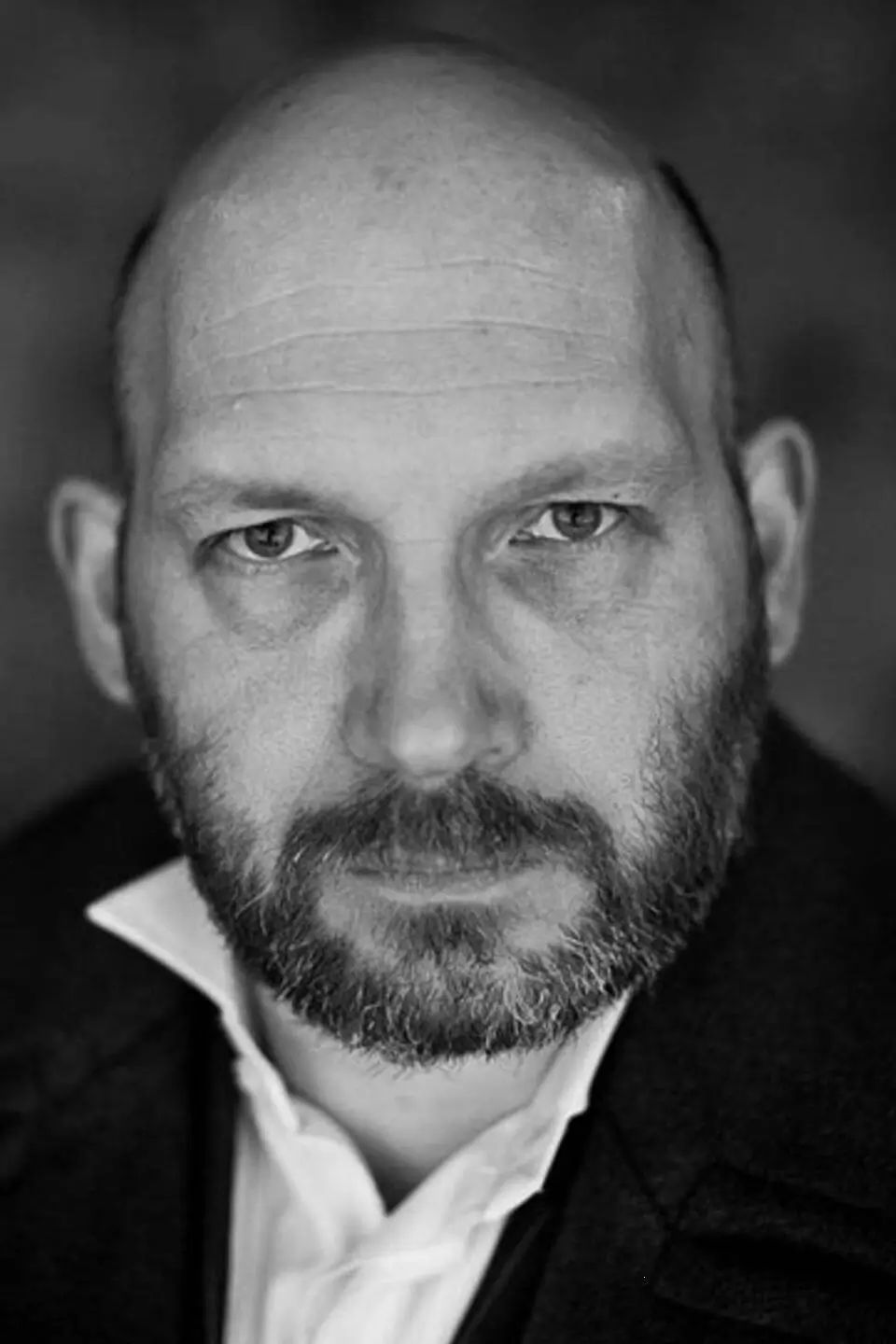
James Lecky is an actor and writer from Derry. His speculative fiction has appeared internationally in such publications as the award-winning Beneath Ceaseless Skies and the anthologies Arcane, The Phantom Queen Awakes and Emerald Eye: The Best Irish Imaginative Fiction. In addition, his work has been nominated for the British Fantasy Society, The British Science Fiction Association and Harper's Pen Awards.
More work by James Lecky


Tel: 028 7126 6946
Email: hueditor@theverbal.co
Verbal, Stable Lane and Mall Wall, Bishop Street Within, Derry/Londonderry, BT48 6PU
 company
Copyright © 2026 Honest Ulsterman