


Mervyn Peake and the Fantasy of Manners

Gormenghast, that is,
the main massing of the original stone. . .
– Mervyn Peake, Titus Groan.
Modern fantasy literature, falls broadly into two camps, both of which take their literary cue from two very different but equally remarkable works published in the mid-twentieth century.
The first, and by far the most common, springs from the work of J.R.R Tolkien – in particular The Lord of the Rings (1954) – and there is a sense in which a great deal of modern fantasy represents either an adherence to, or rejection of, the pseudo-medieval “secondary worlds” popularised by Tolkien's work. The Middle Earth of The Hobbit (1937), The Lord of the Rings, The Simarilion (1977) et al, has become virtually the lingua franca of commercial fantasy – to the extent that many mainstream fantasy novels published in the wake of the post-1960s success of Lord of the Rings were marketed as being “in the tradition”of Tolkien and, more recently, George R.R Martin – easily the most successful and well known writer of modern fantasy – has been dubbed “The American Tolkien” (Lev Grossman, Time, 2005)
The second, much rarer, strand of modern fantasy takes its literary cue from what is common referred to as the Gormenghast trilogy by Mervyn Peake, beginning with Titus Groan (1946) and continuing in Gormenghast (1950), Titus Alone (1959) and the novella Boy In Darkness (1956). Whereas Tolkien's Middle Earth encompasses an entire imaginary world, complete with history, language and geography, Peake's Gormenghast takes place almost wholly within the confines of the titular castle only emerging into the wider world with the third and, sadly, final of Peake's novels.
Although it must be stressed that the works of Tolkien and Peake are so different as to make comparison redundant, there is an argument that – certainly in terms of their subsequent influence – The Lord of the Rings and the Gormenghast Trilogy are literary mirrors of each other. Tolkien's epic world-spanning fantasy could broadly be described as a story of good versus evil, its characters falling easily into archetype (the heroes are very heroic, the villains very villainous) and its narrative, bar the odd divergence, relatively straightforward; its world, culled from and inspired by European myth and legend, recognisable on the same level as, say, Arthurian legend or the history of the Middle Ages.
Peake, on the other hand, is darker, more complex both in terms of prose and characterisation as well as the imaginary world he presents. There are no heroes in Gormenghast and its principal antagonist – Steerpike – has a complexity that places him closer to, say, Miss Havisham than Sauron.
An illustrator, author and poet, Mervyn Peake was born in Kuling, Central China, to British missionary parents in July 1911, and spent the first eleven years of his life in Tientsin (now Tianjin), a Westernised Treaty Port in northern coastal China. The influence of these formative years can be felt strongly in his later work, not least of all in the architecture of Gormenghast Castle itself, reminiscent of the ancient walled city of Beijing (formerly known as Peking):
. . . a panorama of roof-tops, towers and battlements that lay in a great half-circle below. Between high bastions might be seen, hundreds of feet beneath, a portion of quadrangle wherein, were a figure to move across, he would appear no taller than a thimble. . .
. . . The afternoon light was beginning to wane in the sky although the picture of turrets and roof-tops. . . (the) roof terminated in a long horizontal spine like a buttress, which, in turn, led in great sweeping curves towards the main rooftops of Gormenghast. . . He could see how the ridge on which he sat led in a wide curve to where in the west it was broken by the first of four towers. Beyond them the swoop of roof continued to complete a half circle far to his right. This was ended by a high lateral wall. Stone steps led from the ridge to the top of the wall, from which might be approached, along a cat-walk, an area the size of a field, surrounding which, though at a lower level, were the heavy, rotting structures of adjacent roofs and towers, and between these could be seen other roofs far away, and other towers.
(Titus Groan.)
The Peake family returned to England in 1922 and Mervyn's education continued at Eltham College (1923 - 29), where his obvious talents as an artist were encouraged. He left Eltham to study at the Croydon School of Art before enrolling at the Royal Academy in December 1929 where he remained until 1933. Shortly after this he moved to the island of Sark, returning to London in 1935 having exhibited his work on several occasions with The Sark Group, at galleries in London and in Paris. His costume and set designs for Karel Capek's The Insect Play were acclaimed by the Sunday Times and he began teaching life drawing at the Westminster School of Art where he met the painter Maeve Gilmore whom he married in 1937. By 1938 he held his first one-man exhibition at the Gallery in London, in 1939 his first book, Captain Slaughterboard, was published and in 1940 he moved to Sussex where his first child, Sebastian, was born. In the same year he began writing Titus Groan.
In his previous book illustrations and original drawings, Mervyn Peake had already shown his capabilities as a visualizer of haunting and penetrating images, both grotesque and realistic, and this power did not desert him when he turned to prose narrative: his descriptions are alive, and almost Dickensian. . . and his often-detailed accounts of physical action appear as an extension of his artist's control. . .
(The Walls of Gormenghast–An Introduction to the Novels of Mervyn Peake, Edwin Morgan, Chicago Review, 1960)
Titus Groan introduces the major players in the Gormenghast saga; that parade of Dickensian grotesques who inhabit the castle and its environs. A brief roll-call only hints at the power of Peake's imagination – Steerpike, Flay, Swelter, Doctor Prunesquallor, Nannie Slagg, Rottcodd, Sourdust, Lord Sepulchrave and, of course, the titular character himself, Titus Groan, destined to become 77th Earl of Gormenghast, and who's birth and childhood provide the background to the novel. (It is typical of Peake that the title character is initially relegated to a supporting role in his own story while exploring other narrative strands, most notably the murderous feud between Mister Flay, the loyal majordomo of the castle, and the corpulent chef, Swelter).
More importantly, the castle of Gormenghast itself is introduced and serves, more so than any of the human characters, as the central focus of the trilogy. It is a vast place, ruinous in places, always redolent of decay, ruled by a set of obscure and seemingly pointless rituals:
The left hand pages were headed with the date and in the first of the three books this was followed by a list of the activities to be performed hour by hour during the day by his lordship. The exact times; the garments to be worn for each occasion and the symbolic gestures to be used. Diagrams facing the left hand page gave particulars of the routes by which his lordship should approach the various scenes of operation. The diagrams were hand tinted.
The second tome was full of blank pages and was entirely symbolic, while the third was a mass of cross references. . . This complex system was understood in its entirety only by Sourdust – the technicalities demanding the devotion of a lifetime, though the sacred spirit of tradition implied by the daily manifestations was understood by all.
(Titus Groan)
Both Titus Groan and the subsequent volume, Gormenghast, eschew a conventional “fantasy” narrative. Titus may be destined to rule, but this is no lost prince struggling to regain or retain a kingdom. Similarly, although both novels recount the rise to power and prominence of the villainous Steerpike (first seen as a virtual slave in the “steaming province” of the castle's kitchens where chef Swelter holds sway) his eventual fall from grace and death at the hands of Titus himself, he is far removed from the traditional Dark Lord of much commercial fantasy. A Machiavellian character who uses flattery, lies, deceit, arson, and (both directly and indirectly) murder to achieve his ends, Steerpike is the antithesis of all that Gormenghast and its rigid rituals represents:
His body gave the appearance of being malformed, but it would be difficult to say exactly what gave it this gibbous quality. Limb by limb it appeared that he was sound enough, but the sum of these several members accrued to an unexpectedly twisted total. His face was pale like clay and save for his eyes, masklike. These eyes were set very close together, and were small, dark red, and of startling concentration.
(Titus Groan)
There are those critics who have tried to couch the rise of Steerpike in purely political terms – Steerpike as a representative of the proletariat in rebellion against a decaying and decadent aristocracy, but this is to merely skim the surface of both character and narrative. If Steerpike is a revolutionary then he is a singularly selfish one and, more importantly, one who does not seek to overthrow the ruling House of Groan but rather to join with it (his rather adolescent romance with Fuschia Groan, Titus' sister, being a case in point) and there is little in the novel to suggest that the society of Gormenghast Castle is dissatisfied with the status quo other than on a personal level – Sepulchrave is deeply unhappy and seeks solitude in his beloved library, Fuschia initially loathes her younger brother but in the same way that any older sibling might feel resentment for a younger and the twin sisters Cora and Clarice are envious of their brother Sepulchrave's power and status, continually plotting (albeit ineffectually until they fall under Steerpike's diabolical influence) to take his place and even Titus himself ultimately rejects the staid and ceremony filled castle, breaking free of its presence and influence in Titus Alone.
Nonetheless, Steerpike's rise from humble kitchen boy to Master of Ritual is a startling and brutal one – under his orders Cora and Clarice set fire to Sepulchrave's library leading to the death of Sourdust, the Master of Ritual, to Sepulchrave's madness and suicide and, ultimately, the elevation of the infant Titus to the Earlship.
As an opening to the Gormenghast trilogy, Titus Groan presents a complex picture of a society in flux, but even this complexity is eclipsed by the second book in the series, Gormanghast.
At the outbreak of World War II, Peake unsuccessfully attempted to become a war artist, eager to put his skills to use in the service of his country. His application was consistently refused and instead he was conscripted into the army, serving first with the Royal Artillery and then the Royal Engineers. By June 1942, however, he was in the Army Military Hospital at Southport recovering from a nervous breakdown – possibly induced by repeated refusals from the War Office to accept him as a war artist – and was discharged from the army in 1943. In 1946, commissioned by The Leader magazine, he visited Germany as a war artist and entered the Bergen-Belsen concentration camp in June where he produced a series of vivid and harrowing drawing of the dying inmates.
The years 1943 - 48 were some of his most productive. In addition to writing Titus Groan and Gormenghast, he provided acclaimed illustrations for a diverse range of books including Lewis Carroll's The Hunting of the Snark and Alice in Wonderland, Coleridge's The Rime of the Ancient Mariner and R.L Stevenson's The Strange Case of Doctor Jekyll and Mr Hyde.
Gormenghast follows Titus from the age of seven to seventeen, his increasing disenchantment with his role as 77th Earl and his dread of a life of constricting ritual. Meanwhile, Steerpike continues his rise to power, killing and replacing Barquentine, the new master of ritual, only to be unmasked as a traitor and a murderer. In the teeth of a massive storm which floods the castle, Steerpike is killed by a vengeful Titus, who holds him responsible for the death of Fuschia (ironically a death for which is almost wholly innocent). But rather than take his place as master of Gormenghast, Titus chooses to leave the castle and experience the world outside its confines.
Gormenghast is, arguably, Mervyn Peake's masterpiece – darkly funny and chilling, laden with exquisite prose and truly memorable characters. It is in this novel that the environs of the castle take on a character of their own, and in many respects it is Gormenghast itself which acts as the principle character of Peake's first two books in the trilogy (and an always looming presence in the third):
High, sinister walls, like the walls of wharves, or dungeons for the damned, lifted into the watery air or swept in prodigious arcs of ruthless stone. Lost in the flying clouds the craggy summits of Gormenghast were wild with straining hair – the hanks of the drenched rock-weed. Buttresses and outcrops of unrecognizable masonry loomed. . . head like the hulks of mouldering ships, or stranded monsters whose streaming mouths and brows were the sardonic work of a thousand tempests. Roof after roof of every gradient rose or slid away before his eyes; terrace after terrace shone dimly below him through the rain, their long-forgotten flagstones dancing and hissing with the downpour.
From this location the castle could be seen heaving across the skyline like the sheer sea-wall of a continent; a seaboard nibbled with countless coves and bitten deep with shadowy embayments. A continent, off whose shores the crowding islands lay; islands of every shape that towers can be; and archipelagos; and isthmuses and bluffs; and stark peninsulas of wandering stone – an inexhaustible panorama whose every detail was mirrored in the breathless flood below.
(Gormenghast)
It also contains some of Peake's most striking passages, particularly in the description of Barquentine's murder and Steerpike's maiming:
Steerpike, all in a breath, had snatched up the candlestick, and lunging forward, swept the tiny flame across the upturned face. In a moment, the lifeless beard had shone out in sizzling fire and it was but a moment before the rotten rags about the shoulders of the old man were ablaze also. But again, and this time while in the throes of mortal agony, Barquentine’s brain had risen instantaneously to the call which was made upon it. He had no moment to lose. . . with a superhuman effort, one-legged though he was, he flexed his knee and in a spring caught hold of some portion of Steerpike’s clothing. No sooner had he made his first grip, than, with his arms straining themselves to breaking point, and his old heart pounding, he made good his purchase and began to swarm the youth like an ape on fire. By now he had a grip of Steerpike’s waist and the flames were beginning to catch the clothing of his young enemy. The searing pain across his face and chest but made him cling the tighter. That he must die, he knew. But the traitor must die with him, and in his agony there was something of joy; joy in the ‘rightness’ of his revenge. . . At the same time, Steerpike was fighting to free himself, clawing at the burning leech, striking upwards with his knees, his face transparent with a deadly mixture of rage astonishment and desperation. His clothes, less inflammable than Barquentine’s threadbare sacking, were nevertheless alight by now, and across his cheek and throat a flame had scorched his skin to crimson. But the more he struggled to wrench himself away the fiercer seemed the arms that gripped his waist. . . Even now in his pain and danger there was room in him for the bitter shame of his failure. Steerpike the arch contriver, the cold and perfect organizer, had bungled the affair. He had been out-generalled by a verminous septuagenarian. But his shame took the form of desperate anger. It whipped him to a feverpitch. In a kind of spasm, quite diabolical in the access of its ferocity and purpose, he struggled to his knees, and then with a jerk, to his feet. He had let go the throat and he stood swaying a moment, his hands free at his sides, and the pain of his burns so intense that, although he did not know it, he was moaning like something lost. . . It was something quite physical. It was his body crying. His brain knew nothing about it. The Master of Ritual clung, like a vampire, at his breast. The old arms were clasped about him. Mixed with the pain in the agonized face, there was an unholy glee. He was burning the traitor with his own flame. He was burning an unbeliever.
(Gormenghast)
or, earlier in the novel, the deaths of the devious twins, Cora and Clarice:
He knew that in some way the end had come to some demented thing. What it was that had laughed with that double note, that had cried out and answered itself with the same flat and terrible voice, he never knew. He never knew that he was the last to hear the voices of their ladyships Cora and Clarice, nor that he had been within a few feet of those apartments into which they had once been lured. He never knew that behind the locked doors of this place of incarceration the Twins had languished, their brains losing what grip they had, their madness mounting, until, when their provisions began to fail them, and Steerpike no longer came, they knew that death was on his way. When weakness overpowered them they lay down side by side and staring at the ceiling, they died at the same moment, on the other side of the wall.
(Gormenghast)
In Gormenghast, the full power of Peake's imagination is unleashed – from weird fantasy to farcical humour, gothic horror, pathos, allegory and almost shocking surrealism:
Suckled on shadows; weaned, as it were, on webs of ritual: for his ears, echoes, for his eyes, a labyrinth of stone: and yet within his body something other – other than this umbrageous legacy. For first and ever foremost he is child. A ritual, more compelling than ever man devised, is fighting anchored darkness. . . Titus the seventy-seventh. Heir to a crumbling summit: to a sea of nettles: to an empire of red rust: to rituals’ footprints ankle-deep in stone. Gormenghast. Withdrawn and ruinous it broods in umbra: the immemorial masonry: the towers, the tracts . . .
The sun’s rays searing a skein of cloud, burn with unhampered radiance through a hundred windows of the Southern walls. It is a light too violent for ghosts. . .
(Gormenghast)
Mervyn Peake's mastery of surrealism would continue, to great effect, in Titus Alone.
By the mid-1950s, however, Peake's health was in decline and the critical and commercial failure of his play, The Wit to Woo (1957), affected him adversely, leading to another mental breakdown for which he was again hospitalised. Although still a young man, Peake exhibited signs of early onset dementia and over the next few years his physical and mental health declined rapidly, to the extent where he was no longer able to write or draw.
Titus Alone was finished under the most adverse of circumstances and, although the novel is often regarded as the “orphan child”of Gormenghast it remains a remarkable and powerful book. Cut loose from the confines of Gormenghast castle both author and central character explore an outside world which grows more and more bizarre with each chapter, each new discovery and one which, ultimately, leads to Titus doubting all that he had once believed certain until his final return to and ultimate repudiation of Gormenghast itself:
To north, south, east or west, turning at will, it was not long before his landmarks fled him. Gone was the outline of his mountainous home. Gone that torn world of towers. Gone the grey lichen; gone the black ivy. Gone was the labyrinth that fed his dreams. Gone ritual, his marrow and his bane. Gone boyhood. Gone. It was no more than a memory now; a slur of the tide; a reverie, or the sound of a key, turning. . .
The city was indeed beginning to turn in its sleep, and out of the half-darkness figures began to appear along the waterfront; some on foot hugging themselves in the cold; some in ramshackle mule-drawn carriages, the great beasts flaring their nostrils at the sharp air, their harsh bones stretching the coarse hide at hip and shoulder, their eyes evil and their breath sour. . .
Without waiting for any orders from the brain a demon in his feet had already carried Titus deep into the flanking trees, and through the great park-like forest he ran and ran and ran, turning now this way and now that way until one would say he was irrevocably lost, were it not that he was always so. . .
Mr Crabcalf was propped up, not against pillows or a bolster of straw, but by books; and every book was the same book with its dark grey spine. There at his back, banked up like a wall of bricks, were the so-called ‘remainders’ of an epic, long ago written, long ago forgotten, except by its author, for his lifework lay at his shoulder blades. Out of the five hundred copies printed thirty years ago by a publisher long since bankrupt, only twelve copies had been sold. Around his bed, three hundred identical volumes were erected … like walls or ramparts, protecting him from – what? . . He lay with his past beside him, beneath him, and at his head: his past, five hundred times repeated, covered with dust and silver-fish. His head, like Jacob’s on the famous stone, rested against the volumes of lost breath. The ladder from his miserable bed reached up to heaven. But there were no angels. . .
From the motionless building there came a kind of rumour; an endless impalpable sound that, had it been translated into a world of odours, might have been likened to the smell of death: a kind of sweet decay. . .
‘O God! It’s true! It’s true! I am not mad! I am not mad!’ he cried. Gormenghast, his home. He could feel it. He could almost see it. . . There was a taste in the air of iron. There was a quickening it seemed of the very stones and of the bridgeless spaces. . . He had no longer any need for home, for he carried his Gormenghast within him. All that he sought was jostling within himself. He had grown up. What a boy had set out to seek a man had found, found by the act of living. There he stood: Titus Groan, and he turned upon his heel so that the great boulder was never seen by him ever again. Nor was the cave: nor was the castle that lay beyond, for Titus, as though shaking off his past from his shoulders like a heavy cape began to run down the far side of the mountain, not by the track by which he had ascended, but by another that he had never known before. With every pace he drew away from Gormenghast Mountain, and from everything that belonged to his home. . .
(Titus Groan)
Published in 1959 in a heavily edited edition, Titus Alone was not as well received as its predecessors, but a more faithful version of the text, re-edited by the British speculative writer Langdon Jones and published in 1970, restored much of Peake's original manuscript and has since been hailed as a fitting conclusion to the Gormenghast Trilogy.
Peake's literary influence was felt most keenly in the 1960s, particularly in regard to the British New Wave of Science Fiction. Championed and spearheaded by writer and editor Michael Moorcock (himself an admirer of Peake's work) echoes of Gormenghast can be found in the works of Moorcock (The Dancers at the End of Time sequence, 1981 and Gloriana, or The Unfulfill'd Queen, 1978) and in the twisting, surreal landscapes of M. John Harrison's remarkable Viriconium sequence of novels and short stories (beginning with The Pastel City, 1971). Peake has also been lauded as one of the well springs of the so-called Fantasy of Manners particularly Ellen Kushner's Swordspoint (1987) Susanna Clarke's Jonathan Strange & Mr Norrell (2004) and K.J Bishop's The Etched City (2004), novels which forgo conventional fantasy narratives and themes concentrating instead on mood and character.
Peake had always intended to continue the story of Titus Groan beyond the confines of Gormenghast but ill-health prevented this. He did however write a related novella, Boy In Darkness, originally published in the anthology Sometime: Never (1956) -- which also included long stories by John Wyndham and William Golding – in which the young Titus (only referred to by name twice in the narrative) here mostly referred to as the Boy “undergoes a testing allegory of adolescence, and successfully outwits the three horrible half-human figures of the Goat, the Hyena and the Lamb, into whose country he strays” (Edwin Morgan, The Walls of Gormenghast). Shot through with all the horrific logic of a nightmare, Boy in Darkness is Peake at his most chilling.
Mervyn Peake died in 1968 at the age of fifty-seven after a long struggle with neurodegenerative illness. He left behind him a fragment of what was to be the fourth novel in the Gormenghast sequence, Titus Awakes. The fragments were continued and completed by his widow, Maeve Gilmore as Search Without End in the early 1970s and the novel was finally rediscovered and published in 2011 as Titus Awakes: The Lost Book of Gormenghast.
Sometimes comic (Doctor Prunesquallor and his sister Irma are among the finest comedy creations in literature and the romance between Irma and Titus' narcoleptic teacher Doctor Bellgrove is achingly sweet and funny) sometimes sinister (the madness of Lord Sepulchrave and the vicious stalk-and-slash duel between Flay and Swelter in the Hall of Spiders) but never less than compelling, the Gormenghast novels are unique in English literature and unparalleled in the literature of the fantastic.
Bibliography:
Titus Groan (1946)
Gormenghast (1950)
Titus Alone (1959)
Boy In Darkness (1956)
Titus Awakes (by Maeve Gilmore) (2011)
Further Reading
Mervyn Peake, The Official Site (http://www.mervynpeake.org)
Mervyn Peake, A Biographical and Critical Exploration, John Batchelor (1974)
Mervyn Peake, John Watney (1976)
Mervyn Peake: The Man and His Art, Compiled by Sebastian Peake & Alison Aldren (2006)
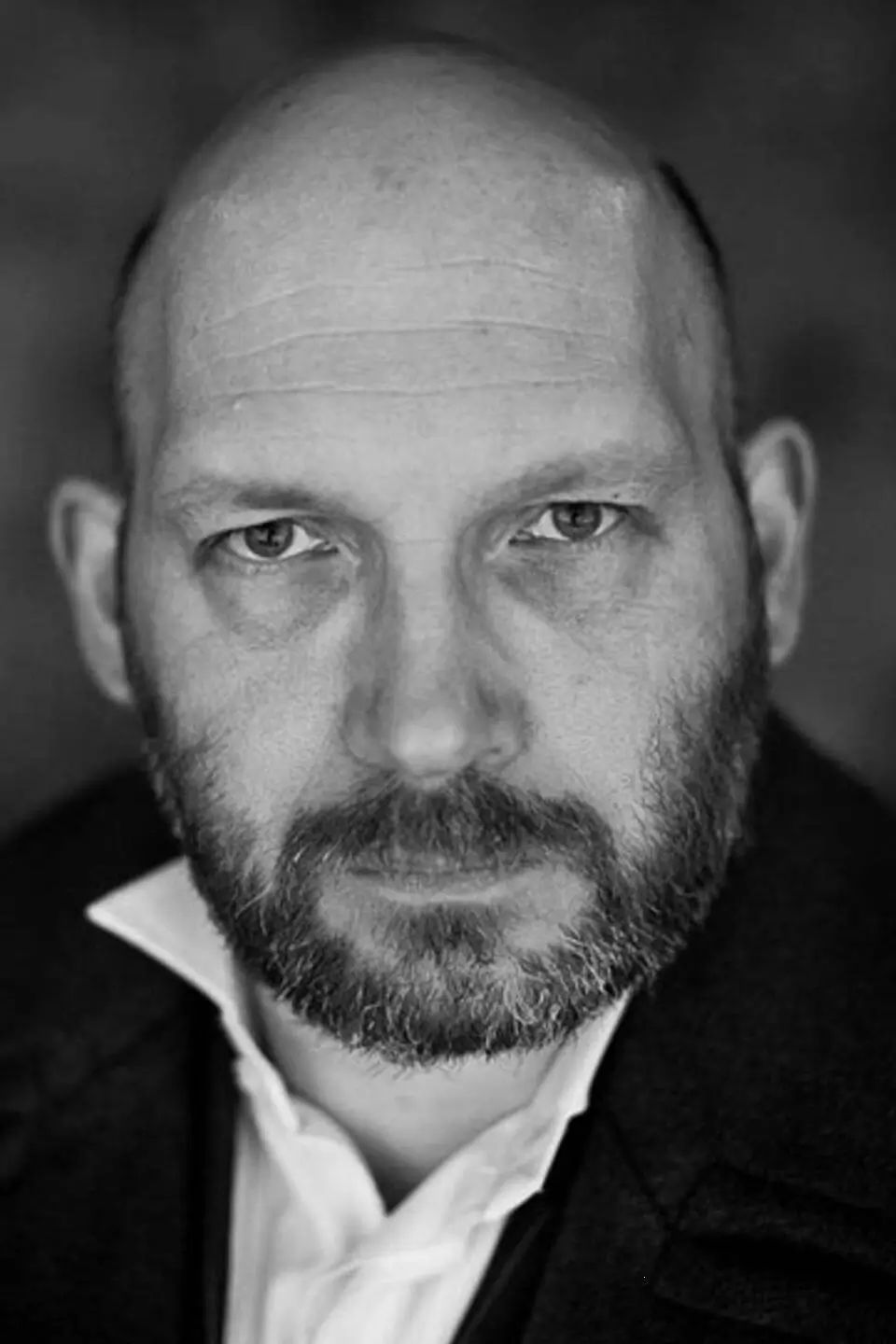
James Lecky is an actor and writer from Derry. His speculative fiction has appeared internationally in such publications as the award-winning Beneath Ceaseless Skies and the anthologies Arcane, The Phantom Queen Awakes and Emerald Eye: The Best Irish Imaginative Fiction. In addition, his work has been nominated for the British Fantasy Society, The British Science Fiction Association and Harper's Pen Awards.
More work by James Lecky


Tel: 028 7126 6946
Email: hueditor@theverbal.co
Verbal, Stable Lane and Mall Wall, Bishop Street Within, Derry/Londonderry, BT48 6PU
 company
Copyright © 2026 Honest Ulsterman