


An Interview
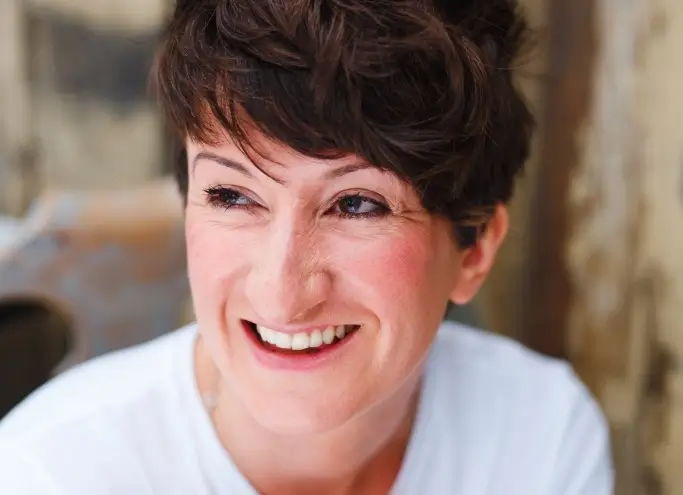
Sarah Davis-Goff has written about publishing, literature and gender for the Irish Times, the Guardian and LitHub. She's co-founder of independent publisher Tramp Press, who have published Mike McCormack's Solar Bones, Sara Baume's Spill Simmer Falter Wither, and Emilie Pine's Notes to Self. In 2019 her debut novel Last Ones Left Alive was published in the UK and Ireland by Tinder Press, and in the US by Flatiron. Last Ones Left Alive was nominated for the Edinburgh First Book Prize and the Not-The-Booker Prize, shortlisted for an Irish Book Award, and won a Chrysalis Award. Film rights have been optioned by Treasure Entertainment. Sarah lives in Dublin.
Sarah’s first novel Last Ones Left Alive is told from the point of view of Orpen, who is leaving the isolated Slanbeg Island where she has lived with her mother Muireann and mother’s partner Maeve for the unknown Phoenix City on the mainland. As well as moving through a post-apocalyptic land there is also the constant threat of skrake, the zombie-like creatures that Orpen has been warned about and trained to fight against since she was a small child. The exact time in the novel is unknown, but certain terms; ‘The Emergency’ and ‘Ghost villages’ evoke World War II and famine-struck villages respectively. Sarah says of these references:
“The Ireland that I create in Last Ones Left Alive is very much informed by Irish history, but it’s a scattergun approach. The landscape images in particular were informed by Irish artists - the main character, Orpen, is named after the Irish artist William Orpen. From the perspective of Orpen, the Famine and World War II are ancient history; someone talking to her about the Famine is like someone talking about Noah’s Ark. It’s not real to her and is seen as something that happened to other people in a world that has vanished. It’s fair for her to feel disconnected.”
Orpen has grown up very isolated, with only her own perspective and what her parents have told her about the world to inform her; a point that is further emphasised in the first-person narrative of the novel. She is both rooted to their very isolated way of living and completely rootless when those closest to her can no longer protect her. Sarah wanted to show what happens when a person is not lucky enough to grow up in a community, which is reflected in our contemporary western society. Sarah talks about the dystopian context of the novel in relation to this:
“I enjoy writing dystopia because everything is taken to an extreme. Being disenfranchised from community is something a lot of people can relate to. Many people who grew up with a rural background felt the same pull as Orpen to the bright lights and the big city and to find something greater. In Last Ones Left Alive these themes are heightened, but I’m talking about fairly everyday matters.
Slanbeg offers a physically isolated setting from which Orpen can travel from, and the island offered another structure for Sarah: “I wanted to create a place where Open could grow up in relative safety. I wanted the experience she was having of the world to be quite different from anyone else around her. Her mothers Muireann and Maeve had very traumatic experiences growing up and the fact that they managed to survive as long as they did is testament to their power, ingenuity, and persistence in the face of threat. But Orpen, compared to them in many ways, is a very sheltered child. She’s been taught about these monsters but she doesn’t actually meet them until quite late in her life, considering she’s been rigorously trained to fight them. From the reader’s perspective she’s had quite a tough childhood but in this world that I’ve created she’s had an incredibly lucky one. She’s been safe on Slanbeg and she hasn’t been subjected to dangers from the skrake or from anything else. She’s good at what she does, she’s been trained well and enjoys the physicality of her training. She’s smart, she takes things in and it doesn’t occur to her to rebel in any way until quite late on, which is just as well for her. Certainly the idea of being on an island and being apart from the mainland and having this different perspective and mentality was very important.”
Last Ones Left Alive has elements of a road novel; the character develops as they move through their journey, they find out about themselves and the world. Sarah says of this trope; “I’m interested in road movies and novels, from trying to get from place A to Place B. There’s a great action movie The Raid, or the obvious novels The Road by Cormac McCarthy, or How I Live Now by Meg Roscoff. The characters are trying to accomplish something very simple but the world is complex, and their actions are complex. I really like the immediacy of trying to figure out how to live day to day, in quite a domestic sense - not in terms of living in a home but in terms of how you’re feeding and clothing yourself. The rudiments of daily life I always find fascinating. I’m also really inspired by the classic 80s movie The Terminator, particularly in regards to how it is structured. It’s such a neatly told story and that’s because the exposition is accomplished within the main thrust of the narrative on the road with Sarah Connor. It’s all explained to her while they’re literally running for their lives. I admire the simplicity and force of that.”
Looking at broader influences, Sarah has been a long-time fan of Stephen King:
“I was obsessed with Firestarter when I was growing up, which is quite an early novel of his. It’s kind of another road novel in a way: it’s about a man and his daughter trying to escape a very clandestine government that’s out to imprison them and conduct experiments on them. It’s really well written on a sentence level, the structure works incredibly well, it’s very tense and really engenders distrust of civil society that still rings true. It questions the role of the anti-establishment, what it takes to be anti-establishment and to remain that way.
I reread it last year hoping it would still read well. It’s a really moving, really great horror novel.”
To look at Last Ones Left Alive through the lens of a road novel, Sarah explains that Orpen’s journey to find her place in the world will be further developed in the next book: “In the second book she’s learning about community, what that means and the different responsibilities when being part of a community. I’m interested in very dated concept of duty and what we owe each other.”
The novel is also an exploration in unpacking trauma, both the personal trauma of the individual characters and the wider landscape inflicted by a country’s traumatic history. In relation to the importance of understanding our history, Sarah states;
“I’m not sure if I subscribe to the idea that those who ignore history are doomed to repeat it but it has refrains that keep repeating, certainly. There’s a line in Margaret Atwood’s The Testaments: ‘History doesn’t repeat itself but it rhymes’ [1]. In Last Ones Left Alive the landscape changes but people’s actions remain very similar. As in our own world, it is possible to feel optimistic for humanity and also to feel like the world will definitely come to an end, you can hold both at once.”
The constant threats and reminders of trauma could warp a person’s perception of both their inner and out worlds. Sarah agrees:
“I was thinking about how trauma effects the mind. When you you’ve been through something traumatic and that experience doesn’t really let up how do you get through it, and how do you learn to first trust yourself and then the world around you? It’s not something I’ve figured out of course but I’ve found it really interesting to explore. There’s also the question that if your sense of self and sense of community has been destroyed, how can you ever reacquire the strength to recoup that? What would people do to get it?
Orpen is traveling and worried not only about the danger posed by other people, but also the skrake, a monster literally coming to consume her. You can really use skrake, which are essentially zombies, to talk about so many things. They’re such a plastic literary trope. There’s a sense that the skrake could not exist and Orpen’s experience might not be so different.”
There is a recurring theme of confinement within the book that is linked to the traumas embedded within this dystopian world. As events unfold we see how Orpen deals with both of these. Sarah discusses this further:
“There is a feeling of confinement with Orpen and the world she finds herself in. She has few options, there are so few opportunities to escape the life she’s been brought into. I think we learn from the world we live in but also from the world we’re told about. Orpen is telling and re-telling herself her own story before she meets her end in order to have something to hold on to. I think a lot of people who have been subject to some kind of trauma tell the story of what happened to them repeatedly in order to make sense of it. I think that’s what Orpen is doing. She’s not so traumatised that she suffers from serious flashbacks where she feels like she’s in a certain place once again, it’s more that she is telling herself her own story in order to make sense of it. I’ve been talking about trauma a lot and although Orpen has been through a lot, and some of those events have been quite traumatic frankly, she’s wouldn’t see herself as someone whose been subject to more than the average in terms of this world. She’s quite positive and optimistic, she’s a fighter and a survivor like I suppose a lot of people who’ve been subject to trauma are. The novel addresses her grappling with the future rather than succumbing to the miseries of the past.”
The novel features deftly written combat and action scenes. I asked Sarah how she researched Orpen’s training and fighting scenes:
“You’ve heard from method acting - I wouldn’t say I method wrote exactly but I definitely got really into kickboxing for the four years or so that I was writing this novel. I trained three or four times a week and I just really enjoyed the physicality. It’s such a fun way to express yourself. Kickboxing is very like dancing in terms of strength and control, its also quite creative. Being strategic while sparring is the final hurdle - the mind takes a while to figure out how to fight: not just about strength. What I liked about it most is that no matter how tough of a day you’re having, if someone smacks you in the nose that’s the end of it, everything else feels less important. It’s very centring, focusing and satisfying.”
Whilst trying to shield Orpen from danger, her mothers are adamant that she is physically able to defend herself once she is independent of them. However Orpen has to fight to survive sooner than Muireann and Maeve expect, and the young woman has to embark on a journey that she is maybe not psychologically prepared for. Sarah continues:
“If her mothers had known how to prepare Orpen mentally as well as physically they would have. They were conflicted about how best to do this. They knew that they weren’t going to be around forever and so their whole focus in life had been getting their child away from an incredibly dangerous and harsh environment that they didn’t want to see Orpen grow up in, and then making a life for that child. They were still getting to grips with that last step of ‘What happens now?’ when things begin to happen at the beginning of the novel. As parents they wanted their child to stay safe so they raised her in a very confined environment. However, ‘Your children are not your children’; [2] they’ll have their own personalities and wants in life. One of the central issues of the novel is that despite the danger, Orpen wants to see more than the tiny island where she grew up.”
Sarah is currently writing a follow-up to Last Ones Left Alive: “The new novel is about what happens next … Orpen has figured some stuff out; Phoenix City is of course not all that she’d imagined or hoped for. I was really interested in writing a city in which something terrible has happened and the result has been reactionary and conservative. Phoenix City has created a very patriarchal environment. I’m curious to find out what happens when you bring a rebellious outsider into that confined environment.” The second novel has given Sarah an opportunity to explore a city, and a community, under siege:
“What I love about writing what is essentially a zombie novel is the siege-like mentality that the monster puts upon the characters. The people in Phoenix City are necessarily confined in their movements. Acquiring just the basic everyday things to live presents its own challenge. Many people haven’t been outside the city walls. I’ve been reading about real-life sieges, particularly Stalingrad, Antony Beevor’s book."[3]
Alongside this research and the exploration of another confined community - this time in a city rather than an island, Sarah is happy to be back in Orpen’s shoes: “Orpen is a very practical, clear-sighted person despite the fact that her life has been so confined. I like her point of view, it’s very no-nonsense, and she’s very clear about her goals …. She’s trying to figure out what she wants from society and what society wants from her. It’s really fun to step into her voice and those eyes again.”
Last Ones Left Alive is published by Tinder Press. https://www.headline.co.uk/titles/sarah-davis-goff/last-ones-left-alive/9781472255211/
[1] Quote widely attributed to Mark Twain
[2] http://www.katsandogz.com/onchildren.html (a Kahlil Gibran poem from The Prophet (Knopf, 1923). This poem is in the public domain.
[3] https://www.antonybeevor.com/book/stalingrad/
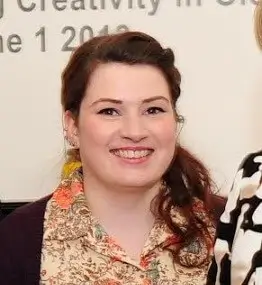
Maeve Mulrennanis a curator and writer based in Galway. She is the Head of Visual Art + Education in Galway Arts Centre, where she has worked since 2006. This role includes exhibitions, critical writing, residencies and education programming. In 2008 she founded Red Bird Youth Collective, which is now a youth led art collective working in visual art, architecture, animation and film. She is the co-curator of the youth & outreach programme for Cúirt International Festival of Literature. Maeve has been on the Board of Directors of Tulca Festival of Visual Art since 2006. Maeve lectures oin the MA Arts Policy & Practice in Huston School of Digital Media, NUI Galway and is an online- Lecturer with NODE Center for Curatorial Studies, Berlin. Maeve is a short story writer, with fiction published in several online journals, The Doire Press 2013 Anthology and The Galway Review. She is currently completing a BA in English Literature and Sociology + Politics in NUI Galway.
More work by Maeve Mulrennan


Tel: 028 7126 6946
Email: hueditor@theverbal.co
Verbal, Stable Lane and Mall Wall, Bishop Street Within, Derry/Londonderry, BT48 6PU
 company
Copyright © 2026 Honest Ulsterman