


Brian Moore as Magical Realist
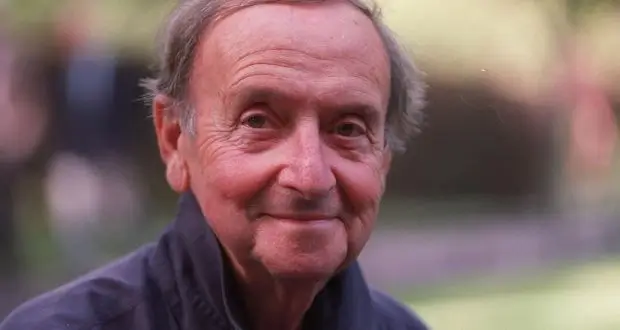
As a writer who suffers from too many disparate ideas, I’m comforted by the existence of writers who’ve managed to publish widely across multiple genres, themes and styles. Two of my contemporary favourites are Margaret Atwood and Michel Faber. However, Belfast-born novelist Brian Moore surely deserves a place on this list of what I’ll call ‘wide-ranging writers.’ The twenty novels he published during a career which spanned five decades, pay testament to the scope of his writing. While Moore’s focus often fell upon the family and unravelling human relationships, he skipped effortlessly between different styles and genres, geographical and historical settings. His books are all the richer for refusing to be pigeon-holed.
Approaching Moore’s work without prior knowledge -as I did about a decade ago- is comparable to the blind man and elephant scenario. It took me some time to realise that Moore wasn’t just a writer of thrillers or historical fiction, magic realism or any of the genres represented in his work. He was a literary chameleon, a master of multiple genres, adapting his skills to his interest’s whim. Moore even wrote crime fiction under a variety of pseudonyms and worked on several screenplays, including Hitchcock’s Torn Curtain, (although he was less than delighted with the end result). Some argue that such breadth of output may be why Moore isn’t as well-known as he deserves to be. Outside of Northern Ireland I frequently find myself pressing copies of The Emperor of Ice Cream and Judith Hearne upon unsuspecting ignorant friends. Needless to say, they’re all converts now. There’s a Brian Moore book for everyone.
As a young man Moore couldn’t settled within the confines of Northern Irish academia. Later he’d write disparagingly of both his experiences at St Malachy’s College and his discomfort with the mores and social expectations of the upper middle class Catholic world he grew up in. Young Moore -like the poetry obsessed protagonist in The Emperor of Ice Cream- was always thinking beyond his circumstances. He left Belfast at the earliest opportunity and never moved back. It’s no coincidence that several of his characters are, like him, Irishmen in exile. Whilst Moore frequently wrote about his homeplace, he required physical distance in order to write freely and with honesty. I’ve always empathised with this aspect of his story. As a young would-be writer I also felt constrained by the goldfish bowl of an Ulster upbringing. At twenty five, I -as Moore eventually would- made for the West coast of America and, in a big city where nobody knew me, finally found the freedom to write about home.
Moore’s family tree, like my own, sprung from boggy mid Antrim soil. His father was born in my hometown of Ballymena, a town which Patricia Craig in her wonderful Moore biography describes with acidic accuracy, as “a rather sober-sided sort of place…unforthcoming, plain and urbane.” Back in the days when young Moore was visiting his extended family it wasn’t the sort of town which nurtured creativity. It was not much improved by 1980 when I arrived upon the scene. Moore’s family were traditional Catholics. Mine, evangelical Protestants. Both didn’t know what to do when a writer of fiction emerged from their ranks. Perhaps they hoped we’d eventually grow out of it. Throughout his novels Moore constantly revisits this theme of the writer, misunderstood by his own kin. The same fault line runs through much of my work. It’s comforting to know Moore had similar insecurities. His endeavours to write boldly and honestly regardless of how his work was received have provided a blueprint for me.
I have much in common with Brian Moore’s life but essentially it’s his writing I fell in love with. I was particularly drawn to the fantastical elements which appear sporadically throughout his work. In his autobiography, Surprised by Joy, CS Lewis, another great Belfast-born novelist, writes, “the only two kinds of talk I wanted were the almost purely imaginative and the almost purely rational.” I often use this quote to explain how I’m wired creatively. When I first began writing I wrote instinctively merging a love of realism with an overactive imagination which populated my early stories with flying children and talking cats. I blame an early grounding in the book of Revelation and the fact that Raymond Carver has always cozied up to Angela Carter in the C section of my shelves. I didn’t know there was a handy label for what I was writing until the poet Sinead Morrissey pressed Gunter Grasse’s The Tin Drum upon me and asked if I’d always been a magic realist.
I promptly read as many magic realists as I could lay hands on: Salman Rushdie, Murakami, Garcia Marquez. I asked to be pointed in the direction of the Northern Irish magic realists. It quickly transpired that there were very few writers from this neck of the woods whose fiction extended beyond realist, mostly linear, narratives. I struggled to make sense of this. We’re only a few miles up the road from Beckett’s absurdism, Flann O’Brien’s flights of fancy and Bram Stoker’s haunting Dracula. Surely the North, with its heady mix of religion, violence, politics and myth, is fertile ground for literature which challenges assumptions about reality. Perhaps in the past, but amongst modern writers, there was a notable dearth of the fantastical. Over the years I’ve only managed to find a handful of kindred Northern spirits. I’ve spent many hours hypothesizing about why our literature is so straight. Perhaps, our writers believe that serious times, such as those which our country has endured, require serious, straight, no-nonsense writing. I respectfully beg to differ, citing Midnight’s Children, Toni Morrison’s epic, Beloved, and every thought Kurt Vonnegut ever committed to paper as evidence for my case. Sometimes serious times actually call for absurdity. Sometimes reality is best viewed through the lens of parable.
When I first discovered the more fantastical elements of Brian Moore’s work it felt like being reunited with a long lost friend. It’s hard to believe your story has validity when you don’t see similar stories being told. Arguably, this also extends to how we go about telling our stories. I remember reading the back cover of The Great Victorian Collection in Oxfam Books on Botanic Avenue and thinking, this is the kind of story I would write. All of a sudden I felt less lonely. I was not the only magic realist in Ulster. There was a precedent for how I wrote. Now, when asked, as I’m often asked, if magic realism is an appropriate vehicle for writing about Northern Ireland and its myriad issues, I can point to Moore as inspiration and influence. Whilst I see elements of his fantastical imagination, dotted throughout his entire canon, from Judith Hearne’s shoe button’s winking up at her, to his larger than life character descriptions, three novels written during the first half of Moore’s career have become touchstones texts for me as I attempt to straddle the real and unreal in my own writing about this place.
The Great Victorian Collection is a slim little novel set in a motel on the Californian coast. Anthony Maloney wakes up one morning to find the parking lot outside his window magically filled with an immense and priceless collection of Victorian objects which begin to degrade when he wanders too far from the motel. This was my second Brian Moore novel and the first which blatantly featured fantastical elements. Philip French, writing for the TLS in 1975, called it “a shrewd allegory about the situation of the artist in contemporary society.” Seamus Deane noted there were elements present of a “secular miracle,” a repetitive Brian Moore-theme I’ll return to later. Personally, I’ve returned to The Great Victorian Collection several times to marvel at how Moore makes the fantastical believable. Gabriel Garcia Marquez, once admitted that his, “most important problem was destroying the lines of demarcation that separate what seems real from what seems fantastic.” Maintaining the suspension of disbelief is paramount when writing magic realism. In The Great Victorian Collection Moore holds this tension perfectly throughout. It’s a masterclass in setting the correct authorial tone. As Moore himself said, this is “an impossible premise treated realistically,” and the narrative voice must never, for a second, verge into the territory of disbelief. Furthermore, Moore, like all good magical realists, understand his characters, setting and realist detail must be well-drawn and convincing if his readers are to maintain their trust when the story starts to go a little off piste. I re-read The Great Victorian Collection when I was editing my second novel, The Fire Starters. I knew, from Moore’s example, that I’d have to absolutely nail my depiction of East Belfast, if I wanted my readers to believe in the sirens and magical children who populated its little back streets.
The Emperor of Ice Cream, Brian Moore’s semi-autobiographical account of the Belfast Blitz, was my second of his fantastical novels. Here, the young protagonist, Gavin Burke converses with the Infant of Prague and is tormented by two Guardian Angels, one good and one bad. It’s a funny wee novel, shot through with moments of incredible poignancy, and probably my favourite of Moore’s books. It is not without significance that the fantastical devices employed are of a religious nature. In this novel, the secular miracle alluded to in The Great Victorian Collection is explored more openly. For me, this novel has always raised questions about what constitutes appropriate belief. If, as a society, it’s permissible to believe in saints and miracles, why not believe in talking apparitions or guardian angels with dirty minds? Indeed, why not believe in poetry, which Gavin Burke repeatedly uses as a semi-mystical means of transcending his own dire circumstances. Though Moore had no interest in the Catholicism of his childhood, the tropes and iconography of religion appear in almost all his novels. I resonate with this. Whilst my faith looks very different from the faith I inherited, I find the imagery and language of Protestant evangelicalism works its way into most of my stories. I, like Moore, am particularly fascinated by the blurry line between the magical and the miraculous. My forthcoming novel, No Promised Land explores the interplay between faith and the fantastical in a rural county Antrim village in 1993.
As a writer, there’s nothing quite like realising you’ve unintentionally plagiarized one of your heroes. A recent re-reading of Moore’s 1971 novel, Fergus forced me to admit that my short story, Settling, which features a London-based, Belfast woman, confronting an apparition of her dead grandmother, bears more than a passing resemblance to the collection of Irish ghosts and apparitions who form a kind of kangaroo court, in the Hollywood home of Moore’s exiled writer Fergus Fadden. While the similarities are entirely accidental, I’m not surprised that I’ve stumbled upon another of Moore’s tropes. In Fergus, as in several other novels, Moore uses the fantastical to interrogate difficult subjects in a roundabout way. The appearance of his dead father, friends and relatives allows him to talk openly about his issues and confront problematic parts of his past in a manner which never presented itself in real life. The physical and temporal distance afforded by the fantastic, offer Fergus something of a safety net. Moore understands that the use of fantastical elements can operate as a kind of parallel narrative within a text. That which is excruciatingly painful to approach with realism can be more safely -and oftentimes powerfully- explored through the medium of a developed symbol or allegory. I’m reminded of how Toni Morrison uses the ghost child, to fully unpack Beloved’s horrific experience and the way Vonnegut employs both time travel and aliens to convey the brutality of the Dresden bombings in his novel, Slaughterhouse 5.
I’m not for a minute claiming Brian Moore was a magic realist. I’ve noticed, and appreciated, fantastical elements in his work and been encouraged by the way they’ve resonated with my own. So much of his writing explores well-trodden paths in Irish literature: the family, religion, class and creativity. I suspect that Moore, much like myself, occasionally turned to the fantastic in order to lend freshness to his ideas. As Flannery O’Connor, when asked to justify her use of the grotesque, once wrote, “to the hard of hearing you shout, and for the almost blind you draw large and startling figures.” Moore probably faced the same problem many Northern Irish writers face today; readers and publishers alike often mistakenly assume there’s nothing new to be added to our story. Everything which needs to be said about an Ulster upbringing has already been said at some length. For the most part Moore’s realism was loud and assured enough to rouse even the most indifferent reader’s attention. Sometimes, however, he required his own version of ‘large and startling figures’ to shock his readers into full engagement. He gave us secular miracles and ghost fathers, talking statues and foul-mouthed angels. In doing so he gave me a set of shoulders to stand upon and I am extremely grateful for this.

Jan Carson is a writer and community arts facilitator based in Belfast. She is the author of two novels and four story collections. Her 2019 novel, The Fire Starters won the EU Prize for Literature for Ireland.


Tel: 028 7126 6946
Email: hueditor@theverbal.co
Verbal, Stable Lane and Mall Wall, Bishop Street Within, Derry/Londonderry, BT48 6PU
 company
Copyright © 2026 Honest Ulsterman