


Jackie Gorman Investigates
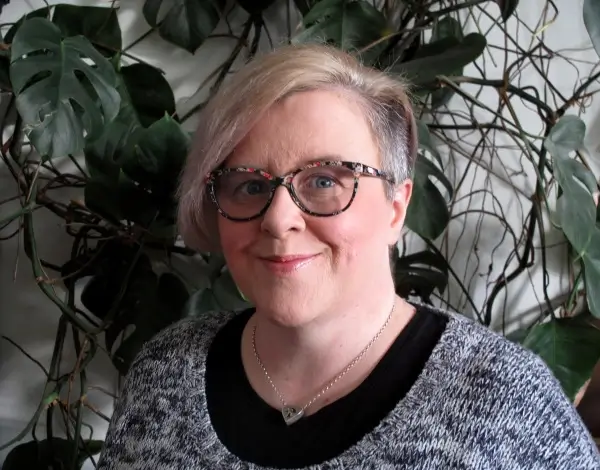
In her poem “Spelling” Margaret Atwood plays a delicious trick with language, as she describes her daughter on the floor playing with plastic letters of different colours, “learning how to spell, spelling, how to make spells.” In a very clever play with words, she is describing the power of language as a kind of magic, the power of litany and incantation, which we have all known in one form or another from a very young age.
This is a power which is especially insistent in poetry. It is the power of language to conjure up images and create a new reality. As Margaret Atwood’s poem astutely observes “A word after a word after a word is power.” I have spent over a year polishing and refining my first poetry collection and in this way, I feel that I have also entered into a kind of word witchcraft. This is truly what it feels like when I realise what I have written is a poem, which is trying to change something or show me something new. This might well serve as a definition of a spell – using the power of words to change something or make something new. The words are deliberately and carefully chosen because they have power, because they can work with or against each other, because they make beautiful or jarring sounds, because they can work together or shunt against each other violently. Mostly, the words are chosen because they cause magic to spring from the most ordinary of things, often from the natural world – a stone, a raven, an acorn.
Poems can speak to us at times of love, loss, fear and hope. I always read my poems out loud to myself over and over again, when I am editing. The human voice makes the words a living breathing thing. If I read it in front of others, I always hear something new. More than anything, poetry is a craft – you serve an apprenticeship slowly, learning from others, learning by mistakes, slowly beginning to understand that it takes time to achieve any kind of skill. In a way which is oddly reassuring, it is never finished. My collection includes poems written over a period of five years and as I put the collection together and gave it to other poets to read, I was often surprised by their observations. Words such as shape shifting, myth and magic kept coming back to me from these close readers of poetry. For all my rationality and love of logic and reason, underneath my use of language, there seems to linger an older love of incantation and spelling in the Atwoodian sense.
One of my favourite poems is by the American poet Bill Holm. In his poem “The Icelandic Language”, he talks about the language of his ancestry. “But this language believes in ghosts; chairs rock by themselves under the lamp; horses neigh inside an empty gully, nothing at the bottom but moonlight and black rocks.” There is a familiarity in this description which most people can relate to, regardless of their nationality. For me, it conjures up memories of elderly relatives who peppered their sentences with words from Irish and a fear of the Banshee or the robin in the house as a harbinger of death. Language works at a mysterious level which we don’t fully understand and yet we do. We can sometimes feel language at work in poetry in a way that evades our descriptive powers. This process has been best described by the philosopher Julia Kristeva as seeing poetic language as a signifying process, that is a process that makes meaning, so language speaks through what is said and how it is said. It is remarkable to consider that language is in the body before there are the words to express it. The pre-linguistic child is absorbing the rhythmic and musical elements of the sounds around it, creating a world of nonverbal associations that will act as gateways to speech. This may explain why we all love the warm comfort of rhythm and rhyme. It is one of the first things we have known.
I do not think of myself as a witch but I sometimes like to think I have written a book of spells, spells for myself, spells that have come from five years of change and discovery, much of it challenging – separation, moving house, back to college, a lot of grief. Poetry was the thing that got me through, it cast its own spell gently and powerfully over my life and it has allowed me to continue and in some ways, to begin again. It turns out that magic is nothing extraordinary and yet it is, it is there all around us in how we use language to create meaning and new realities.
I am not the same person that wrote a poem four or five years ago because I wrote those very poems which changed me. They provided the magic for me to trust my own voice, even as it struggled to find the words and metaphors, the turn of phrase that would be a spell for what I really wanted.
The Lock
I remember swimming in the lake,
near Kriebstein, not knowing that
the stars which glittered above were
tiny knives in my back.
I close up.
Time and talking unpicks the lock.
It finds a heart like a tenement,
poor, crowded and neglected.
In this place, it finds a chick
left with an open wanting mouth,
as the songbird has left the nest.
************************************************************************
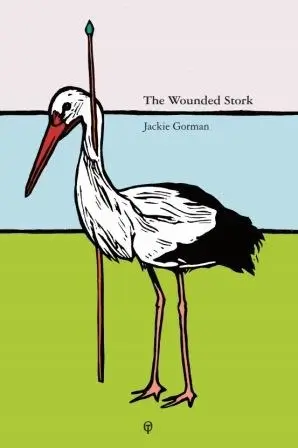
The Wounded Stork [The Onslaught Press, UK, 2019] by Jackie Gorman was launched by Thomas McCarthy at Listowel Writers’ Week in May of this year. In 2017, she won the Listowel Writers’ Week Single Poem Award and was commended in the Bord Gais Energy Irish Book Awards Poem of the Year Award. She has recently completed a Masters in Poetry Studies at Dublin City University and she has had a number of poems published in The Honest Ulsterman in the past. http://onslaughtpress.com/product/the-wounded-stork-by-jackie-gorman/
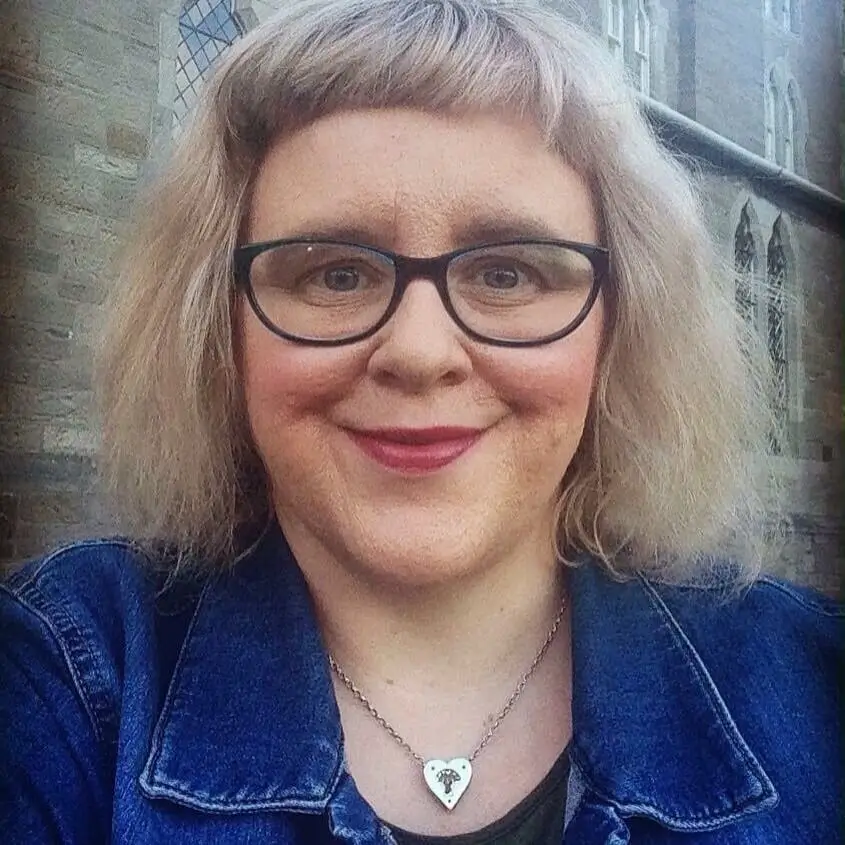
Jackie Gorman is from Athlone. Her poetry has been published in a number of publications including The Honest Ulsterman, Poetry Ireland Review, The Sow’s Ear Poetry Review, The Lonely Crowd and Obsessed With Pipework. Her work has been commended in the Patrick Kavanagh Poetry Awards. In 2017, she won the Listowel Writers Week Single Poem Award for the poem "The Blue Hare". Her work was included in the 25th Anniversary Edition of the Windows Anthology. She has recently completed an MA in Poetry Studies at the Irish Centre for Poetry Studies at Dublin City University and was part of the Poetry Ireland 2017 Introductions Series.


Tel: 028 7126 6946
Email: hueditor@theverbal.co
Verbal, Stable Lane and Mall Wall, Bishop Street Within, Derry/Londonderry, BT48 6PU
 company
Copyright © 2026 Honest Ulsterman