


Beneath the swollen, wind-driven clouds, past the bare trees shivering fitfully with each passing gust, the two men moved. Oliver’s rickety wheelchair fumbled noisily over the uneven, pitted tarmac. Behind him, with a cold and brutal vigour, Matthew pushed, as if he were taking revenge or solemnly working towards redemption. Sodden, maculated clumps of leaves pasted the pathway like huge blots of stale chewing-gum, and high in the sky a swirling mass of gulls revolved slowly and showered the men with their raucous calls.
The two men did not speak as they crossed the park. For now the burden of silence was unbreakable. They had this afternoon to spend together, but they had already said everything that they needed to say, and they had said all these things many years ago. Now their friendship was an exercise in bitter fortitude, a bond long tainted but as yet unable to yield to the blessed freedom of rot. This day would be no different to all the others and would pass without more than a couple of words exchanged. They derived no pleasure from these walks, but each weekend the two men met for another joyless stroll, simply because they had no one else to see and absolutely nothing else to do.
And so, slowly and cheerlessly, the two men moved through the park.
“Matt?” said Oliver abruptly as they were passing the pond.
“Yes Oliver?”
“Matt, you know, I always thought there was something a little bit off with you.”
“Sorry?”
“I always thought there was something about you… something … something crooked.”
“Is that right?” replied Matthew, “I’ve always thought that myself too as a matter of fact”.
A gust surged briefly, sending an empty can of cider chattering across the path. A duck quacked twice from the pond and then fell silent.
“No doubt,” Oliver said, “no doubt.”
As they turned a corner, ragged with lifeless flowerbeds, the wind changed and the frail bleating of a distant pedestrian crossing pulsed like mouse’s heartbeat in the men’s ears. Matthew paused and they both listened. A moment later, a frantic bleeping broke out.
“Well, that’s a relief,” Oliver said.
Without responding, Matthew began to push again.
But for the other, both men were alone. The chaos with which they had engulfed each other’s lives many years ago had burnt out something inside them, quelled something vital and real, and planted in its place a soul-devouring despair, a darkness so impenetrable that few could bear to be around the men who carried it inside them. Slowly and imperceptibly, they had lost all friends, all lovers, all family. The people who had once borne these names were strangers now. With one instinct they had all risen and departed, as if fleeing a barren land whose only river had been poisoned at the source. The two men had lost each other too for years, but once each man had found himself utterly alone they had by some impulse drifted together once more. They had reduced each other to zero and now their sole delight was to be two zeros side by side.
“Not a bad day,” Matthew said.
“Not a bad day to be a cripple, no,” Oliver replied.
“True. There are certainly worse days to be legless in a park. It could be colder, it could be raining, you could have no one here to push.”
The two men chuckled, but neither was quite sure where this laughter came from, or who was mocking who, or whether this was one of those rare occasion when a sort of fellow-feeling, so long stifled, briefly stretched its wasted limbs to the sun. They were never sure of these things anymore. They had strayed too long in the territory of intimations, irony, underhand jabs and sly abuse, and these indulgences had placed sincerity and all its joys permanently beyond their reach.
As they were approaching the bins, Oliver twisted his head to look up at Matthew and smiled. He pointed gleefully to the cast-iron mouths, stuffed and overflowing with trash.
“Reminds me of a certain gentleman we both know well.”
“What?”
“Oh nothing,” Oliver grinned, “Nothing at all, just, you know… you.”
They passed the bins. A little further on, a flock of pigeons was pecking among the discarded contents of a hoover bag, grasping the purplish balls of dust in their beaks, tossing back their feathered skulls, and flinging the tiny bales into the air as if they were conducting some deranged religious celebration.
“Look,” said Matthew as he halted and turned Oliver’s chair towards the spectacle.
“Fuckin’ pigeons, so what?”
“You’d like to get a closer look, wouldn’t you?”
Oliver did not respond.
“You’d like a closer look, am I right?”
Still Oliver refused to respond, but he squirmed impulsively in his chair. He knew what he had gotten himself into. Indeed, he had known before he opened his mouth that it was bound to end this way.
Matthew pushed him forward right to the edge of the dusty arena. The pigeons scattered briefly and then regrouped and resumed their scavenging. Matthew began to tilt the wheelchair forwards.
“Do we have to do this?” Oliver asked.
“Yes,” Matthew replied, “every so often, for good measure.”
Matthew glanced around quickly and then thrust the chair forwards, dumping Oliver to the ground like a limp carcass. At the solid flop of impact, the pigeons burst into the air and were gone.
Oliver lay motionless on the sparse winter grass: he would not give Matthew the satisfaction of seeing him struggle. He was smarter than that. Or so he thought. For had he known that Matthew derived an obscure pleasure from witnessing his restraint, had he known that it tickled Matthew all the more to see him suffer twice, once in pain and humiliation, and once in his pointless attempt at retaining some dignity, he would have screamed and roared and beat his stumps into the muck as if they were two furious little fists.
Passers-by were watching now and so Matthew made a show of tenderness as he lifted Oliver’s stubborn weight back into the chair. He took a tissue from his pocket and began to wipe the congealed muck from Oliver’s chest.
“Are you okay? You poor thing.”
Among the glue of mud, scraps of dust were stuck and Matthew picked these off carefully and flicked them away.
“What a mess! Let’s get you home and cleaned up,” Matthew tutted as he slapped Oliver’s shoulders vigorously, as if to clear them of the last lingering traces of dirt.
Matthew would take him home, but Oliver knew that he would be deposited in the hall without a word, left alone to the tedious cripple’s struggle of trying to undress and wash before he caught a chill. For good measure, Matthew was capable of turning off all the lights as he left, forcing Oliver to grope about in the pitch darkness sometimes for as long as an hour in order to find his stick and switch them back on. He would die this way, he was sure of it, stranded in the hallway of his own home, transformed into a squirming, maggot-ridden slum of flesh long before any of his neighbours would catch the sweet scent of his decay. His legs had decayed already, it was true, shoved down the bottom of some hospital bin marked Hazardous Waste. A little less work so for whoever would have the unfortunate task of scraping his rotten corpse off the plywood floor.
Oliver had hoped that this humorous, little notion would make him laugh, or at least smile. But it did not.
“I’m sorry,” he said.
“Sorry for what?” Matthew asked.
“I was trying to do what was right,” Oliver continued.
“What was that?”
“I thought I was doing what was right.”
Any hint of sincerity pained both men as it reminded them that for other people sincerity was a natural habit, and not just another carefully chosen weapon intended only to wound and maim. In this instance Matthew believed Oliver, as far as he could believe anything anymore. Oliver had said this many times: “I thought I was doing the right thing.” And Matthew believed him. He believed at least that Oliver had intended to mean what he had said. However, Matthew could not act on this belief, as he did not doubt that Oliver was capable of conjuring up the ghost of remorse in order to bring about an entirely fictitious reconciliation designed to soften him up for a deeper blow at some point in the future. These men, I have said, only associated with each other because they had no one else, and for them a fervent and fearful mistrust was preferable to the calm of unbroken loneliness.
“What you did or did not intend is of no relevance to me,” Matthew replied.
“Oh really?”
“Yes.”
Oliver raised a quizzical eye to Matthew, smiling as if he knew something, as if he knew something about Matthew that Matthew himself did not even know. It was one of his oldest tricks.
Matthew jabbed a finger brutally in Oliver’s face. Oliver laughed.
“You’re losing your grip Matthew, you’re most definitely not the man you used to be. Take me home.”
Matthew pushed off once more, swerving gently to avoid a bundle of dog dirt, his anger mellowing inexplicably at Oliver’s words, softening into a fragile sensation of peace and ease.
Take me home. Matt, take me home. Oliver is maybe fifteen or sixteen. He is slumped against an unpainted cinder block wall somewhere in the suburb where they both grew up. His arms and legs are motionless, his chin lolls down to his breastbone. He has drunk far too much. Take me home Matt, please. Oliver is six or seven, stunned, his forehead pocked with an enormous bruise. An older boy had thrown a stone into the air and he had been looking up to see it come down. Take me home. And once he said those words to his best friend Matt, Oliver knew that he was as good as home already.
“Oliver,” Matthew said. “Oliver, there were once two happy men, there were once two happy, loving, living men. They existed, once upon a time, I can assure you of that.”
Oliver had struck first. To this day it was unclear to Matthew what potent mixture of vengeance, honesty, tenderness and fury had spurred him to the act, but he had struck first, and perhaps he had been right to, this possibility could never be forgotten. Matthew had known that a deep underground resentment of his character had been brewing in Oliver’s heart for many years – he had seen the subtle glaze in his eyes, sensed the hidden edge to his words – and he told himself that this is why Oliver had lashed out like he did. He told himself this but even he knew that he was not beyond lying to himself. It was possible that Oliver had acted selflessly, out of what we call goodness, forsaking the ties of friendship for higher, more exacting duties. This possibility pained Matthew deeply as it would mean that the whole thing had been a simple mistake and should never have happened, and that his vengeance had been a massive injustice to the man.
“I know Matt, I know.”
Two happy men he had said, but Matthew knew of course that this was not exactly true. He knew that old friendships, those that stretch back to childhood, that time when emotions and rivalries and cruelties are raw, are never as simple as this, that they are sustained by resentment and jealousy as much as by love. And if goodness may have played a part in what Oliver did, hatred certainly had its role too. Matthew could see clearly now how amid the sunshine and the games, the bullying and the boyhood loyalty, amid all the fights and forgiveness, Oliver’s little heart had been wounded, wounded irreparably. Matthew had punched him many times, for no reason at all, in the stomach, on the shoulder, in the face. Child’s play of course, child’s play. With cruel words – child’s words – he had cut Oliver down to size, many times, for no discernible reason at all. And this is how those dark and bitter instincts had first taken root in Oliver’s heart, Matthew was sure of it. And this is why, years later, when these long forgotten hurts had begun to rankle and fester once more inside Oliver, the grown man, with his car and his job, was a child once more, helpless before the irresistible splendour of his own rage. This is what Matthew told himself at least. It was a simple story. It was easy to believe. And Matthew knew all about this hatred himself, this seething anger that flows like a dark river beneath some of the closest intimacies, because his little heart also had its wounds, and long before their sundering, long before the events that had changed their lives, he too had hated Oliver, as a father will hate his son.
“You hated me,” Matthew said.
Yes, they had resented each other, and that is what lay behind it all. That and goodness. Maybe. But Matthew could not tell the difference between the two anymore and, if he could have, he was not sure what difference it would have made.
“I never really hated you,” said Oliver.
A lie. They had resented each other for years, though for years they had managed to keep the chaos at bay. For years Matthew had remained silent during Oliver’s long, bitter drink-fuelled tirades. For years he had pretended that nothing was amiss. And this had worked, for a time. The chaos of love, the chaos of hatred. What difference did it make? What difference did it make after all?
“I thought you were a danger,” Oliver went on.
“I would never have hurt anyone, never.”
It was possible too, Matthew sometimes thought, that their hatred, that the moral imperative that had allowed Oliver to express this hate so freely and fluently, that their love, that the tragedy that had permanently destroyed their happiness, that all these heavy things were just metaphors for something else, something far beyond the power of human eyes to see. What this thing could be, he did not know at all.
“How could I have known that?” Oliver asked.
Matthew shuddered, a quick fear pierced inside him. This brooding on hatred was unpleasant, but it was nothing compared to the actual spectacle of hate, the actual sight of this mutant of hatred before him, this ugly, crippled creature whose very pores seemed to spew spite and terror into the air.
“How could I have known?” Oliver repeated.
A puddle of nausea blossomed in Matthew’s stomach. It seemed to him that he was back in those slow, excruciating moments when their true friendship had begun its collapse. Oliver had started it, Matthew was sure of that, it was Oliver who had taken that irrevocable step from jabs, pokes and drunken taunts to a probing malice that sought fear and weakness and then calmly drove the knife into those tenderest of spots. He had begun by mocking Matthew, mercilessly, for no reason at all. This had evolved into a barrage of snide comments, relentless suggestions that a darkness existed in Matthew’s heart, a malevolence which Matthew had never felt was there before. And Oliver had insisted upon this point again and again until Matthew began to doubt himself, to feel that Oliver may be right. “We’ll all wake up one day and Matthew will have cut all of our throats in our sleep. I can smell it off him. Matt, I can see it in your eyes…” And so soon Matthew began to distrust himself, to question the till then unquestionable respect he had for the integrity of his own motives and emotions. He never felt truly whole again after that, he never felt at home in his skin again, and it was for this that Matthew could never forgive his friend. Oliver had punctured some vital organ deep in Matthew’s soul – call it the instinct to trust and love oneself – and he had never recovered from that awful wound.
“What would you have done Matt? It wasn’t an easy situation to be in. I was concerned!”
To this day Matthew could not say whether the strange looks were in his imagination or not, but at the time it had seemed that all warmth had gone out of the faces of those he and Oliver both knew. Silences as brutal as accusations insinuated themselves into apparently innocent conversations. A flicker of knowingness seemed to lurk behind all eyes he dared to raise his own to meet. Without intending it, his voice took on a permanent pleading whine. He felt that Oliver had poisoned these people against him. He believed that his whole constellation of comrades and acquaintances, the only thing that separated him from a cold, sterile existence, was disintegrating before his eyes. He drank alone at night to still the endless, fervent babbling in his head. He dreamt up arguments and pleas that would absolve him in the eyes of the world. He nursed and developed bitter assaults on Oliver’s character. But he never said a word, not really, he and Oliver, they never had it out face to face. It was all subtle implication and masked violence on Oliver’s part, and implacable, agonising silence on Matthew’s. The truth was he had been afraid of Oliver, terrified that once he looked him in the eyes he would see how deep his friend’s hatred really went. In a matter of months, two decades of friendship had descended into sordid fury and hatred.
“I should have spoken to you,” Oliver said. “I know, I know. We should have spoken. I owed you that.”
And all the while, the nameless hole in Matthew’s gut had continued to grow. It fed on fear and suspicion, it fed on silences and insults, and it fed on imagined silences and insults. And it could not tell the difference between the two. So it never went hungry. Swelling and swelling, it had hollowed Matthew out, scooped all traces of warmth and joy from his heart, until the man felt that he himself was just some thin, rancid membrane concealing from the world the bloated pit of darkness that lay within him. And he knew why he felt this way: it was because of Oliver. Slowly, calmly, and without any qualms, Oliver had taken him to pieces. And when he thought of Oliver, of his knowing, mocking smile, Matthew had trembled with a hatred so deep that it had felt like the word of God. Finally, unable to contain his rage any longer, unable to stomach for one hour more his wretched impotence, he had taken his terrible revenge, for which he spent the next three years in jail.
Matthew flexed his fingers. They were stiff from clenching the handles of the chair. He flexed his fingers because he needed to speak, he needed to know.
“Tell me Oliver,” he finally said. “Did you really think you were doing the right thing?”
Oliver paused, looked away towards the gate, towards the cars on the road.
“I don’t know,” he replied eventually.
“Happy men Oliver,” was all Matthew could say. “Two happy men.”
There was a brief silence and then Oliver spoke.
“And you, are you sure that I didn’t do the right thing?”
Matthew thought about this.
“Two happy men,” was all he could say. “Two happy men.”
A gull called. The wind blew. The grass shivered in the fields.
“I’m tired Matthew,” Oliver said weakly. “Take me home.”
Take me home, Matt, take me home. Two happy men there had been, despite it all, two blood-brothers. People had sometimes mistaken them for twins, so closely had their gestures and expressions converged over the years. They had been royal optimists, believing always in a future of greater peace and love for all. Together, they had peeled away layer upon layer of hatred and fear. They had tried to discover what it is to be a good person, to love, to forgive, to accept, to inspire, to try to make the world a more beautiful place. And they had succeeded, for so long their friendship had been a success. Around town they were famed for their kind and understanding natures. “Man,” they would say to each other, “you have taught me so much.” “Man,” they would say, “man, I love you. I love you man.”
At that time they had never imagined that raging through this world are forces more powerful than love or optimism or friendship. And when such a relationship turns sour, when such love grows hard, when one day you reach out and the hand of comfort is cold and swollen with hate, it is not an easy thing to get over, it is not easy at all, because it is not only that love which one loses, it is the very foundation on which all one’s capacity for love is built.
Matthew began to push faster, and the wind at his back pushed him in turn. They passed a stand of young oaks mottled with lichen, the fiery yellow splotches somehow appalling and horrifying on this cold, overcast afternoon. A luminous blight smeared on the bark, this is what Matthew saw, a botanical cancer eating away at the fresh wood. Whatever delicate beauty may be found in such things Matthew was blind to it, and had been for years. Oliver too saw only with the eyes of pain. For both men, now that their lives had been drained of all joy, the whole world appeared to be merely some huge and heartless machine blindly working through its bloody motions, a vast dungeon of grinding cogs and crushing wheels on which they rode like two specks of dust. And nature for them seemed to be a bubbling, festering wound that could never heal itself, endlessly throwing out brief, harsh shapes and then mercilessly dragging them back in again. On lonely nights, as they lay awake in bed, they could hear the wilderness of the suburbs boiling away pitilessly beyond their thin windowpanes. At times it seemed that the very forests, the bones of the hills were roaring in pain. This is all that these men saw, this is all that they heard. And this most off all is what crushed their souls, this is what made them weep at night. This world, which once they had seen in all its gorgeous liquid tints, which once had been their home, was beyond them now, beyond their very touch. The sunsets that had once drenched the sky in glorious hues of pink and crimson now no longer even seemed to drench it in blood: no, blood, a bloody sky, such passionate visions required far too much imagination, far too much feeling for men such as these. And the rivers, the rivers that had once seemed ancient, majestic channels of vitality, were now just weary ditches, endlessly and monotonously ferrying cold and lifeless waters from land to sea.
And this is why these men were alone but for each other. People had tried to be patient, had tried to understand, but there were none who could bear the company of these creatures from whose breasts had been forever torn the precious and very shallow roots of bliss.
A dull thudding broke out nearby. A huge, dopey-eyed Labrador was lumbering across the field towards them, kicking up a faint brownish spray from the waterlogged grass. Matthew paused. The dog stopped by the chair and sniffled briefly at Oliver’s stumps and then froze, suddenly alert, staring away into the distance, as if guarding the two men against some unseen but imminent danger. Oliver reached out and stroked the thick straw of its hackles, furrowed his fingers deep into the pale fur and clenched, tugged, rubbed and clenched again. The dog ignored his attentions and continued to gaze far away with its sad, bloodless, big-dog stare.
A sudden, sharp shout jolted the Labrador and it sprang away from the men and bounded down the path without a backward glance, its claws clacking on the tarmac and its big, saggy face jiggling as it galloped. The two men watched the dog shrink and darken as it sped deeper into the distance. Once he saw that the dog was coming, its owner, a black stickman at the far end of the field, turned away and walked slowly on.
“We should get you a dog,” Matthew said after a pause.
“What? So you can poison it?”
“I’d never hurt a dog.”
“You’d do something,” Oliver said wearily, without bothering to conceal his grief. He went on, bitterly: “You’d spray my chair with some chemical that dogs find repellent and fill your own pockets with strips of rasher. Something like that, something fucked up! Oh you’d play it that way, I know you would, I know you too well!”
“Fair enough.” Matthew began to push once more. “It was only a suggestion.”
A fresh silence grew between them, but Matthew could sense that something was building up inside Oliver. He could see that his friend was sitting a little higher in his chair and this meant that he was angry. Through long years of practice, Oliver had almost perfected the skill — so necessary in his battles with Matthew — of removing all traces of emotion from his face, and he now expressed himself solely through his buttock and abdominal muscles, clenching his ass cheeks in rage as another might clench their jaw.
The wheelchair shuddered in Matthew’s grip. He looked down. Oliver was creating a little, harmless storm on the chair below: he was clutching the armrests and meekly swinging from side to side, cursing, rocking back and forth, with all the impotent fury of a coffee pot boiling over. He was afraid, Matthew could see, of actually throwing himself off the wheelchair. Matthew watched with a delighted calm until the agitation subsided. Now he could make out what Oliver was cursing about.
“You know I want a fuckin’ dog, you fuckin’ well know I’d love a fuckin’ dog, you fuckin’ bastard you know it, I’d fuckin’ love one!”
Matthew considered Oliver’s words, mulled briefly over his legless friend’s situation, but it was not pity that moved him, no, these men were far beyond pity. It was some other impulse, call it a strange instinct for fairness. And he yielded to this instinct, not through any desire for justice itself, but because it was the first time he had felt any sort of instinct or impulse in years, and it gave him pleasure to follow unbidden its promptings.
“We will get you a dog,” said Matthew. “We will get you a dog and, on my word, it will stay out of our battles.”
“Don’t fuck with me Matt.”
“I won’t. I promise. I can give you a dog. That is all, nothing more. I will give you a dog, no strings attached, a mutt in exchange for your legs.”
And Matthew felt once more that sweet sensation of yielding, of surrender to an impulse that called to him from some deep source beyond his own self, as when twenty years ago he had burst into Oliver’s house late one night with a steel baseball bat and struck that first blow, cracking the left shinbone like a rotten branch, and raising the bat and striking again, sundering the kneecap, and raising and striking again, up and down, again and again, as the man’s legs were slowly and miraculously transformed into two bloody shanks that couldn’t even be hung in a butcher’s window, two long, mushy loaves of pulverized flesh and freshly shattered bone.
And when it was done, Oliver’s two socked feet ludicrously appended to all this carnage, but untouched by it, clean and intact, the frayed netting of an incipient hole clearly visible on the left big toe and the warm balls of the heels nestled against each other like two lucky eggs. That night his socks, as usual, were not a matching pair.
“Oliver,” Matthew said with a crack in his voice, as the memory of that deed unleashed itself like a storm inside him. “Oliver. Oliver, please.”
But Oliver did not respond. And the gulls overhead began to hoot and scream into the wind.
“Oliver,” Matthew repeated. “Oliver, Oliver, won’t you please take me home?”
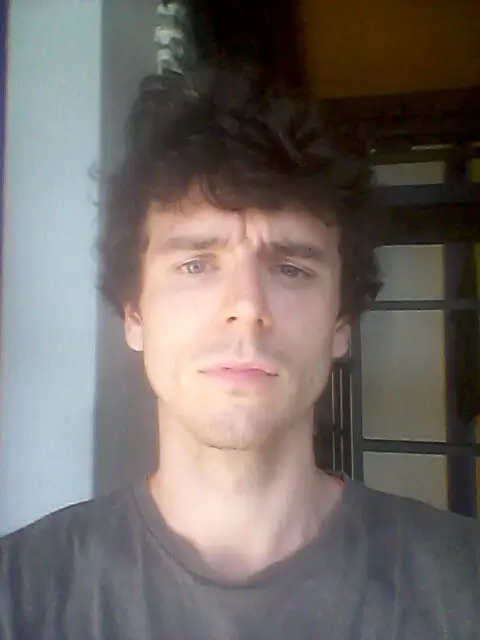
Dermot O'Sullivan is from Dublin, Ireland. He studied English Literature in Trinity College, Dublin. His work has been published in journals including Causeway/Cabhsair and Fence. He currently lives in Brazil.
More work by Dermot O'Sullivan


Tel: 028 7126 6946
Email: hueditor@theverbal.co
Verbal, Stable Lane and Mall Wall, Bishop Street Within, Derry/Londonderry, BT48 6PU
 company
Copyright © 2026 Honest Ulsterman