


Daddy took me to the zoo this morning. Mammy didn’t come because she had a headache. Sometimes, she gets headaches and that’s why she can’t teach anymore. Daddy says it’s everyone’s patriotic duty to go to the zoo. I know what the word patriotic means because it’s on a sign in my classroom. We look at the sign when we sing the national anthem before the school day starts and at the end of the day before we go home. I like to sing but it would be nice if we could sing different songs sometimes. I said that to Mammy once; she told me not to tell Daddy.
We have a nice car, and we have a nice house. Daddy does an important job for the government. He says the government are the people who run the country. And he says they’re doing a very good job. We went to the zoo in our nice car. He let me sit beside him.
“It’s against the law for children to sit up front,” he said to me, his fingers tapping on the steering wheel. I think he saw that I was a little bit scared.
“But we don’t need to worry about that,” he said.
He liked to listen to old music, men that weren’t good at singing. I pretended to like it, but he knew I didn’t.
“Siri. Disney Hits,” he said. Hakuna Matata started to play. I really like that song. He mouthed along with the words, his head nodding from side to side. We were on the North Circular Road. There was a line of traffic ahead of us trying to go into the Phoenix Park. Daddy turned on the blue light of the car. He’s not a policeman but he has a blue light because he’s important.
I was a bit worried about the zoo. Some of the people in my class went; some of them liked it and some of them didn’t. There was one boy, Marcus, he’s a mean boy.
“It was so cool,” he said.
“What was?” I asked him.
“The things you can do to the animals.”
Daddy parked on two yellow lines up near the entrance to the zoo. In school, we learned that you are not meant to park on double yellow lines because it’s dangerous. But Daddy says that it’s okay. Anyway, he always parks on them, and nothing bad ever happens.
“Are you nervous, Séamusín,” he said, taking me by the hand.
“No Daddy.”
“It’s okay to be nervous your first time.”
“Will they be able to see us?”
“No, they can’t see us. And even if they could, they couldn’t do anything.”
“Okay Daddy.”
“You just have to remember they’re not people – not like us people.”
There was a long queue outside, but Daddy brought us up to a different gate with a thatched roof. It was like one of those roofs we see when we visit Granny down the country. Daddy showed the man on the gate his card. His card was like magic. When people saw it, they did whatever Daddy wanted. Even their face changed, and the way they talked.
“Would your son like this?” said the man at the gate, holding out a golden ticket. “This is for our most special visitors.”
Daddy took it and gave it to me. It said VIP on it.
“That means ‘very important person,’” he said.
There was a man selling candyfloss just inside and I asked Daddy if I could have some.
“Later Séamusín. Let’s go and see some of the exhibits first.”
“Okay Daddy.”
“What d’you want to see first. The fodder yard? The shock room?”
“I don’t mind.”
Daddy looked at an information board. It said morning feed was due to start at ten, so we were just on time. He said that when he was young this zoo was full of animals. He pointed to a little island in front of us. “There were monkeys there.”
We walked for a little bit. There was a small boy standing by a tree getting sick. Maybe he ate something bad. His parents looked at him like he did something bold. My tummy felt funny too, but I didn’t want to let Daddy down. We went a bit further, and there was a crowd ahead of us. The people were standing in front of a big glass screen. It was way too tall for anybody to climb over.
There was a wooden cabin with a guide standing outside it. Daddy told me to show him my VIP card. The guide smiled at me, brushed his hand through my hair. “Just in time,” he said. “They’ll be starving.”
We went inside. The enclosure was very big. There were a few different groups, one sitting around a camp fire, another standing looking towards our cabin. They looked like the people you see sleeping in doorways sometimes before they get moved on. But maybe a bit worse. And their heads were all bald, even though some of them were women. They were very skinny and really dirty.
Daddy told me to press one of the buttons in front of me. When I did, I could see a small package fire from a cylinder in front of me. It reminded me of a football match when teenage boys went around shooting t-shirts into the crowd. These packages were small parcels of food though. A man ran after it; another approached him. He raised his fist and the other backed away. The guide said there were four more packages to shoot.
“How many people are in there?” I asked.
“Twenty,” the guide said.
“Is there enough for them.”
“More than enough. We take good care of everyone here, but we have to be careful not to overfeed them.”
We left then and Daddy said he would take me to the white rooms. You had to go down in a glass elevator to the viewing area. There were four giant windows, each looking into a room. Everything inside was white, the roof, the walls, the floor, the bed and bedclothes. The only colour was in the face of the exhibits, but they were pale too.
“Tell my boy about how it works,” Daddy said.
There was another guide – a man a bit older than my parents. He looked like the janitor at my school.
“The human mind needs stimulus,” he said. “Do you know what stimulus is?”
I nodded my head to say no.
“It’s like something that makes your brain think. So, colour, a picture or a piece of music. But in there, there’s nothing, so, then your mind starts to create things instead.”
“Like when you’re dreaming,” I said.
He scrunched up his face, scratched at his ear.
"More like when you’re having a nightmare. Only without waking up.”
It was a boring room, but Daddy seemed to enjoy watching. I could hear him talking to the guide about the people who were in the rooms. I heard the words journalist and trade unionist. We learned about journalists in school, but I didn’t know what a trade unionist was. I knew the conversation wasn’t meant for me anyway.
One of the men inside kept walking around in circles, like he was doing laps of the schoolyard. It looked weird. His face looked empty, not happy or sad. Lost maybe. It seemed strange to look lost in such a small room. I think Daddy knew I was getting bored.
“How about a hot chocolate?” he said.
“With cream and marshmallows.”
“Double cream.”
It was nice to sit with Daddy at the picnic table. He drank a cappuccino and let me play Candy Crush on his spare phone. I asked him why he needed two mobiles, and he said one wasn’t enough when you did the type of work he did. I didn’t really understand that, but I know it was important.
He asked me what I’d like to do next, and he told me the shock rooms were his favourite. It was in an old building made from the same red bricks as our house. Daddy said they used to keep pythons and constrictors in here, but it was a different type of snake now. The inside was dark, and it smelled a bit bad like the toilets in my classroom.
There was a man tied to a chair in one window, and he had wires attached to his body. There were five buttons you could press from green to red. Daddy said green was the gentlest and I should start there. I pressed it and I could see the man shaking in his chair.
“Try the next one,” Daddy said.
I did what he told me. The man shook even more then.
“Now the red one,” said Daddy.
“I don’t really like it.”
Daddy looked at me in that way that I knew what he was going to say was very serious.
“This thing was a human rights lawyer; he wanted to steal things from people like you and me and give them to other people.”
I pressed the button. The man began to shudder, and some spit came out the side of his mouth. He went to sleep then.
“Wake him up,” said Daddy.
“I don’t understand.”
“Press it again.”
I did what he said and then we went and got a hamburger and chips. I didn’t feel too hungry, but I pretended I did. Daddy asked if I wanted to see any more of the exhibits. I said I’d like to go home and do some baking with Mammy.
“Good idea,” he said. “I’ve some work to do in the office anyway.”
We went to the car. He played Disney Hits for me, and we sang along to The Bare Necessities. When we got home, I went inside, and Mammy hugged me. I could see that she had been crying again.
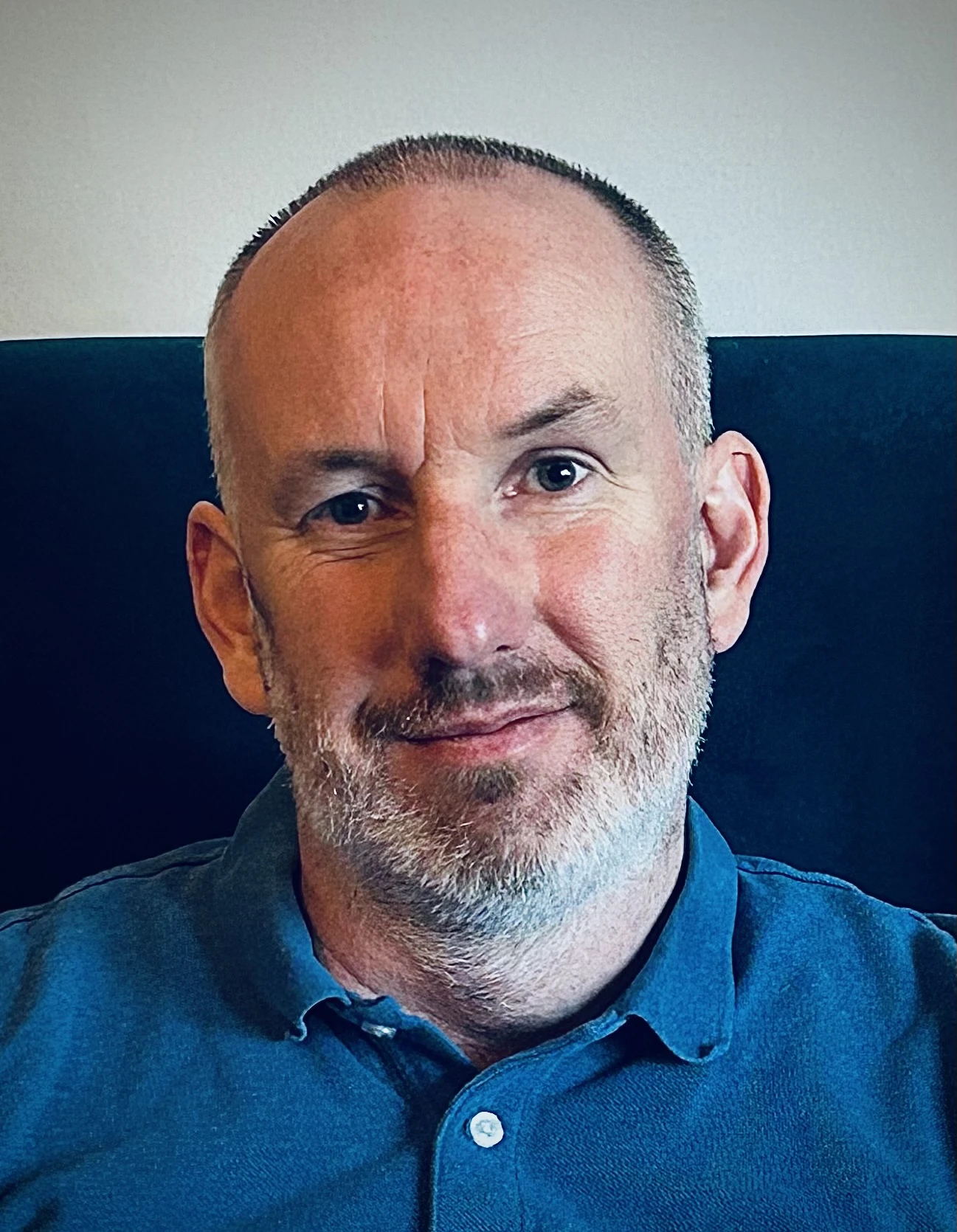
Ken Foxe is a writer and transparency activist in Ireland. He is the author of two non-fiction books based on his journalism and a member of the Horror Writers Association. You can find him on Instagram (@kenfoxe) and Twitter/X (@kenfoxe).
www.kenfoxe.com/
More work by Ken Foxe



Tel: 028 7126 6946
Email: hueditor@theverbal.co
Verbal, Stable Lane and Mall Wall, Bishop Street Within, Derry/Londonderry, BT48 6PU
 company
Copyright © 2026 Honest Ulsterman