


An Interview

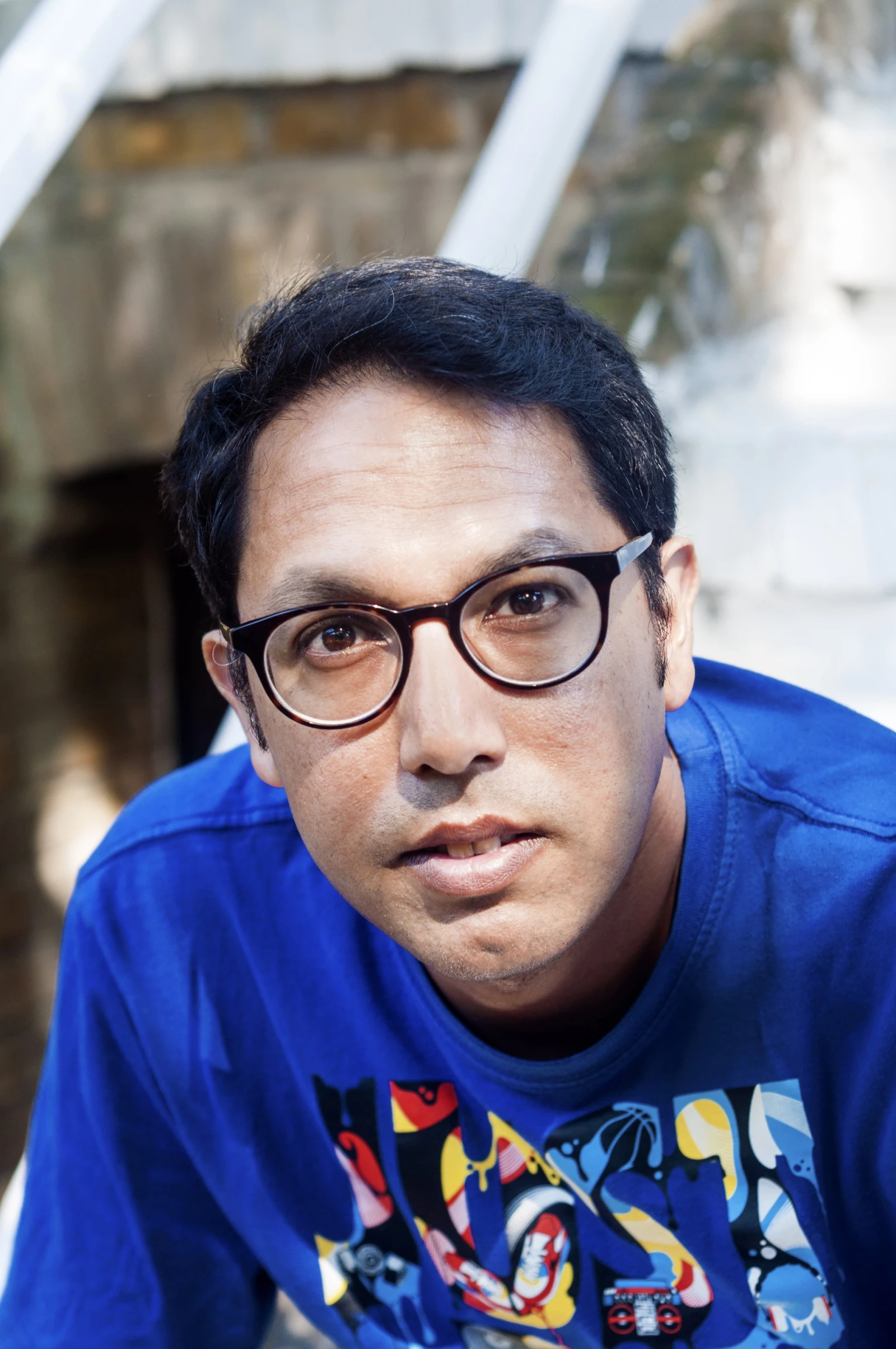
James Gallacher is a literary historian specialising in the writerly networks of 20th Century Ireland. He received his Ph.D from the University of Liverpool in 2018, and will be teaching Irish literature classes at the University of Luxembourg from January 2023.
Introduction: Bohemian Belfast and Dublin: Two Artistic and Literary Worlds, in the Work of Gerard Keenan, published in 2020 is the first collection to bring together the critical and creative writing of the author and, in doing so, redraws the lines of understanding around the literary networks of mid-to-late 20th Century Ireland, particularly between Dublin and Belfast.
Such a direct and personal connection between the literary bohemia of Patrick Kavanagh and Flann O’Brien, and the world of the Honest Ulsterman at the start of The Troubles has never previously been made, and this work highlights how Keenan – better known by his Honest Ulsterman pseudonym ‘Jude the Obscure’ – contributed both to this magazine, and to Envoy, Lagan, and Kavanagh’s Weekly. With unpublished material supplemented by a small but significant selection of long forgotten work published by Keenan under his real name in the 1940s and 1950s, the book facilitates a strong positioning of Keenan alongside several significant moments in Irish literary history. This is underpinned by the extensive critical introduction that defines both the perimeters of Keenan’s place within the Irish literary tradition, as well as establishing the corridors of connectivity through which his interaction with bohemian Dublin and subsequently The Honest Ulsterman were developed.
The work offers explicit, thematic, and stylistic connections between the two literary eras from the interplay between Keenan’s early work for Envoy and the unpublished material utilised and presented in the volume for the first time. In addition, a significant battery of personal letters between Keenan and the H.U editors, Michael Foley, James Simmons and Robert Johnstone is presented within the book’s introduction to highlight the extent to which the group sought to draw on and adapt the literary approaches of Kavanagh et al to facilitate a transcendence from the brutal realities of 1970s Belfast.
Kaitlin Thurlow: Your book begins with the statement: “The name Gerard Keenan is one in large part lost to Irish literary history.” What did you want readers to know about Keenan and his circle?
James Gallacher: From a scholarly perspective, Keenan and his work really represent a hitherto unacknowledged connection between multiple literary and artistic networks in Ireland, reaching across from the Dublin Bohemia of Flann O’Brien, Paddy Kavanagh et al, and into the blunt reality of Belfast at the onset of The Troubles, it really is like finding a missing piece to the jigsaw dynamics of literary and historical connection.
From the broader, more cultural, side of things, Keenan’s representation of mid-20th century Belfast offers up a depiction of the city that remains stubbornly absent from popular histories of the city; in disguising Belfast as “Farset” (named after its subterranean river), he shows us a kind of shadow city – a place of literature, art, jazz, drugs, prostitution, homosexuality, and of a pervading kind of subversion not instinctively associated with the place.
KT: Keenan wrote critical essays in the “Business Section” of the Honest Ulsterman under pseudonyms like Jude the Obscure and others. What were his motivations behind disguising his identity? And did this make researching him even more challenging?
JG: The most explicit answer he gave to this question came in a letter from around 2003, where he starts quite clearly that he adopted pseudonyms to avoid the type of intense local notoriety that writers like Kavanagh and (rather ironically) Flann O’Brien endured.
More specifically, his adoption of ‘Jude the Obscure’, relates largely to his own background, and the similarity between his own biography and that of Jude from the Hardy novel. I think he had quite an acute sense of himself as someone whose intellectual ambitions were irreducibly at odds with his domestic obligations, and as such, using the mask of Jude fitted well with someone who felt compelled to compartmentalize so many facets of himself.
In terms of research, the Jude sobriquet arguably made things easier, given its provenance; the processes of elimination were made far easier by dealing with a man on one hand, and a novel on the other.
As for the other pseudonym he adopted, Joe Biggar, it is the name of a 19th century Belfast-born, Irish nationalist politician served as a member for the Home Rule League and the Irish Parliamentary Party. He is largely remembered for his intellectual aggression in approaching the British parliament, while remaining ambivalent towards physical force republicanism. I suspect the awkwardly individualist nature of Biggar’s political style appealed to Keenan, and also hints at his position on the constitutional status of Northern Ireland.
KT: How did you uncover some of his unpublished work? What were some of the discoveries you made by working with the Keenan family?
JG: It was really an exercise in fortuitous literary thread-pulling. I first came across the name as a contributor to Kavanagh’s Weekly, a short-lived, and even shorter-tempered publication, written almost entirely by Patrick Kavanagh and his brother, Peter, under a variety of pseudonyms. The tone of Keenan’s columns, that of a correspondent from Belfast, struck me as being sufficiently distinct from the majority of content in KW, that I started digging for other contemporary references to a writer or journalist called Gerard Keenan. Eventually, I found some scant corroboration and a link to the Honest Ulsterman and so got in touch with the editor, who in turn put me in contact with previous editors, who finally put me in touch with Gerard’s son, John, who was generous enough to loan me his father’s papers.
In terms of working with his family, and particularly with (his son) John, I think what really became apparent was the contrast between Keenan the man and Keenan the writer/critic. This is also in evidence when some of the literary depictions of his acquaintances are set against private letters and communications between him and them. He was evidently a well-loved family man, father, and grandfather, which at first doesn’t seem easily reconciled with the relentless, intellectually hectoring figure, who comes across in a lot of his work.
KT: This is a collection of short stories and critical work. How did you settle on what to include and what to leave out?
JG: My priority was really the establishment of a coherent chronology for his body of work, I was always conscious of the need to position him within the corpus of 20th century Irish letters, and so I emphasized pieces that offered the most consistent timeline, both biographically and literarily, as well as those most substantially corroborated by the paperchain of letters and communiques I had access to.
KT: Keenan moved in and among literary and artistic circles with familiar names such as Patrick Kavanagh and Sean O’Faoláin. How did they influence and set themselves apart from each other?
JG: Keenan was a self-confessed literary acolyte of Kavanagh and, to a certain extent, Flann O’Brien. Stylistically speaking, the influence of Kavanagh’s polemical journalism and non-fictional writing is self-evident throughout Keenan’s career. Indeed, it was precisely that stylistic similarity (displayed in a letter-to-the-editor) that first stirred the Ulsterman editors to propose the idea of his ‘Business Section’ column, with a view to it filling the same role as Kavanagh’s ‘Diary’ had done for Dublin magazine Envoy some twenty years previously.
Personally speaking, it appears Keenan’s infatuation with Kavanagh, and Dublin Bohemia in general, fizzled out after several interactions with them. After a few years of admiring them through the pages of various magazines, and himself publishing a short story in Envoy, he appears to have found the reality of their social milieu altogether unappealing. Despite this, however, his literary and intellectual admiration for Kavanagh and O’Brien never wavered, indeed I think some 7 of his first 10 Business Section columns are concerned with one or the other…
KT: What do you think are some of the common threads between Keenan’s creative and journalistic work? Is there one work that strikes you the most?
JG: There are several thematic constancies that occur in both his creative and critical work: a peerless regard for the ‘Parnassian’ impulse in high-art and literature being arguably chief among them. He appears to have been someone for whom there could be no acceptable compromise in the pursuit of literary creation, and he is continually, and often quite high-handedly, scathing about those who dared to seek profit from their endeavours.
More implicitly, I think Keenan’s creative work is really at its best when he brings the hammer-blow bluntness of his prose style to bear on matters of real existential poignancy, such as in the novella Farset and Gomorrah, or short-story Parents and Priests. The enormity of the topics (The Troubles and the death of his father, respectively) lend themselves well to a harsh simplicity of tone and language that elevates the raw emotion being articulated and would likely lose power if addressed in a manner more circumspect. This also rings true in his non-fictional writing, when at times he can appear trapped by the complexities of his own intellectual agonies. Whereas, when he approaches a topic directly, his analysis is often far more insightful for it.
KT: Discovering Keenan was an offshoot of your dissertation work at the University of Liverpool where you were researching the development of literary circles in post-war Dublin. What surprised you the most about this movement?
JG: I think the creativity within straightened circumstances really shines through when a lot of the mythos of the period is stripped away. The hoary tales of herculean drinking and perpetual feuding have become processed and marketed as a component of Ireland’s literary tourism industry, often to the detriment of serious discussion about the writers and their works. However, when their writing and ideas are assessed on their own merits, you see a group of highly intelligent, talented, and sensitive individuals struggling to make sense of life as they experienced it.
KT: Where do you see this project going in the future?
JG: There are still a couple of leads to chase up within Keenan’s papers that may well result in another publication or two. In particular, I think some of Keenan’s first HU columns represent some of the earliest posthumous analysis of Flann O’Brien, so there’s likely an argument to made for positioning him within the timeline of literary and critical responses to O’Brien. Keenan’s material also forms a significant part of a monograph I’m currently working on, exploring the development and dynamics of Irish literary networks in the mid and late 20th century, of which he forms a big part of!
Kaitlin Thurlow is a doctoral student in English at the University of Georgia and writes on Irish modern and contemporary fiction and visual art. She lives in Athens, Georgia.

Sara Baume is a writer of fiction and non-fiction who has received multiple awards and been widely translated. Her debut novel, Spill Simmer Falter Wither, won the Geoffrey Faber Memorial Prize. Her second novel, A Line Made by Walking, was shortlisted for the Goldsmiths Prize and her first non-fiction book, handiwork, was shortlisted for the Rathbones Folio Prize. Her third novel, Seven Steeples, was published in spring 2022. She is based in West Cork where she works also as a visual artist.
More work by James Gallacher


Tel: 028 7126 6946
Email: hueditor@theverbal.co
Verbal, Stable Lane and Mall Wall, Bishop Street Within, Derry/Londonderry, BT48 6PU
 company
Copyright © 2026 Honest Ulsterman