


Posted in: October 2026 Edition
Doireann Ní Ghríofa Interview on 'Said the Dead'
Siobhán Mc LaughlinDoireann Ní Ghríofa, writer and poet, talks about her new book, 'Said the Dead.'
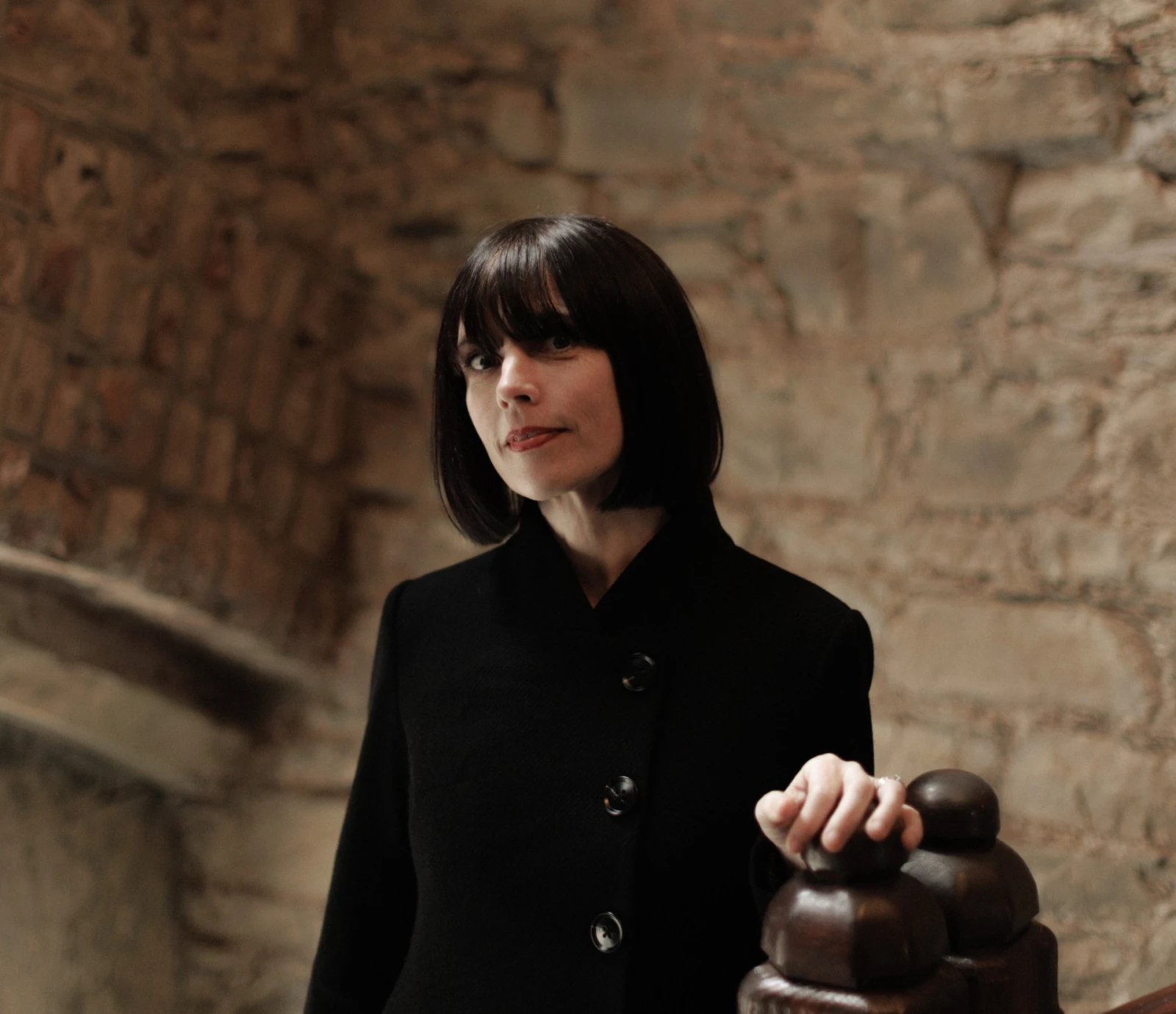
(Photo Credit: Bríd O'Donovan)
Doireann Ní Ghríofa’s writing leaps between genres and times, to explore how the past makes itself felt within the present. Both history and ghost story, her most recent book, 'Said the Dead', distils hundreds of hours of archival research towards a polyphonic portrayal of a 19th century asylum.
Siobhán Mc Laughlin: Said the Dead is such a unique book, it’s very hard to describe. Doireann, could you describe it in your own words for us, and what led you to the subject matter?
Doireann Ní Ghríofa: I think I'm very drawn to the past, Siobhán , and to studying the past to the best of my ability (as someone who has absolutely no education as a historian)… I'm just an ordinary person who's drawn to studying the past. And in Said the Dead, I attempt to make a study of the past by looking extremely closely at a single building in the city in which I live, to detect what's still lingering of that past, and what might still be felt from the walls and corridors of that one building, which was known at one time as the city asylum. And the people who were in charge of the administering of the asylum kept quite meticulous records of this vast institution, so there are extremely detailed ledgers, for example, naming everyone who traded with the asylum, all the various tradesmen who came and went, and all the employees who worked there. There's an extensive paper trail, in other words, and in addition to that, there are, many, many casebooks that document the names and medical histories and the lives of the patients who were held there as well.
And so, in wanting to make a study of this very particular history, I was drawn to these casebooks and what they might reveal of the human being on the other side of each page. When I was attending our city archive and reading these casebooks one by one, I was very conscious of the fact that there were two other human beings on the other side of each of those pages; the doctor who is holding the pen (and who is the author of this casebook), and the patient who was sitting there being observed. One part of these records that I really struggled with, was that in order to meet the eye of the person being treated on the other side of the page, I had to travel through the records that were being composed by the doctor. So I was thwarted from accessing the patient on the other side of the page directly, in their own words.
That said, I felt fortunate to have these records that at least helped me to step a little closer from our time, in the 2020s, to their time, to listen as intently as I could, using the very flawed records that I had access to, which were both flawed and biased. I used the casebooks to attempt to learn more about the people who were being treated for mental distress in the hospital at this time. And so, I devoted years of my life to learning about this single building in our city, learning about everyone who worked and who lived there, everyone who gave birth and who died there. That was the material from which I tried to stitch Said the Dead.
It was a long task to find my way towards this book, but it felt like important work to learn about these people and to think about them deeply, Siobhán, to spend so many years of my life attending to them and attempting to do my best by them and to honour them on the page. And since the publication of Said the Dead, I've been so struck by that holy relationship between author and reader, that strange magic that occurs on the page where the histories of these lives - the history of these people - comes back to life, I think, through the act of reading. I've been so moved to know that individual women who were held in this asylum, who had very difficult lives, and who I spent many years of my life thinking about and dreaming about and learning about - they're now coming to life in other people's imaginations. They're travelling from death back into life in some strange way, every time a Reader picks up this book and starts to read. Many of these women didn't have any descendants, and might well have been forgotten in our age, were it not for the fact that Cork City Archive shields and protects those records so well, and makes them accessible to any member of the public who wants to visit those casebooks, and to visit those people whose lives are documented inside.
So we're very, very fortunate that our city Archives take such good care of these records, and that is not a privilege that's been afforded to similar records from similar institutions all around the country. We've seen cases recently where urban explorers have trespassed in derelict mental health hospitals, and found records just scattered on the floor, but in Cork, similar records were donated to the archive by a small group of psychiatric nurses who were working there at the end of the institution's life, and decided to move all these casebooks to safety. And their decision means that these records belong to our city, now, and that they can be accessed by anyone who cares to attend to those stories.
SML: That's good to have that resource.
DNG: Yes, it's important – it's a living part of our history, I strongly feel. And Said the Dead is just one of hundreds of books that could be written drawing on the history of this one hospital, in this one small area of Cork City. There are many, many, many more books that could be written, drawing on those same historical documents. We're so fortunate to have our city archives looking after them and making them available for further research.
SML: The book is very hard to classify in its genre. It's a very beguiling blend of fact and fiction and history; and ‘ghost story’ has been a term attributed to it as well. How would you describe it Doireann in your own words? I'm thinking also of your debut prose book, Ghost in the Throat, which was hard to pin down with a specific label. How would you describe the genre of Said the Dead?
DNG: I would make the case for a much simpler description, which is just to call it a book! I just call it a book. Because I write prose and poetry, I think of my books as either short books (the books of poems), or long books, like Said the Dead. I do feel sorry for booksellers and librarians who ask me a very simple question - which shelf am I supposed to put this book on?
Both books follow a similar gist, artistically – we are following someone who cares deeply about the past, as they make a careful study of the remaining facts that are available of that past, and then imagining them to life on the page. The way I think of it is ‘based on a very true story’. The bones of this story feel very true to me, but I'm imagining them to life on the page, you know, although I always do my best to cleave as closely as I can to the facts of another human being's existence.
But I will let the people who appear in my books stand at a window for a moment, daydreaming. And I feel that people who read my books understand that that moment where a person is daydreaming on the page, that daydream is clearly being imagined by the author, since there isn't an actual historical record of daydreams. On some pages, my books veer close to historical fiction, you know, and then there are other pages where there’s a litany of dates and names and direct quotes from primary sources… but I mean, there's time travel in Said the Dead, so there are pages where it's probably closer to Science Fiction!
My books are strange, I don't deny that, but I don't think they're as weird as we think, either, and when people try to pinpoint the genre, I feel like shrugging and saying… it's just a book.
SML: That is a good description, yes!
DNG: I don't know if it is! I feel like I always start out by saying: it's very simple, it's just a book. And then all of a sudden, I keep talking and I'm like, oh no, hang on, you’re right, it's a bit weirder than that.
SML: You've said before, Doireann, that you are cursed to write ‘weird, weird books’. On that same idea of genre, do you think it is becoming a more porous, more flexible medium? Can it bend and adapt to the writer’s needs? You're a poet as well, so - does genre have to be fixed? Does it have to be defined?
DNG: I don't think so. I think that there's space for books that are experimental and that try to do some strange cartwheels on the page. They're the kind of books that I'm drawn to reading, as well as the kind of books I'm drawn to writing. It's part of the richness of being a reader in the contemporary age that we have endless amounts of books to choose from, and there is no shortage of people trying to blend genre in interesting ways on the page, and I really enjoy reading those kind of books myself as well.
SML: You mentioned the relationship between reader and author, and especially in this book it's really something very unique as you have the figure of ‘The Reader,’ which I was immediately intrigued by. The Reader is the persona that leads us through the narrative. What led you to creating that persona? Was it a way of maybe distancing yourself, the author, from the trauma of the telling of the ‘I’ voice? Or was it a way for readers to delve deeper into the story?
DNG: Both. I think that's a great question and it's something I sometimes struggle to talk about myself, so thank you. In Said the Dead we're following a quest. A Reader's quest… Reader with a capital R. This allows anyone who picks this book from a shelf in a bookshop or a library to open it and realise that they are following a character named ‘the Reader’. It allows them to immediately plunge into the story because they are, in that moment, also the Reader. They become a reader who is following this Reader. And I really like the sense of closeness that this allows, the sense of blurring, so that we can feel very, very close to what's unfolding on the page, almost as though we're looking through someone else's eyes and seeing it all unfold there. So, once I realized that we were following this character of the Reader, the whole book just cracked open to me, and started to feel very real. That was a key moment in the development of the book.
SML: And keeping with that point, I was very endeared by certain points in the narrative when the Reader attempts to imagine an alternative or better life for the women - for some of the women - or their outcomes. And especially, the passage I was really struck by was of Dora, the 16-year-old girl, who died. And to quote the Reader: ‘The Reader’: “She was only sixteen. Instead of death, she longed to give her the life she might have chosen for herself - a life with books - but all she could give her was a life in a book.” And then it's followed by a really beautiful passage of imagining Dora enjoying her books, sitting under a cherry blossom tree in her garden. It's so moving. And I wondered, what was that experience like for you? Again, was that a way of - because the subject matter is very sad and very distressing - of finding a bit of light within the stories? What inspired you to use this technique? (It felt like a very natural reflex, and exactly in sync with what we, the readers, were wanting to hear.)
DNG: It felt important for me to signpost to readers – here are the facts, the very sad facts, of what happened to Dora (and that's her real name, and she was a real teenager who really lived in this city). Her parents were extremely poor, so Dora was taken from school where she had been noted to be ‘a great novel reader’. She loved reading, that was one of her joys in life, but her family needed the wage that she could bring in, so she was taken from school, and she was set to work as a seamstress. Not unusual. Dora became more and more depressed, and her parents despaired of looking after her, so they brought her to the asylum, and sadly, she faded away very quickly there.
It was so, so distressing to even read that on the page in the casebook. I can only imagine how horrific it must have been for her family and for the doctors who were documenting the lengths they were going to try to help Dora. When her rabbi who came to visit, explained that there had been violence in her home, but that it was greatly regretted by her parents, who had said to him that they didn't understand her condition of mind at the time - I think was how they had put it. So this was a really sad story, and Dora died, and she was only 16, and that just... broke my heart. So, although I tried throughout the book to stay true to the reality of the difficulties that unfolded for many of the women inside this institution, with Dora, I broke my own rule – I wanted to let her live in the pages of Said the Dead, to make things different in her life, to make it so that her parents wouldn't be suffering from extreme poverty, that they wouldn't feel forced to change their daughter's life in this catastrophic way, that she could be given a different future where she could have the ease of an ordinary teenager, an afternoon of just picking up a book, wandering into the garden and sitting under a tree to read. That's such a simple pleasure to so many of us, but it's something that wasn't given to Dora… except in this book. She is alive, here. It gave me goosebumps when you were talking about her, because in many ways, it feels like, for so many years, I was the only person who knew about people like Dora and who was thinking about them and carrying them with me all the time, and now you know about them.
SML: And so many others as well...
DNG: Exactly – that's so moving to me! It is extraordinary that Dora has a life in this book now, and other people are learning her name, and I really believe that in the act of shared imagination, that in the reading of a book, it comes to life to another human being in some way, and that means that Dora also comes to life in some way… she was precious and beloved and important in life, and I feel that she is the same in death.
SML: It's a beautiful passage, really beautiful.
DNG: Thank you. Thank you for reading it, Siobhán . It genuinely does mean a lot to me, you know, and I love that that part of it spoke to you.
SML: There were so many other parts as well, especially when the Reader would try to intervene in the stories, for example: ‘the Reader couldn't inflict the cold on Bridget, standing on the ship’, which resonated deeply with us Readers as well.
DNG: You see, I'm too soft to write difficult histories! That's why I don't think I would ever be able to, like, write a PhD or something, because I'll always go on flights of fancy where I'll be like, oh: there is that person, they're on a boat, they're probably really cold, so let’s you and I imagine a coat for them. You know, you can't write that in a real history book, but you have that power in the books that I write, giving people who had a difficult life a little bit of ease. I don't try to hide those moments of imagination from the Reader of Said the Dead. Instead, I ask them to join me in this act of shared imagination and to give some alternative to those people. Although at the same time, I don't try to gloss over the difficulties of their lives, necessarily.
SML: Yes, because the facts are still unflinching, they're still there, the facts are reality, but… This is a nice balance.
DNG: I hope so.
SML: In the writing of this book Doireann, you are like a conduit for these lost voices, ‘a vessel,’ you quoted. And there's a great sense of care and compassion in how you handle the women's stories and tell their stories as compared to the carelessness of the system that they were in. Did you feel a sense of responsibility with this, and how did that impede or inspire your writing process?
DNG: I felt a massive sense of responsibility, and I was scared by the ethical weight, and I mean that very genuinely. I was frightened by weighing up the ethical choices that I was making as a writer. In even reading those casebooks, in tracing the lives of the women I was encountering in the casebooks into other archives so that I could figure out what had unfolded in their lives before they came to the asylum, and for those who were discharged from the asylum, what happened afterwards. No one whose lives are documented in the history of this book ever consented to me reading about them or writing about them. That was an element I grappled with very seriously throughout the writing of the book, and rightly so. I think it's only right that I took that extremely seriously, because these are people's real lives, they demand seriousness.
And I suppose the heart of what I had to weigh up was how important did I feel it was to attend to these people's lives, and to write about their lives, and in some way to celebrate their lives, versus their anonymity within the casebooks which are locked in the archive. You know what I mean? So I was weighing these two issues the whole way through the process, and I still struggle with those issues and those difficulties. And it is… very difficult ground ethically. And I try to invite the readers of the of Said the Dead into those ethical dilemmas, so that we can try to puzzle our way through them together.
And yeah, it's not an easy book from that perspective. There's a lot to think about, and a lot to puzzle through.
SML: I liked the fact then that you were able to use their real names. That was really powerful, I thought.
DNG: Yes, yeah it was. When I first came to Cork City Archives, my understanding was that I had to anonymise all the women, which would have meant inventing different names for them, and I really struggled with that, because to me, it felt like theft. It felt like I was taking their last and most precious belonging from them, which was their names. And so when the senior archivist explained that because of the period of time that had lapsed since those people were brought into the archive, that he believed that ethically - from the archive’s perspective - that using their names was permissible. It was such a relief to be able to give them their own names, because it feels like such a vital part of a person's being.
Those names belonged to them, you know? Who was I to invent new names for them? That felt too strange. And so, yeah, it was such a relief to be able to give their names back.
SML: Doireann, you've said in the book that ‘every story is a ghost story’, and you've mentioned your fascination with the past and how it still lives in the present. Could you talk to us a bit more about that?
DNG: Yeah, well, I suppose…when you think of the story of any life - my life, your life, anyone's life who'd be walking past us in the street - there's an element in which they might all be considered ghost stories, because we carry our losses with us… the people we've loved and lost, and so much more. We carry our griefs and our ghosts. And part of attending to our fellow human being is coming to know what ghost stories they carry within them, I think. And one area that shows such deep trust between people lies in trusting another person with the ghost stories that we are carrying close to our own hearts. And it's something that's unique to everyone, but I do believe that we all…carry our own versions of ghost stories with us.
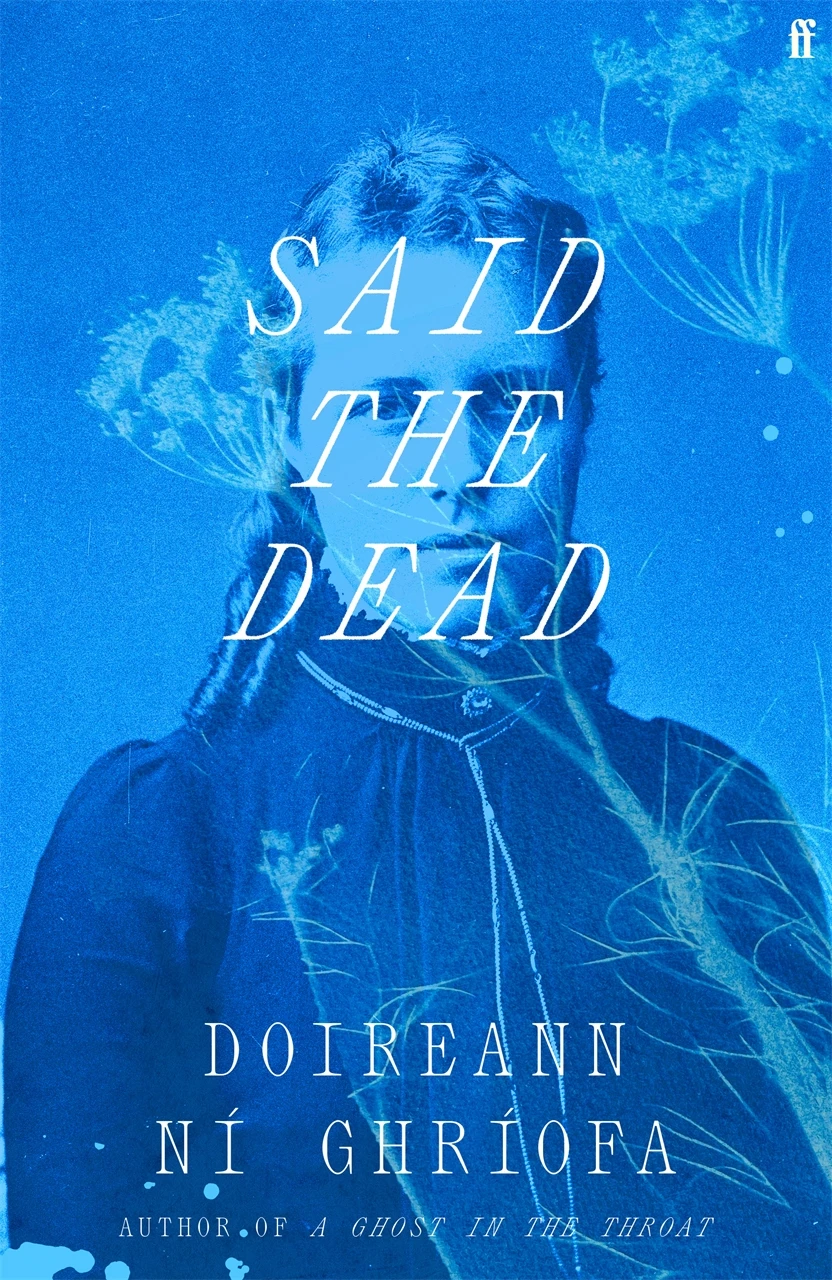
SML: That's a really interesting way of putting it. I want to ask you about your writing process Doireann - where you actually write. You wrote most of this book in your car on location at the site of the asylum. And with A Ghost in the Throat, it was the same as well, you wrote in snatches, in your car. I find that really inspiring and fascinating!
DNG: Yeah, I suppose I do daydream about a tiny little studio in the attic of an old building that I could have as a place to work. But my life hasn't worked out that way. So what I do have is my car, and the good thing about writing in your car is that you can park it anywhere! When I was writing A Ghost in the Throat, my children were much younger and I used to drop my youngest to playschool, and then I would have three hours before I had to pick her up, so I couldn't bring myself to waste any of that time driving home, to the kitchen table, or what have you. (And anyway, I would have just done housework if I came home.) So I used to drive to the top of a free multistorey carpark, a Dunnes carpark, and I’d park on the roof, and just write and write and write. And that was how I wrote A Ghost in the Throat.
You can see very far from the top of a multistorey carpark, and I could see the hills beyond which Eibhlín Dubh Ní Chonaill would have lived in her married home. So there was something about looking over that level of distance as well that was really helpful to me with A Ghost in the Throat and imagining my way into it. Because there was such distance between me and Eibhlín Dubh Ní Chonaill in terms of the time that had passed between both of our lives too, so it worked… it just worked out well. And… and I think… sometimes I think that, as a writer, part of trying to make it all work is just learning to play the hand you're dealt. I could be daydreaming till the cows come home about my own imagined little drafty writing studio in an old attic, but…if I have a couple of hours in my car, I might as well use them. And then, with Said the Dead, I was so used to writing in my car at that stage that I would often, after I would bring my kids to school, I would roam around what remains of the old asylum for a while and then the archive would open at 10, so I would drive there. I would stay there until they closed for lunch, reading the casebooks and the other historical records that they had.
And then I’d drive back to the remains of the old asylum, park my car there in the shadow of the institution and take out my laptop and write and it was a process that worked because that was all I had and I had to make it work. There were other, like, periods in the writing of the book where I kind of had to be quite nimble in my artistic practice as well. Like sometimes I had to focus more writing in the gaps of time at home. At one stage, my husband was diagnosed with kidney cancer, and so through his surgery and treatment and everything, I was based here, and kind of working in small windows of time I could find around looking after him, through the last phases of finishing Said the Dead.
What I should say is, although my writing process is a mess, I've learned how to make it work for me. And there's a certain muscularity to teaching yourself to work in small snatches of time that mean that if you need to perform other caring responsibilities or just write through any difficult situation you find yourself in, you can still sometimes stitch together enough small periods of time in order to slowly, slowly build something bigger.
So, yeah, I wish I could say my process was neater or fancier. My process really is messy, but it works for me, or it has so far. Touch wood!
SML: And that's very relevant for women writers especially, who have so many other responsibilities.
DNG: I mean, you'd be waiting all your life for the perfect conditions as a woman of our age, so you just have to make it work somehow. Yeah, but I know there are days where it just feels like you're making a mess of everything, you know, and you just have to keep going and keep trying. I don't think I can make any of it look easy, because I don't find it easy, but I think, resilience and tenacity and even giving yourself a few minutes a day, it all adds up.
SML: That brings us to our last question. In this book, Said the Dead, you really seem to ‘inhabit’ the story, the characters, and the place. As do we, the readers. We're totally in the book, and I personally found it a very harrowing and haunting experience reading it. I had to read it very slowly, in small instalments, because I had to stop then to sort of recover, as it's so affecting. Now that you have the book finished and it's out there in the world - are you still haunted by these women? Or do you feel that the telling of their stories has laid them, their ghosts, to rest, so to speak?
DNG: I think there has actually been a sort of handing them onwards to people who read the book, because they felt and feel so alive to me and that it has felt almost sacred to trust in the process of publication, and the fact of that, which is someone else now picks up those stories and those lives or those stories come to life in their mind now. The act of publication means letting go, from my perspective, and letting them find their own way in the world. And I really trust the Readers who will pick this book up, and like you, find their way into these pages and into these lives.
Yeah, these lives are definitely still with me. I think about them a lot, but I'm so grateful that so many people, by reading Said the Dead, are taking good care of them on the other side, in this book that they have found their way into. I feel my part of the process is very brief, you know, my role lies in researching of these lives, writing about them, but then I let them go, to live a new sort of life in this book, which has its own life far beyond me, and I'm no longer part of that connection between the lives of the women in the asylum, and the readers who'll pick this book up. At that point, when the book is sitting in a bookshop or library, waiting to be picked up, I'm absent, and the connection is entirely between the women in the asylum and the reader of the book.
I feel very fortunate to have had that brief part to play in this process. It has really been among the gifts of my life to have spent those years studying these women and the lives that they lived.
SML: And we feel very fortunate that you have taken it upon yourself to tell their stories and to share them with us. Yes, thank you Doireann, and for speaking with me today.
DNG: Thank you Siobhán, and thank you for your time.
Said the Dead by Doireann Ní Ghríofa (published by Faber) is available to buy now.
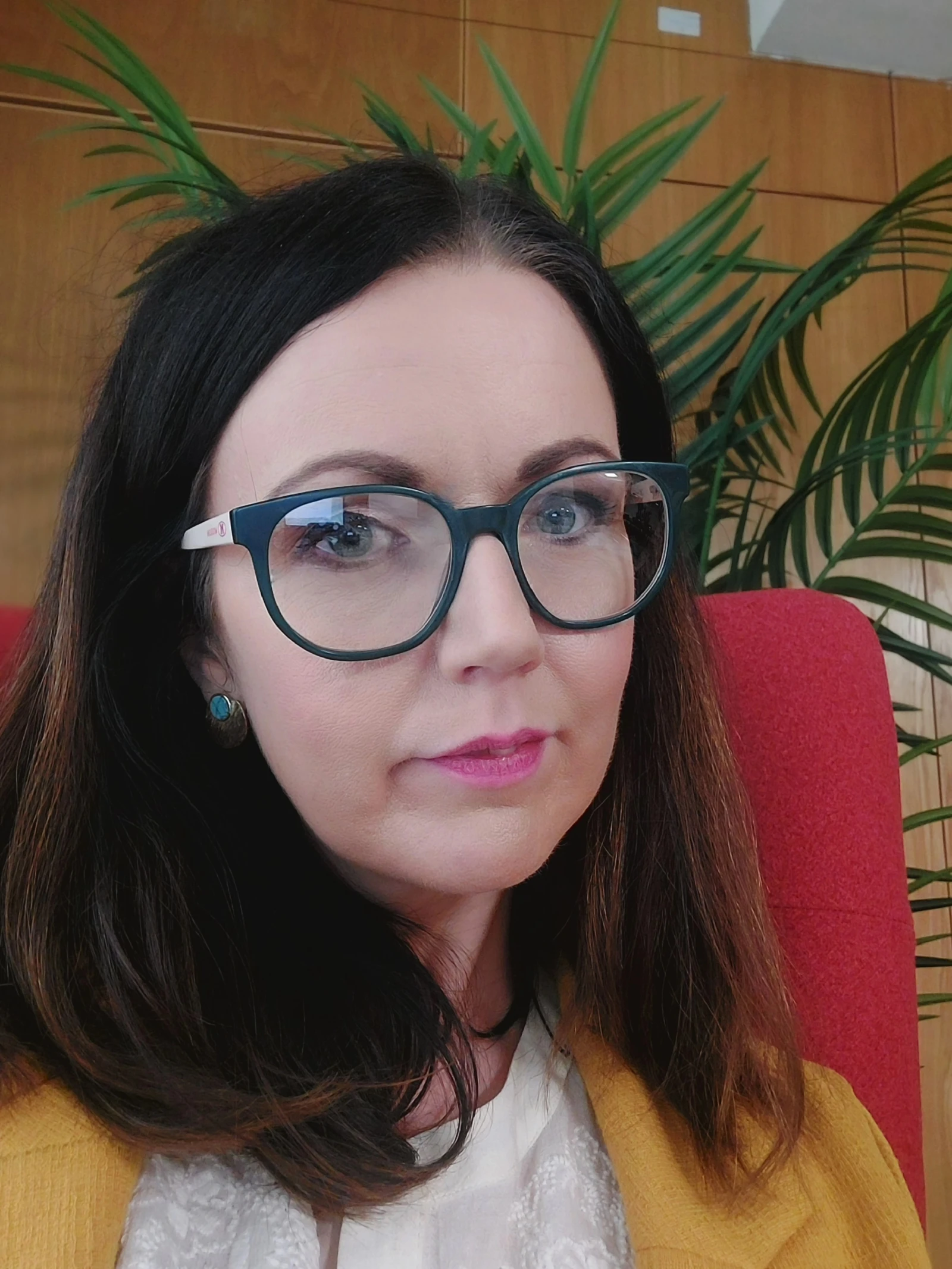
Siobhán Mc Laughlin is a poet and creative writing facilitator from Co. Donegal. Her poems have been published in The Honest Ulsterman, The Ekphrastic Review, Hive Poetry Journal, The Martello Journal, The Waxed Lemon and more.
More work by Siobhán Mc Laughlin


Tel: 028 7126 6946
Email: hueditor@theverbal.co
Verbal, Stable Lane and Mall Wall, Bishop Street Within, Derry/Londonderry, BT48 6PU
 company
Copyright © 2026 Honest Ulsterman