


Milena Williamson on her latest collection.

Recently I was reading several essays in The Stinging Fly, part of an ongoing series, reflecting on the writing life. Emily Cooper’s essay on rejection and the reinvention of the writer’s self, project after project, funding call after funding call, really resonated with me. I’m twenty-nine, post-PhD, an early-career researcher, a teaching assistant on fixed-term contracts. I’m kept awake at night by the question of “what next,” particularly since March 2024, when my debut poetry collection Into the Night that Flies So Fast was published with Dedalus Press. Victoria Kennefick’s essay on writing up to the submission deadline made me want to laugh and cry at the same time. I am familiar with the “deep, overwhelming desire to switch the brain off” and the regular interruptions of “I’m going to make a quick coffee.”
[Enter bridget boland, Bridget’s mother, who is dead]
[Enter district inspector wansbrough, who searches for Bridget]
These essays by Cooper and Kennefick foreground the process over the product. They let the reader experience the intimate messiness of writing. I was going to write an article about the books that helped me/inspired me/lurk in the fog behind Into the Night that Flies So Fast. However, after reading the essays by Cooper and Kennefick, I felt compelled to write something exploratory, asking the questions about my own book and my own writing process, that – almost six months after the publication date – I am still wondering about. This is that piece.
[Enter johanna burke, Bridget’s cousin, who is a mother of six children dead and alive]
[Enter patrick kennedy, Bridget’s cousin, who pins her to the bed]
In recent interviews, such as the one with Julie Morrissy for Books Ireland, since the publication of Into the Night that Flies So Fast, I have been asked about some of the poems in the book: are they persona poems or monologues? To which I have answered, “they’re voice poems.”
[Enter jack dunne, Bridget’s father’s cousin, a storyteller who walks with a limp]
[Enter father ryan, who administers the last rites to Bridget]
But what is a voice poem? This is a term of my own invention, which I used while I was writing, in order to write the poems themselves. I was listening to, or perhaps more accurately listening for, a voice that would enable me to write the poem. But now that the book is finished and out in the world, I am perfectly willing to accept the more standard terms: persona poems or monologues. These terms facilitate communication; they allow people to speak about my book (which is no longer only mine) with clarity and ease. But why did I call these poems “voice poems,” just to myself? Why and how did I invent this term?
[Enter william ahearne, Bridget’s neighbour, who is a boy of sixteen]
[Enter katie burke, Bridget’s cousin’s daughter, who is a girl of eleven]
On the difference between listening for and listening to, I think about the dialogue between James Fenton and Mary Ruefle. In An Introduction to English Poetry, Fenton writes: “The voice is raised, and that is where poetry begins.” In Mary Ruefle’s “Short Lecture on Prayer” in Madness, Rack, and Honey, she challenges and develops his idea. “James Fenton, in An Introduction to English Poetry, puts forth the idea that poetry happens when one raises their voice. I agree, but I also believe that poetry happens when one lowers their voice. In the first instance, the raised voice, we have the street hawkers, the singers, the storytellers, the priests—anyone who wants to be heard over the din—but in the second we include the tellers of secrets, the lovers, the password keepers—all those who want to be heard beneath the din, not by the din itself but by one singular other who is part of the din, as when in the middle of a concert we lean to the person next to us and cup our hand around our mouth, forming a private amphitheater, a concert within a concert, connecting ourselves to one the way the concert is connecting itself to everyone.”
[Enter michael cleary, Bridget’s husband, who is sleepless after ten days and nights]
These poems are not in my own voice. They are in the voices of a variety of people (and animals), all of whom are very real. Into the Night that Flies So Fast is about the life and death of Bridget Cleary, a young Irish woman who lived in County Tipperary. She was murdered by members of her family and her community on suspicion of being a fairy changeling. The book introduces a cast of characters as Bridget, her family and members of her community all come onstage to give their versions of events. I say characters, because even though they were all once real people, they are now my interpretation/imagining/projection of these people, and therefore, characters.
[Enter james kennedy, Bridget’s cousin, who holds her by the hand]
[Enter william kennedy, Bridget’s cousin, who holds her by the feet]
[Enter michael kennedy, Bridget’s cousin, who faints]
Every character has a brief description, desire or motive as they enter. Bridget Cleary is the only person who has no description. She is wholly herself, either present or absent, “woman, changeling, [or] person.” Bridget was murdered because she was an object of scrutiny, subject to conflicting descriptions or interpretations. She was also subject to patriarchal society, misogyny and ableism. She was ill and bedbound in the ten days before her death. She was married but childless. She was literate. She earned her own money by dressmaking and keeping hens. According to the Cork Examiner, people who knew Bridget said she was “a bit queer” and “not that of every woman in the same social plane.” In my book, I let Bridget revel in multiplicity, privacy and ambiguity, privileges she was not afforded during her life.
[Enter dr. crean, who drinks on the job]
[Enter dr. heffernan, who is married with children]
In total, there are twenty-two unique characters that appear in Into the Night that Flies So Fast. They speak through the poem, through the research, through my imagination of who they were and how they behaved. Some of the characters speak in unison, forming a chorus in a single poem; for example, the two doctors perform an autopsy on Bridget’s body and three of Bridget’s cousins work together to restrain her in bed.
[Enter patrick boland, Bridget’s father, who is losing his sight]
[Enter denis ganey, the fairy-doctor, who prescribes a herbal remedy for Bridget]
In the chronology of my writing process, the characters who made the earliest entrances were District Inspector Wansbrough, Dr. Crean and Dr. Heffernan, Michael Cleary, William Simpson, Badger the dog and Bridget Boland. Why was I drawn to them? Why did I hear their voices before others? Perhaps these characters wanted “to be heard over the din.” Most of them are male (including Badger!), except for Bridget’s mother. Perhaps they were like the storytellers and the priests that Ruefle identifies; they were speaking with some kind of authority, raising their voices over the din. I felt I had to write from Michael Cleary’s point of view (or else erase him entirely, in an act of rebellion against his voice and his perspective), as the person who is perhaps most responsible for Bridget’s death. District Inspector Wansbrough acts as a stand-in for the reader. As he investigates the scene of the crime and “walks where she walked,” so too do we as readers search for Bridget, turning the pages. Writing from the voice of Badger the dog allowed me to portray particularly poignant moments; the dog waits for Bridget to return home, like Argos in The Odyssey, but “there is not a woman/ who comes up the road/ who could be her.”
[Enter william simpson, Bridget’s neighbour, who possesses the keys to the Clearys’ house]
[Enter badger, Bridget’s dog, who barks at journalists]
Other voices were harder to hear. Certain characters required more careful listening, long after the point when I thought the voice poems were finished. Among the final voice poems that I wrote were those from the perspectives of Mary Kennedy (a second poem), Minnie Simpson and Dotey the cat. All of them are female, including Dotey. How funny: of course I heard the voice of the dog louder than the voice of the cat; it reflects the very nature of these animals. These were the characters who wanted “to be heard beneath the din.” They are closer to “the tellers of secrets, the lovers, the password keepers.” Mary Kennedy reminds us that the community of Ballyvadlea enacted its own punishment on those who were associated with Bridget’s murder; an act of violence can set off ripples of fear and anger. Someone set fire to Mary Kennedy’s cottage and “The charred earth/ was a stage where no one set foot again.” Minnie Simpson is the teller of secrets, struggling with the idea that she is not so different from Bridget, that her daughters may grow up to be not so different from Bridget. Dotey the cat is the password keeper, offering us insight into the local landscape: the cottage in Ballyvadlea where the Clearys lived was built on a rath or ring fort.
[Enter mary kennedy, Bridget’s widowed aunt, who cares for Bridget during her illness]
[Enter minnie simpson, Bridget’s neighbour, who is ten years older than her husband]
These characters want to be heard “not by the din itself but by one singular other who is part of the din.” As the poet, I was the singular other, entangled with the din of everyday life in the present: assignment deadlines, doctor’s appointments, travel plans. I had to separate myself from the noise, return to my sacred texts, such as Angela Bourke’s excellent The Burning of Bridget Cleary, that first opened the door for me into this project, offering passage between the room of research and the room of poetry (yes, these are both rooms in the house of writing).
[Enter dotey, Bridget’s cat, who watches everyone]
There are six poems in the book from Bridget’s perspective. Some of these were among the first voice poems (or early versions of them) that I wrote. And some of them were among the last ones that I wrote. “Ill Met by Moonlight” and “I Must Be Thy Lady” arrived early. In these poems, Bridget addresses the violent, looming presence of men, particularly her husband. I certainly heard her anger over the din. “An Old Tale,” which takes places in the outhouse, where I imagined Bridget stealing a moment of peace and privacy, was the last one I wrote.
[Enter bridget cleary]
I decided to punctuate this essay with the stage directions that mark the voice poems. This way, the experience of reading this essay could be interrupted/haunted by the voices that make up my book. Collectively, all of these fragments make up a cast list or a dramatis personae. Bridget never exits the stage of the book. She only enters. Maybe she is hiding in the wings (a turn of phrase that is pure poetry), even when someone else takes center stage. To have her exit would be to remove her from the narrative, and this I could not bear to do. The book may be finished, but I still hear Bridget over and beneath the din: “I will never let the stains out of his clothes,/ weeds wide enough to wrap a fairy in.”
[Re-enter bridget cleary]
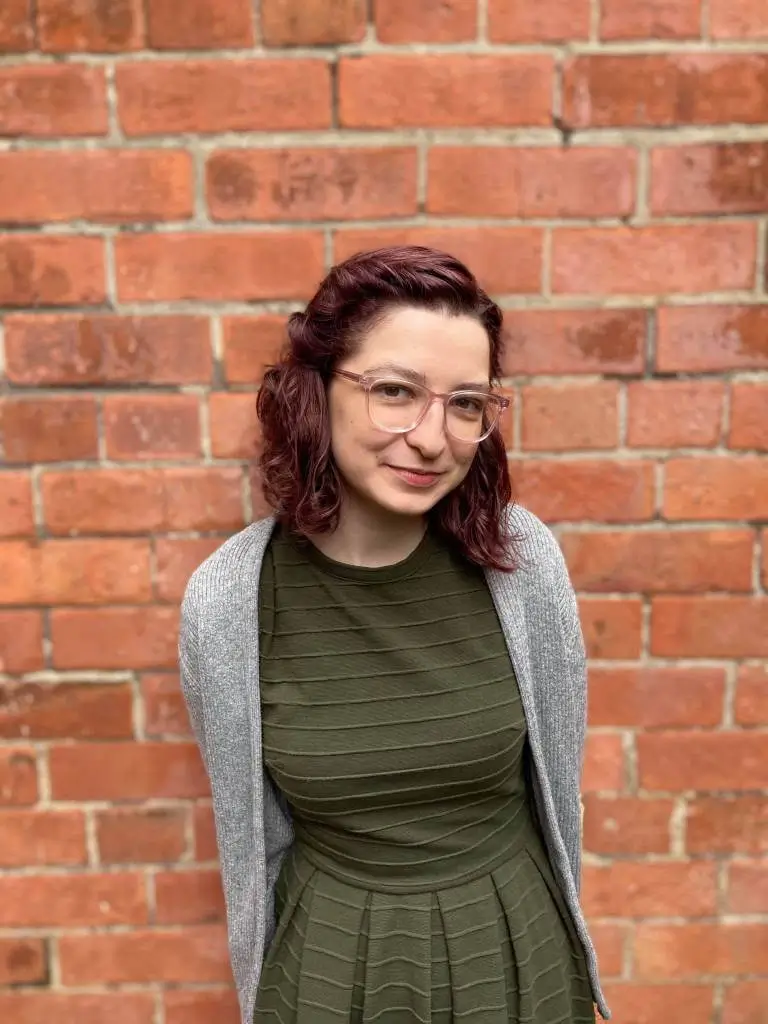
Milena Williamson is from Swarthmore, Pennsylvania and has lived in Belfast since 2017. She has a PhD in poetry from the Seamus Heaney Centre at Queen’s University Belfast. A recipient of the Eric Gregory Award, she published her debut pamphlet Charm for Catching a Train in 2022 (Green Bottle Press). Her writing about Bridget Cleary has been supported by the Arts Council of Northern Ireland and the Ireland Chair of Poetry Trust.
More work by Milena Williamson


Tel: 028 7126 6946
Email: hueditor@theverbal.co
Verbal, Stable Lane and Mall Wall, Bishop Street Within, Derry/Londonderry, BT48 6PU
 company
Copyright © 2026 Honest Ulsterman