


The Boiling Point For Jam
I am not entirely sure when my
journey into the world of poetry began, although I do remember having to learn
poems by rote at primary school and having to recite them in front of the whole
class. If anything, the trauma of that
ordeal may have been the deterrent rather than the enticement to further any
poetic adventures. And certainly, it wasn’t some time later at Portadown
College, when a series of wonderful English Literature teachers tried, mostly
in vain, to stimulate some interest in me through the works of Shakespeare,
Alexander Pope, Chaucer, T S Eliot and so on. Probably, I just wasn’t ready for it yet and when I look back through my
forensic notes on The Wasteland or The Rape of the Lock, for example, I
understand why that might have been. My teenage brain simply wasn’t mature or
inquisitive enough yet to delve into a world of assonance, dissonance, imagery,
enjambment or imagery etc.
It is more likely that poetry began its journey for me in the form of music. During the long and awful years of the ‘Troubles’ here, when there was a dearth of social activities for most of us, my best friend and I spent many afternoons after school, vocalising our adolescent woes through the writing of songs. Looking back, they were badly written and probably badly sung, but they were the stories of our lives then and came from a very visceral place. This, I have come to understand, is where my subsequent poetry generally emerged from, because I mostly cannot write a poem unless I’ve lived it myself. This has created challenges for me and the reason why I sometimes steer away from subjects that can be overly intrusive. There is a limit to what I am willing to reveal.
My debut poetry collection ‘The Boiling Point for Jam’ has been recently published with Arlen House. It has been a long and sometimes arduous journey to get to this point, but I will always be hugely grateful to Alan Hayes for his belief in me and to all those others who offered support when doubt and lack of self-belief stalked silently in the shadows. I doubt if I’m the first poet to wonder if I’m good enough, talented enough or artistic enough to gain some recognition within the greater ‘poetry world’. And to be honest, it can be a world sometimes tricky enough to break into. I certainly don’t believe that everyone should like my poetry and indeed, for the purists out there, my poems probably lack articulation and refinement. That matters to me, of course it does. But what matters more is that at least some of my poems can connect in a meaningful way with somebody else.
For years I have been doing what most would-be poets do to get their work noticed - submitting to anywhere and everywhere that might accept and publish my work. At the start I was very uninformed and certainly terribly naïve. It took me quite some time to realise how selective I needed to be in sourcing an appropriate home for my poems and how much self-disciple is needed to follow and abide by the rules for submission in competitions and publications. I soon learned that ‘line limit is 30 lines’, does not mean ’31 lines’, no matter how brilliant you believe your poem to be, or ‘Font, Times New Roman, 12’ does not mean ‘Calibri, 12’ and so on. Hence, an early lesson was to adhere to the rules and actually read the guidelines properly in the first place. Hindsight, as we all know, is a wonderful thing, but there is much to be said for mistakes made along the way, painful as they might have been at the time.
Criticism, as long as its constructive, can be very enabling and does force you to sit back and view your work more objectively. Obviously, nobody enjoys having their writing scrutinised and examined forensically, especially if the resulting critique is none too favourable, but it’s really the only way to improve and progress. So, sometimes you’ve just got to take in on the chin and move forward, but carry on polishing and perfecting those areas in need of fine tuning. I would also say that you need to develop quite a thick skin, or else avoid the internet completely, as there are plenty of folk out there in the internet ether, ready and willing to throw some pretty nasty and unhelpful opinions your way.
Yet, sensible and honest criticism is worth its weight in gold. One very wet and miserable November day in Lisburn, I sat down with Damian Smyth from the Arts Council of Northern Ireland, and tried to absorb his observations on the set of poems I had earlier sent him. I had been delighted that he’d agreed to meet up with me, only expecting a few minutes or so of his time and instead was gifted with several hours of candid and positive critique. Later, I would pore over his suggestions, understanding that they would not always be to my liking, but knowing too, that his experience and knowledge were deserving of my respect and attention. Taking away the whole first verse of a poem, for example, is not an easy thing (and oh how I debated long and hard over that one!) but in the end I began to see that the advice I received was there to encourage and not dishearten me. That particular session with Damian undoubtedly shaped the poetry collection that was to come.
So, how long did my collection take to compile? Truthfully, it sometimes seems like a lifetime, considering that a few of the poems were penned some years ago but have subsequently enjoyed individual lives of their own in various anthologies. My poem Forty-three Grams for example, was a winner at Listowel in 2008 and has since undergone small edits, yet I think it deserves its place amongst the more recent others. My main dilemma was deciding how to organise the poems in a meaningful way and I spent long hours examining the collection of other poets (of which I have many), trying to work out a style that might be pertinent to me. Some poems were based on individual themes with separate sections, others rather more specific with an overall theme, but in the end I decided on a more random approach with topics loosely linked. Yes, I hope there is a definite flow to the collection but in the end The Boiling Point for Jam is more a continuous account, if you like, of events during my life that have affected me deeply.
Much of my poetry has been inspired by my upbringing in a troubled Northern Ireland where I was blessed with friendships that overcame tribal divisions and parents who were inherently tolerant and kind, and who made me feel loved. This sense of belonging washes over many of my poems and I hope, has given me a wider world view than I would otherwise have experienced. Like most families, mine was not immune to its challenges and dementia has had a large part to play in my writing, both poetry and prose. In writing about the effects of the disease on my family, it has allowed me in a certain way, to fuse the present with the past; the two being interchangeable in how we are shaped as human beings. The opening poems in the collection are related to real experiences with my dad, mum and aunt, and come from a very private place but hopefully reflect the terrible emptiness of grief:
‘For in the end we are simply left
with sadnesses,
their shadows shocking
as they cross the sun,
while in between remains
the light that says life carries on,
only because it does.’
Having married someone from The Middle East it was inevitable that I should take more interest in a part of the world I previously knew little about. I have visited my husband’s birthplace (Iran) many times and had residency in both Bahrain and Oman. This has given me some insight into the diverse cultures and religions of the region and hopefully my poems reflect this, but I also wanted to portray that sense of loneliness one can feel when time is spent away from the familiar. I try not to offer any political judgements in my poetry but with the conflicts that exist and the ongoing refugee crisis, it is difficult to keep my frustrations from bubbling to the surface at times.
Generally speaking, and in the simplest of terms, I write poems about things that move me. Sometimes the theme of a poem will be deeply personal, as in Forty-Three Grams or inspired by stories gifted to me from the memories of others Beside the Blackwater. But more often than not the central element of my poetry is the frailty and vulnerability that exists inside us all. The poem closest to my heart in this collection is Garden – not, by any means the best poem here (in my opinion) but certainly the one that reflects a life that could be anyone’s life, with its combined blessings and sorrows, yet ultimately offering up hope for new beginnings.
I cannot say that I write poetry easily. The truth is, I’m much more at ease writing a prose piece for The Belfast Telegraph or Slugger O’Toole, than penning a poem. The process can sometimes be quite torturous, taking an awful lot longer than many people realise. On average I might spend a couple of weeks on a single poem, the exception being the very last poem in the collection. You’re Beautiful took me just under an hour to write and I have never wanted to change a single word. It was always going to be the thought that completed the book because it’s for one person and for everyone, too:
‘say it out loud
like a poem learned in school –
it will live in you afterwards
you’re beautiful’
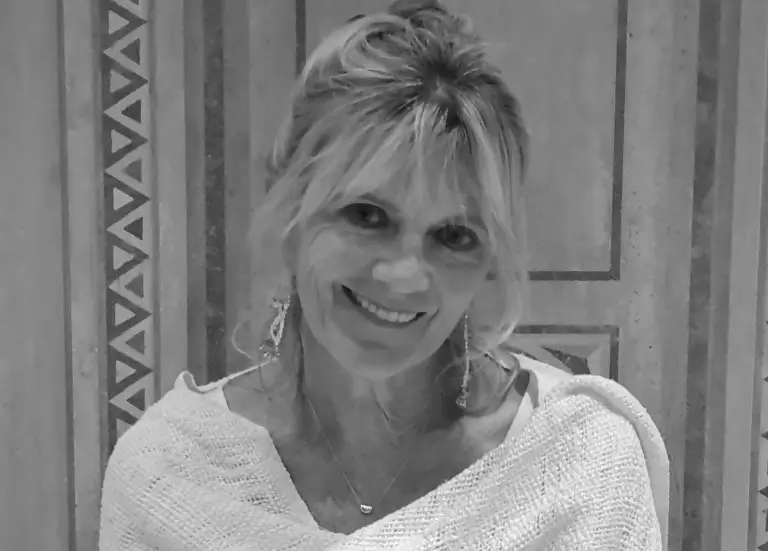
Lynda Tavakoli facilitates an adult creative writing class in Lisburn and is a tutor for the Community Arts Partnership, Seamus Heaney Awards for schools. A poet, fiction writer and freelance journalist, Lynda’s writings have been widely published in the UK, Ireland, the US and the Middle East. She has been winner of both poetry and short story prizes in Listowel, the Westival International Poetry Prize, and placed in several International poetry competitions. Lynda is the recipient of an Individual Emergency Resilience Programme Grant, awarded by the Arts Council of Northern Ireland.
The Boiling Point for Jam is her debut poetry collection. and is available here: http://arlenhouse.ie/books/the-boiling-point-for-jam/

Lynda Tavakoli facilitates an adult creative writing class in Lisburn and is a tutor for the Community Arts Partnership, Seamus Heaney Awards for schools. A poet, fiction writer and freelance journalist, Lynda’s writings have been widely published in the UK, Ireland, the US and the Middle East. She has been winner of both poetry and short story prizes in Listowel, the Westival International Poetry Prize, and placed in several International poetry competitions. Lynda is the recipient of an Individual Emergency Resilience Programme Grant, awarded by the Arts Council of Northern Ireland.
More work by Lynda Tavakoli


Tel: 028 7126 6946
Email: hueditor@theverbal.co
Verbal, Stable Lane and Mall Wall, Bishop Street Within, Derry/Londonderry, BT48 6PU
 company
Copyright © 2026 Honest Ulsterman