


The rain, like chaos, hits the window and glides down and over the ledge, onto the dusty grey soil of the lot, turning it fresh and black as ink. Parker taps his pen on his desk to the beat of rainwater that drums in an old paint-pot sitting at his feet. The skylight has let in buckets of the stuff, which keeps bringing old chips of paint back to life. Out of the window, the cattle step through sweet clover that is already flattened by the sweet-smelling rain. Having always known the importance of letters, Parker drafts one for the local paper; having to share his opinion, which often derails halfway through each letter’s composition. As long as he is passionate about a cause at the time Parker is writing, and he is, this is good enough for him. This time there is no changing of minds.
He wonders where the children from the photos are now, as he stands on the polished floor of his study in stockinged feet, feeding old, wrung-out newsprints to the fire. Then Parker sits and makes three small edits, before typing up his letter to post the next day. First, he must carry his small sleeping daughter out of her bed and into his truck, and go collect Sarah and her tables and their silverware.
We have water in the house, Parker tells Mike the next morning as they take a pew in Starbucks. They are each clutching a bottle of newly-bought soda, and Parker is wearing his Sunday best; he is looking out at the deserted and rain-beaten street, at the statue of a shiny copper ex-president who lurks permanently patriot on the corner of the street. Downtown, there is one on every corner.
We have just over six inches at our house, Mike says. He is wearing a baseball cap and shorts. He takes a drink.
You can see easily from the bypass, when you’re driving by, Parker says. And more water, right at the top of our lot line. We’re a little worried about it, but it’s looking like the sun might come out.
You think? says Mike. He examines his bottle. Three dollars for this, he says, did I hear her right?
Parker smiles. So, what else is new? You went for that interview?
I went to the interview, says Mike getting comfortable. It was weird; I got the letter and it said: Dress code: Wear what you like.
That is weird, Parker says.
Yeah, so you know me, says Mike. I had to know what that meant. They always say wear what you like, but really…
Yeah, Parker agrees.
So, I went.
You did? How did it go?
Firstly, says Mike rolling his wrists, I emailed and asked what to wear; and they got back to me and were like: Really…wear what you like.
Hmm.
So, I got there and mostly people were wearing suits.
Really? Damn. Parker shakes his head, spinning, unspinning the lid of his soda bottle.
Then there was this one dude, says Mike, and he was wearing cargo shorts. It was just weird, you know. And then, um, there’s ten of us. So, like…
That’s quite a lot.
Yeah, says Mike. And I’m not paranoid but I’m like, sceptical or whatever, but I thought, one of these guys is a plant.
Oh, like not really there for the interview? asks Parker.
Right. I had it narrowed down to the dude in the cargo pants, or, this dude who was like a nervous copper. He never stopped talking. But it was good. It put people at ease. Even still, I’m a conspiracy theorist, says Mike. So, I do my test, which was strange too, because the questions were not what I thought they’d be. There are photos of people, just all different kinds of people, and you have to write, plus three to negative three, how much you are sexually attracted to someone. Guys, girls, old people…
I’d give everyone negative three, says Parker. I think that’s what you should have done. Or maybe they’d be expecting you to score a certain way and I’d hit it up at random: say, a negative two here, and a one, a positive two here…
Yeah, but, says Mike
Unless it’s your wife, Parker puts in.
Yes, Mike says. But they had, say, a teenage girl who is dressed a little older; I mean, like, do you be honest?
That’s crazy.
Yes, crazy, seriously.
You should get paid a ton of money to do that, says Parker.
It was voluntary, I had to pay to go there, says Mike. So then… you take the chance, you do that, then I had to go in and the interviewer asks—first question: Why are you wearing that? And then he says: Oh, you’re the guy who emailed.
Crazy! says Parker.
Second question, says Mike, how long have I kept you waiting? I knew, it was twenty minutes. And third question: How many applicants are there altogether. I said to the interviewer: Well, initially you said nine. You’re the only person picked up on that, he told me. So, I go in for the second interview and who’s there on the panel?
The guy in the cargo pants? asks Parker.
No. The nervous copper.
That’s hilarious, that’s hilarious.
They are constantly testing your observation skills, says Mike. It was good, it was intense though, when I got done at the end of the day, I was exhausted.
Yes, it’s the rigours of being in a situation.
Right, right, says Mike. It’s overwhelming.
Are you still convinced that you would like it?
Oh yeah. I would.
That’s great, it really is.
They said I should hear something in like two weeks.
Great, says Parker, I wish you well with it.
They sit quietly for a while, then Parker says: You know, I don’t know anymore, it feels like we are living under some regime.
Mike frowns.
I mean, I speak to God, says Parker, and he is listening and I just don’t know. I want so much to be that good man.
Yeah, right, right, says Mike looking around at a woman who has been typing nonstop in the corner and has not touched her iced coffee. There is a bite taken out of her glowing white apple. She could be a distraction but she is not.
They take those little kids from their parents, says Parker.
That’s what you mean by a regime. Mike laughs dryly.
They are looking for asylum, says Parker. I don’t think they are criminals.
Right, you don’t. Uh-huh. Mike takes another drink. It does look like the sun is coming out, he says.
That will be nice, maybe I’ll get out for a hike.
I’m renting a house in Keystone.
You are? asks Parker.
Oh, yeah. So, I can take all day, don’t have to go to bed by a certain time, can sleep late. I can nap during the day.
That’s pretty nice.
Go for hikes, says Mike.
Nice.
You and Sarah should join Karel and me at the weekend.
I’d love to, says Parker.
It’s on Playhouse Road.
Dude, oh my gosh, really? says Parker.
It’s something.
Gosh, Mike dude, says Parker, his throat closing. My eyes start to water when you say something that is already overwhelming to me.
Mike smiles with his eyes squinted small.
But I’ll have to check, Parker says. Sarah is working weekends. She had to do a wedding at Nemo last night. It was an outdoor thing. We cleaned up, took away the tables and our silverware. We weren’t getting home till 2AM.
Can’t you leave your tables and you can get them in the morning? asks Mike.
Not really, says Parker. She had two weddings booked this month. And next month…two July weddings. She can’t carry the stuff by herself. It’s my truck, I don’t want Little Bill driving my truck. All her stuff. I told her maybe she could hire help and give them twelve dollars an hour.
Right. Mike takes another sip and looks out of the window.
Parker extends on his point: I’m making money, she says, and I’m like, Jesus, stop. We have a daughter and you need to stay home for that daughter. But she’s like: I have a business, it’s a small business, but it does make money.
I read a quote by CS Lewis lately, says Mike sharply, always impatient with prattle – Lewis is saying that the homemaker is the ultimate profession; that all other professions exist to support it.
Parker laughs. Oh, man, he says.
I better get going, says Mike. I’ll let you know…about that hike.
Once Mike leaves, Parker stays to use the restroom, then he sits down again and lifts the local paper from which he reads some more about the detainees held at the border. In the photo that accompanies the piece are the little children, they are lying on some floor and wrapped in foil like oven-ready chicken parcels. Then over the page, another article, this time about the postal service; it states that there has been a recent swell of people sending letters to God, and being that there is nowhere to put them, the letters are going to be burned.
On the way home, Parker watches from his truck as his congregation is eaten by the church doors and a thought pops into his head, or a voice, that says: Go home and pray in your closet. At home, he does exactly that, between mothballed shirts and Christmas pullovers. Then he joins Sarah and their daughter for Sunday lunch. Sarah is dishing out steak and potatoes; she is in a pleated skirt and smelling of cinnamon. Quietly she is listening as Parker tells her about the new letter he wrote for the paper, about the detained children he has read about in the media.
In town there is this sign, she says sitting down to eat, it’s everywhere actually.
Which sign? he asks.
It’s a hotline, a couple of dollars a minute. People call it and they ask for answers for things they’d prefer not to waste their time over.
That’s ridiculous, says Parker.
Is it?
It is, I think.
Hmm, I don’t know, says Sarah, slipping a heel in and out of her pump. It’s possibly better than the Rightful Timescale.
The Rightful? I’m not sure I know what you’re talking about.
Yeah, she says, that’s when you give yourself a certain time limit to consider a thing. So, like, say I am wondering what to make for dinner…
Right?
I’d think, what have I got in the fridge? do I go tuna? or pasta? do I go and get something else? Parker, people can waste hours thinking about stuff like that.
They do?
I know I do, says Sarah.
Hours? he asks.
Maybe one hour, split up throughout the day.
Parker eats his lunch with new consideration.
Whereby, say you have a bigger decision to make.
Like to employ staff to help you with your tables? he asks.
That will do, says Sarah. So, is that medium or large? That’s probably large.
In your case, one staff member, two hours a night, twice a month. Medium?
It’s medium; so, ten minutes is all the consideration that question needs.
Speaking of, says Parker, I don’t want Little Bill driving my truck and I don’t want someone who doesn’t care about your supplies bashing everything about. And someone needs to be home with our daughter.
Right, of course, Sarah says. We’re getting off topic. So, large dilemmas are, like: should I relocate? invest money? and so on…
How long do large dilemmas get, on the Rightful Timescale?
Sarah shrugs. Coupla hours.
Getting back…what is the helpline for? asks Parker.
Okay. Sarah eats some mashed potato. You phone them up and they just cut out the middle person, and the wasted time; they tell you what you should do. Immediately.
Like, they give you bad financial advice?
No, I don’t think it’s like that.
Sounds like a scam.
It just lights a little fire under you, says Sarah.
People use this service?
I know they do.
Who do you know? asks Parker.
Lots of people… take Mike and Karel.
Stop it. Mike and Karel?
They’ve used it when they wanted to make career decisions.
Mike didn’t mention that.
Maybe he is embarrassed. It’s a peculiar thing, admittedly.
Peculiar, yes, says Parker.
I just think that sometimes people shy away from decisions. They want someone to focus them, to listen to them, you know.
Yes, I do.
The rain has stopped but the study’s skylight still leaks. Parker scans a copy of the latest paper to find that his letter has not been chosen again. The usual float of disappointment wells up inside him, up to chest-level, just behind his nipples.
The letters that have made it into the paper are nothing new. They are about the local uranium mines, and the old unforgotten flood, and other tragedies that people care to have remembered. Not often, not today, but sometimes, there are letters complimenting the manners of young people, or thanking someone for a kind gesture, but Parker cannot remember the last time he read this type of correspondence. Working back from the letters page, he finds a development on a story he has been following, about a father on trial for the murder of his nineteen-month-old daughter. The initial story, as Parker remembers, was non-suspicious; the child’s mother stated that the little girl fell in the bath, and fell down some steps. Now, they’re saying, that the child’s father is expected to blame the child’s mother because, as a minor, she once committed a felony, but that file is sealed. Parker reads that there will be a decision made soon as to whether that old file will be opened and all the details brought to light, which just seems wrong to him. All of it, every edge of the story, seems sharp to Parker.
The child’s face still sticks in his mind. And in her face, he sees the other face he now knows so well; the face of the little girl detainee who cries permanently at the back of his eyes, as she has her shoelaces tied by her mother for the last time in God knows how long, just before they are pulled away from each other; which there is no photo for, just a narrative, but it is the image Parker pictures most when he pictures the little girl. When he pictures any little girl. Even his own.
By now his letter seems like nothing, by now he is embarrassed about it. Parker goes to the post office and opens a PO Box.
The next week he receives a message to tell him that it the box is full, that he needs to come and collect. And there are hundreds of letters in there already, they mostly addressed simply to God. Some to God in Heaven, a few to My Sweet Lord. Parker brings them home in his truck and spreads them over the dining table.
Where did you get this idea? asks Sarah. Was it because of the hotline?
No, he says. This will not generate an income.
Nor should it, she says, but how interesting. Sarah lifts a fan of letters as she fetches a butter knife from the drawer.
We can’t open them, Parker says. Can you imagine what is in there, what would happen if we were to read them?
I have little interest in reading them, says Sarah. I can equally leave them alone.
The week after, with word gotten out, there are close to a thousand letters for Parker to collect. Which he boxes and stacks in his study. When he has a moment, he spends it looking at the boxes with his eyes full of tear-water.
I was thinking about hotlines, says Sarah joining him with their red-cheeked daughter on her hip. You know those hotlines you get - She covers their daughter’s open ear - whereby children can speak to Father Christmas?
Vaguely, he says, folding in the top of the top box.
You know, it’s automated, right?
It is?
Yes, she says. Father C goes: What would you like? have you been good? and then he says: That’s great! before you have a chance to answer.
I don’t remember, admits Parker.
Oh, I do, says Sarah. I called one once, I was probably in the second grade.
There is another money generator, he says, if that’s what you’re thinking. Like the decision-making one.
I don’t want business ideas.
You’re right. It’s just not ethical.
No, Sarah says. It’s not not ethical. As long as the charge isn’t too much, and children get something from it…
Out of the window, the soil is finally lightening in colour and drying out. The cattle are roaming, and the air is humid and sweet.
You’d need a longer pause, says Parker, or else it gives the game away. Or, not automate it but actually listen. Actually reply.
Sure, she says. But we’re busy with the ranch, and the baby, and that’s not why I’m telling you this.
Hey, Sarah, he says, wouldn’t it be good, to work from home? You could be with our daughter. Little Bill would do a great Father Christmas impersonation, and the idea would still be yours.
Parker! I have a business, she says. It’s a small business, but it does make money.
He tickles his daughter’s foot. She pulls away and laughs.
You know CS Lewis? Parker asks Sarah.
Of Narnia?
Yes, he says. Lewis had a saying about a homemaker, about the homemaker being the best career path there is.
Sarah sighs. He’s gone a long time. And it’s not his homemaker anyone’s talking about.
It’s not about the notoriety, says Parker.
Isn’t it? Then, I wonder, can you talk a little about why you write to the newspaper? Sarah asks.
I just have something to say. Like, an opinion.
You never sign off anonymously.
Since starting up the PO Box I haven’t written a single letter, says Parker.
You like best when someone responds to your letter, Sarah says, positive or negative, you’re happy.
Parker studies her.
People aren’t as ignorant as you seem to think, she says, they know their god is not getting these letters. They know it is a person. A humble, good person.
How do they know the person is good?
Like a bad person will do this? Most people shut out cruelty, if they have the privilege. But not you. You, Parker, are exactly the kind of person who can give these people hope. She cuffs the lid of a cardboard box.
Parker only once relents and opens a letter, then stuffs it back into the envelope before he can see the sender’s name and in doing so release some curse like a black moth.
He thinks about the detained children, who are still not with their families, and about the protests made from the outrage of good ordinary people who believe they can make a small change in the world. He thinks about the actions of the people who detained those children. They would, Parker thinks, like to learn of more ways in which they can further hurt people, especially those who need help, whose faith in being listened to instinctively is diminishing. This in mind, he goes to his closet.
Dear whomever or whichever force that deals with such things, he says, see that I have adequate strength to get me through this. Or tell me, what should I do. Should I stop writing letters to the paper?
No, comes a reply. You should not.
Should not what? he asks. Should not stop?
Parker waits but the reply does not arrive.
Should I advise that people need to stop writing to you, Lord?
Yes, is the reply. It wasn’t one of your better ideas.
You are disappointed in me, whispers Parker, his nose is stuck in the collar of a mothballed shirt; he is a hair closer to moral clarity. And I should close the PO Box? he adds to another wait, and again, no reply.
On a Saturday evening, before he collects Sarah, their silverware and her tables from somebody else’s happiest day, Parker fills up his truck with boxes full of letters for God, and he drives his young daughter to a campsite, where, as he fashions a pit fire, Parker remembers how he once found a postal worker at his screen door, clutching a letter he was meant to be delivering. One summer, the man just appeared there, staring intently at the envelope. Parker had coughed to get his attention.
Oh. Got some post for you, the postal worker said pinking up. I think it’s a job application, so, I was casting a little good luck over it for ya.
Disbelieving and dubious then, Parker now identifies and appreciates the compliment, as he holds each letter for a moment, as if trying to dissolve it into a prayer, then letting the envelope fall and go up in smoke. He waits for the flames to give out, checking in every so often on his daughter, whom he can see is still sleeping, which he can see through the sparkling window of his truck. He cannot leave even one God-letter intact or in a recognisable state, Parker thinks, as he assesses the scene at his feet. Down on hands and knees, with a flashlight in his mouth and a zippo in his hand, Parker individually relights every larger shred until all that is left is absolute ash.
He finishes up just in time when the rain restarts, the bouncing hail of it waking his daughter, who is in now upright her car seat, and watching out of the window with eyes that look like deep dark hollows, in this light. From this space. She smiles, her eyes wet from the cry her father hasn’t heard. She is smiling for that father, who is running towards her and his truck, dodging a new wave of rain, and looking just like a flame dancing on the rapidly darkening earth.
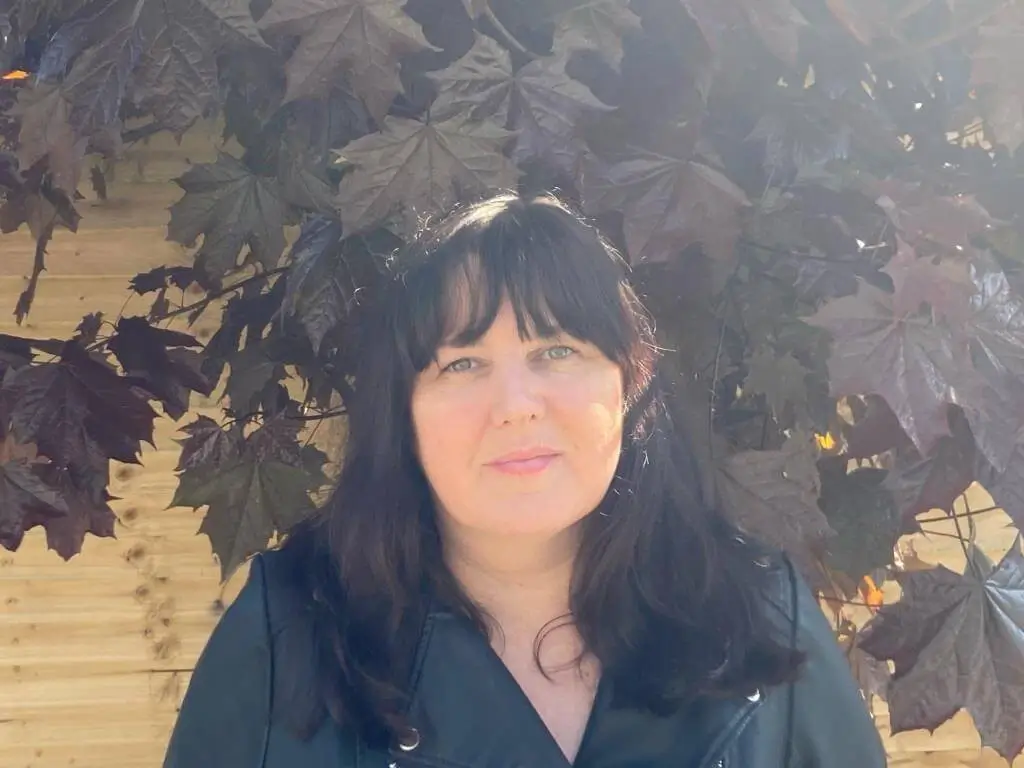
Kelly Creighton is the author of one poetry book, two short story collections and five novels. She is a Poetry MA student at Queen’s University. In 2014 she founded The Incubator Journal. Kelly lives in County Down where she facilitates creative writing classes and mentors writers. https://kellycreighton.com


Tel: 028 7126 6946
Email: hueditor@theverbal.co
Verbal, Stable Lane and Mall Wall, Bishop Street Within, Derry/Londonderry, BT48 6PU
 company
Copyright © 2026 Honest Ulsterman