


Remember. Your hand pressed to rock. You held it there, fingers splayed, the cave wall absorbing its warmth. You were high off the ground, arm stretched to the ceiling.
Were others hoisting you up, a pyramid of bodies? Or had you pulled branches from the jungle, scaffolding your way? Did you hold the bowl of liquid pigment in your free hand as you flattened your palm rigid against the rock?
You were a short distance in from the entrance, hand held to the cave’s ceiling. The pockmarked surface may have left indentations on your palm, minuscule deposits may have remained sticking to it for a while after you returned to the floor.
Let it be you inhale, and bring the bowl to your lips. You suck in a mouthful of the red-ochre solution; melted animal-fat and water mixed with iron-oxide. Bringing your face to your hand, you blow the liquid out in a spume of reds, coating each finger and knuckle. The dye binds to the rock exposed between your digits. A spray falls back on your face; you close your eyes. Red minerals adhere to your eyelashes, stick to sweat on your brow, settle in creases either side of your nose.
You suck in another mouthful and return to the flared fingers. You spew the colour, glazing the L-space between thumb and forefinger.
You go back to the bowl one last time, hand still pushed to the rock. You inhale deep, upend the small bowl, sup, and raise a dye-spattered face to the ceiling. You blow the fluid over the edge of your hand, covering it from little-fingertip to wrist knuckle. Opening your crimson-rimmed eyes, you look up.
A mess of red-ochre hues, anchored by your hand, adorns the ceiling. Starting with the heel of the palm, you remove your stained hand from the cave wall. A negative handprint remains.
Would the print leave a familiar pride as you flex numb fingers and swing the arm to re-establish blood flow? Or is this your first time? Would you feel awe as you recognise your own shadow, now independent of you, a mute sentinel left immobile for perpetuity on the rock ceiling? Would the handprint fill you with courage, soaring gatekeeper at the entrance to the sheltering cave? Would it help you sleep with less fear during the black night, tucked into the cave’s niches, as snarling creatures stalk your uneasy dreams?
How long did you consider the islanded handprint, shored by tides of red-ochre pigment, before you moved on? How long did you remember it?
This is known. A hand was held to rock. A sign was left behind.
Earth has circled the sun forty-thousand times since. Forty-thousand years bristling with hope and decay. Forty-thousand years of birth and death, fear and triumph, as memory’s baton passes hushed through the coursing blood of generations.
Have many lain in the cave’s dark hollows, eyes glistening, holding their young close, listening to the creatures below? Have many heard the roar of the beast in their sleep? Have many, restless in the amber light of the fire, sought out the beacon handprint as a reminder of who they are and what they are capable of ?
The earth turns. The rock weeps. Drop by drop by drop, the water layers calcite deposits over the cave wall, and layers time over its dormant handprint.
Forty-thousand years later, on an Indonesian island south of the Equator, a scientist stands in the cave and sees a shadow of your sign.
With tiny diamond-bladed saws, she cuts a sliver from the minerals cloaking your blood-red handprint. The sediment contains traces of radioactive Uranium, which decays into Thorium at a specific rate. By analysing the level of decay, the handprint lying beneath is dated. Forty-thousand years old, this much is known.
Above the Arctic Circle, and a thousand kilometres below the North Pole, a snowmobile purrs under a low milky sun. The driver has the headlamps on though they’re no help today in the glimmering, lilac-hued light. The beams glare on the vast wilderness, and the ground echoes back the artificial glow. It is Spring Equinox on Spitsbergen Island, a place where often it is neither night nor day.
The driver left the small Norwegian town of Longyearbyen before noon and headed north with his passengers, two officials from neighbouring countries.
He sees the beacon in the distance; a concrete portal jutting out of the snow-covered mountainside. A tiara of glistering mirrors at the portal’s entrance reflects the polar half-light.
This is the Global Seed Vault, a gene bank for the earth’s seeds, constructed deep into a frozen sandstone mountain. Nicknamed the Doomsday Vault, it is designed to withstand all disasters, stretching one hundred and thirty metres into the belly of the rock mountain. The area has no tectonic activity, and the permafrost maintains the sub-zero temperatures required for the preservation of seed viability. The impregnated mountain is one hundred and thirty metres above sea-level, should the surrounding ice caps ever melt. Under these conditions, the seeds can survive in the sealed, frozen cave for thousands of years.
He passes the sign warning of polar bears; the beasts outnumber humans on the island. Stopping the snowmobile close to large stainless steel doors, he turns off the engine.
The vault is opened only three or four times a year, for deposits such as these. The remainder of the time it is left unmanned, watched over remotely by cameras and sensory monitors.
They exit the snowmobile, engine ticking in the hush, and haul three sealed boxes from the back of the vehicle. They walk to the entrance, footprints crushing a chain of hollowed islets into the virgin snow. Scraping away ice crystals, the driver unlocks the doors, follows his passengers in, and re-locks.
Under the glare of motion-sensor lights, they are shadowed by their own footprints as they make their way across the frosted concrete floor. He unbolts the inner doors and they leave the path. In the darkness behind them, their furthest footprints have already begun to freeze over. They follow a tunnel of corrugated iron to the third entryway. He unlocks, and they enter the womb of the mountain, a large sparkling cave hewn out of the rock.
Here there are three sets of steel doors. Behind these lie the sleeping plant embryos. Opening the middle chamber, he ushers them past the threshold. They enter it alone, carrying their boxes of live seeds.
Within the chamber, there are a multitude of shelved boxes containing millions of viable seeds from around the earth. Each frozen seed remembers. Each embryo cossets a history of the plant from which it came, and each has a raging will to release that memory.
Today’s deposit consists of seeds from Betula pubescens (Birch), Pinus sylvestris (Scots Pine) and Picea abies (Norway Spruce). This is the vault’s first deposit of tree species. They place them on the shelf space allocated. Thus the remembering of forests begins.
They leave the chamber and the doors are re-sealed. Black silence envelops the rows of boxes, the tree memories held within begin their descent into dormancy.
He escorts them back through the series of exits. Clicks of motion-sensor lights resonate behind each door. When he opens the outer doors, they feel the relative warmth in the air, and flex cramping fingers. A silver dusk is descending. Alongside the mirrors and prisms reflecting the polar light, fibre-optic cables crowning the portal’s entrance have begun to smoulder, spreading a teal blush on the ground. They crunch through their crystallised earlier footprints and climb into the snowmobile. The driver circles, scoring tyre tracks in the snow. He heads back, the glow of the portal’s fibre-optic halo retreating in his rearview mirror.
There is still a fragile light in the sky and a dusting of snow has begun to fall when he drops the officials to their hotel, a modern structure skulking over the town’s inky fjord. He returns the snowmobile to base and walks homeward, jingling the house keys in his coat pocket. Hearing the lone chime chinkle across the dark still water of the fjord, he thinks of his child wrapped up safe and warm at home in her bed.
At the Seed Vault’s entrance, the network of cables send their quiet blue light upward to the moon, witnessed only by a lone prowling polar bear. She can sense the earlier presence of the humans, though their footprints have been shrouded by the falling snow. She claws at the fading scent, nostrils flaring, dark mouth hanging open. She moans low. Locked deep inside the belly of the mute mountain, the forest seeds have fallen into frozen sleep, memory’s baton iced over.
It is a moonless night in France, and no light reaches the inner hollows of the cave. Earlier today, electric beams had illuminated the walls. They were photographed and measured in an attempt to decipher recent findings; drawings left behind thousands of years ago. Now the cave is dark. Water dropping slow from the rock tinkles through the hush.
Lying unknown beneath minerals left over time by the water, veiled by ancient smoke stains from torches belonging to the cave’s early inhabitants, silent at the furthest point of the cave, there waits undiscovered a secret beast.
You drew it carefully: eyes fixed, lower lip hanging open, sharp teeth, protruding ears, tufted tail, coarse pelt ending at a rough mane. You placed it in a stalking pose.
Later, at some unknowable time, will someone peel back the millennia and find it?
Let it be that it will be found, and named Panthera spelaea, the cave lion. The image will be marvelled at, the fear the beast must have instilled will be wondered at, the marks will be documented and preserved for future generations.
But for now your stalking beast sleeps, a memory hidden beneath a blanket of years.
Snow has stopped falling when he unlocks his front door. The lights are off. He checks his sleeping child, then eases into bed beside his wife. He places his palm on her belly, feeling the tautness there. The pregnancy is still tentative, in its third month. He imagines the strange, tiny life bound within, struggling to survive, to follow the charted course. A miniature heart beats blood down to transparent fingers, layer upon layer of cells push blindly outward, the memory of life striving rapt within each one.
In the middle of night, his child’s cry wakes him. He goes to her. She is sitting up, flushed, caught in the terror of a dream.
‘Hva er galt, min elskede? Hva har skremt deg?’
What’s wrong, my love, what has frightened you, he asks.
‘Jeg er redd, Pappa, jeg er redd for dyret’
I’m afraid, Daddy, I’m afraid of the monster.
He kisses her forehead. Salt from her sweat remains on his lips. He scoops her up and rocks her, his voice low.
‘Det skal være i orden, min lille engel, jeg har rett her, alt skal være i orden’
It will be alright, my little angel, I’m right here, everything will be alright, he tells her.
There they remain, locked together, rocking back and forth, back and forth, her wild heartbeat slowing to join his, their blood circling furious round and round their bodies, carrying the captive memory of thousands of years.
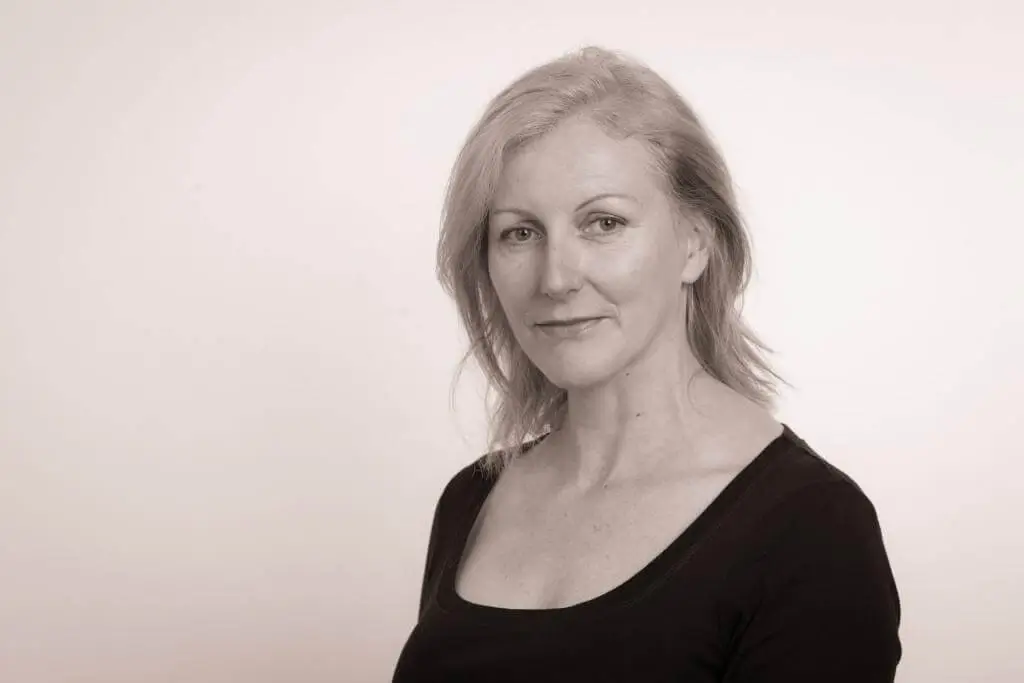
Born in Dublin, Niamh grew up in Paris, in north-west Ireland, and in Washington DC, where she graduated as a visual artist from the Corcoran School of Art.
She worked in the Animated Film industry, returning to north-west Ireland to raise her children. She began writing in 2014. She is currently completing an Honours Degree course in Writing and Literature.
Twitter: @NiamhMacCabe
Website: niamhmaccabe.com
More work by Niamh MacCabe


Tel: 028 7126 6946
Email: hueditor@theverbal.co
Verbal, Stable Lane and Mall Wall, Bishop Street Within, Derry/Londonderry, BT48 6PU
 company
Copyright © 2026 Honest Ulsterman