


A What-If Story
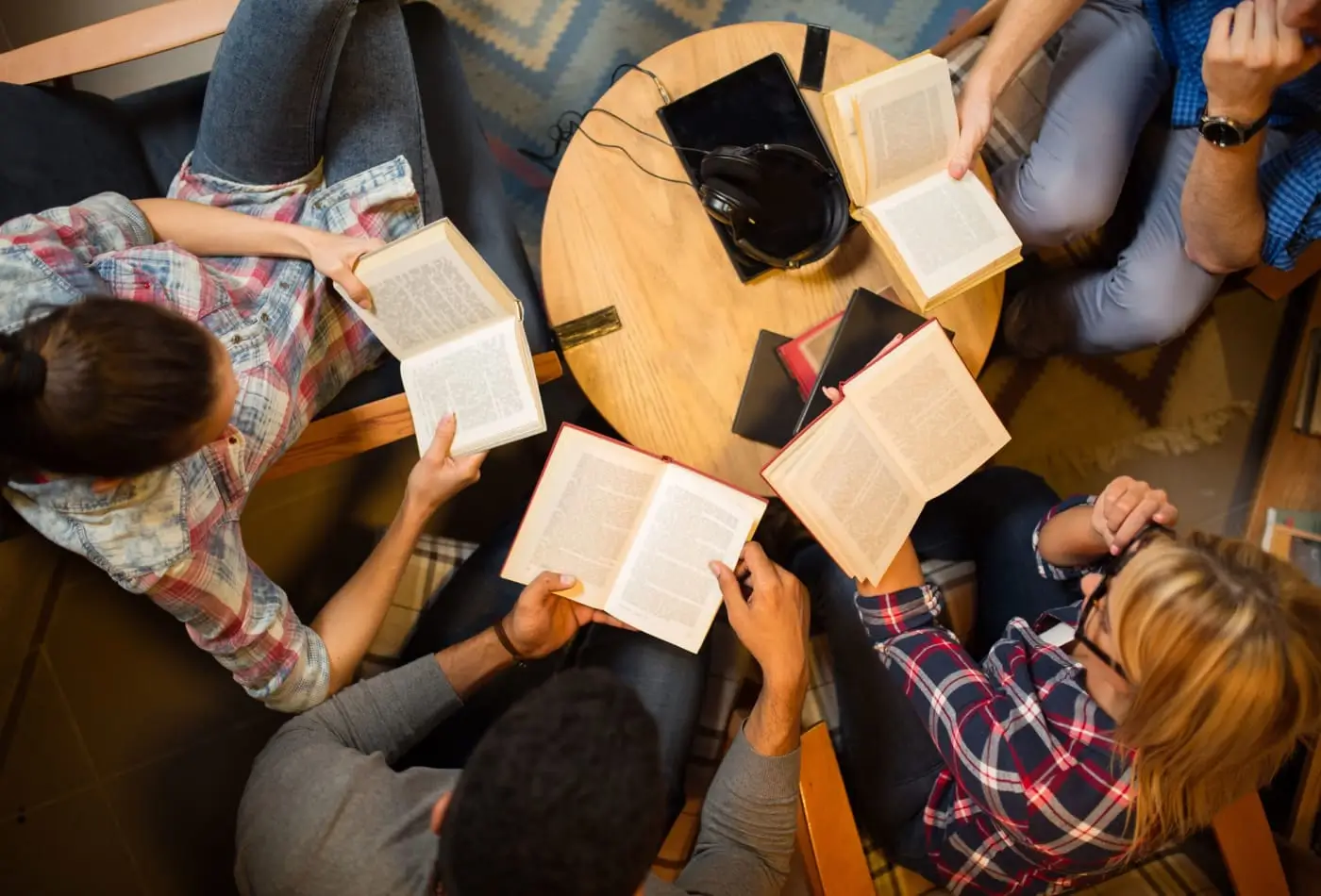
In a university Literature seminar, students discuss Pond by Claire-Louise Bennett. As they offer their opinions about Pond, the students also refer to the novels Harvest by Jim Crace and The Quickening Maze by Adam Foulds. Their module is drawing to a close. Their consideration of Pond is shaped by the course focus on ‘Contemporary Fiction’, of which Bennett’s work is the last example. Their tutor has suggested material to inform their discussion: an article in The Irish Times, an interview with Bennett from The Honest Ulsterman. One student invokes both as she talks through her analysis with her peers:
‘a lot of this article is about the way the author looks at objects, and they mention consumerism and the focus on the object rather than the focus on the human, which is what she [Bennett] mentioned in an interview, which really did interest me a lot actually. Saying that she’s focused on the human rather than on the physical and the object, and the fact that lines are blurred. There’s a passage in the book that I read last night where she’s talking about the oven and how the landlady suggests that her small oven could fit two legs of lamb in it…’
As well as referencing the articles, Helen’s contribution to discussion begins to paraphrase an episode from Pond. She shares with her peers an event in the story she feels is important, already familiar to others through their private experiences of reading the book. Helen’s turn in the conversation re-tells Bennett’s story and invokes related texts to warrant analysis. The blend is consistent with conventions of literary study in higher education, and of talk about literature in seminar discussion.
The seminar discussion is just one instance of people talking about books together which I explore in my research [1]. The study examines the activity of reading together, encompassing shared reading in primary and secondary schools, universities and reading groups. Two decades’ working as a teacher-educator and several years as a teacher of English inform my research focus. Observing new teachers in their inaugural attempts to orchestrate whole-class encounters with Great Expectations, Pride and Prejudice or Lord of the Flies confirmed my own experience that guiding shared novel reading is a difficult thing to do well. Finding a dearth of research to account for the practice, I wanted to examine, describe and reflect on how teachers and lecturers guide conversations for shared novel reading in formal education, and to what effect. I also wanted to learn from reading conversations in less institutionalised settings such as reading groups, where members join to read for enjoyment, and to enjoy reading with others.
When a fourteen year old student articulated his frustration that ‘we have to do these books for our final exam… there are no books that we can read purely for enjoyment’, the tension inherent in institutional shared reading was clear. Older readers said their school experience deterred them from reading for decades, though many are now prolific readers in book groups. The same readers highlighted ‘a really good storyline’ as key to enjoyment, but found their pleasure hindered by literary education that became self-defeating. Inducting students as ‘embryonic critics’ [2], institutional reading sometimes extinguished a love of reading and, at worst, cut them off from the pleasures of reading across their lives. The conversation about a novel shared here demonstrate qualities of reading group talk that could influence institutionalised literary reading for the better. The discussion also illustrates some distinctive traits and achievements of reading conversations where stories are enjoyed, together, for their own sake.
I had the privilege to join the book group conversation of six adults. They meet monthly to discuss a chosen novel over a restaurant meal and a few drinks. This meeting concentrated on Kate Atkinson’s novel Life after Life. The book presents multiple narratives, each outlining one possible life of the protagonist Ursula Todd, born 11 February 1911. In one she is stillborn, in others she survives the Spanish Flu. Several strands trace alternate paths through the Second World War, in some accounts Ursula expressing a sense of déjà vu. The Russian-doll structure of the book, with frequent switching across narrative voices, demands readers’ attention. At this meeting the relationships between different narrative strands were of particular note:
David I can imagine a lot of people starting reading that and giving up.
Phil Yes.
David Because it’s just… you’ve really got to stick with it.
Phil I can imagine some people being frustrated by the…
David Yeah, backwards and forwards.
Andrea Repetition.
Phil …the conceit.
Andrea Well, yeah.
David But you really have got to stick with it.
Phil I can kind of imagine it being one of these box-
Andrea (aside) well, one of my-
Phil sets, where different events… different comp- series come in different epi- different episodes coming out.
Barbara Oh, really?
David It would be very difficult to film.
Eric Oh yeah.
Barbara I mean that I can’t see that it could-
Eric Oh yeah, impossible, impossible, in one film it wouldn’t work, it wouldn’t work in one film.
Barbara You couldn’t do it, no.
Eric but in a sense-
Phil no, but in a series-
Andrea you could do it in a series-
Phil it would work-
Andrea yeah, you could do it in a series.
In the university seminar conversation, students invoked over twenty texts other than Pond to develop their discussion, on more than eighty occasions, across just a few minutes. Referring to these texts supported their analysis, just as citing other texts might support argument in a literary-critical essay. The invocations were also common reference points to aid the progress of the seminar conversation. Similarly, I noticed this book group uses the hypothetical adaptation of the novel for television of film in its own approach to Life after Life. How does that process work, outside institutionalised education and on a social occasion?
How participants introduce texts to reading conversations, and how they voice them when they introduce them, are key interests of my research. The approach follows the tradition of Conversation Analysis, first developed by the American social scientist Harvey Sacks [3] when he attended to everyday telephone conversations. Sacks was more ethnographer than linguist, concerned with how communities and groups understand one another and generate meanings together. My work shares the same emphasis, focussed on the nature of reading conversations, their organisation, what occurs in them and what they achieve. Though researchers have adopted Conversation Analysis to analyse talk in fields as diverse as law, journalism and counselling, its application in education research is relatively limited. In the area of reading research, studies have tended to examine individuals’ reading comprehension. Literary theory has a well-developed repertoire for considering texts, the field of narratology the most relevant to my interest in reading stories together . My research considers how group members converse about – and during - shared reading experience. In the book group exchange, I wondered how the hypothetical visual adaptation acted as a proxy for Atkinson’s novel, and how it enabled the speakers to build their reflection about the book.
Even without adopting the detailed annotation of Conversation Analysis, the transcript suggests participants’ evaluation of the novel’s form. Their discussion continues:
Barbara Well, The Time Traveller’s Wife…
Andrea I never saw it, no.
Barbara That wasn’t as-
Andrea no, that wasn’t such a good film.
David Especially if all the actors are mumbling as well.
All (laughter)
Phil Yeah, there’s a lot of time-travelling series on Netflix, isn’t there?
Andrea But is it time travel?
Phil -don’t know.
David Well, it’s not really time travel-
Barbara no, it’s not time travel-
David is it?
Phil No, it’s a diff- it’s a-
Andrea no, I’m not saying it is.
Phil - different form of it–
Andrea yes-
Phil isn’t it?
David ‘cause it’s only one person doing the-
Eric but it’s just a series of what-ifs -
Phil and the dog, and the dog, you know-
David yeah.
Andrea It’s a what-if book.
Eric (laughs)
David A what-if book, yeah.
Phil Yeah, but it’s got the same theme, because it’s looking at different, different - alternate universes, really.
Barbara But it’s always her. It’s always her decision.
Andrea Yes.
In this sequence, speakers build on the exchange shown in the first transcript around Barbara’s introduction of a specific film, The Time-Traveller’s Wife, and by referring to the novel that inspired it. The reading group members use these invocations as a frame to comment, with great efficiency, on multiple versions of Ursula’s life represented in Atkinson’s novel, how the lives connect with each other, and the extent to which they qualify as ‘time travel’. Phil makes highly specific reference to a detail in the novel, that of ‘the dog’, which evidently needs no elaboration for those present. They accept the allusion without query. The transcripts demonstrate progress from apparently casual conversation - an aside about a possible film version - through close text reference and suggestions of theme, to the group members’ own classification of Life after Life as a ‘what if’ novel.
Annotation for Conversation Analysis transposes the dimensions of sound, time and turn-taking in speech to transcripts on the page. It shows patterns of intonation, the duration of pauses, and moments where the utterances of speakers overlap. In highlighting these details, the approach affords analytic access to the emotions of participants, how they orient to one another and to the objects of their conversation. On organisation of talk, Sacks found that we are surprisingly successful at avoiding overlap, even on the phone, though we may still attempt to contribute as others are talking or also begin to speak. This occurs at a ‘transition relevant place’, a moment when we judge another speaker to have completed a turn. In group conversations, this can happen at moments of controversy or heightened engagement. The plain transcription of the reading group conversation cannot represent speakers’ animation as they debate the merits of adapting Atkinson’s book to film. In this excerpt, now annotated according to Conversation Analysis conventions, the sense of urgency impelling individuals to speak is conveyed in simultaneous overlapping, marked by square brackets:
Barbara [I mean that I can't see that it could]
Eric [oh yeah impossible] impossible you couldn’t
[do it]
Phil [it wouldn’t w-s- in one film
it wouldn’t work it wouldn’t work in one film]
Barbara [you couldn’t do it no]
Conversation Analysis regards this sort of exchange as ‘trouble’, as the rules of turn-taking are momentarily disrupted. Participants’ commitment to consensus is signalled as they express agreement at the same moment, just as what is said signals affiliation to the same perspective. It is not social trouble.
These facets of reading conversations are important to their achievements as collective explorations of narrative. When Barbara introduces reference to the film version of The Time Traveller’s Wife, Phil understands it as a proposal that Life after Life represents time travel through the many lives of protagonist Ursula. Other members of the group, Andrea and David, respond and challenge, David most directly:
Phil yeah there's a ↑lot of time traveling (.) series on
Netflix isn't there -
Andrea but is ↑it time ↓travel
Phil don’t know
David well it's not ↑re:a[lly ↑time trav↓el]
Barbara [>no it's not time travel<]
David =is it
Once David completes his evaluation, his disagreement marked by rising and falling arrows showing varying intonation, Barbara swiftly asserts the point that Life after Life does not represent time-travel. The annotation of greater than/less than arrows shows the increased pace of her utterance, overlapping with David’s comment. She seems to anticipate a transition-relevant place, interjecting before David completes his statement ( ‘=’ shows his turn follows Barbara’s instantaneously, known as latching). The commitment participants show to this debate is sustained in further turns, which exhibit continued overlapping and rising volume (shown by capitals) as speakers begin to assert a new categorisation for the novel:
Phil [NO IT'S A DI- IT'S A]=
Andrea [NO I'm NOT SAYING IT ↓IS]
Phil =different fo:rm [of it]=
Andrea [yes]
Phil =>isn't it<
Barbara well the [inaudible]
David ['cause it's only one] per↓son [doing the-]
Eric [but it's just a series
of [what ifs:]
Phil [>and the dog<](.)and the dog –huh- you know
David yeah
Andrea >it’s a< what ↑if book
Eric urr hahaha:
David a what: if book (.) yeah
Phil yeah: but it's got the same (.) it's the same theme
because it's looking at different (.)
°different° a:lternate (.) universes ↑re↓ally↑
The group arrives at consensus that this novel merits classification as a ‘what if book’, the ‘what if’ formula used by Eric, Andrea and David and finally elaborated by Phil. Conversation Analysis deems this affiliative too, building around shared topics. It is a conversational process by which participants evolve their own categorical terms for phenomena, understood within their immediate community and used as effective resources for communication. Here the category they create is a text genre. The conversation culminates in the analytic achievement of the term ‘what-if book’, a phrase belonging to this book group’s local vernacular of literary criticism and as useful to its participants as the disciplinary discourse might be to students in formal education.
My research into classroom conversations, university seminars and reading group discussion about novels recognises book talk as distinctive speech, each format purposed to analytic and social functions. The books around which these conversations revolve influence patterns and moments of affiliation, as participants re-tell powerful episodes or debate the significance of characters’ traits, stylistic features or story form. The reading group conversation represented here shows members developing an exploration of Life after Life’s complex narrative structure, enabled by linking its many alternate worlds with narratives in other media. Other transcripts reveal different conversational phenomena: how readers invoke novels by embodying voices in quotation, or how they convey episodes through skilful and timely paraphrase. Reading group conversations maintain participants’ pleasure in reading, their desire to read more, and their pleasure in reading with others.
The research helps us identify the qualities of book talk, celebrates them, and accords them value. Literary study in formal education can learn from their achievements, providing teaching can be open to recognising analytic achievements as well as reading pleasure in vernacular expression. What if?
Acknowledgement
This work was supported by the British Academy, grant number MD150021.
[1] Gordon, J. (in press). Researching Interpretive Talk around Literary Narrative Texts: Shared Novel Reading. London: Routledge/Taylor and Francis.
[2] Rosenblatt, L. (1978). The Reader, the Text, the Poem. Carbondale; Southern Illinois University Press.
[3] Sacks, H. (1992). Lectures on Conversation. Oxford: Blackwell.
Dr John Gordon is Reader in English Education at the University of East Anglia, Norwich. He worked as a high school teacher of English and Media before becoming a researcher and teacher educator in UEA’s School of Education and Lifelong Learning. He leads a professional Masters course in Shared Literary Reading, working and researching with teachers of reading in primary, secondary and higher education. John’s research explores responses to literature through conversation in classrooms and reading groups. John is author of Researching Interpretive Talk around Literary Narrative Texts: Shared Novel Reading (Routledge), A Pedagogy of Poetry (Trentham/IoE) and Teaching English in Secondary Schools (Sage). Contact: john.gordon@uea.ac.uk

Dr John Gordon is Reader in English Education at the University of East Anglia, Norwich. He worked as a high school teacher of English and Media before becoming a researcher and teacher educator in UEA’s School of Education and Lifelong Learning. He leads a professional Masters course in Shared Literary Reading, working and researching with teachers of reading in primary, secondary and higher education. John’s research explores responses to literature through conversation in classrooms and reading groups. John is author of Researching Interpretive Talk around Literary Narrative Texts: Shared Novel Reading (Routledge), A Pedagogy of Poetry (Trentham/IoE) and Teaching English in Secondary Schools (Sage). Contact: john.gordon@uea.ac.uk
More work by Dr John Gordon


Tel: 028 7126 6946
Email: hueditor@theverbal.co
Verbal, Stable Lane and Mall Wall, Bishop Street Within, Derry/Londonderry, BT48 6PU
 company
Copyright © 2026 Honest Ulsterman