


Our father was cross when we predicted his death.
‘What?’ he snapped. The television cast colours over him in the gloom; his face flashed faintly red, then green, red again. This is how he likes to sit every evening: in the dark, just him and the screen, very close. Or he says he likes it, though he never looks that way, slumped on the sofa, with his meal of bangers and mash propped precariously on a tray over his knees. His forehead is always scored with lines of dark where the red and green, cannot reach. It is because he has long days – that’s what Mum says. The long days must have large claws to score such a deep scowl.
After a pause, he added sharply, ‘What do’ya mean?’ Finally, he looked over at us; we didn’t answer. To him, we are them or they or you. Sometimes, we are the little shits. ‘I’ll fucking bang your heads together, I will, if you carry on like that.’ He raised his hand, then shook his head, and growled from the corner of his gravy-wet lips to Mum: ‘Keep your kids away from me.’
‘They’re our kids,’ she said quietly.
‘You can keep them. I don’t want them. Freaks.’ He turned up the volume on the telly. We flinched at the sounds of explosions in faraway places, the clatter of guns and the stern voice of the newsreader. More bad things that made Dad frown, scratch his plate as he searched for food on it in the dim light – he thinks everything is going to turn out badly. That the world’s going to the dogs. We don’t have a dog. Dad wouldn’t let us have a dog.
Mum told us that it was bedtime and led us upstairs, out of the dark, into the light on the landing. She put a hand on my shoulder as I brushed my teeth. She saw how the minty taste of toothpaste made me flinch. I hated the cold buzz that settled in the mouth, like static on the telly. Hen was also at the sink, but he did not need a comforting hand – he liked the taste.
‘That’s it, Ben,’ she told me. ‘Good work.’ Then, she shut the door of the bathroom, lowered herself so she was closer to our level, and said, ‘That was not a very nice thing to say to your father.’
We stared at our feet, twitched our toes. We don’t know why we had said it. We only said it because it needed to be said. The words pressured us – throbs in the dark that went to our tongues. But it was not a nice thing to say and we mumbled how we were sorry because we saw how it hurt her.
We traipsed to our room where it was cold because the radiators don’t work. We saw our breath billow in front of our faces and we pretended we were smoking like Mum used to. We undressed, then quickly pulled on pjs with orange and black stripes on them – the tiger cub pyjamas, Mum calls them.
Mum shut the wardrobe firmly after us, then stood at the window and waited for us to be ready, before she tucked us into our bed, gave us a kiss, one each, and a single whisper goodnight, for us to share, as she closed the door. We are good at sharing: socks, heat, sentences. We never try to steal the covers from one another during the night. Mum always tells us that we should stick together. We got close, pulled the old covers tight so we did not shiver. We listened to the voices that raged under the sounds of the telly.
Like we always do.
Like we are doing now.
His voice and her voice and the voice of the newsreader all mingling together – all of them hard, urgent and threatening.
At nighttime we are wise. As sleep weighs down on us, we feel a kind of waking up: as the room gets darker and our bodies grow heavier, our minds shine, become buoyant, as if about to fly free. We are always nervous before becoming wise, try to stop it from happening and keep talking to each other, nudge the other awake if he falls asleep. At the end of a bad day, we quietly cry. Bad days are the best and worst times to have wisdom.
There are signs before the wisdom starts. The dark becomes thicker. All we can see is the line of light coming in from the landing under the door, and the distant flashing of planes through our bedroom window. We hear the click of the bathroom light, the water gargling from the taps as Mum and Dad get ready for their bedtime. They do not speak. There are only the sounds of brushing and spitting. We never go to sleep before they do.
Click. The bathroom light goes off. Click. The landing light goes off. All dark now, apart from the glimmer of planes. We hear footsteps. We hear a door shut.
We close our eyes and inside our heads a door opens. There are steps that lead downwards into a grotto where we can see nothing apart from the slight sparkle off the stone as if stars are caught in the walls. These steps are the only way for us to get from one day to another. We cannot go any other way: a day is a labyrinth not a maze, and a labyrinth only has one winding path. We know the difference because we are wise and note things well. We ache with cold from the stone. We see the light and know it is time.
Time to be wise. Which means we dream. And dreams go through details, and details are where God is – so Mum always says. Where the Devil is – so Mr Palmer always says.
And two heads are better than one – this is what Mum tells us – so we share our dreams. In the night we remember, we relive the day again. The sun wakes us. We count the motes that shimmer above our visible white breath. Our nighttime selves who relive the day see more clearly: we know the number of the motes, can recite from memory all the words we see on the back of the toothpaste tube and the shampoo bottle, can recall the glimpses of things that we only saw in the corners of our eyes.
We know what will happen. We will get up again, get dressed again, have toast and chocolate spread again, go to school and swim again, and Mum will collect us at the end of the day, and we will wait and play and when Dad comes home we will tell him that he is going to die. We know all this because we have lived it, and will now see it one more time, do the day again. But first we pretend to be asleep as we do every morning and wait for the twist on the door handle.
‘Guys,’ Mum murmurs. ‘Time to get up.’ And she whistles softly. Together, at the same time, we look up, throw aside the bedsheets. She stands there in her dressing gown, hugging herself, and then does the same to us, holding us close. She smells of night. Her hair is brown with glistening grey streaks running through it. ‘Now, let’s get you showered, shall we?’ After our showers, we get dressed. Our clothes have a slight lemon scent.
Over breakfast, we tell Mum how our toys, those most prized to us – our Lego with which we build forts, our globe with the names of all the capital cities on it, our magnifying glass – have been going missing one by one. ‘They’ll turn up’, she says, ‘they’ll turn up.’ Then she rushes upstairs. There is the sound in the toilet bowl she makes, and she returns to us pale, shaking slightly. We find that our videos have vanished: our cherished Looney Tunes collections, the much watched Basil the Great Mouse Detective. ‘They’ll all turn up. I’m sure,’ she says. ‘In time.’
It is time to leave. In the car we listen to the radio and hum along to the jingles.
Then it is school time. The bell calls us into class where we write the date: 10th December 1998 in our books for a second time. We are writing about Constable. He was a painter. Our minds are filled with haystacks. We have to paint the haystacks and we get yellow spattered on our cuffs.
Playtime is short and cold. Afterwards we have to go swimming. The pool is deep and cold. The stench of chlorine clings to our skin. We know what will happen. How when we change back into our uniforms, we will recall the number of times that the shower next to us drips (thirty three), how Kevin will cry because he had forgotten his kit and was forced to swim in his pants, how we will be let out to lunch three and a half minutes early.
In the corner of the hall where we eat, we chatter low with each other plotting how we will get unseen from one side of the playground to the other. Nearby Miss Kidd and Mr Palmer also talk low, but we talk lower so we can hear them.
‘I don’t think I’ve ever seen the twins apart,’ Miss Kidd mutters. ‘Joined at the hip.’ She is wearing smart trousers and a red jumper.
Mr Palmer shakes his head. ‘The McConnells? Welded at the brain. They think alike and everything.’ To him we are the twins or the McConnells or double trouble. But Mr Palmer does not want to talk about us. We can tell. He wants to talk about them, about the possibility of them – there have been songs sung in the frost-pale playground: Mr Palmer and Miss Kidd sitting in the tree, kay-eye-es-es-eye-en-gee. He usually has stubble on his chin, but today he has shaved. ‘So –’ he begins.
She interrupts. ‘What do you know about their family?’ Miss Kidd wants to talk about us: she does not want to talk about them.
She kneads the back of her hand with the fingertips of the other.
‘I’ve only met the mum.’
‘And?’
He shrugs. ‘She looked tired. Like all the parents. They all look the same.’
She shakes her head. ‘That’s a horrible thing to say.’
‘Maybe.’ He tries to meet her eyes, but she is looking at us.
‘Which is which?’ she asks.
‘One’s called Henry. The other’s called Ben.’
She does meet his eyes now: this time with a pointed stare. ‘Which one is which? You had them in your class for a year.’
‘The one on the left is Ben; the one on the right is Henry,’ he answers quickly, wrongly.
She stops, seeing us looking. ‘I need to go powder my nose.’ She smiles at us and we feel warm, we feel brave and able to cross the playground unseen and unheard. We will use the climbing frame, the elm tree, the toilet block as cover.
Sometimes, we call each other by the other’s name to test people. Teachers tell us off for this, but most of the time they do not notice. The kids at school call us names that are not our names. To them we are the gay lords, the McStupids, the weirdos. They’ll come up to us on the playground and make sounds like the hyenas from The Lion King because we like to hold hands. When Rick sees us doing that, he jabs the tips of his forefingers together. But we have planned not to be seen by Rick who never wears his tie properly, by Katie who has sharp nails, a mean pinch, by Ant who always pushes when we line up for assembly. We shelter under the tree that leans over the school fence from the graveyard, wait for the moment where we can run unnoticed behind the climbing frame.
We know we will try too early. We know Rick will be there with the tips of his fingers, with names that are not ours on his tongue. A minute later would have been best. The second time round we have a better sense of when to run. But our nighttime selves, we do not do anything differently, we follow our days to every detail, track the labyrinth all the way round. This is the only way.
Home time. Miss Kidd looks out from the Year Two classroom. We wave at her, but she does not see us. This makes us sad as her waves would be a comfort. Mr Palmer is talking to the mums outside, occasionally glancing at the window where Miss Kidd stands. He makes the mums laugh. Miss Kidd laughs too, though we cannot hear it, and we think she laughs for different reasons. On the first day of school, when the mums saw us, they did a double take, had to look again. Tom’s mum, the tall thin woman who always waits for Tom by the climbing frame, said we were uncanny.
‘Hello, Ben,’ Mum says to me.
‘Hello, Hen,’ Mum says to him.
She knows the details that tell us apart.
She drives us home. We eat bourbon biscuits with orange juice; we watch cartoons. Mum tells us to change out of our uniforms, but she lets us do it in the lounge because our room is cold. We change into matching green t-shirts and jeans and then put on thick white jumpers. They are warm.
Dad arrives home, slamming the door. He is full of mutters and shouts. It is now dark outside. It is soon dark inside. He likes to watch telly in the dark. He likes to eat dinner over telly and for there to be quiet while he watches. He is now gulping down his seconds, face going red, going green, going red again as the screen flickers.
We approach him.
Most of what we learn in the days between days, we forget. There is too much there. But sometimes we remember. Just a little. A small thing gathered from going round a second time and seeing it all again. Dad does not see the details as we do: how my left eye is lower than my right and Hen’s eyes are level, how the clocks went back four weeks and two days ago, but all the clocks in the house are still unchanged, how we have crossed the lounge on tip-toe and seen him on her with the sofa creaking, her asking him to stop.
We see the bags beneath Mum’s eyes, we see the hard look above the bags, we have seen the cigarette packet, almost full, that she threw into the bin. We see how she keeps lemons in our wardrobe, how she sucks on them in the morning, and then puts a finger to her lips. We see how she refuses wine with a silent raising of her hand, and how she climbs the stairs more slowly, carefully. We spy these things with our little eyes. And in this moment, during the dreaming, we understand why we say the things we say, and how the details fit together.
We tell Dad that he is going to die.
‘Can’t you keep your kids away from me?’ he says to her.
‘They’re our kids,’ she says to him.
‘You can keep them. I don’t want them. Freaks.’
We see how, as he turns his head back toward the television, jamming up the volume, she nods. So we become hers, and hers only. We told him he will die because Mum makes the dinner, and without food you cannot live.
We are taken upstairs, we brush our teeth, we shiver in our room and dress, just as we did the first time round, and then we will go to bed and have normal dreams, and find our way out of the labyrinth into tomorrow. We do not think tomorrow will be greatly different from today, another variation on the theme of getting up, going to school, coming home, and then doing that day again in our dreams. But we know the day will come when we will not go to school, and Mum will take us somewhere else where it is warm and light. Because that is the only way. And Dad will come back to a dark house, empty of us, and empty of Mum. The entire house will be cold.
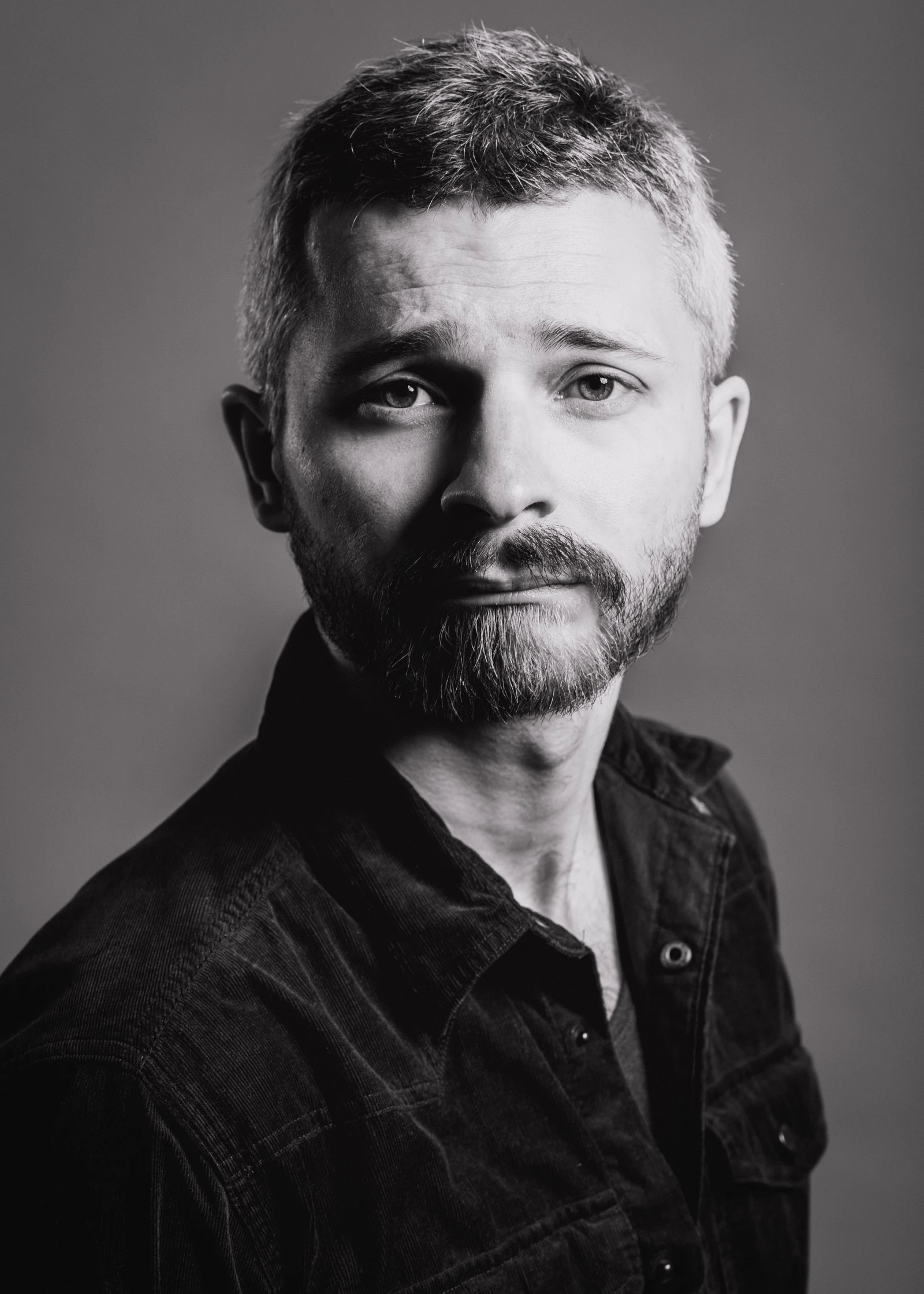
J. S. Loveard is a writer from the UK. A graduate of the doctoral programme in Literary Practice at the University of Warwick, he has been published in Banshee and 3:AM magazine. He lives in Leamington Spa, England.
More work by J.S. Loveard


Tel: 028 7126 6946
Email: hueditor@theverbal.co
Verbal, Stable Lane and Mall Wall, Bishop Street Within, Derry/Londonderry, BT48 6PU
 company
Copyright © 2026 Honest Ulsterman