


features
“Poetry is part of a family of arts that are richer when they talk to one another:” An Interview With Kathleen McCracken
by Katharina Maria KalinowskiKatharina Maria Kalinowski interviews Kathleen McCracken.

Kathleen McCracken is the author of eight collections of poetry including Blue Light, Bay and College, shortlisted for the Governor General's Award for Poetry, and a bilingual English/Portuguese edition entitled Double Self Portrait with Mirror: New and Selected Poems. She was a finalist for the WB Yeats Society of New York Poetry Competition, the Montreal International Prize for Poetry, The Walrus Poetry Prize, and the CBC Poetry Prize. In 2019 she won the Seamus Heaney Award for New Writing. She has held several Ontario Arts Council awards and an Individual Artist Award from the Northern Ireland Arts Council. Her poems have appeared in The Malahat Review, Poetry Canada Review, Exile Quarterly, Poetry Ireland, The Shop, The Belfield Literary Review, New Orleans Review and Grain, and she has given readings in Canada, Ireland, Portugal, Brazil, the United Kingdom and the United States.
Katharina Maria Kalinowski: Kathleen, thank you so much for taking the time to sit down and talk to me about your work. You've been involved in so many projects over the years, and there are a lot of questions I would like to ask you about your poetry, your artistic practice, and your critical work. But I’m actually going to start with a very recent collaborative project you've been involved in, which is the foundation of Macha Press. I believe it's the first collectively run press on the island of Ireland. Could you talk a little bit more about it?
Kathleen McCracken: Macha Press is a cross-border non-profit publishing initiative that was launched here in Belfast on August 15th. It is a collective founded by seven poets. The idea originated with Natasha Cuddington, who is a Canadian poet but, like myself, has lived in Northern Ireland for many years. The other poets involved are Siobhan Campbell, Ruth Carr, Shannon Kuta Kelly, Alanna Offield, Lorna Shaughnessy, and myself. We’re all based on the island of Ireland, but we have international and intercultural connections and interests. Each of us has worked across different art forms and disciplines including film, photography, music, and theatre. We have been involved in collaborations with writers from other cultures, and are interested in collaborating with each other and with the writers we publish. Collaboration is central to our ethos.
The name is pronounced “MAKH-uh”, and it's drawn from the eponymous and pregnant goddess who runs through the Ulster Cycle. She appears in various Irish and Scottish incarnations, as well as in other cultures, and is usually associated with fertility and power. In Gaelic the word “Macha” also means a geographic plain, an open space for boundless possibilities, so we wanted that implication as well. And there's a hint of the Scottish word “Makar”, which means poet. We're interested in work that is formally hybrid, interdisciplinary, and innovative in terms of form or content; that is intercultural, either nationally or internationally. We are attuned to marginal poetries. We’re open to work in translation and also endangered poetries, poetries that have been created historically and might not be recovered otherwise.
We plan to publish two books per year, one by an established writer and one by an emerging writer, or a historical work that we think is deserving of recovery. I want to say a bit about the production of the books. We are keen to ensure that each book in itself is an elegant artifact. So we are placing a lot of focus on design, the visual presentation of the printed words, the texture and quality of the paper, the use of space on each page. All Macha books will have a square shape, allowing for greater play between text and space, more formal and structural innovation than the conventional rectangular book affords. We are paying close attention to font, the type, the size, the colour. In all of this, we've had the good fortune to have the input of Sophie Herxheimer. Sophie is an internationally recognised artist and poet. She's designed our colophon, two back-to-back horse’s heads (horses are one of the goddess Macha’s attributes) as well as devising the colour palette and other associated artwork. Our graphic designer is Julian Manev, who is an award-winning architect based here in Belfast. Julian has brought truly outstanding skill and vision to the first book we are publishing.
That first book is by Belfast poet Eilish Martin, and it is entitled ! All’arme / ? And what … if not. It is a tête-bêche book, a head-to-toe book, that reverses so there are two books in one. Each book consists of a long poem sequence, and in the centre of the book there is a reproduction of Eilish’s visual art alphabet sequence. ! All’arme / ? And what … if not will be launched in Ulster University's Art Gallery in Belfast on October 17th, and an associated exhibition of Eilish’s artwork, including the original panels for the alphabet sequence, will run for two weeks either side of the launch date in the University’s Birley Building. Our second book will be by an emerging poet, and is due for publication in May 2025. There's a funding structure on our website (www machapress.com), so that readers can become subscribers to and supporters of Macha Press, that's how we're organising the income for our non-profit organisation.
KMK: That's so exciting. And I was really excited when I first read about Macha Press, about its ethos and focus on experimental work, because to me it feels like a lot of things are bubbling up at the moment; it feels like there might be a growing interest in experimental work in Ireland. With that in mind, could you maybe comment a little bit on how the press fits into the current literary landscape on the Irish isle?
KMcC: Macha Press is our collective response to the limited number of publishing outlets for poetry in the Northern Ireland and also to our awareness of the wealth and variety of poetry currently being produced across Ireland, which we believe merits a greater choice of publishers. We don't see ourselves as competing with any existing publishers, but rather as being complimentary. It's important to emphasise that.
I think ‘experimental’ is maybe an overused or even a misused term in relation to poetry. In a sense, all poems are experiments, which means all poets working in Ireland and elsewhere are experimental. Innovative is possibly the more appropriate word. At Macha Press we are interested in work that's challenging received notions of what a poem is or can be, that's pushing form and language in new directions, that's doing unexpected, thoughtful, original things with the text itself, with the texture, the physical appearance of the book, but that stays faithful to poetry's roots in language, while also being willing to dialogue with or extend towards other art forms.
In terms of the relation between experimental poetry and Ireland, the received notion seems often to be that Irish poetry is comparatively conventional, traditional, lyric-centric. In fact, and you'd probably agree with me, there's a lot of innovation going on, especially amongst younger poets. They appear to be compelled to write more openly and passionately about gender, sexuality, ethnic diversity, immigration, war, etc, in ways that are adequate to or represent the complexities of the contemporary world, and very often that requires breaking with lyric form.
I think Irish poets generally are tending to look to more international models now than they might have been a generation or two ago. Some North American poets, for instance Anne Carson, Claudia Rankine, Jordan Abel are experimenting with poetry in ways that encourage poets here to move in similar directions. I’m thinking of Christodoulos Makris’ intermedia projects, Tara Bergin’s single-line sequences, Julie Morrissy, who's hybridizing poetry and documentary and theatre. Natasha Cuddington is working with sound and design; there’s Gail McConnell's work, Eilish Martin… These poets and others are working with disruptions and reinventions of poetic form and language. Readers, it appears, are intrigued by and accepting of that turn to such surprising and challenging strategies, so hopefully Macha will add to the publication and the dissemination of that kind of work.
KMK: I think it's an exciting time for poetry everywhere, because, as you said, poets are trying to respond to all the challenges and complexities of a global world and everything that's going on.
KMcC: The way the media operates in our world means we're constantly looking at screens, whether it's television or computers or cell phones or e-readers. There's so much diversity now in the way words and indeed narratives are presented, and that too has contributed to difference in poetry; poets are inventing different ways of making texts impactful and finding a medium that's in keeping with our lived experience.
KMK: I definitely want to come back to the word experimental in a minute. But can I just ask you about your impression of the relationship between the North and the South in terms of literary activities and scenes – do you think there's a divide, or is it not really tangible?
KMcC: I can only speak for my own experience here, but I have found that relations between literary communities North and South are reciprocal, cooperative, supportive. For instance, the Irish Writers Centre in Dublin is open to writers from the North and the South. It hosts events, workshops, launches; it encourages membership and mentorship from poets across the island. The wonderful Irish Poetry Reading Archive, held at University College Dublin, contains audio recordings of readings by Irish poets resident in the North and the South and further afield. The most recent issue of Poetry Ireland Review was edited by the poet Mícheál McCann, who is from Derry; it features work by Irish, Northern Irish and international poets and it was launched at No Alibis bookstore in Belfast. Also, emerging poets from North and South are undertaking MAs and PhDs in Creative Writing; students from North are going to Trinity and UCD and Galway, people from Dublin and elsewhere in the South are coming up to Queens and Ulster University.
And there have been plenty of cross-border literary arts projects and bodies down the years. So, generally, I don't think there's any significant divide. No doubt there are cliques and factions; poetic space can be fractious, and I should say that I'm pretty much an outlier when it comes to those things. But my overriding sense is that the relationship is one of mutual interest and advancement of the writing and publishing of poetry on the island of Ireland, and further afield. So, in terms of North-South, I think it's more supportive than it is divided.
KMK: That's encouraging to hear. And, as you said, I think we can't really afford to build these animosities as poets, we kind of need communities and collaborations.
KMcC: Well, I may be naive, but I've given readings and been involved in symposia and discussion panels North and South, and feel I've been welcomed in Dublin just as I have been in Belfast. Granted, as a ‘blow in’ (albeit a resident of over 30 years!) I suppose I will always be something of an outsider in either country. Basically, I think people who love poetry just want to read accomplished, exciting poetry, no matter where it's being composed.
KMK: Can I go back to the word “experimental” or “innovative”, if you prefer that one. Can we talk a little bit about how you use that word in your work, or how you relate to that word, especially thinking about your background in Canadian poetry and how you've been influenced by different poetic traditions?
KMcC: I think innovation or experimentation means to me what it means to Macha, to our collective, in that it means finding ways to challenge myself, stylistically, technically, formally; finding words and rhythms and shapes and structures that can adequately express the ideas, emotions, perceptions that I'm trying to convey in my writing.
The topic, the subject, whatever it is I'm writing about, generates how I innovate formally and technically. The voice I hear in my head dictates how the words are positioned on the page. I started out writing lyrics, and published several books that were fairly conventional collections of short free verse.
Before too long I moved on to collaborations, specifically verbal/visual collaborations, whether that meant writing ekphrastic poems or actually collaborating with visual artists. The very first book I had published was the result of a commission I was given one summer during my high school years. It was a project funded by the Ontario Board of Education, and I worked with a visual artist, Paul Welch, writing poems about one-room schoolhouses in Ontario. Paul did pen and ink sketches that related to the poems. I suppose that was the first experiment I undertook, in terms of collaboration. Across the years I’ve written book-length sequences of poems, collaborated with painters and photographers to interleave their images with my poems, and in 2014 I worked with the Brazilian scholar José Roberto O’Shea as he translated my Double Self Portrait with Mirror: New and Selected Poems into Portuguese. Recently, as you know, I was involved in a collaboration with the filmmaker and photographer John T. Davis. Together we created a poetry/photography exhibition and filmpoem entitled Mustangs, or The Ballad of Gideon Light. The exhibition was mounted in Ulster University’s Art Gallery last April, and the filmpoem was screened in Queen’s Film Theatre at the same time.
I'm currently working on a novel in verse. I wouldn't say my work's radically experimental, but I do think that, as my practice has evolved, I've pushed at boundaries that I felt were restrictive or limiting. I know there are much more radical things to do with the poem on the page and the stage and indeed on the screen, but I think that what innovation means to me is constantly challenging myself and moving on from what I've done before.
KMK: What really strikes me about your work is how your words never seem to rest on the page but, as you said, push at boundaries and reach beyond; they become maps, songs, images, and, perhaps most evidently, photographs, inviting the reader quite literally to, as you write in one of your collections,“Picture it. […] Hold it one sixteenth / of a second. And move on.” (from “Snaps”, Blue Light, Bay and College) I was wondering if you could talk a little bit more about the idea of reaching beyond, to other art forms, particularly the visual arts. As you’ve said, you've recently worked with a filmmaker and photographer. I’m curious to hear more about the process of turning your poem into a film.
KMcC: For me, poetry is part of a family of arts that are richer when they talk to one another. I'm drawn to visual art and try not so much to make a poem narrate what I see in a visual image but become a visual image, if that makes sense. I've tried to write some poems that work as if they were films, by which I mean they achieve meaning via linguistic and structural equivalents of ‘jump cuts’ or ‘pans’ or ‘long shots’. That kind of associative juxtapositioning in terms of the narrative and imagery isn’t unusual in poetry of course, but I think in some way that’s part of my poetics, to reach towards interart dialogue. For me, that's a rich source, to see the poem in or as the painting or the photograph, or to allow the music or the film to feed into the poem, to shape its content and its contours.
Mustangs, or The Ballad of Gideon Light started with the question of whether a poem could consist of only one word. Initially I wrote this throwaway two-liner (a title and a one-word poem) – ‘Poem Telling A Story In One Word // mustang’. But that word, and the idea of building something around it, stayed with me. A mustang, of course, is a North American wild horse, it's an emblem of freedom and the American West, and conversely it summons up all the exploitation and depredation that is happening to those priceless environments and their inhabitants. There are other co-options of the word too, like the World War II fighter plane, the Ford convertible, sports teams. It was a word that, for many reasons, resonated with me. I started writing these micro poems that were two lines long, plus a title, so three lines each; but my rule to myself was that each one had to have the word “mustang” in it once. It was just a kind of fun exercise to begin with, but they accumulated to the point where I had 150 of them, in effect a long poem full of cross references and sonic echoes, all of them focussing on this shape-shifting figure called Gideon Light, or Mustang, a drifting lost soul who is part human, part horse and who is heartsore over the effects of appropriation, urbanization and the climate crisis on his western homelands. When I started to perform the poems John T. Davis, who is also a musician and songwriter, accompanied me on acoustic guitar. At the same time, we started thinking about how we might combine the poem sequence with some of his black and white photographs of western landscapes and landmarks. John made a film in 1984 called Route 66 about the highway across the United States, and during the recce he'd taken a series of black and white photographs. There was an amazing fit, or dialogue, between those photographs and the poems, where the poems charted Gideon’s inner life, his emotional responses, the photographs documented the locations and landscapes he moves through. So we chose a selection of photographs which we then had mounted and interspersed with my poems; there were three poems per board and together with the photographs they were arranged in the gallery in a linear shape, like a road. And that led to thinking why not make a filmpoem as well, so John edited colour footage of New Mexico, Wyoming, Texas, Montana he’d shot in 2014 with my voiceover reading 50 of the poems and his original music score. During the Mustangs, or The Ballad of Gideon Light exhibition, the filmpoem was on a loop in an adjoining gallery, as well as screening in QFT. So it was a nexus of poetry, photography and film events. I really enjoyed the process, and I think John did as well. It was a challenge to him. He hadn't made a filmpoem before, and while I had studied filmpoems and talked about them in an academic, critical sense, it was great to have the opportunity to be involved in actually making one.
KMK: That's fascinating. I really enjoyed watching that filmpoem. Did you see all the poems working as short poems on their own? It’s interesting to hear you mentioning long poems, because, as you just explained, the Mustang poems initially started off as really short one-word challenges that then turned into this longer form.
KMcC: It's interesting you quoted that line, “Hold it one sixteenth / of a second. And move on.”, because that poem is asking the reader to think of it as a photograph. When I started writing the Mustang poems, I remember saying they were like Polaroid shots, each one had a story in its three lines. And then, as they developed, and were so obviously linked by the repetition of the word mustang, and as the character of Gideon Light emerged, it was clear they constituted a long poem rather than a series of individual pieces. I'm interested in the long poem form, I've written a couple of other sequences. One is about my father, it’s called “Snow Tea” and is in my collection Tattoo Land. Across a single book my poems interrelate, they don’t exist in isolation from one another. But to answer your question, I suppose the individual Mustang poems work independently as well. At the exhibition launch one of the guests told me she wanted to have one of them tattooed on her arm – I was really chuffed!
KMK: When I was watching the Mustang filmpoem, I noticed the term “sacrifice zone”, which Naomi Klein has written about, and you also mention “slow violence”, which is a term Rob Nixon works with. I'm curious to hear how your critical work feeds into your, for want of a better term, “creative” work. Is there an overlap between your research and your poetry?
KMcC: For me, there's a close relationship between writing and research. It mightn't always be categorised as “academic research”, but to write something, anything, you have to do the research. So I'm always reading – to get the facts right, but also to enter into that world. That poem about Gideon Light, it's a study of masculinity in some ways, but as I’ve said it's also my critique of what's going on in the North American continent in terms of environmental depredation. So I wanted to have Mustang/Gideon observing the current state of western Canada and the United States. That's why I brought in sacrifice zones and the idea of slow violence, I wanted it to raise consciousness, as I say in one of the pieces, the “cankerous mouth of the Mississippi”, the tar sands in Alberta, the drought and the water wars. I don't know when I first encountered those particular terms, but they became terms of parlance as I became increasingly aware of what was happening to the environment in those regions. At the moment, I'm writing a poem that has a lot to do with family history and World War II, so I'm reading in both those areas. I travelled in the West quite a bit before Mustangs was written. So the research is lived experience as much as academic study. In terms of research and writing, though, I think studying other poets’ work teaches us how to write. For 30 years, I was a lecturer in Contemporary Literature and Creative Writing at Ulster University, so encountering other writers’ approaches in a teaching and research capacity has helped to hone my practice as well, has helped me think objectively and critically about my own work. Mentoring creative writing students, you're dialoguing with students and that feeds back into your own work, too, in terms of how you’re trying to help other people think, “that doesn't work, how do I make it right?”
KMK: I find the idea of research more or less being everything that you do really intriguing.
KMcC: I wrote my MA thesis on Paul Muldoon’s early work, and whenever I’m in Paul’s presence I notice how interested he is in absolutely everything. He's either asking, “what is that spider doing over there,” or, “why is that crack in the sidewalk,” or, “how is that roof constructed?” That way of being curious has influenced me, and it's not exclusive to Paul Muldoon. The research is ongoing; even when we're asleep, well, we keep our dream journals, don’t we? Life is research.
KMK: I think that's a wonderful idea. Talking about inspirational models, can I ask you about Paul Durcan? I believe he's been a great influence for you over the years. And, going back to the idea of how different arts interrelate in your work, including even your “academic” work, you have a really nice quote from Paul Durcan in one of your papers, where he says that “poetry has to be fundamentally cinematic and photographic and painterly as well as musical. I see no ultimate distinction between the different ‘arts’.”
KMcC: I’ve always loved that quote from Paul Durcan. I’ve studied his poetry closely and published several essays about it. He was a mentor to me. What really struck me, amongst many things, was his engagement with the other arts, particularly painting. He has two or three collections that respond to paintings in different galleries. One of my collections, Mooncalves, includes paintings by various Canadian painters, and some of the poems were written out of looking at paintings or photographs. Paul’s poems are deeply engaged with ekphrastic process, and that appealed to me. And also that idea of the arts being interrelated, that poems are fundamentally cinematic, photographic and painterly, as well as musical, that idea of the arts dialoguing. I found a kindred spirit, I suppose, in Paul's work, in his poetics.
The sister arts, painting in particular, have sparked thousands of dazzling poems throughout the centuries. But rather than the poem giving or imposing a narrative on the visual or the plastic representation, simply describing or interpreting it what I'm more interested in is what I would call a third or energised space or moment that comes about when language and the visual image or the sound, the music, come into contact. I suppose it goes back again to what I was saying earlier about the filmpoem and the exhibition. I'm interested in that charge, that sort of electricity you get when the two different forms, disciplines come together and ask you to see what you can make of their contact. That's what's really interesting to me, to find out what that third space or moment is that comes out of the encounter.
At the same time, I recognise that visual and verbal art are distinct. They require different materials. One's spatial, one's temporal. There are debates that go back to Laocoön about the differences and the similarities between the ‘sister arts’. So again, I think for me it’s about that sweet spot, that pivot point, where two or more arts engender that new electric perception so that we see things in a different light because of their dialogue
KMK: I love that idea of art becoming transformed when it gets into contact with another art.
KMcC: I like to feel that happening. It’s something to work towards, that electricity, that third space.
KMK: In one of your papers about Paul Durcan you talk about the issue of identity as well, about self-perception and the “gap between the poet and the poem”. I was really intrigued by that. You also write that the relationship between writing and the writer is one of constant estrangement. Is that something that comes up in your practice as well, that element of estrangement or maybe surprise?
KMcC: In that paper I was talking about the way Durcan puts a figure into his poems called Paul Durcan and what that says about the relationship between the writer and the text. I think it's a way of drawing attention to the fact that this is made work, it’s artifact, art, that even when it looks autobiographical, there's always that gap, that distance and difference between an artist and their creations. Sometimes people have construed my work as autobiographical, and of course it starts in my experience. But there is a gap, there is a distance. The poem is of me, but it exists at greater or lesser tangents from me. The voice that I hear saying the poem is not exactly my voice as you're hearing it now. It's a kind of idealised, androgynous voice that gets beyond the specifics. Something interesting happens when I read one of my own poems. I think I know exactly how it should be said and read, performed if you like that word. But there is also a gap, especially if I go back to work that was written quite a few years ago. Sometimes I almost don't recognise it; at the same time I know how it should be enounced, but there is a sense of estrangement, too. As many writers would say, once the poem is birthed, it's out there in the world. It's not you, it's not part of you anymore. It’s a hard question to answer, but I think, in a way, that's what Paul Durcan was trying to do by putting Paul Durcan in certain poems. Other people have done it as well; in some of Paul Auster’s novels there's a character called Paul Auster, it seems to be a way of saying, “this is not me, because here's a character called me, called Paul Durcan, or Paul Auster.” I haven't put my own name into a poem, but yes, I do feel there's a sense of estrangement and yet profound familiarity, too, between the self and the poem.
KMK: It’s funny with poetry, isn’t it, how readers tend to assume the lyric I and the poet are the same person. That paradox of estrangement and familiarity makes me think about your Mustang poems again. One of them has these wonderful lines, “Double Self Portrait with Mirror // who’s the Mustang / is it me or is it you?” which again seems to echo those questions of identity or sense of self or selves.
KMcC: I did think of that line as being a direct question to the listener, to the reader; an invitation be actively involved in the world of the poem, to shift position and acknowledge their role in making meaning. It was a gesture towards the complex, dynamic relationship between reader and writing and writer and writing.
KMK: I suppose, in a way it’s a trialogue, isn’t it, not just a dialogue. It's not just the poet and the poem, there's also the reader.
KMcC: Yes, that’s a nice way of putting it. Some readers have asked why my poems aren’t more openly autobiographical. There have been certain events in my life that I've never written about. As a female poet, you sometimes feel pressure to write about the personal, because for women so much of our experience was suppressed for so long and now that we can write more openly there is a certain obligation. When I have written about what is most personal to me, I’ve tended to do so obliquely, ‘slant’ as Emily Dickinson puts it.
As regards estrangement, I've written a number of poems in the voice of others, and I know that can raise the appropriation question, but on that I think as writers imagining ourselves in the positions of others is an essential skill, but we do have to be informed and respectful when we do so. Perhaps the masks and voices I’ve constructed have been a way of avoiding writing about personal experience, and that engenders a kind of estrangement from the self. I'm working through this idea of estrangement… Even in the poems that are more personal, such as those about my father and his death due to cancer, delving into and writing about our lives together was an emotive experience for me, yet there's a distance in the poems. I was aware of avoiding sentimentality. Estrangement can be built into the way poets use language, as a distancing technique.
KMK: Do you think your sense of self, or the distance, or let’s say the relationship between the poem and yourself has changed with moving from Canada to Ireland? How is it related to place?
KMcC: I've always been deeply affected by place, by landscapes and physical environments, perhaps more than by people. Many of my poems respond to wilderness, open spaces, the trees, the lakes, mountains, the horizon line. It matters to me to pay attention to what the physical space around me is doing, to get a sense of its personality, the web of relations that make it a dynamic, living ecosphere.
Being here, on the island of Ireland, I've responded in certain poems to the immediate environment. But I still write more about Canada. We think of Beckett or Joyce leaving home places yet coming to understand and feel and write about those places more intimately when at a distance. I suppose “thickening” is a word that comes to mind; there’s been a thickening of my connection to my home places. I have a poem called ‘Today I Should Be In Medicine Hat’ which talks about always seeing some aspect of home in the ‘adopted’ country: ‘Inside the magpies / There are cardinals … Inside the Mournes / There are the Rockies’. Most of my poems about Canada have been written since I've lived in Northern Ireland. And I wrote about Ireland when I was younger, before I came to live here, because I desired to be here. It's that thing of being at a remove from what in the mind become ‘holy places’ that often kick-starts the writing.
KMK: Maybe it's again that sense of being estranged from it in some way because of the distance, and then it comes back to you, and you get that sense of longing as well.
KMcC: Yes, that’s what happens; estrangement leading to longing leading to engagement. Maybe you've never even been to the place. It's a function of the imagination, working more actively on the place that isn't present than the place that is.
KMK: That's interesting, that it feels more immediate, because you have to work harder for it to be imagined.
KMcC: But you also have to do the research to make sure that you get the details right if you’re writing about an actual place. But yes, seeing home through that lens of memory or absence does make the observation more acute, I think.
I've travelled a fair bit, in Canada, the United States, Brazil, Portugal, and those experiences gave me new subjects. I was stimulated by those environments. You asked me about my self being modified by travel – I do think the selves that I am were differently shaped or modified by the exchanges, the discoveries that I made going to those places. I was very fortunate to be able to do that. And it was fabulous to work with the translator José Roberto O’Shea as he translated my poems into Brazilian Portuguese; it was so enriching and rewarding. It gave the poems another, parallel life. I didn't feel translation placed the poems at a greater distance from me, rather hearing them spoken in another language opened another plane, another aspect of them.
KMK: It didn’t give you yet another sense of estrangement?
KMcC: It's funny, no, I don't think it did. It was enrichment rather than estrangement that I felt. When we launched that book, I would read a poem in English and José would then read the same poem in Portuguese. For both of us there was this wonderful energy between the two languages, whatever happens when the words elide yet retain their uniqueness too. It was like opening a window.
KMK: I was actually just thinking about that window metaphor, how a new language opens up a window. The way you described your experience also made me think of Walter Benjamin who talks about the afterlife of a poem in a different language.
KMcC: That's what I feel it has, an afterlife, or a parallel life in that other language.
KMK: We’ve covered a lot of ground already, but can I just ask you about your artistic influences? You mentioned Paul Muldoon and Paul Durcan. Which other poets, critics, thinkers have influenced you over the years?
KMcC: I started out reading Canadian poets, Susan Musgrave and Margaret Atwood, Gwendolyn McKeown. I was a teenager, and their presence, their achievement, was a license to write. They were women, and they were Canadian, and their example said ‘you can do this too’. As a young poet, I think it’s really important to have models like that to aspire to. Later, at university, I read Irish poets – Seamus Heaney, Michael Longley, Paul Muldoon, Ciaran Carson, Medbh McGuckian. They all showed me different ways to approach form and respond to place, they were important to me then, and still are.
The seed of my idea for the Mustang figure came from reading Sam Shepard’s collection of short prose pieces, Day Out of Days. His stories tend to be about men negotiating troubled lives in the American West. Other writers like N. Scott Momaday, Leslie Marmon Silko, certainly Cormac McCarthy, Kent Haruf, gave me access to those landscapes and mindsets. Terence Malick’s films, T.C. Cannon’s paintings. Their works suggested how I might engage with the contemporary West. They were also instrumental in showing me how to express my own growing eco-awareness.
I'm also interested in poetry as memoir and poetry of witness. So Carolyn Forché, Claudia Rankine, Anne Carson, Layli Long Soldier, Ilya Kaminsky, Ada Limón are poets that I'm constantly reading and learning from. Terence Hayes is superb for giving you ideas about how to innovate form and technique.
Another writer who's been important to me is the Canadian novelist and poet Anne Michaels. She writes with tremendous sensitivity and passion and sorrow about the relationship between the physical and the metaphysical, that mapping of what is the title of one of my collections, A Geography of Souls. That’s something I'm always returning to, questions about the relationship between this realm and whatever other realms there are, whether in a quantum sense or in a spiritual sense.
And then finally, most recently, I’ve been looking at works like Liz Berry’s The Home Child, which I think is brilliant. Also Robin Robertson's The Long Take, Paisley Rekdal’s West: A Translation. Those are novels in verse, and I'm trying to do something similar with a series of interrelated poems and historical documents.
KMK: Is that the verse novel you mentioned earlier? Is that when you're working on at the minute?
KMcC: Yes, I don't want to say too much about it, because that jinxes things, but yes, that's what I'm working towards. It seems a natural extension of the sequence, of the long poem.
KMK: I'm looking forward to reading it whenever it's done! Before we wrap up, I have one difficult big-picture question I’d like to ask you: I’ve heard you say elsewhere that art can help us see the world and ourselves differently, that poems can be bridges that prevent us from living in boxes, that they can be gifts that we give to the society. How can we as poets try to preserve this ethos of gift-giving, while living in a neoliberal society where we have to apply for funding, where art becomes increasingly commercialised and institutionalised?
KMcC: It's hard. It is a real challenge, and almost all artists struggle with that. Like everybody else, artists have to eat, and we need an income. Most of us are reliant on grants, or else we take jobs that allow for a measure of writing time, but usually turns out to be a very small measure. It is genuinely difficult to stay passionate about and consistently engaged with a project; to be focused on developing the craft, to guard the solitude, the determination, the openness to everything that it takes to make art if the pay is poor and the time limited.
I guess for me, the key thing is to stay true to the vision. You just have to believe in it and keep writing regardless; stay humble and uncompetitive. One of the most destructive things any poet can do is to feel that you're in competition with others. Limiting time on social media is something that works for me. It's always a temptation, but I find that if I spend too long scrolling there’s that voice saying, “I'm falling behind, so and so's achieved another award and I haven’t written anything in weeks.”
So, for me making poems is not about what you get back, the income or the accolades, as much as it’s about the giving away. A poem is only a poem when it’s received, when it’s listened to or read. We don’t have to be published to achieve that, we can give readings, make recordings, take part in workshops. There are ways of keeping that impetus alive and sharing the poem with a community without necessarily feeling that you’ve got to win prizes or publish in the most popular journals. It’s a hard task, it’s not easy to keep that energy and keep that self-belief, but that’s the requirement.
KMK: That really resonates with me. And I think the idea of staying uncompetitive is a good call for any artist.
KMcC: Yes, you just have to believe in what you’re doing and let that be fuel enough to keep it alive. I found it helpful, liberating actually, when it was said to me, “don’t worry about whether it’s the right thing to write about, the topical issue, what everybody else is going to think is groundbreaking; just be sure you’re passionate about what you’re writing.” That’s how we keep going.
KMK: I think that’s a great note to end on. It was brilliant to talk to you, Kathleen. Thank you so much for your generous and thoughtful responses.
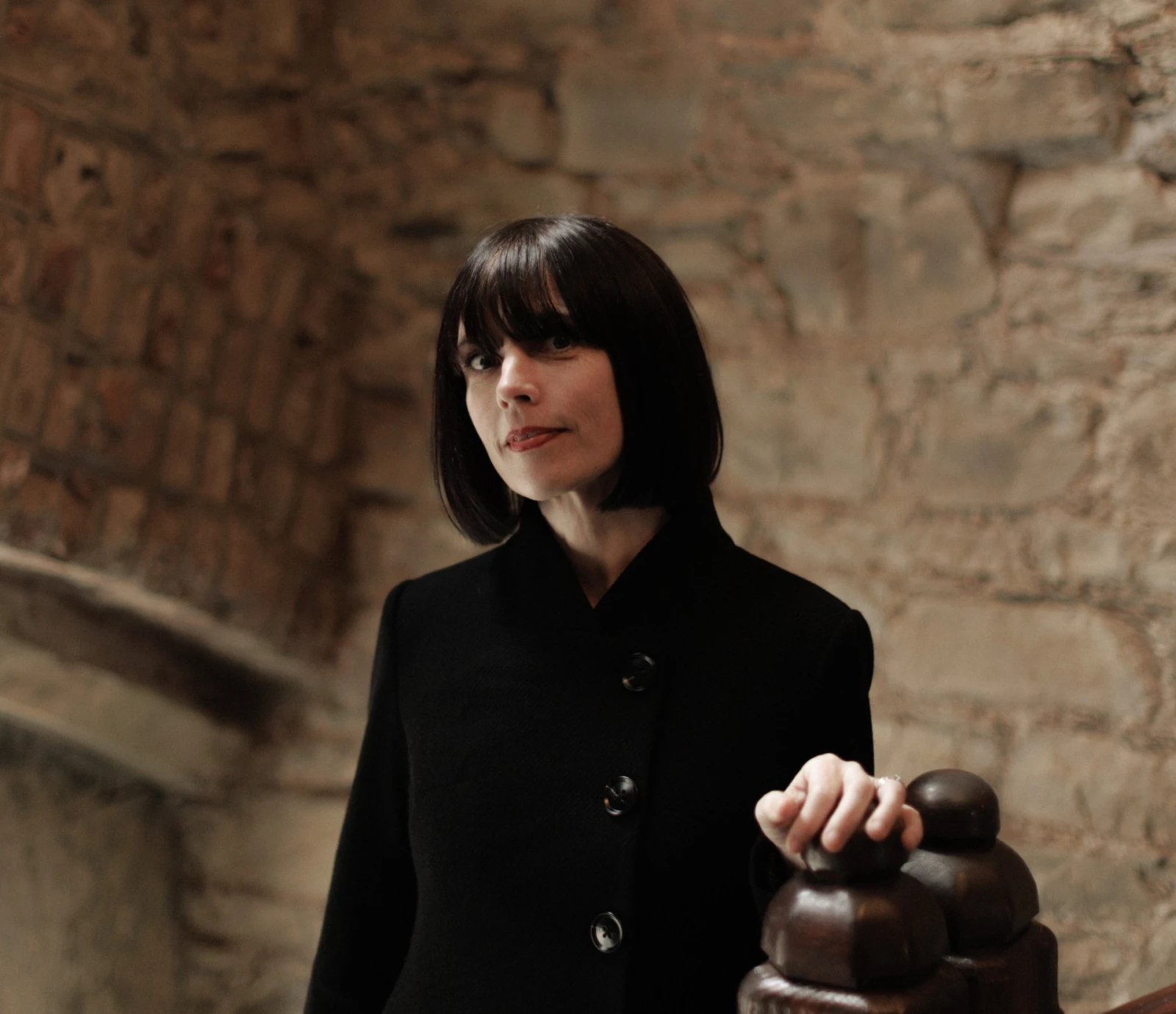
Image by Mariusz Smiejek.

Katharina is the Literary Editor at the Verbal Arts Centre in Derry-Londonderry. She received her PhD in Creative Writing from the Universities of Cologne, Kent, and Dublin. Her research and poetry explore creative-critical intersections, ecopoet(h)ics, and translation and can be found in The Journal of British & Irish Innovative Poetry, Magma, and The Irish Poetry Reading Archive.
More work by Katharina Maria Kalinowski


Tel: 028 7126 6946
Email: hueditor@theverbal.co
Verbal, Stable Lane and Mall Wall, Bishop Street Within, Derry/Londonderry, BT48 6PU
 company
Copyright © 2026 Honest Ulsterman