


And the Power of Stories
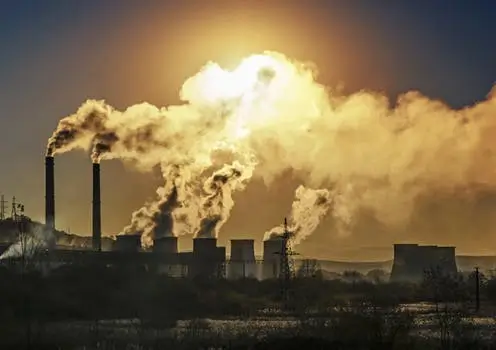
I’ve been reading and writing about the literature of climate change for the last fifteen years. But I am still reluctant to mention it if asked what I do, because the stock response is: “Why literature?” Climate change is, as everyone knows, hugely important, and patently worthy of serious scientific study. Few dispute the justification for exploring ways of mitigating it, such as alternative energy, low carbon transport, and carbon sequestration. If pressed, many probably also acknowledge the need for research into the political, social and possibly even psychological dimensions of the problem, as well as its chemical and physical causes, and its biological and meteorological effects. But why spend time studying representations of climate change in literature, film or art? Doing so seems frivolous in the face of the very seriousness of the phenomenon.
Reality and Fiction
In May 2018, a fifteen-year-old Swedish schoolgirl won an essay competition on climate change sponsored by the newspaper Svenska Dagbladet. She wrote: "I want to feel safe. How can I feel safe when I know we are in the greatest crisis in human history?” Impressed by the strength of her conviction, a journalist suggested she take action in the form of a school strike. Some months later, she attracted wider media attention when she began spending her school days outside the Swedish parliament, calling for stronger action on climate change. Her demand that the government reduce carbon emissions in accordance with the Paris Agreement resonated with a public alarmed by the heatwaves and wildfires during Sweden's hottest summer for over 250 years. Soon, other young people engaged in similar protests, and the global school climate strike movement called Fridays for Future was founded. Millions have since demonstrated, putting their governments and multinational companies under unprecedented pressure to reduce their carbon footprint. Greta Thunberg was hailed by Time Magazine as one of the 100 most influential people in 2019.
Greta suffers from Asperger’s syndrome. However, the dismissal of compromises, deadpan seriousness and singularity of purpose resulting from her condition have contributed to her impact as an advocate of action on climate change rather than detracting from it. The bluntness with which she has addressed business and political leaders in her public speeches (“How dare you!”; “You are failing us”; “The eyes of all future generations are upon you. And if you choose to fail us, I say: We will never forgive you”) triggered accusations that she is oversimplifying the complex issues involved. However, her bravery and sincerity are universally recognised, and she has inspired millions, raising global public concern about the environment.
There are curious parallels between this familiar true story and the narrative of a Norwegian novel published five years before, by Jostein Gaarder, author of the global bestseller Sophie’s World. The World According to Anna tells the story of a fifteen-year-old girl obsessed with climate change. Anna’s life is disrupted by strangely vivid dreams of life seventy years into the future, and accusations by her great-grand-daughter that she has been complicit in allowing climate change to happen. Her parents send her to a psychiatrist. However, her sympathetic reception by the psychiatrist encourages her to remain undeterred in her concern for the environment, and she ends up as an internationally celebrated icon catalysing action on carbon emissions. Like Greta Thunberg, Anna becomes a Joan of Arc-like figure personifying public guilt over having stolen the environmental foundations of a good life from our grandchildren.
The World According to Anna is not a particularly sophisticated work. It has achieved nothing like the level of success of Sophie’s World, or even Saci Lloyd’s young adult novel, The Carbon Diaries: 2015. However, it is useful as an example of how novelists are seeking to address the problem of the remoteness and abstraction of climate change, and make it real for readers. Over the last half century, and especially over the last twenty years, a growing number of writers have sought to make a climate-changed future imaginable for readers, by depicting younger generations struggling with droughts and flooding, storms and the mass extinction of species, and to promote a shift of attitude and preparedness to change readers’ way of life.
The book starts with the ten year old Anna learning that the world is “in disarray”: there is no snow for their village’s annual sleigh ride into the mountains at New Year. She hears people talking about climate change. Anna has a particularly lively imagination and an uncanny ability to visualise things she hasn’t experienced. As she grows older, she begins to believe some of her dreams and daydreams, and to feel they are being sent to her. She dreams she is in the year 2082, and her name is Nova. Thousands of species have become extinct, and Norway is criss-crossed by treks of refugees from the south. She is angry and frustrated, especially when she realises that there was no shortage of warnings when there was still time to prevent all this happening. Anna wakes with a powerful sense that she has a mission to go back and sort things out. Dreaming again that she is Nova, she accuses her great-grandmother: “I want the world that you had at my age. And do you know why? Because you owe me that!” Perhaps the world can have another chance, the old lady replies. She has a magic ring with the power to fulfil a single wish. This is used to bring back the world the way it was when Anna was sixteen. But Nova must promise to look after it: when they meet again in seventy years’ time, it will be Nova who is called to account. Seeing herself through the eyes of a great-grandchild galvanises Anna’s resolve to campaign for climate action. “What right did mankind have to destroy other forms of life?”, she asks: “What was wrong with humanity?” She feels cheated: “It was like the earth had been hijacked.”
Gaarder integrates factual information about oil consumption, carbon emissions, climate change and species loss in the narrative as excerpts from cuttings and printouts Anna has collected from her voracious reading of newspaper and internet articles. This is perhaps plausible as the behaviour of an individual on the autistic spectrum exhibiting restricted, repetitive patterns of interest and behaviour. The World According to Anna is somewhat marred by lapses into a moralistic tone. However, these do not prevent it from giving hope to young readers and encouraging them to take action to change the world. The book ends with the empowering words to Anna, on her sixteenth birthday: “This is your day!” A key aim of the novel is formulated by Anna’s psychiatrist: “We have to get better at visualising our heirs, better at recognising those who will inherit the world.” Perhaps thinking of the power of literature to broaden readers’ thought horizons, Gaarder presents reading stories as one way of doing so. As well as campaigning for climate action, Anna and her boyfriend set out to read Hamsun and Dostoevsky, Shakespeare and Homer, The Arabian Nights, and Greek and Norse myths.
This raises the question of what role reading fiction can play in helping society face the environmental challenges of our day, and work towards a more sustainable way of life. Informing readers about the causes and consequences of climate change is an overt aim of many works in the hybrid genre of cli-fi, which seeks to combine what the literary scholar Timothy Clark has called “the interesting” (i.e. tales of human relations, trust and deception, love and indifference, altruism and exploitation) with ethical reflection and adherence to factual truth. Climate change novels typically blend elements of fiction and nonfiction: Kim Stanley Robinson’s ‘Science in the Capital’ trilogy, which explores the scientific, technological and political possibilities and problems of transitioning the United States to a carbon-neutral economy in remarkably realistic detail, is one good example. Barbara Kingsolver’s Flight Behaviour, which depicts the impact of climate change on the migration pattern of a butterfly, and traces the development of an individual from climate scepticism to understanding of its causes and consequences, is another. But such social and psychological realism is the exception rather than the rule in cli-fi, which is dominated as a genre by thrillers and science fiction. Research into why we are attracted to stories, and what role they play in society suggests that intriguing and inspiring readers may be more important goals than informing them.
A biocultural approach to storytelling
Humans are, as Graham Swift writes in Waterlands, the storytelling animal. But what social function does telling and listening to, writing and reading stories serve? In The Origin of Stories. Evolution, Cognition, and Fiction, Brian Boyd has traced the evolutionary origins of narrative in human culture, and explained our attraction to stories as deriving from the “ultrasocial” nature of our species. We have gained our evolutionary advantage over other species largely through group cooperation. Cooperation depends on empathy, on understanding how others see and feel about events. More than any other species, we therefore depend on information about others’ capacities, dispositions, actions, and reactions, and need to pay attention to each other’s feelings, intentions and behaviour.
Stories help us to do this as a form of ‘cognitive play’ with patterns of social information: over millennia they have enabled their listeners to hone their skills in piecing together clues to appreciate how others feel, think and act. Storytelling is, like art in general, a byproduct of adaptive features of the human mind. As an activity designed to engage human attention through its appeal to our preference for inferentially rich and therefore patterned information, it coordinates groups and facilitates complex cooperation. Genres, characters, plot, and irony offer emotional enticements which keep audiences distracted from responding to their immediate surroundings. Enticing us to forgo mental rest for mental stimulation, narrative has developed our capacity to see from different perspectives, and enhanced our mental flexibility. As Boyd puts it, “stories help train us to explore possibility as well as actuality, effortlessly and even playfully, and that capacity makes all the difference”.
Stories stimulate our brains more than routine processing of the environment because they offer an incentive more intense than usual, a rush of the kinds of patterned information that our minds crave. This serves to sharpen minds and skills. Stories work by triggering the firing of mirror neurons. Mirror neurons, whose function was discovered only in the early 1990s, fire when we see others act or express emotion as if we were making the same action, and allow us through a kind of automatic inner imitation to attune ourselves to their feelings and understand their intentions. Humans, who imitate and practise more than any other species, saturate themselves in the supernormal stimuli of stories.
Our predisposition for fiction seems at first glance counterproductive in biological terms: as Boyd says, we might expect an “appetite for the true”. But most people prefer novels to textbooks, fiction films to documentaries. Fictional stories offer more intense satisfaction than most true ones, because they are designed to do so. We spend so much time telling one another stories that neither side believes, because they deploy forms especially elaborated to gain and hold our attention: working with strategies of exaggeration, repetition and surprise, they feature unusual characters or events, pleasantly defying our expectations. We humans interpret something as a story if we can. We focus on human characters and actions, associating them with powerful emotions, positive or negative. Humans are tireless social evaluators, and fiction makes the most of this, aligning issues with characters and deliberately pointing up character contrasts. Events and characters are designed to provoke us to reflect on, say, generosity, or deception and counter-deception. As a result, story “efficiently evokes our intense emotional engagement without requiring our belief”.
Characters demonstrating readiness to help others, perseverance, or courage serve as role models. They encourage resilience and determination in readers, openness and independence of mind, resolution in the face of obstacles, tolerance of others, compassion with those weaker than oneself, and efforts in support of the common good. However, most lastingly valued stories cannot be reduced to a single moral or message, and most writers with literary rather than purely instructive ambitions prefer to open up rather than close off implications. Some writers prioritise immediate, low-effort attention-worthiness; others longer-term, high-effort engagement, aiming to last over time and reward re-readings. But in general, moral lessons can be learned best in a memorable and pleasurable way. “Our guard is down, our moral emotions are engaged, our imaginations stirred”, Boyd writes, citing novelist Philip Pullman: ‘“Thou shalt not” might reach the head, but it takes “Once upon a time” to reach the heart.’”
For Boyd, improving social cognition is the most important function of stories. Inviting us to shift from our own perspective to that of others, they cultivate our sympathetic imagination. They are virtual exercises in understanding situations, and points of comparison informing our own lives. Training us in recognising and anticipating patterns of behaviour, and offering models to emulate or spurn, stories provide vicarious experience at low cost. They are, however, more likely to provide general principles we can apply in future circumstances than particular social information to guide immediate decisions.
Stories also perform other subsidiary functions. They can make social norms explicit, for instance by drawing on shared admonitions, myths, models, or exemplars, and they bind communities together, by rousing emotions, and making us feel we share these values and react in much the same way. A further function, at odds with this social-cohesive role of traditional art, is promoting creativity. Art and stories develop in us habits of imaginative exploration, so that we take the world as not closed and given, but open and to be shaped on our own terms. Artistically creative choices do not lead directly to survival benefits, but Boyd argues that they strengthen dispositions that do so, through preparing human minds to think beyond the given, and to feel confident in controlling aspects of the world on their own terms. By refining and strengthening our sociality, by making us readier to use the resources of the imagination, and by raising our confidence in shaping life on our own terms, art and stories fundamentally alter our relation to the world – with profound consequences for survival, Boyd claims.
In the past, then, these functions of stories have combined to make them a means of increasing our chances of survival as a species. Does this mean reading fiction can help us survive in the age of climate change and mass extinction? Do novels about climate change do more than serve as a hook to attract attention to the issue, for readers who might not otherwise encounter or be open to it in school, through TV documentaries, news articles, or social media? Do they also have the potential to change readers’ minds, and motivate them to action? For some time, sociologists have been studying audience responses to films, including climate change movies like The Day After Tomorrow. The evidence of long-term impact on social attitudes, values and behaviour is not clear. Reading is normally an individual activity, and measuring its impact notoriously difficult. Research in empirical literary criticism, working with questionnaires as well as blogs and reviews, is in its infancy.
There is in any case no single answer to these questions, because of the variety of literary production. In the half century since the first novelists turned to imagining life in a climate changed future and speculating on the success and failure of different efforts to mitigate global warming, the mass extinction of species, and the inundation of coastal cities from rising sea levels, they have complemented each other by resorting to a series of different strategies in pursuit of slightly different aims. Sometimes more oblique approaches to the subject may be more effective.
Sixty Days and Counting
Kim Stanley Robinson’s Sixty Days and Counting (2007), the final part of his ‘Science in the Capital’ trilogy, was marketed as a ‘science thriller’. The sixty days referenced in the title are the first months in office of the new American President, Phil Chase, who assembles a “global warming task force” to end the anthropogenic drivers of climate change and mitigate its effects, eventually involving the US armed forces and international reinsurance companies as well as parts of the Federal Government. Chase is an admirer of Franklin D. Roosevelt, and he models his environmental programme on the New Deal, the ambitious programme of public works projects, financial reforms, and regulations enacted by Roosevelt between 1933 and 1939, which enabled the United States to recover from the Great Depression without ceasing to be a liberal democracy. Like Roosevelt, Chase is a political pragmatist, and an optimist. The thrust of Robinson’s novel is that the problem of climate change can be solved through ingenuity and tenacity, in a context of social justice and international cooperation. Meeting the global challenges of sea level rise from the melting polar ice caps, ocean acidification, species loss, human population growth, world hunger and unsustainable energy generation is within our grasp, his narrative suggests, and both democracy and capitalism are ultimately compatible with climate action, albeit in modified forms. Chase succeeds in the face of all odds, by pursuing a course of bold and persistent experimentation that parallels Roosevelt’s.
Actions which the novel outlines include a vast geoengineering project to keep the level of the world’s oceans from rising by relocating billions of gallons of seawater in arid land basins and pumping it onshore in the East Antarctic, where it will stay frozen; the use of genetic modification to create a new form of lichen to capture carbon dioxide in the forests of Siberia; and more familiar initiatives such as new forms of solar technology, carbon cap and trading, imposing strict fuel efficiency standards, and raising taxes on fossil fuels. Alongside these, Chase legislates to end corporate loopholes and the off-shoring of profits, support the WHO’s efforts to stabilise world population, eradicate AIDS and malaria, and introduce gun control legislation, universal health insurance and guaranteed employment. Robinson explores the likely difficulties such a president would face. There is a good deal of detail on tensions between the various government departments and agencies, on the entrenched opposition of institutions like the World Bank, whose profitability assessments are founded on the externalisation of environmental costs, on trouble in getting legislation and funding through Congress, and on the amplification of public anxieties by the oppositional press. Key to progress is close collaboration between science and politics, a carefully orchestrated programme of research and a raft of policy initiatives implementing its findings.
There is a price to pay for such realistic imagining of the near future. Some aspects are already outdated: it is assumed that if America leads, the rest of the world will fall in step. A turning point is reached when China faces a sudden collapse of major ecosystems as a result of climate change, drought and the atmospheric pollution brought on by the Communist Party’s obdurate pursuit of economic growth. The American nuclear submarine fleet comes to the rescue, providing the power to drive the country’s emergency services while a crash programme replacing dirty coal power stations with clean ones is set in motion. In return for access to American science and technology, China agrees to cap its carbon emissions. Other failings of the novel are a lack of psychological consistency and complexity in the characters, an absence of dramatic tension in the flimsy thriller plot, which centres on a rogue intelligence agency, and the conventional sentimentality of the happy ending, with its allusions to a halt in coastal erosion, love, marriage, and a baby on the way. A subsidiary narrative strand is concerned with a Tibetan Buddhist community which, having sought refuge from Chinese persecution on an island in the Indian Ocean, has been forced to evacuate because of sea level rise, and come to live in New York State. And quotations from the writings of Emerson and Thoreau introduce a further source of ethical and spiritual values, which feed into the motivation of the main protagonist, a scientist who works for Chase. However, while these augment the story of Chase’s climate reforms, neither they nor the conspiracy at the heart of the thriller make for particularly exciting or memorable reading.
Suggesting humans “might learn how to live on this world properly”, Sixty Days and Counting makes the possibility of an alternative future believable. Robinson’s message is that there is no quick fix, but in the end the world can be saved. The story ends with Phil Chase writing: “I think for a while we forgot what was possible. Our way of life damaged our ability to imagine anything different.” This stands in welcome contrast to the dystopian scenarios of the bulk of environmental fiction. Robinson’s novels are rightly acclaimed for their thoroughly researched exploration of urgent environmental problems, and hailed as successful examples of speculative future fiction, drawing readers in with their human stories, informing them, and encouraging them to take action. However, here at least, the action on the level of the individual protagonists is dull. If fictional world-building is to be a criterion for evaluating climate change novels, another American author who has specialised in the field, Paolo Bacigalupi, presents an incomparably more vividly imagined future in The Windup Girl.
The Windup Girl
Paolo Bacigalupi’s novel The Windup Girl (2009) is set in Bangkok, at a time towards the end of the 22nd century, after what is variously referred to as the “energy collapse” and “the Contraction”, when the oil and natural gas which powered the debauched Expansion ran out, making society dependent on muscle power and dwindling coal supplies. It presents memorable images of a possible climate-changed future, with its evocation of the sweltering heat, sounds and smells of a slum-infested city, where life is brutal for most, high-rise buildings are abandoned because of the shortage of power, cars have been replaced by bicycles and spring-powered scooters, and factories are powered by gene-hacked mammoths. However, the main subject of the novel is not climate change, but the use and abuse of science to exercise power. Genetic engineering is used as a weapon by American conglomerates, who pursue world domination by flooding the global market with gene manipulated wheat, vegetables and fruit, making their customers dependent by rendering their grain sterile, and forcing people to buy ever new products by deliberately creating diseases which generate epidemics wiping out the crops growing from old stock. The Windup Girl is a passionate warning against the deregulation and social inequalities which accompany capitalist globalisation. In a subsidiary plot, a replicant (the eponymous ‘windup girl’) raises the question of whether advanced robots can have feelings, identities and souls, and challenges conventional notions of naturalness. A third narrative strand explores the plight of migrants fleeing from their countries of origin, who are treated as invasive species.
The Windup Girl combines thematic complexity with the qualities of a good thriller: fast-paced action, nail-biting suspense, and gradual revelation of secrets. There are unexpected plot twists, violent and erotic episodes, and dramatic concluding scenes in which the city is destroyed. However, despite this dystopian trajectory, Bacigalupi’s novel celebrates human aspirations, ingenuity and tenacity. It ends with a new beginning for the Thai people (albeit one gained through the loss of their capital city to the sea), and for Emiko, the Japanese replicant, who has suffered humiliation throughout and always dreamed of escaping her subservience to her misogynist masters.
There is nothing about the science of climate change in this novel, but it presents a graphic portrait of a teeming city in the grip of oppressive heat and drought, under constant threat from the surrounding sea, which is only held back by huge levees and giant pumps, struggling to cope with the influx of refugees who have been driven from neighbouring countries by famine and the religious fundamentalism, political extremism and armed conflict arising from it. It also raises important ethical questions, juxtaposing self-seeking materialism with idealism, loyalty, and dedication to the community and the nation, in a world where corruption is rife and selfless actions have become ambivalent. Climate change is less a topic in itself than a factor intensifying social conflicts. Bacigalupi does not set out to inform readers, or even to work through a wholly realistic scenario of the possible future. But the novel certainly attracts readers’ attention, and its striking images and characters may prompt them to think seriously about the future.
The Lathe of Heaven
Ursula K. Le Guin’s novel The Lathe of Heaven shows that many of the underlying themes and tropes we have noted in The World According to Anna, Sixty Days and Counting, and The Windup Girl have been there from the beginnings of climate change fiction: thoughtless consumption vs. guilt and a sense of responsibility towards future generations; narrow rationalism vs. dream, imagination and intuition; Buddhist unity with nature and letting be vs. the desire to shape our own lives and control the natural environment which is fostered by the Abrahamic religions; heat, extreme weather events, flooding, and the gradual collapse of modern civilisation. First published in 1971, this short novel by one of the world’s leading SF and Fantasy writers, author of A Wizard of Earthsea, The Left Hand of Darkness and The Dispossessed, appears to have been the first literary treatment of a phenomenon which had yet to gain wider public attention.
The central figure in the enigmatic tale, George Orr, has the gift of dreaming things into being, for better or for worse. Distressed by the havoc his dreams are wreaking, Orr resorts to drugs, and ends up in psychotherapy. His therapist, the sinister William Haber, takes control of Orr’s “effective dreams” – ostensibly to cure him, and to make the world a better place by manipulating it, but in reality also to further his career and exercise power. His self-serving use of the power of Orr’s dreams results in a dystopian nightmare. The action is set in Portland, Oregon, around the end of the twentieth century, in a world of rising temperatures and constant rain: “Nowadays the eternal snows were gone from all the world’s mountains, even Everest.” “It would take several centuries for the CO2 to clear out of the air, if it ever did. New York was going to be one of the larger casualties of the Greenhouse Effect, as the polar ice kept melting and the sea kept rising.” The private car has “strangled in its own exhaust”, and “undernourishment, overcrowding, and pervading foulness of the environment” are the norm. Cancer and climate change are two things Orr’s dreams cannot alter: after he has dreamed a “Crash” which decimates the human population and shakes civilisation to its roots, the air is still “profoundly and irremediably polluted”. The “endless warm drizzle of spring” is Antarctic ice, “falling softly on the heads of the children of those responsible for melting it”.
The Lathe of Heaven is in essence a ‘mad scientist’ story, a fable of the proclivity of humanity to seek to impose order on life, and of its unintended consequences. When Haber directs Orr to curb world population growth, install universal peace to end all war, and do away with racial discrimination, a carcinomic plague wipes out six billion lives, the world unites in the face of alien invasion, and everyone is grey-skinned. Haber’s rigid individualism, rationalism and will power are contrasted with Orr’s Taoist belief in the need to let things be. When Haber asks whether it is not man’s purpose on earth “to do things, change things, run things, make a better world”, Orr responds: “I don’t know if our life has a purpose and I don’t see that it matters. What does matter is that we’re a part. Like a thread in a cloth or a grass-blade in a field. It is and we are. What we do is like wind blowing on the grass.” In the end, Orr succeeds in resisting Haber’s domination through alliance with a community of effective dreamers, benevolent aliens whose arrival on Earth he has dreamed into reality. “Everything dreams”, he explains at the end of the book: “The play of form, of being, is the dreaming of substance. Rocks have their dreams, and the earth changes […]. You must learn the skills, the art, the limits. A conscious mind must be part of the whole, intentionally and carefully – as the rock is part of the whole unconsciously”.
Working for a better world must, Le Guin implies, be rooted in empathy with human and nonhuman others, guided by compassion and cooperation, and tempered by respect for what is. Haber castigates Orr as a “moral jellyfish”, but the image suggests, rather than the intended spinelessness, an interconnectedness with the world which anticipates the principles of twenty-first-century Material Ecocriticism, with its stress on the agency of matter and the permeability of the boundaries between the human and the non-human, the living and the supposedly inert. Le Guin’s story about Haber and Orr punches above its weight, and her narrative, playing as it does with the multiple time-tracks and alternative realities which are the stock in trade of science fiction, is wittily ironic and intriguing.
Gun Island
My final example is written by the Bangladeshi-born New Yorker, Amitav Ghosh. In 2016, Ghosh published The Great Derangement, an extended essay examining our collective denial in the face of climate change. Among other things, he asked why the gathering clouds of environmental catastrophe appeared to resist adequate representation in novels. How, he asked, might climate change be written about? His answer, Gun Island (2019), is neither science fiction, nor thriller, nor young adult novel. Nor does it resemble Kim Stanley Robinson’s near-future realistic speculative fiction. Although it is written in the mode of psychological and social realism, it makes extensive use of myth and history, interweaving these with the present time narrative and hinting at parallels.
The book is structured like a detective story, piecing together clues to understand the true meaning of a popular Bengali legend, ‘The Gun Merchant’. This tells of a merchant who is fated to travel the world seeking a safe haven from the goddess of snakes, Manasa Devi. It turns out to have its origins in the seventeenth century, and to be a blend of true story with mythical elements from Hindu and Muslim cosmology, and tales of heroism and the supernatural. At its heart is an account of the life of an Indian merchant who is forced by environmental changes brought on by the Little Ice Age to leave his home in Calcutta. He becomes rich trading in Venice, but nearly loses everything in his struggle against powerful adversaries, here conceived as an avenging nature. A series of parallels emerge between this story of the Gun Merchant (it emerges that the Bengali word for ‘Gun’, bundook, means ‘Venice’, so it is really the story of the ‘Merchant Who Went to Venice’) and the experiences of the narrator, Deen, on the one hand, and twenty-first century migrants on the other.
The scholarly Deen is initially uninformed about international politics and the environment, and he struggles with depression, but he masters this, while learning about Bangladeshi and Indian emigration to Europe and the impact of climate change. Using the Gun Merchant legend as a parable, Ghosh’s narrative warns against assuming human control and underestimating the power of nature. Deen comes to see that the Gun Merchant is not the victim of the snake goddess Manasa Devi: his misfortunes are due to his own arrogance, his conviction that he was rich and clever enough to avoid paying deference to the forces she represents. Manasa personifies a nature whose power has been overlooked, and the legend encapsulates awareness of human self-endangerment in the Anthropocene through failing to acknowledge restraints in relation to the other living beings with whom we are co-dependent. The desperate economic migrants from the Indian subcontinent are effectively similarly fleeing from acknowledgement of the power of nature: they too may learn that Europe cannot serve as a refuge from it.
Gun Island conveys a good deal of scientific and political information – mainly on marine biology and information on the flooding and decay of Venice, and forest fires in the Los Angeles region, but also on the reasons why Asian and African migrants come to Europe, the journeys they make, and the brutal persecution, deprivation and exploitation they suffer en route. But the main focus of the book is the historical background to today’s population movements and the climate vulnerability driving them. Ghosh’s message is that we are not the first generations to experience existential threat from a change in the climate – and that humans are resourceful enough to deal with it. Humanitarianism triumphs at the end over xenophobic anxieties and ruthless exploitation of others.
Like Gaarder, Ghosh writes of the power of stories. His novel implies that more of the stories in our cultural heritage than we realise are actually about climate changes and their human impact. It is not merely that the floods, famines and storms from which the Gun Merchant suffers resonate with our experience of weather events related to climate change today: he encourages us to read the story as an allegory of tendency of the pursuit of material profit in global capitalist trade to overlook the necessity for restraint in respect of fellow humans and the nonhuman world. Stories don’t tend to change people’s minds, Ghosh has said in an interview, but (echoing Brian Boyd) they can lead readers to understand certain predicaments. “Only through stories can invisible or inarticulate or silent beings speak to us”, he writes in Gun Island: “it is they who allow the past to reach out to us”. “It is only through stories that the universe can speak to us, and if we don’t learn to listen, you may be sure that we will be punished for it.”
Axel Goodbody is Emeritus Professor of German and European Culture at the University of Bath, and Visiting Research Fellow at Bath Spa University’s Research Centre for Environmental Humanities. His main research fields are German environmental literature and thought, and ecocritical theory. Recent publications have been concerned with climate fiction, climate scepticism, energy narratives, and human/ animal relations. He is Associate Editor of the journal Ecozon@.

Axel Goodbody is Emeritus Professor of German and European Culture at the University of Bath, and Visiting Research Fellow at Bath Spa University’s Research Centre for Environmental Humanities. His main research fields are German environmental literature and thought, and ecocritical theory. Recent publications have been concerned with climate fiction, climate scepticism, energy narratives, and human/ animal relations. He is Associate Editor of the journal Ecozon@.
More work by Axel Goodbody


Tel: 028 7126 6946
Email: hueditor@theverbal.co
Verbal, Stable Lane and Mall Wall, Bishop Street Within, Derry/Londonderry, BT48 6PU
 company
Copyright © 2026 Honest Ulsterman