


Geraldine’s eyes opened to the sound of her phone alarm on the bedside locker. She quickly silenced it and glanced around her. This was her bed and this was her bedroom, but she had to remind herself of who the man lying next to her was. It took a moment. Pete-, Pat-, Paul! Yes, his name was Paul. She raised herself up in the bed slightly and adjusted her eyes by focussing on his sleeping face, which was only momentarily disturbed by the noise. He was younger than her – she estimated by about four or five years. This being a Sunday morning, her alarm shouldn’t have been set, but she must have done it without thinking. She settled back in the bed, a little closer to the edge than before, and closed her eyes again.
At about half past ten, the body started to move beside her. She was turned away from him with her eyes open. Both of them lay awake for a while before Geraldine decided to speak.
‘Do you want some coffee?’ she said turning her body slightly.
‘Ah, yes I suppose’, Paul said. ‘But only if it’s not too much trouble.’
‘It’s not’, Geraldine said and moved to sit up. Their eyes met and they surveyed each other for an instant in the harsh morning light. She was thankful that she had been conscientious enough to put on a T-shirt and pyjama bottoms before going to bed. Most of Paul’s bare chest became uncovered when he moved.
‘Good morning’, he said rather awkwardly, as if it was too late to say it but he would anyway.
Geraldine gave a half smile as she tried to calm the large clump of hair at the back of her head.
‘I’ll just go put the kettle on so,’ she replied.
While she was gone, Paul glanced around the unfamiliar room. It was quite small with most of the space taken up by the bed. The wall facing him was almost completely covered with posters and prints of paintings. This brought back a conversation he vaguely remembered having with Geraldine about her work. He managed to locate his T-shirt on the floor and quickly put it on before she returned.
‘So, you work in one of the councils then?’ Paul asked before she was fully back inside the room with the coffee.
‘Uh huh’, she said, handing him a mug. She positioned herself at the opposite side of the bed, sitting up.
‘What’s that like? Oh, weren’t you saying it wasn’t really what you wanted to do?’
‘Ah, it’s fine, you know…’ Geraldine said, trying to remember what she had said the previous night. ‘Boring enough but it pays the bills.’
‘I know how it is. Same with my job. I suppose it keeps you from going insane too… you know, having something to get up to in the morning.’
Geraldine smiled and took a drink from her mug.
‘You must like art, do you?’ Paul asked after a moment’s silence. ‘I mean with all the pictures on the wall there.’
‘Ah yes, well…’
‘Let me guess. I bet that one’s your favourite, right?’ he said pointing to one of the prints on the wall.
‘Why do you say that?’
‘I don’t know – because it’s the biggest?’
‘As it happens, it is,’ Geraldine said.
‘Told you! Who’s it by?’
‘El Greco... It’s a self-portrait: a detail from his “Burial of the Count of Orgaz”. That’s only a tiny part of the whole thing. That’s him in it.’
Geraldine stopped and there was a pause while Paul fumbled for an appropriate response.
‘He looks a bit cross-eyed, doesn’t he?’ he said finally. ‘Is that a lazy eye he has, or what?’
‘Perhaps’, Geraldine said. ‘I don’t know.’
‘Do you think he looked like that in real life or just painted himself that way?’
Geraldine’s drunken openness of the night before was counterbalanced now as she held herself back. The conversation made her uncomfortable. She struggled to summon the power to feign friendship with a man she barely knew; and there was no way she could force herself to talk about something so personal. What could she say? She had travelled to Toledo alone the previous year and spent four days and nights walking in El Greco’s footsteps. She didn’t understood why she had broken down in tears while out walking on the third night. She had a vision of herself standing on a deserted terrace in the darkness, with the haunting clouds overhead and her wet face lightly illuminated by the moon. She had never discussed it with anyone and probably never would. The intensity of the experience, the potency of the image, for her, was heightened by how painfully private it was: heightened until the pain was unrecognisable and became tinged with pleasure, and she felt the kind of gratefulness one does for a dream that lifts the world up and transforms it according to a new and more personal design. Communicating it would be like taking a knife to a great painting.
Paul stayed on to chat until he finished his coffee and then left Geraldine’s apartment. She politely and subtly fought off any suggestion that they might see each other again. She offered him an escape and expertly made him believe that the best thing would be for him to take it with minimal fuss.
Geraldine could do a great impression of a woman with serious psychological problems. It was involuntary and often took her by surprise. But with a little bit of extra effort, she could pull herself back from being too crooked and live the life of a normal working woman. Her passion in life was art. She had studied art history at UCD, followed by an MA in museum studies at Queen’s. However, she ended up not using her Master’s and instead took a job as an arts officer in the Fingal Council. This was the closest she could get to working in art. But it felt to her like any other administrative job, with the exception that she regularly dealt with people trying to work or get funding in the arts. More important to her was that the calm and stability of her working day suited her.
When she was younger, she lamented the fact that she was unable to produce something that reached her high standards for what a work of art ought to be. She learnt, though, that a great deal of joy could be derived from the appreciation of the work of others. Her life’s work, as she saw it, was to follow the creative process as it had been followed from start to finish by great artists. She had endless conversations with herself about it and would acknowledge that El Greco was a great artist but not the greatest. Nevertheless, his images had etched themselves on to her soul from an early age. Their effect on her was inexplicable, almost primal, and they flickered out of the dark corners of her mind at different parts of the day and wrestled for her attention.
Geraldine had more or less the same group of friends since secondary school. Over the years, one or two had drifted away but a core group remained. Of the five women currently belonging to their circle, only Geraldine and Jen were single. Kate and Amanda had husbands, while Naomi had a long-term boyfriend. This meant that Geraldine and Jen usually ended up sitting together on nights out. Geraldine much preferred the company of Kate or even Naomi, but she didn’t have any choice in the matter.
The following Saturday night the group arranged to meet, as usual, at 9 in Filban’s on Leeson Street. The routine of many years was to stay there until about 11:30 and afterwards move on to the Oracle nightclub. A lot of the conversation was about how much the crowd there was changing and that they should seriously consider going somewhere else. This, of course, was empty talk and each of them knew it would never come to anything, which only compelled them to speak with greater condemnation of the establishment and its clientele.
When they arrived at the club and settled at a table just before midnight, the music was too loud for any sustained group conversation and it was replaced by the pantomime of exaggerated faces, smiles, rolling eyes and hand gestures from across the table. 1 o’clock rolled by. Kate, Amanda, and Naomi each now felt that they could see out the night in the pleasant and sentimental embrace of their man. Geraldine and Jen meanwhile took to the dancefloor and readied themselves for the flushed faces of approaching men. Rightly or wrongly, they both secretly believed that they were never the first choice of any guy that tried to get their attention. At this late stage of the night, they had probably been brushed away by numerous women and Geraldine and Jen were the next ones in line.
It became difficult to find space to move on the dancefloor, which dictated the style of dance-moves available to people. The DJ was delivering all the nostalgic 80s tunes they could handle. The crowd resembled seals lapping up food. As the music thumped loudly from above, men and women flung their arms up in the air and sang along together with their eyes closed or half-closed and heads bobbing backwards. Geraldine turned around to see Jen kissing someone. The guy next to them – probably a friend of his – was looking at Geraldine. She looked away, but turned back a moment later to see him moving closer. He danced next to her for a minute before saying hello. As the opening bars of the Bangles version of ‘September Gurls’ came on, he moved closer and proceeded to ask her a number of questions about her name and who she came here with. Geraldine gave short answers to most, but she allowed him to take her hand while they spoke into one another’s ears. Their attempts at rudimentary communication were drowned out by the loud guitar and vocals: ‘how can I deny what’s inside… when I get to bed late at night, that’s the time he makes things right…’
The man’s name was Darragh. As the line of ‘December boys got it bad’ was being repeated in the climax of the song, he seemed to be moving in to say something else, but instead kissed Geraldine on the lips. For no apparent reason, while they were kissing, the image of the Count of Orgaz from El Greco’s painting came to her mind: the ghostly white of the Count’s face contrasted with his dark beard as his corpse is lowered into the ground by a youthful St. Stephen and an ageing St. Augustine. And the row of men – including El Greco himself – looking on at the extraordinary event. These were the moments she feared. They were the inevitable moments of the night when she felt uncontrollably maudlin and tears threatened to engulf her eyes. She was overcome with a yearning for something else and couldn’t help but pity herself for being so lonely.
She released herself, took Darragh by the hand and led him from the dancefloor. A vacant spot by the wall opened up and they quickly positioned themselves there, partially concealed by a large pillar. Darragh leaned in to kiss her again and his hands wandered down her back. She didn’t stop him and he interpreted her responses as encouragement to wander further. His left hand found its way to her thigh. He lingered there just below the rim of her skirt. Sensing trepidation, Geraldine quickly grabbed his hand and moved it under her skirt. He responded by kissing her more forcefully and holding her hip tighter with his other hand. After a few minutes, she pulled away and excused herself to go to the toilet and told him she would be right back.
On her way through the crowd she glanced over at her friends still sitting at the table. They were oblivious to all around them. She continued past them. In the toilets, she wrestled for a space at the sink and took her time washing her hands. She covered her hands in soap for a second time and lingered and thought. She played with the idea of just leaving without telling anyone. While still considering it, she collected her coat from the cloakroom. There was no final resolution to do so on her part, but soon she was outside walking towards the canal. She turned off her phone. But she didn’t want to go back to her apartment right now either. Instead of crossing the canal, she turned right and walked alongside it in the direction of Harold’s Cross.
Perhaps everyone is discontented, she thought to herself. However, she was convinced she felt it more intensely than other people and certainly more than the people she knew. To be successful at living, she had often told herself, you have to shape the world in your image, to as far as possible make it into a place that is amenable to you. The people she knew did this with family, friends, habits, and things. But this is exactly what she felt incapable of doing. Try as she might, it felt false; underneath it all the world felt alien to her. This, she believed, may have been what drew her to great art: the artist’s vision is projected on to the world and there is a sort of continuity there. And if she was lucky enough to comprehend that vision, she could feel that continuity too instead of the alienation.
Geraldine continued walking and after a while found herself in less familiar territory. She reached the bridge at Rialto and paused, leaning against the wall. What did she think she was doing, leaving the club without telling anyone and walking this far away from her apartment? She would have to explain herself to the others. It would have been easier to have gone along with it. She fantasised about being carried and gently laid down to sleep. Her feet were hurting. The simple comfort of a bed would be enough for now to help her forget everything else. If she could be magically swept up like that, all might have been all right. Instead, she was tormented by the faces of her friends and the man she had kissed. They would not be angry so much as confused, and gently but firmly request an explanation.
The hurt she was feeling, though – it was, she realised… bearable. Mercifully, she could build an image around it, or rather build it into an image. Everything had its use for this purpose: even the grey concrete under her, the blacked-out rows of anonymous houses, the dirty still water. All of it could be pulled together and crammed into the four corners of a frame. Everything, including those faces – some of them familiar, some of them not – could hang together harmoniously and stare out at her in judgement if they so wished. She could look back at them or she could avert her gaze from the faces to the sky. Geraldine looked up. The moon was bright and half-full and it made the sky appear heavy with clouds. ‘Isn’t it haunting?’ she whispered to herself, feeling a little foolish. Still, the words were like a lifeline; a way of calming herself in a vulnerable moment.
She turned around to walk back towards Rathmines. As she walked she began to feel a bit better. She wondered whether she was arriving at a rare moment of clarity or merely feeding herself with soothing words in common drunkenness. It didn’t matter much right now. Nevertheless, she told herself that whatever connection she felt with the world must be seen for what it is: fabricated. It was as artificial as an artist’s creation, but she was all right with that. It was in private moments like this that it felt real, and that feeling was worth striving for. She didn’t need company tonight. She was relieved to not have to entertain anybody or to endure the predictable pattern and the awkwardness that followed.
Tonight a different scene would be played out. She would be held and guided with every step, watched in every tired movement of undressing and every last breath until dreaming overtook her completely.
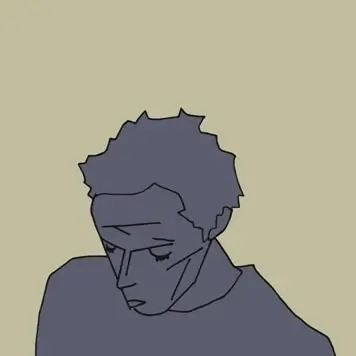
Thomas McNally is a writer, illustrator and philosopher. His short fiction has appeared in Icarus and gorse. In 2014, he published his first book of illustrations with the Lilliput Press: an illustrated edition of James Joyce’s fable of ‘The Ondt and the Gracehoper’ from Finnegan's Wake. His formal training is in philosophy and his academic articles have appeared in numerous international journals, including Philosophical Investigations and The Nordic Wittgenstein Review.
More work by Thomas McNally


Tel: 028 7126 6946
Email: hueditor@theverbal.co
Verbal, Stable Lane and Mall Wall, Bishop Street Within, Derry/Londonderry, BT48 6PU
 company
Copyright © 2026 Honest Ulsterman