


‘As if my heart put on a face’
My
first poetry collection, Eat or We Both Starve, was published by
Carcanet Press in March 2021. At that point we had all been living in a time of
great trauma and upheaval for exactly twelve months. It seemed so strange that
my life-long dream was coming true in the middle of a pandemic, so my memories
of the past year are ones of anxiety, stress, and uncertainty for sure, but
also of extreme joy, excitement, and creativity. The first lockdown was a
fruitful time for me. My day job hadn’t yet transitioned online so I was freed,
to some extent, from all expectations in that regard and that unlocked an
energy in me that I hadn’t felt in a long time. I wrote regularly, alongside
childrearing, edited the collection, recorded my parts of the Unlaunched Books
podcast with John McAuliffe and Seán Hewitt, and read and read. I even made
banana bread. The sun shone every day, remember? In many ways, and in complete
acknowledgment of my privileged position, it was briefly glorious.
But chaos is the natural condition of life, and to this state I think all things revert in the end. We are the aberrations desperately trying to put some sort of sense onto the world, to try and control it. I have never had much success with that. I’ll never forget the relief I felt when I read that Zadie Smith admitted to having a ‘a very messy and chaotic mind.’ The fact that I use the word ‘admitted’ is very telling, don’t you think? I mean, there is nothing inherently wrong with having an untidy mind. Is there?
I’ve been thinking about this question regularly over the past two lockdowns which were much trickier and darker than the first. We were expected to work as normal, if not even harder to make up for lost time, even though the case numbers rose, and the news got more and more terrifying. During this time, I tried to remember the world that existed when I first put my collection together, and how it was gone forever. The poems seemed like quaint reminders of this place, particularly those about partying, ‘Big Girl’ and travel, ‘Paris Syndrome,’ but some poems almost seemed to predict or point to the inertia, claustrophobia and loneliness that characterised the pandemic. I am thinking of poems like ‘Selfie’ and ‘I Didn’t Know What to Do With Myself.’
I don’t often know what to do with myself, pandemic or no – scheduling, planning, organising – all these skills elude me though, to the casual observer, it can appear that I have everything in order. But the pandemic really showed me that when it comes to poetry, I experience a clarity and a focus that I struggle to bring to many other tasks. It is a way of channelling the mayhem of my mind into something approaching communication.
It’s a translation of my interior.
It is never enough (but it is enough).
It is the way my mind works.
It is how I think.
The challenge, of course, is finding the time and space. The challenge is showing up to the desk.
I became very interested in the routines and schedules of successful writers, hoping that they would provide guidance in my struggle to keep my creative life afloat. I hoped I could emulate them maybe, rather than trying to revise my own process, which I found difficult to modify when my life circumstances changed, as change they always do. The writers I researched have several elements in common when it comes to their practice, and to follow them you must:
1. Write in the mornings.
2. Take regular and lengthy exercise.
3. Have a healthy but temperate social life in the evenings.
4. Re-read pages at night, often to a benignly interested but silent spouse.
5. Retire early to repeat the process the following day.
Of course, there are variations on this, some more extreme and unattainable. The Americans have a penchant for getting up at 4am, for example (the horror). However, none of them recorded or admitted to stopping-and-starting the way I do. But are writers who write like me, in short bursts, in a disordered and manic way, celebrated and fetishised in a similar way to Stephen King and co? Probably not. Definitely not. And why not? Because how can you describe a process that is so unique and individual to each person. How do you talk about work and playschool and dinner making and clothes washing and zoom calling? It certainly wouldn’t come across as universal, would it? I can’t help but think that this is to do with gender roles. That women’s domestic drudgery isn’t universal because it is not male. So many of the male writers I researched had the privilege of solitude. They had someone else in the household to make supper. I don’t know what to do about that. I have a very supportive spouse who more than pulls his weight, yet it is still hard. Childrearing is all-consuming, especially coupled with work, which is why the 4am option looks more promising.
I know I wrote somewhere in some article that probably still exists on the worldwide web somewhere that I write every day. And I did then. Sometimes I still do. But never always. Never now. And yet, as I type this, I have set my alarm, crossed my fingers that our little one won’t visit us tonight, and put my intention out into the universe. Tomorrow is the first day of the rest of my writing life. (Spoiler alert: it didn’t happen.) But despite this perceived failure on my part to regulate my practice, or rather an unwillingness to accept my way of doing things – my book came into being all the same.
And what was it like when my book was, finally, out in this altered world? One of the most important poets in my life, Sylvia Plath, said, ‘It is a terrible thing to be so open: it is as if my heart put on a face and walked into the world.’ One of my colleagues texted that to me on the book’s publication day. I was delighted by the reference to Plath, of course, but equally I felt somewhat on edge. Turns out that was the correct response. I thought I would die in the days before publication day. The main source of my anxiety was that with the exception of my editor, a few family members and one trusted friend, no one had read the book in its entirety. It is not the same to read a poem or two in a journal, or even flick through the final manuscript. Some strange alchemy occurs when a manuscript turns into a book, with a cover! It is a thing unto itself. You don’t own it anymore, if you ever did. And my book is intense, dressed in its blood and bandage.
Martina Evans, who graciously and beautifully launched Eat or We Both Starve into the world on Zoom on the 31 March, held my hand in the run-up to that moment. I didn’t know that the publication and the days before the book launch would make me feel so exposed, so raw (the book launch itself was wonderful and so enjoyable). I am not alone in this, of course, but unlike the endless articles about how writers schedule their days, and even how they deal with rejection, there is very little collected about what happens or how they feel when something they have worked on for years is eventually published. I fell down the stairs. I woke up crying on more than one occasion. I developed an extreme allergy to stargazer lilies. I wondered about other writers’ responses to being published. I still do. And then, unaccountably, the moment passed, and the book was free.
Publishing Eat or We Both Starve with Carcanet is one of the best things that has ever happened to me, and the best so far as an artist. I am very grateful for the wonderful reception it has received and how it has, despite, or maybe because of its weirdness, found its wonderful readers. They have stuck by me through countless Zoom readings and events, and I am very grateful. But there is that moment when the reading is done, when the clapping hands emoji hover over black boxes or the tiny, pixelated portraits of the attendees, and then that rectangle pops up, ‘The host has ended the meeting’ and you are alone with the blank screen and your reading copy and, well, nothing else. I look forward to in-person events, and to pushing my heart out into the audience with its little face on, watching it take its first tenuous steps into the real world. I hope you can join me there too.
I Didn’t Know What to Do with Myself
I told a twelve-year-old he was annoying
he found our class trip to a medieval castle
boring
I asked him what he thought medieval castles were supposed to do
as if everything should entertain
he shrugged
I put an asterisk
beside his name in my roll book to pretend
I cared
I was shrill with a colleague who, I’m sure, doesn’t like me
I drove home too fast
there was nothing for dinner
I ate raw celery from the bag didn’t wash it
there were squashed flies on it like eyelashes
I didn’t brush my teeth fuzzed with bacteria
There was no time
Instead I bit my nails to the quick imagined them
stabbing me
my own
tiny person trying to get out
I bumped my head off the wall
to feel something
saw stars.
from Eat or We Both Starve (Carcanet Press, 2021)
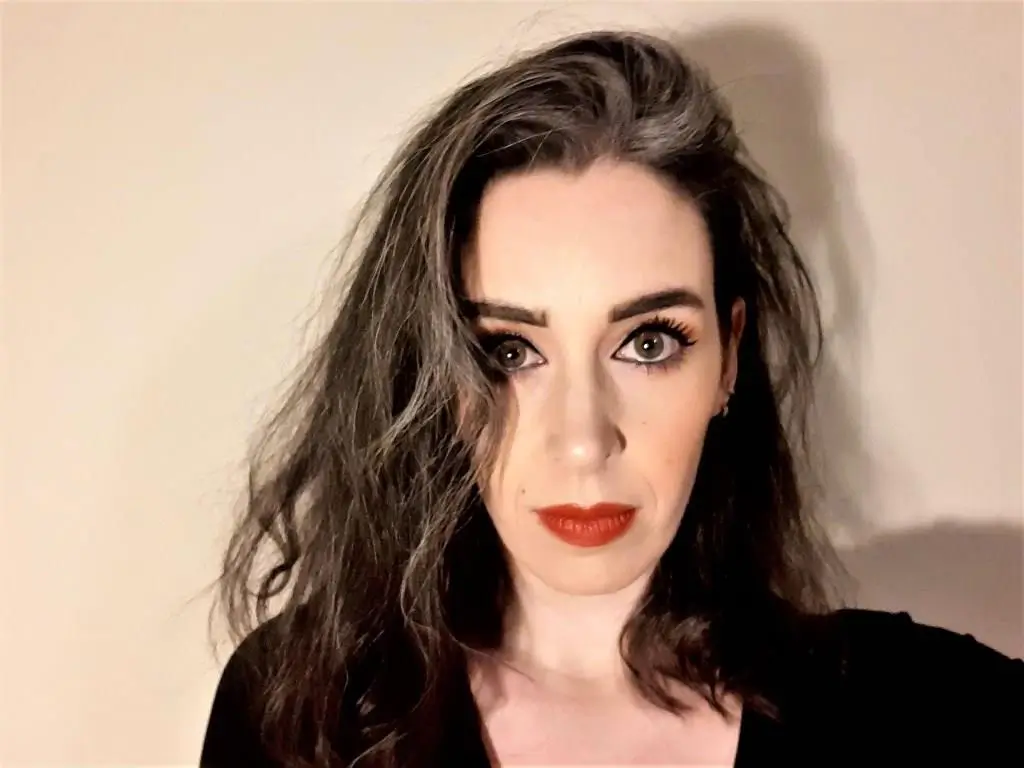
Victoria Kennefick is a poet, writer and teacher based in Co. Kerry. Her poetry collection, Eat or We Both Starve (Carcanet, 2021) was launched in March. Her pamphlet, White Whale (Southword Editions, 2015), won the Munster Literature Centre Fool for Poetry Chapbook Competition and the Saboteur Award for Best Poetry Pamphlet. Work has appeared in Poetry, The Poetry Review, PN Review, Poetry Ireland Review, The Stinging Fly, The Irish Times, Ambit, Banshee and elsewhere. A recipient of a Next Generation Artist Award from the Arts Council of Ireland, she has also received bursaries from Kerry County Council and Words Ireland.
You can buy Eat or We Both Starve here: https://www.carcanet.co.uk/cgi-bin/indexer?product=9781800170704

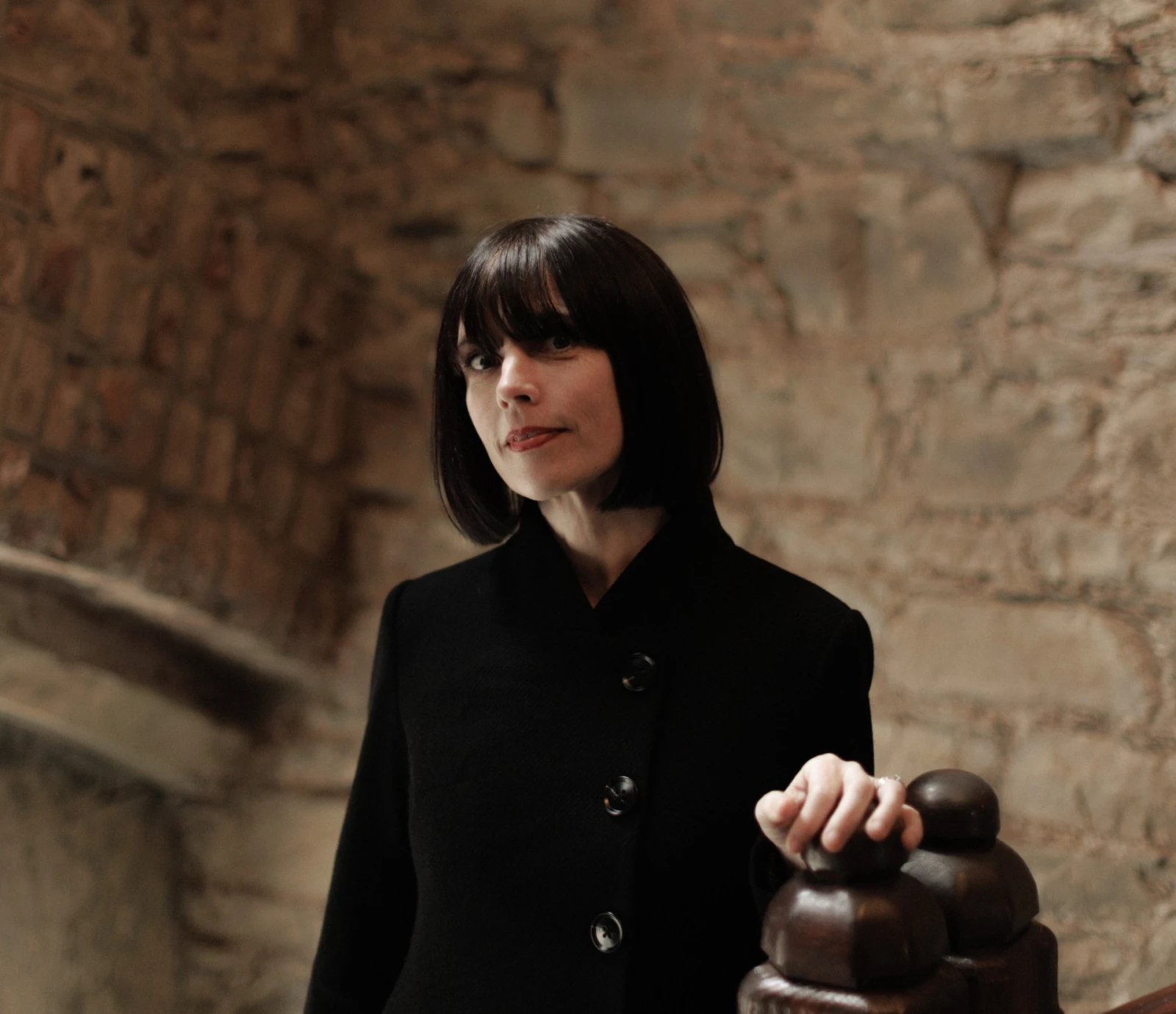
Victoria Kennefick is a poet, writer and teacher based in Co. Kerry. Her poetry collection, Eat or We Both Starve (Carcanet, 2021) was launched in March. Her pamphlet, White Whale (Southword Editions, 2015), won the Munster Literature Centre Fool for Poetry Chapbook Competition and the Saboteur Award for Best Poetry Pamphlet. Work has appeared in Poetry, The Poetry Review, PN Review, Poetry Ireland Review, The Stinging Fly, The Irish Times, Ambit, Banshee and elsewhere. A recipient of a Next Generation Artist Award from the Arts Council of Ireland, she has also received bursaries from Kerry County Council and Words Ireland.
More work by Victoria Kennefick


Tel: 028 7126 6946
Email: hueditor@theverbal.co
Verbal, Stable Lane and Mall Wall, Bishop Street Within, Derry/Londonderry, BT48 6PU
 company
Copyright © 2026 Honest Ulsterman